Category Archives: Natural Healing

Joey goes bananas

As the supports for roof needed to be in place for 21 days and the roof was for Joey’s stall, Joey couldn’t occupy it. (See Joey’s room remodel) So, Joey had to be moved. Shadow was tethered in the car parking/food storage area, and Joey was given her stall. It hardly seemed fair to Shadow, but I have mentioned that Joey is my husband’s consentido (favorite) right?

Anyway, Shadow’s stall is not as solidly constructed, nor as finished as Joey’s stall even though she is a full year older. And Joey, well, is Joey, a bit nervy. He’s not into change at all. So this new arrangement had him up in arms.

My husband said it’s because his testicles have dropped early. Not having any experience with male horses before Joey, I had to look this phenomenon up. Apparently, a male horse’s testicles will descend, one at a time at anywhere from 18 to 24 months of age. As Joey will be 2 in July, he seemed to fall in the normal range of development. However, all the men in La Yacata have made comments about Joey’s balls and offer their congratulations to my husband, as if he is responsible for the miraculous feat or something. I’m surprised my husband hasn’t been handing out cigars. Whatever!

No one made a big fuss when Shadow had her first estrus cycle a few months ago. In fact, my husband was annoyed that now he’d have to keep a better eye on her or any stray donkey or stallion would get her pregnant. Machoism!

Whatever the reason for Joey’s nervousness, he wasn’t happy in his new stall. He’s always been flighty like Spirit had been. My husband sold Spirit for that very reason, but won’t think of being parted from his precious Joey.

So here’s what happened.

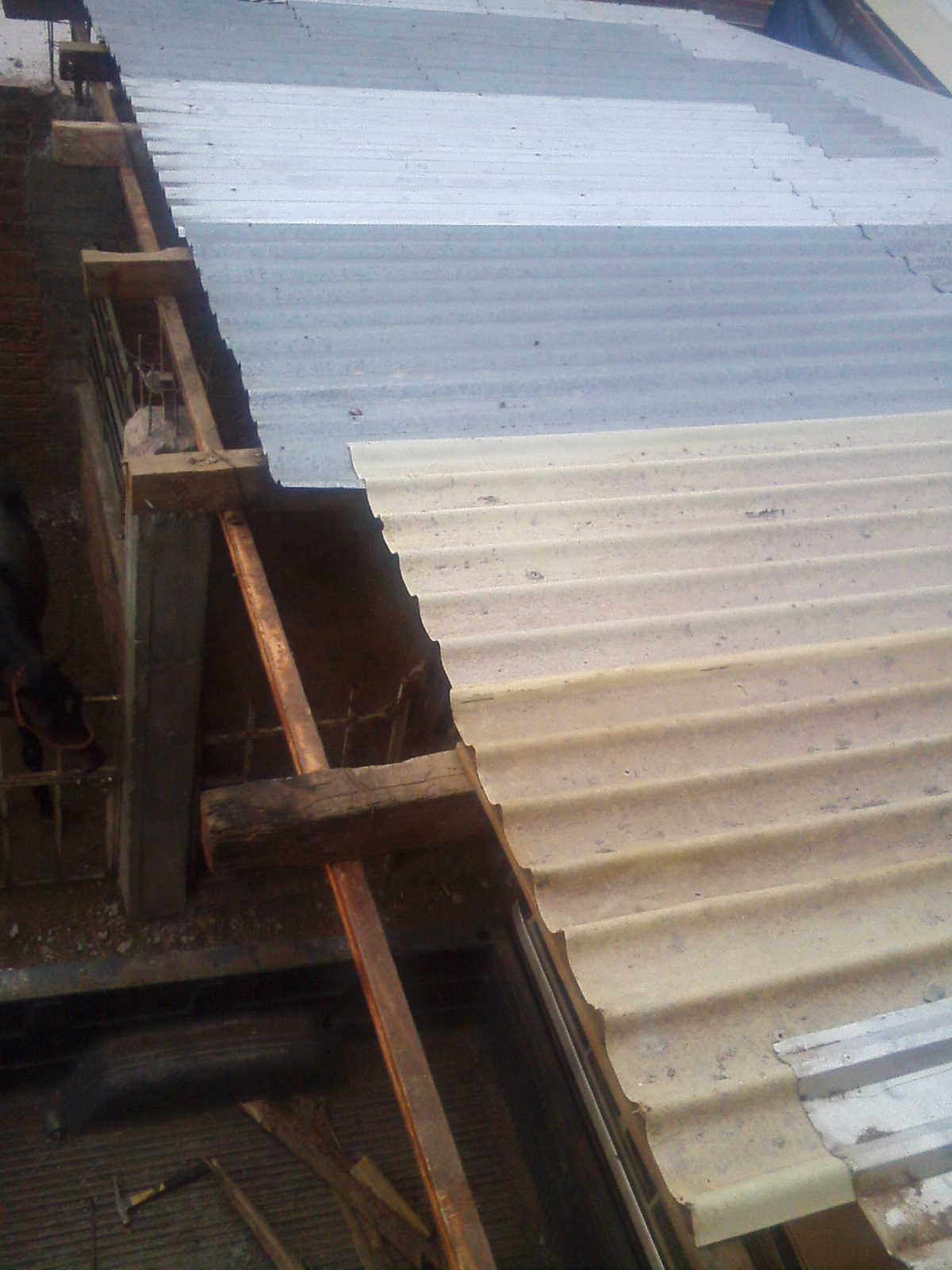
cam04358.jpg

The laminas (corrugated metal sheets) didn’t quite reach the end of the roof

Since the roof and the remaining laminas did not quite reach, my husband wanted to extend the laminas just a bit so that they would overlap, keeping the rain from coming in the gap. He and my son were up on the roof doing just that. Joey, in Shadow’s stall, must have thought the sky was falling. He went berserk and tried to leap out of the stall. The gate was too high for escape, so he ended up impaling himself on a rebar.

My husband and son rushed down to administer first aid. The wound was deep, and my husband was sure he’d have to put Joey down. He went for Azul (the vet named Blue) to see if anything could be done. Azul stitched up the wound, saying that neither the heart nor blood vessels were damaged, but it was a bad injury.

cam04371.jpg

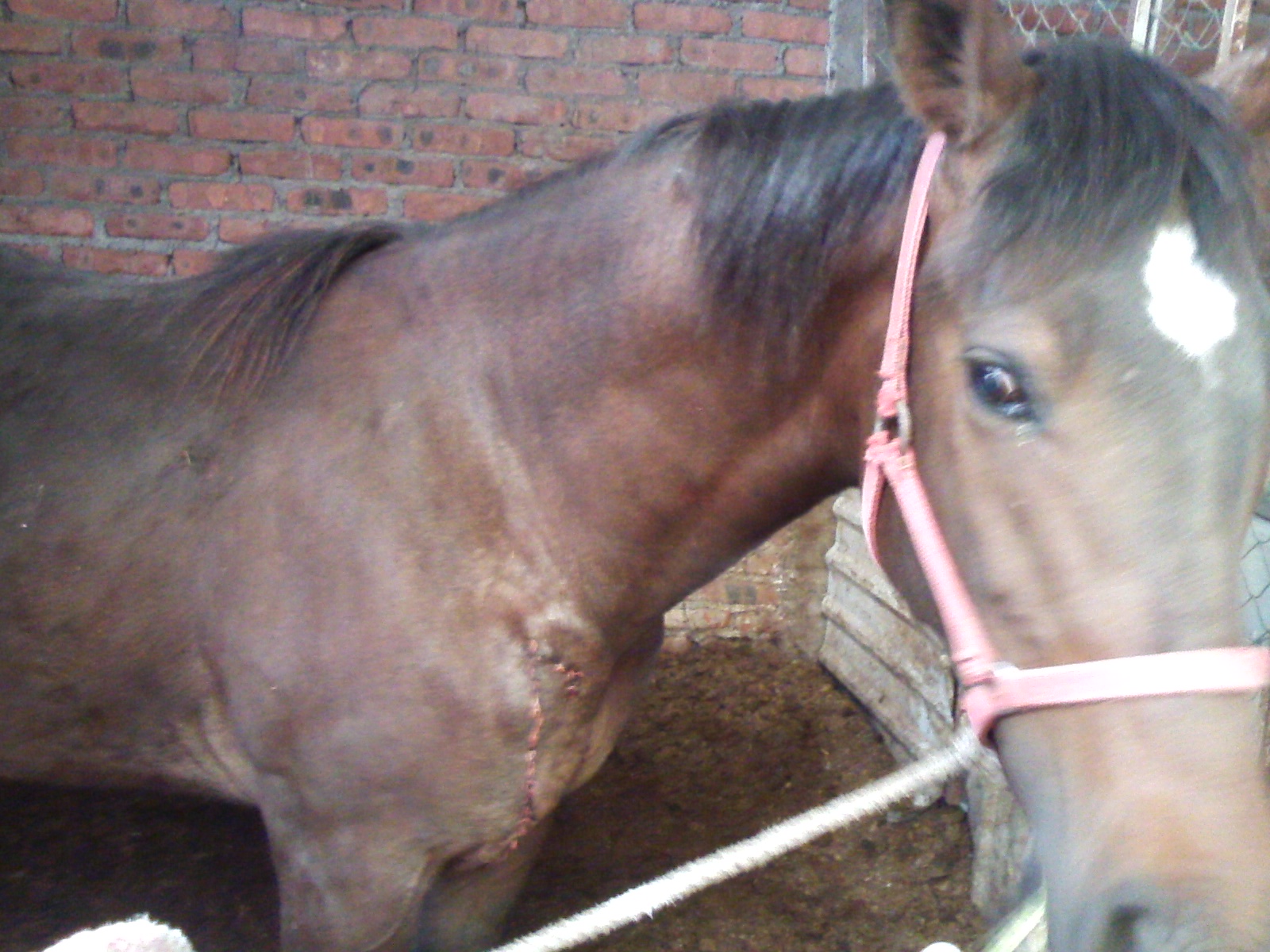
Joey’s wound

Before stitching over the cuero (skin), he mashed a banana up and inserted it into the whole. He said that the banana will help the skin scar faster. I couldn’t find much information on the use of banana in wounds, but he’s had more than 20 years experience working with horses, so I suppose he knows what he’s doing.

cam04396.jpg

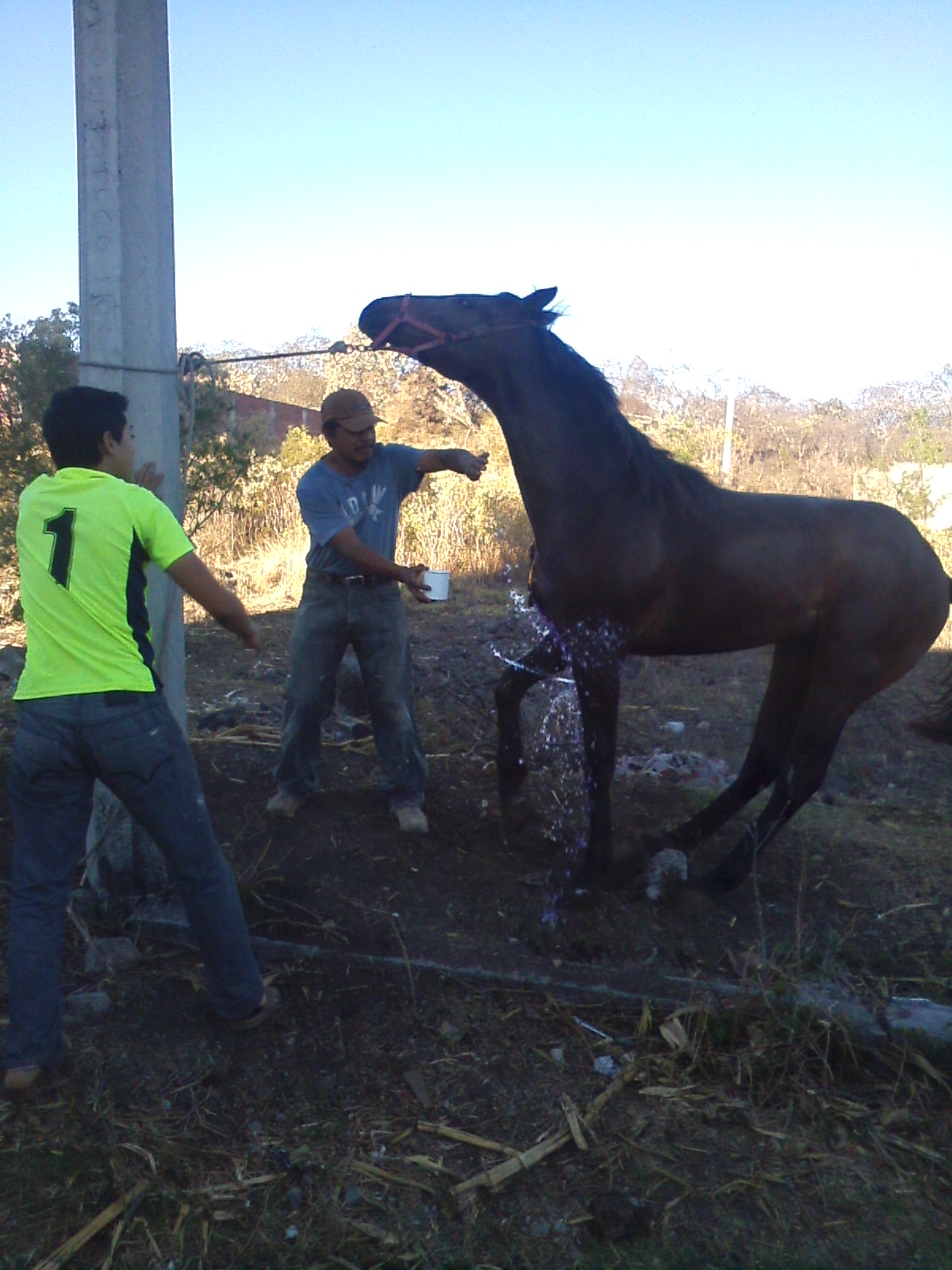
It’s only water, Joey!

Joey had to be tethered so that he couldn’t lay down and rip out the stitches. He wasn’t happy about that. He was given penicillin and tetanus shots. My husband tried to wash the wound with mata de toro, but Joey wasn’t having any of that. He wouldn’t let anyone bandage his wound or apply aloe as we did with Shadow. In fact, he managed to bite open his wound on several occasions even being tied.

He had to be untied to eat, but one of us had to be out with him while he ate to make sure he wasn’t biting his chest wound again. He took HOURS to eat–stopping every few minutes to glare at the watcher.

He couldn’t be tied outside as walking caused his wound to open again. He wouldn’t tolerate Shadow being outside either, so she was sentenced to prison as well, just so he would be calm.

We couldn’t go anywhere for weeks as Joey needed constant supervision. As soon as he thought no one was watching, he’d start in on the ropes. He managed to bite completely through one, tear his halter to pieces another time and pull hard enough to break a second rope. Each time he escaped, he bit his wound open again and bugged Shadow until we could herd him back in the stall. My husband had taken the offending door off the corral after it dared injure Joey. Really, it was exasperating.

At times, my husband despaired and said that if he didn’t heal up, he’d be sold to feed the lions at Los Areas Verdes. Then he said, if Joey did recover, he was selling both horses. Couldn’t he see that Joey was the problem here?

Joey did get better, despite it all and after about a month, he and Shadow were allowed out to graze again.

******************************************
The Herbarium Membership for Herbalists

disclosure

4 Comments

Filed under Animal Husbandry, Natural Healing

Let’s talk about food in La Yacata

Our whole purpose in living in off-grid rural Mexico is to become self-reliant. After 9 years of slow progress, we still aren’t there yet. But we are closer than we were.

ears-of-green-corn

Our microcosm provides us with regular food stuff. We grow corn, beans and squash ever year in the traditional way on sharecropped land. (See Las tres hermanas) Our non-GMO organic corn not only provides year-round foods for our animals but also allows for equally healthy tortillas–the very foundation of Mexican cuisine. My sister-in-law runs a tortilleria (See Failing at your own business–Tortilleria), so I am relieved of this very time-consuming task. Corn is also used in tamales, pozole and a plethora of other traditional dishes.

tamal

Corn and lime boiling in preparation for milling for tortillas.

We also grow garbanzo (chickpeas) after the corn growing season is finished.  It makes for a nice snack, either raw or steamed, with the added benefit that the entire plant is eagerly consumed by our grazing animals.  Fiona, the donkey, is especially fond of garbanzo.

garbanzo

Steamed garbanzos

Our organically fed animals also provide us with delicious foodstuff. From our small herd of goats, we have daily milk and occasional meat. The milk we don’t drink right away is pastured right on the stove for later. We use it for creamy hot chocolate or honey-dripped oatmeal. The honey is from a local organic hive and delicious!

pasturizing milk

As we don’t have refrigeration, we dry our leftover meat into jerky strips. The dried meat theoretically should last several weeks. However, it rarely does due to the presence of a pre-teen, always ravenous, boy.

drying goat meat

Our chickens, ducks, and turkeys provide us with daily eggs and occasional meat as well. Just as with the goats, this means butchering. My husband has had years of practice at this and, therefore, our animals do not suffer needlessly.

butchering

We also keep rabbits and have recently added sheep to our backyard barnyard. Both provide occasional meat. (See Waskely Wabbits and Old MacDonald’s Farm). I’m hoping that our sheep will give us wool and perhaps milk later on as well. But as we haven’t had much success with sheep herding (See Birth and Death) it remains to be seen if that will actually happen or not.

full of tunas

Tunas are not hard to find after the rainy season.

La Yacata provides food, free of charge, for us as well. Cactus fruit is abundant towards the end of the rainy season. It’s not unusual for us to spend an afternoon foraging for pitayas (See Picking Pitayas) or tunas (See Picking tunas) or harvesting nopales (cactus leaves)(See Harvesting Cactus) for dinner.

feverfew

Feverfew

Tea can be made from hojas (leaves) or roots of a variety of naturally available plants. (See Feverfew tea and Lentejilla). Wild mushrooms are also found aplenty during the rainy season.

acebuche

Acebuche berries

Mesquite trees provide a chewy sweet treat for a snack. Acebuche trees have tart red berries that can be eaten right off the tree or made into a refreshing drink. Even the grass is edible. Quelite can be boiled like spinach.  (See Women in the Revolution–Marcelina)

chirimoya

Cherimoya fruit

We have moras (blackberries), chirimoya, guayaba, limones (lemons) and durazno (peach) in season in our own garden. We anxiously awaiting fruit from our granada and nispero trees this year. Our orange tree up and died last year, so it looks like no oranges this year. I hope to do some container gardening as well. Backyard gardening hasn’t been very successful with our free range chickens and rabbits out and about.

******************************************
 

disclosure

10 Comments

Filed under Alternative Farming, Animal Husbandry, Health, Homesteading, Native fauna and flora, Natural Healing

Picking Capulines

The rainy season hadn’t begun yet, but my husband insisted that the capulines were ready. He said he saw some sellers by the Bodega, their buckets brim full and was impatient for some of his own.

So on Sunday, we went in search of the elusive capulín, (Prunus serotina subsp. capuli), otherwise known as the wild black cherry or capolcuahuitl in Nahuatl. According to my little guidebook Antiguo Recetario Medicinal Azteca, the capulín is useful for the treatment of dysentery, spasms, nervousness and pain caused by abscesses and tumors with the application of a leaf poultice.

Excess should be avoided and care should be taken in the ingestion of the capulín leaf because it seems that wilted leaves become toxic due to the release of cyanide in the wilting process. Ingesting 10-20 lbs of foliage can be fatal. The tablespoon every 2 hours of tea made from 4 fresh leaves per liter for nervousness should be safe enough.

wpid-cam00890.jpg

We had gone once before with my husband’s mother. The trip was longish, and our then 4-year-old son fell asleep, so I stayed in the car with him. Boy, was I glad that I did! Not 20 minutes after they left, there was such a hail storm that it dented the roof of the truck. Eventually, my husband and his mother, and the passel of local kids that had come along to show them the way, came back into sight, drenched to the skin. My mother-in-law had her bucket on her head and was hollering Bloody Murder. There were no capulines to enjoy on that trip.

wpid-cam00885.jpg

This time, we drove Myrtle up past la basurera (dump) through La Barranca and Santa Gertrudis to Los Amoles, at the very peak of the mountain. We had to leave Myrtle behind when the trail got too rough and hoofed it the rest of the way.  The path was well-traveled, no espinas (mesquite thorns) like there is in La Yacata, and as we were already so far up, it wasn’t as difficult an uphill trek as I thought it might be.

wpid-cam00897.jpgcool rock

The earth in the area was a deep rust color, and the wildflowers were spectacular. My son, who has recently developed a keen interest in rocks, was in seventh heaven with all the new samples he slid into Dad’s backpack.

conversationWe encountered an older man on his horse coming down the mountain, and my husband stopped to chat. It turns out that he knew this man from when he was a boy in Cerano. They talked about trading donkeys and horses, although I don’t think anything will come of it. My husband is pretty pleased with Fiona, our current burra (donkey) and Beauty is due to foal any day now. As my son and I had a shady place to wait, we didn’t mind the rest period.

a little bit sour

That one was a little bit tart!

wpid-cam00919.jpg

Just a few capulines!

We did finally come across some capulín trees. However, most of the berries were still green. We managed to get a handful to enjoy, though. They taste like mini-cherries and were well worth the hike.

sceneryview

The way back was just as pleasant a hike as the way up. At the risk of repeating myself, how amazing it is to live where the earth’s abundance is so readily found.

*********************************

disclosure

4 Comments

Filed under Alternative Farming, Native fauna and flora, Natural Healing