Category Archives: Native fauna and flora

Let’s talk about food in La Yacata

Our whole purpose in living in off-grid rural Mexico is to become self-reliant. After 9 years of slow progress, we still aren’t there yet. But we are closer than we were.
ears-of-green-corn

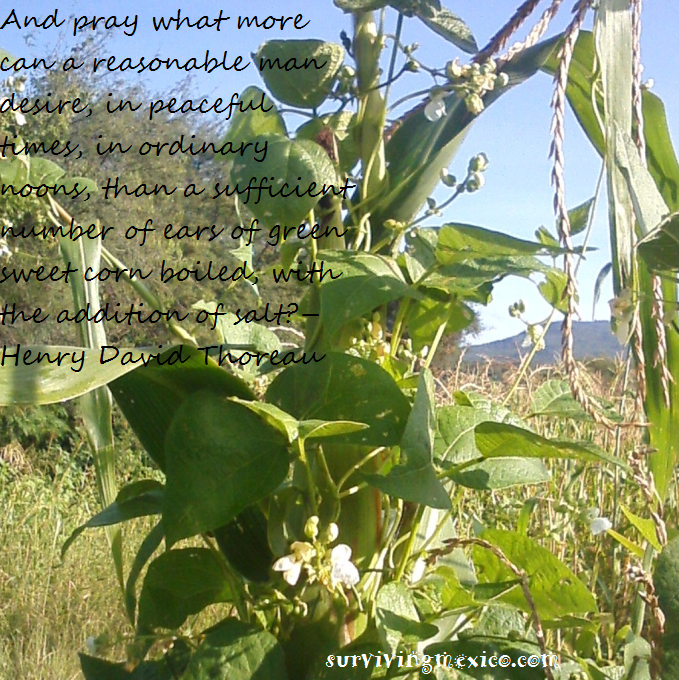
Our microcosm provides us with regular food stuff. We grow corn, beans and squash ever year in the traditional way on sharecropped land. (See Las tres hermanas) Our non-GMO organic corn not only provides year-round foods for our animals but also allows for equally healthy tortillas–the very foundation of Mexican cuisine. My sister-in-law runs a tortilleria (See Failing at your own business–Tortilleria), so I am relieved of this very time-consuming task. Corn is also used in tamales, pozole and a plethora of other traditional dishes.
tamal

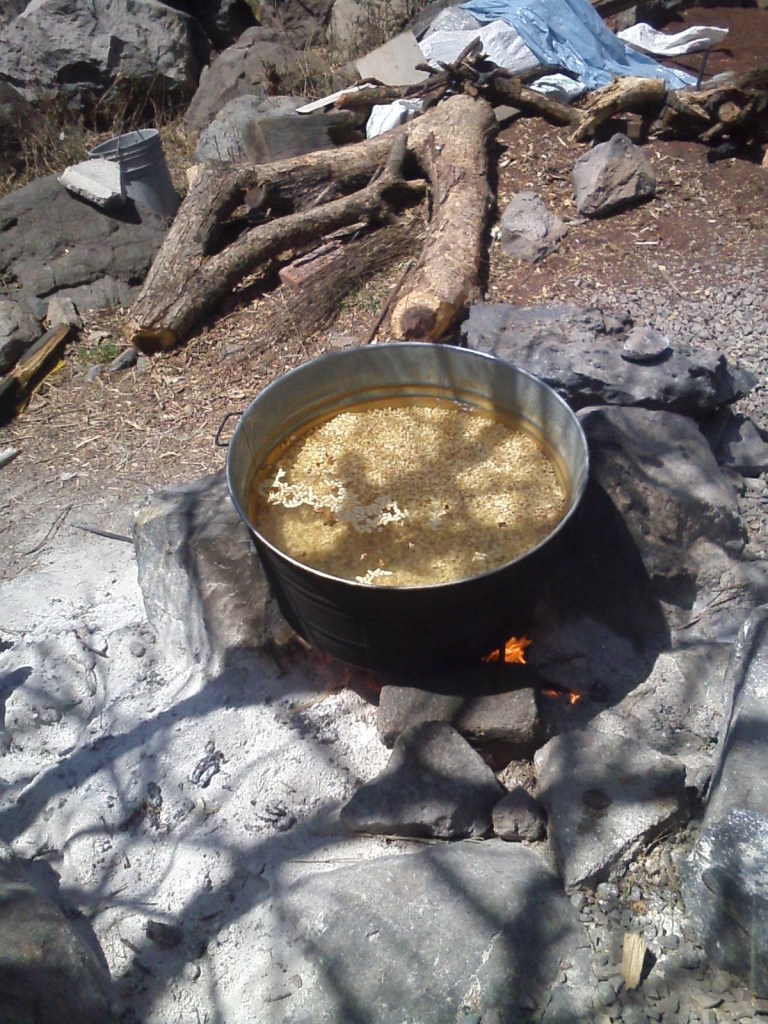
Corn and lime boiling in preparation for milling for tortillas.

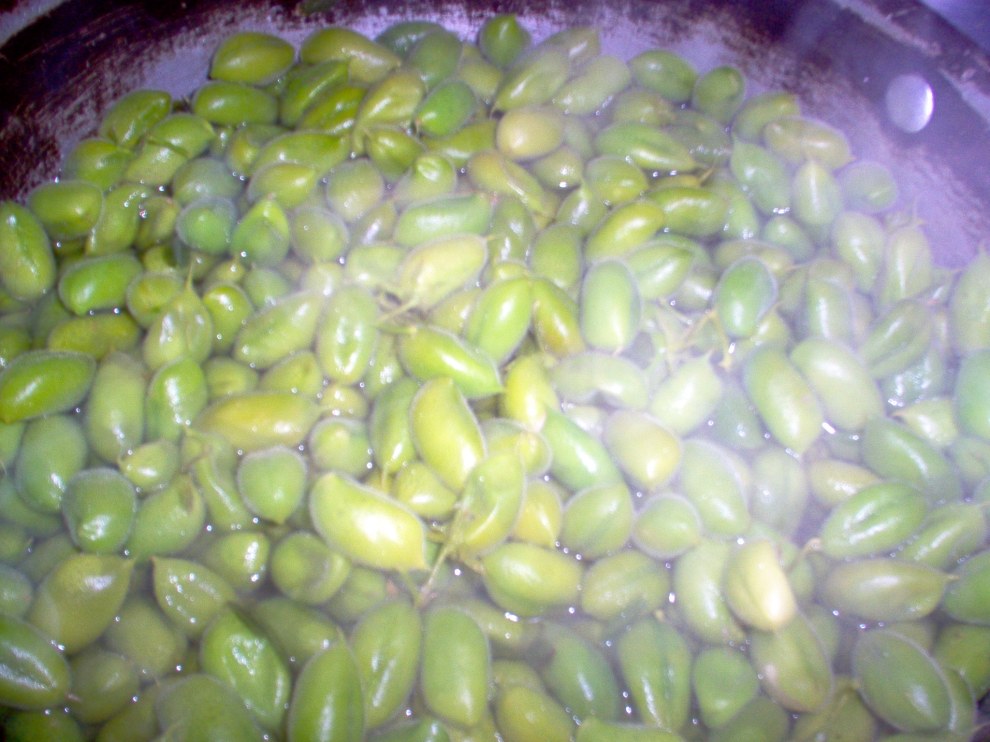
We also grow garbanzo (chickpeas) after the corn growing season is finished.  It makes for a nice snack, either raw or steamed, with the added benefit that the entire plant is eagerly consumed by our grazing animals.  Fiona, the donkey, is especially fond of garbanzo.
garbanzo

Steamed garbanzos

Our organically fed animals also provide us with delicious foodstuff. From our small herd of goats, we have daily milk and occasional meat. The milk we don’t drink right away is pastured right on the stove for later. We use it for creamy hot chocolate or honey-dripped oatmeal. The honey is from a local organic hive and delicious!

pasturizing milk

As we don’t have refrigeration, we dry our leftover meat into jerky strips. The dried meat theoretically should last several weeks. However, it rarely does due to the presence of a pre-teen, always ravenous, boy.

drying goat meat

Our chickens, ducks, and turkeys provide us with daily eggs and occasional meat as well. Just as with the goats, this means butchering. My husband has had years of practice at this and, therefore, our animals do not suffer needlessly.

butchering

We also keep rabbits and have recently added sheep to our backyard barnyard. Both provide occasional meat. (See Waskely Wabbits and Old MacDonald’s Farm). I’m hoping that our sheep will give us wool and perhaps milk later on as well. But as we haven’t had much success with sheep herding (See Birth and Death) it remains to be seen if that will actually happen or not.
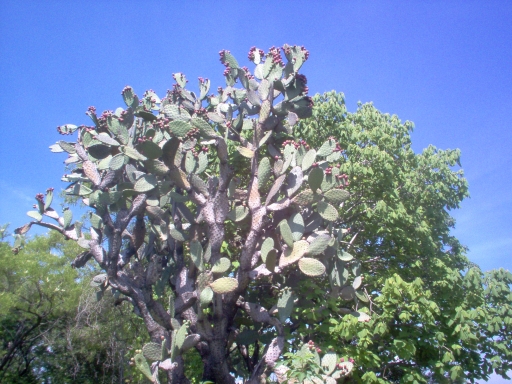
full of tunas

Tunas are not hard to find after the rainy season.

La Yacata provides food, free of charge, for us as well. Cactus fruit is abundant towards the end of the rainy season. It’s not unusual for us to spend an afternoon foraging for pitayas (See Picking Pitayas) or tunas (See Picking tunas) or harvesting nopales (cactus leaves)(See Harvesting Cactus) for dinner.
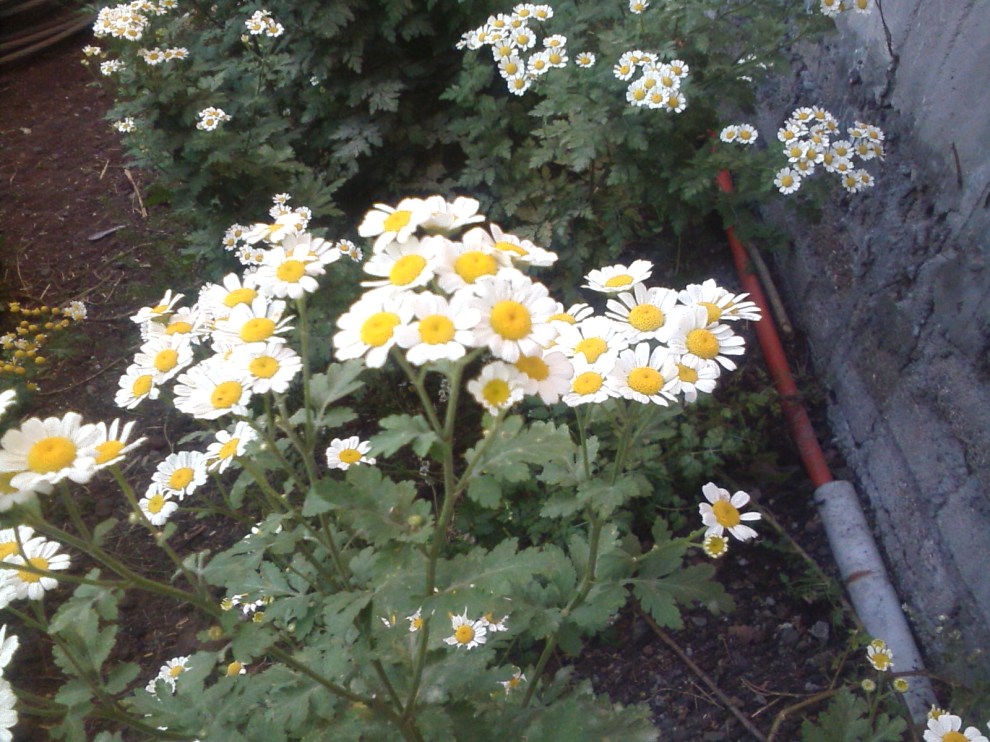
feverfew

Feverfew

Tea can be made from hojas (leaves) or roots of a variety of naturally available plants. (See Feverfew tea and Lentejilla). Wild mushrooms are also found aplenty during the rainy season.
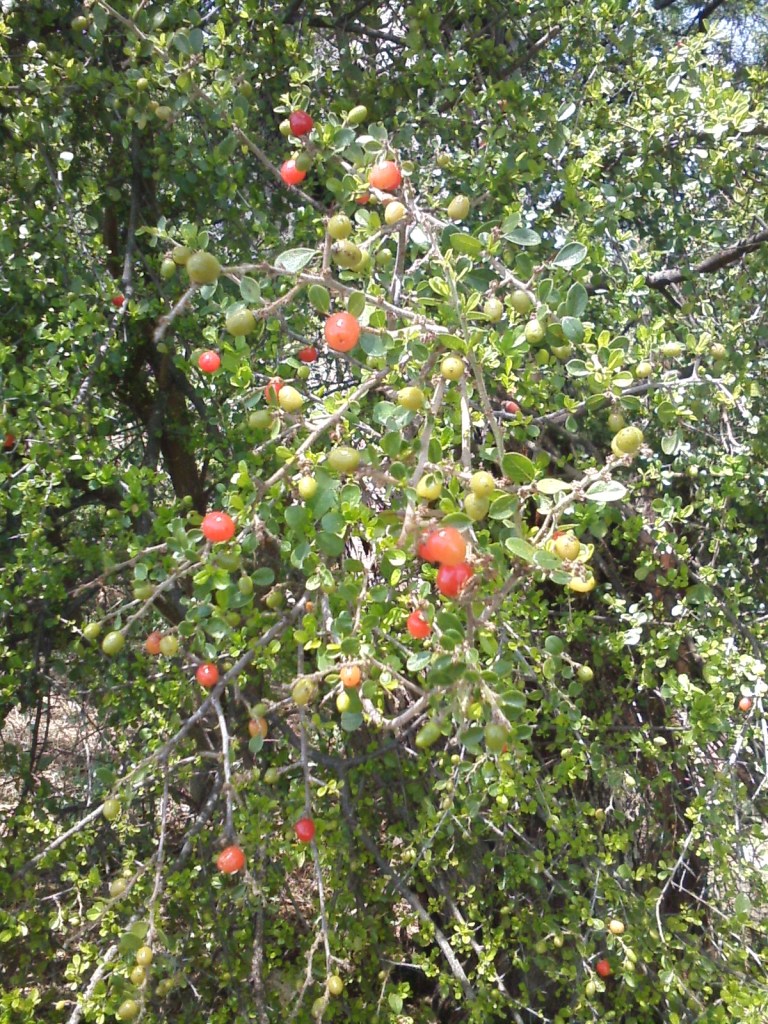
acebuche

Acebuche berries

Mesquite trees provide a chewy sweet treat for a snack. Acebuche trees have tart red berries that can be eaten right off the tree or made into a refreshing drink. Even the grass is edible. Quelite can be boiled like spinach.  (See Women in the Revolution–Marcelina)
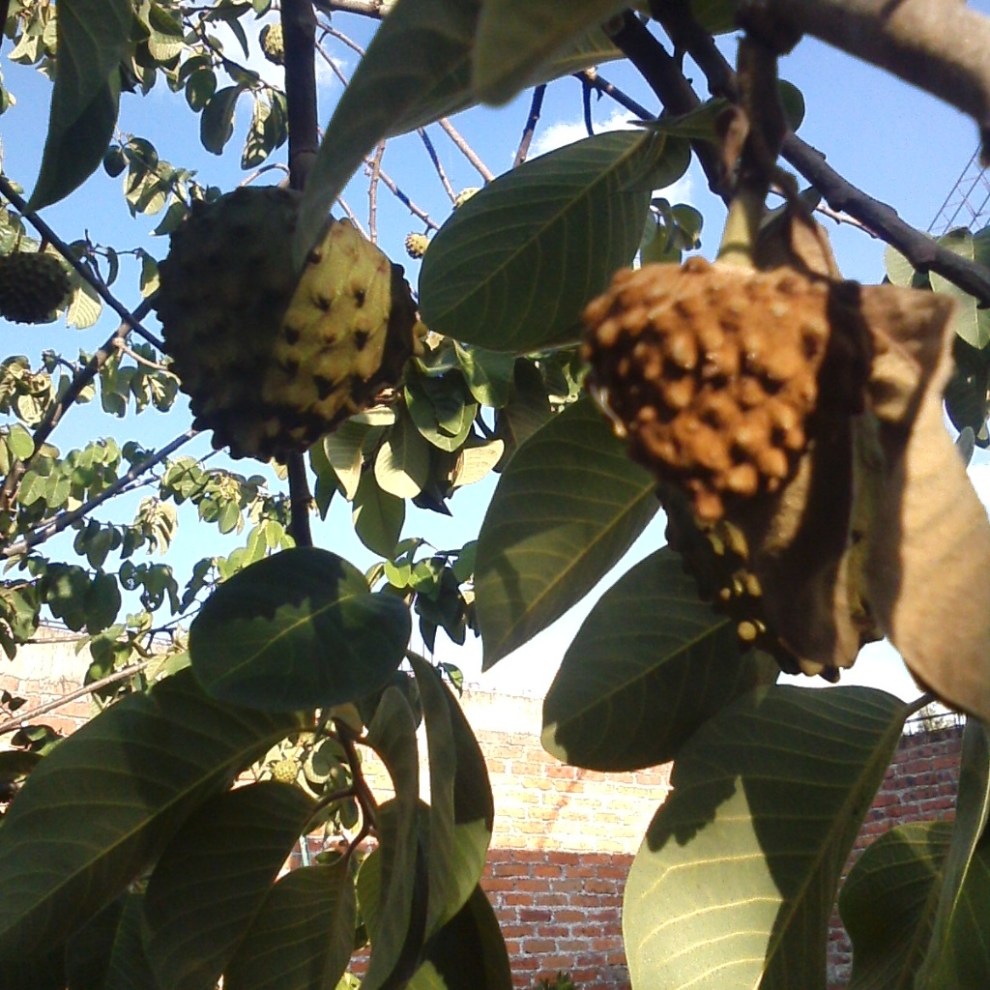
chirimoya

Cherimoya fruit

We have moras (blackberries), chirimoya, guayaba, limones (lemons) and durazno (peach) in season in our own garden. We anxiously awaiting fruit from our granada and nispero trees this year. Our orange tree up and died last year, so it looks like no oranges this year. I hope to do some container gardening as well. Backyard gardening hasn’t been very successful with our free range chickens and rabbits out and about.

******************************************


disclosure

10 Comments

Filed under Alternative Farming, Animal Husbandry, Health, Homesteading, Native fauna and flora, Natural Healing

Christmas in México—Poinsettias

poinsetta

Poinsettia gone wild!

Everyone knows that the poinsettia was adopted in the United States as a Christmas decoration when Joel Roberts Poinsett, the first United States Ambassador to Mexico, introduced the plant into the United States in 1825.  So since this weed was so highly esteemed by the neighbors to the north, the Mexican too adopted this plant as a holy Christian symbol. 

However, it was valued prior to Christianity reached the shores of México.  The Poinsettia, or Cuitlaxochitl as it was known in Nahuatl, was used by the pre-Hispanic indigenous people to make clothing dyes.  It was also thought to host the souls of fallen warriors.

Then, during the 17th Century, a group of Franciscan priests settled near Taxco and began to use the poinsettia as decoration in the Fiesta of Santa Pesebre and most likely, in their Christmas celebrations.

A relatively modern story evolved to provide rational for its Christmas use.  There are several versions of this story about, and here is one more.

Once upon a time, a young boy was going to see the image of the Christ child at the altar in the local iglesia (church) on Christmas Eve.  He felt bad that he wasn’t able to bring any gifts to lay at its feet.  As he was walking, he saw a green leafy plant by the side of the road.   Having nothing else to bring, he picked the plant and went inside the church.  When he lay the plant by the image of the baby Jésus, it miraculously changed color.  It’s leaves turned bright red.   He knew his gift from the heart had been well received in heaven. From this day forth, this plant has been called La Flor de la Nochebuena.

Other versions follow the same story line, but the gift is given by a little girl. (The Legend of the Poinsettia)

Some versions of this story have the boy actually giving the plant to the baby Jésus like the Little Drummer Boy rather than visiting a local altar, but that just seems too hokey.  This plant is not native to Bethlehem and how a little Mexican indigenous boy found his way to Israel is beyond explanation, so the stories don’t even try.

However it came about, the NocheBuena is now a firmly entrenched emblem of Christmas in México.
SOTBS Blog Hop Op1Sq

    Have a Christmas in Mexico themed blog post?

Link it up here!   An InLinkz Link-up 

***********************

disclosure

Leave a comment

Filed under Mexican Cultural Stories, Mexican Holidays, Native fauna and flora

Alternative Farming–Gleaning

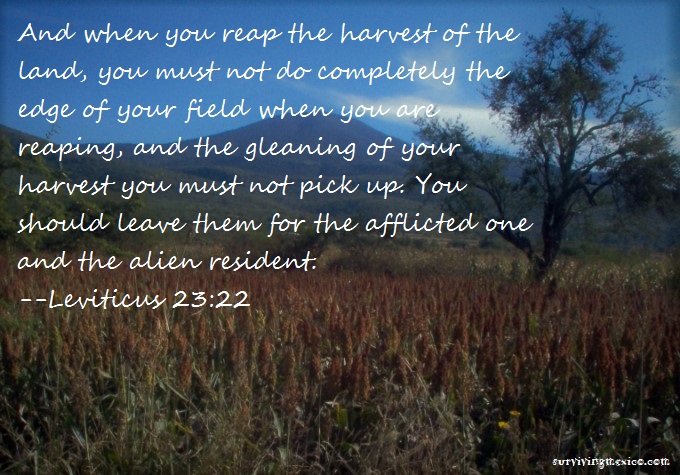
maiz-sorgo-leviticus

November is harvest month in central México. The corn has been stacked to dry, and the squash piled high. The winter crop, garbanzo(chickpeas), has been planted and if the rains hold off, by now, it should be about 3 inches high.

But the harvesting isn’t done. Maiz sorgo is also ready to bring in. This grain plant is a favorite of chickens and pigs. (See Miss Piggy didn’t bring home the bacon). It isn’t a crop we plant since humans don’t typically eat it, so we have to obtain it through other means.

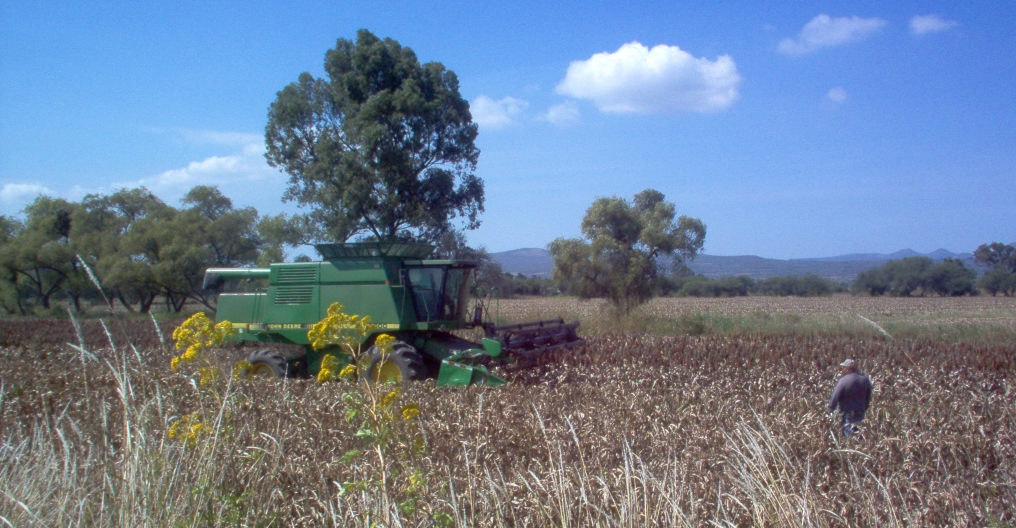
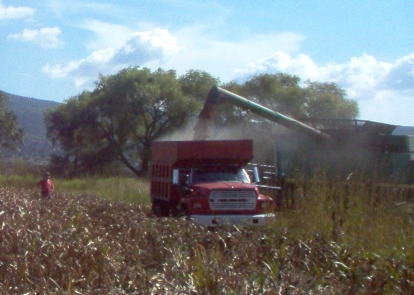
thresher sideTherefore last Sunday, we headed towards Cerano to see what we could see. And lo and behold, there was the maquina (thresher) mowing through the fields of maiz sorgo. My husband excitedly pulled off the road and leaped out with his costales (grain sacks) and machete.

thresher dumpingHe asked the people in the fields if he could apepinar (glean). It is a courtesy to ask, but nearly never is it denied. Gleaning, if you aren’t already familiar with the term, consists of collecting the fallen crops that la maquina (thresher) didn’t get. It isn’t difficult, but it is tiring going up and down the rows looking for leftovers. The trick is knowing where the thresher is going next to be one of the first to stake your claim.

gleaning

We followed la maquina (thresher) for a few hours and came home with 4-5 costales (sacks) of maiz sorgo. Not too shabby, but certainly not enough to last all winter.

threshing

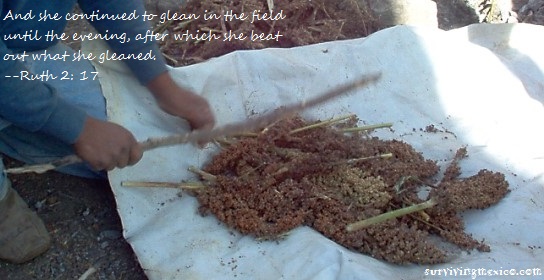
The next step is to thresh the grain heads so that the little seeds can be stored better. This involves some heavy stick beating. After that, we give the chaff to the goats and scoop the seeds into a barrel. If there is enough, we take the seeds to the molinero (miller) and have it ground to dust. If there isn’t, we feed it as is to the chickens as part of their homemade “scratch” (grain mixture).

Being a gatherer isn’t such an onerous life as you might think and an important part of our harvest.

********************


disclosure

1 Comment

Filed under Alternative Farming, Native fauna and flora