Category Archives: Native fauna and flora

Tortillas

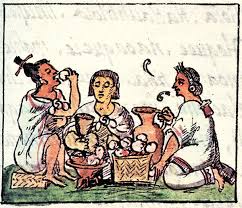
The creation story of the Maya recorded in the Popol Vuh explains how the gods created man in a sort of trial and error kind of creation. The first attempt consisted of mud men which resulted in mindless creatures with no strength that were easily dissolved in water. So then the gods tried wood men. This type of being was stronger but lacked that infinitesimal spark the gods were looking for. After much discussion, the gods crafted humans from a mixture of yellow and white corn. Finally, this was a being with strength, intelligence and agility. Thus the race of humans was born.

627px-Tortilleras_aztecas

Being people of the corn, maize has a sacred place in Mexican culture. Maize was domesticated about 10,000 years ago in the Balsas River Valley in south-central Mexico. Mexico is home to more than 2,000 identified varieties of native corn and has the oldest varieties found in any place in the world.

Is it any surprise that the corn tortilla remains an essential part of the Mexican diet?

florentine_codex_metate_3

The name tortilla comes from the word tlaxcalli in Náhuatl which comes from the longer word tlaxcalli tlán. The place nameTlaxcala means “the place of the tortilla” maybe giving some insight on where the tortilla was first developed. In Maya, tortillas are called waaj. In Totonaco, chaw. In Mixteco, ndíta. In Zapoteco, eta or gueta. In Otomi, hme. In Rarámuri, remeke.

Although there are now tortillerias (places that manufacture tortillas) where tortillas are machine pressed, it’s still possible to find delicious hand-pressed tortillas in a variety of colors wherever you are in Mexico. (See Tortilleria)

Making tortillas by hand is a very time-consuming process.

IM000773.JPG

Removing kernels

First, the dried corn is removed from the cob. It is possible to buy bags of corn and skip this step, though.

The corn is then sifted to remove stones and dirt, then poured high so that the wind takes any chaff left over.

Next corn is then boiled until soft with lime and the husks removed.

This is called nixtamalization. This process increases nutritional value, flavor and aroma of the while reducing mycotoxins when compared to unprocessed grain.

metate.jpg

The softened and peeled corn is then milled. Many tortillerias offer this service as hand grinding with a metate takes much longer .

The resulting doughy mix is called masa. Masa can be used for a variety of other delightful culinary treats which I’ll talk about in another post. (See Tamales)

tortillas

For tortillas, the dough is formed into small balls and then pressed flat. The now flattened result is transferred to the comal (heated flat pan) and toasted on one side, then flipped to be toasted briefly on the other. The finished product is removed and stacked.

There is a cara (face) to the tortilla which should be eaten that side up. I have yet to mastered being able to determine which side is the cara, but my son and husband have no problem, often flipping the tortilla before eating so that it is right side up. In the event that your taco is put together wrong, you might hear “le ponen los cuernos” (literally to put on the horns). This refers to the belief that in the event of an upside down taco, the preparer will be betrayed by his or her romantic partner. Hmm, maybe I’d better try a little harder to get that taco right side up.

cam04058.jpg

Tortillas come in a variety of colors mostly based on the type of corn used for the masa. When we went to the Monarch Butterfly Reserve, our delicious quesadillas were made from blue corn. I’ve also seen where tortillas can be made from cactus but haven’t had the pleasure of a taste of those yet.

The Write Tribe Festival of Words #5

disclosure

6 Comments

Filed under Carnival posts, Homesteading, Mexican Cultural Stories, Mexican Food and Drink, Native fauna and flora

Invasion of the Flying Edible Ants (Chicatanas)

This morning my classroom was invaded by huge flying bugs. I spent some time before class using the broom to swat out these loud buggers which appeared to be dying. I wasn’t completely successful as there were still one or two flying about when the first graders arrived. However, to my surprise, not only did the kids not freak out like they do when there is a wasp, bee or mosquito in the room, but they could identify them as an ant and reassured me that “no pasa nada”.

I mentioned the flying ants to another teacher and she said they always come before the rainy season begins. Some insist that they arrive June 23, the eve of the birthday of John the Baptist (provided Jesus was born on December 25). Others claim that they come with the summer solstice.  And still others say that they come June 13 in honor of the Patron Saint of Huatusco, San Antonio de Padua.

Typically, the chicatanas appear for one to three nights between June 12 and June 20, although sometimes the rainy season comes a bit earlier. Whatever the exact day, the conditions must be just right. Generally, the chicatanas appear after a hot day followed by a very wet, humid night. This year, those conditions were met on June 15/16, at least in Moroleon.

This was my first experience with the chicatanas, even though I’ve lived more than 10 years in Mexico. The chicatana, also called cuatalatas, chancharras, cochonas, arrieras, zompopo, mochomas, sontetas, nokú, tzim-tzim, tepeoani or tzicatl, is a species of the Atta genus (leaf-cutter ants). The Florentine codex referred to these insects as tzicatana (homiga arriera) and mentioned that they were used as food.

Used as food? Yep. Mexico has more than 250 edible insects, including this one. The chicatanas are prepared in a variety of ways, depending on the region, after their wings, heads and legs are removed. Sometimes fried and served in tacos, sometimes ground into salsa with garlic, salt, and chili, they are considered quite the delicacy.

Really, it’s just the queens that are eaten, as they are the huge buggers flying about looking to establish new colonies during this period. The food or salsa prepared from the queens is traditionally thought of as an aphrodisiac and may have something to do with the tradition in Huatusco when girls looking to be married visit the shrine of San Antonio de Padua with 13 coins to ask for his intervention on the matter. But then again, they could be unrelated.

I wasn’t able to find anyone who knew how to prepare the chicatanas, so missed out on trying yet another exotic Mexican food for this year. I’ll have to keep it in mind next year, where the queens swarm again.

************************************

1 Comment

Filed under Mexican Food and Drink, Native fauna and flora

Playing Tourist–Monarch Butterfly Sanctuary

cam04080-1.jpg

One Sunday morning during the long Christmas vacation, we up and decided that today was the day we would go see the mariposas (butterflies). We had high hopes of seeing active butterflies since the numbers were reportedly up this year (2015) as compared to previous years.

Why the low numbers?

Well….Illegal logging of the oyamel tree has caused over-wintering habitat loss. Pesticide use and the excessive planting of corn and soybean GMOs (genetically modified organisms) in the United States have threatened the milkweed plant, a prime source of food for the migrating monarchs. Even global climate changes have impacted the life-cycle of the monarch. In 2002, a severe winter storm killed millions of monarchs. The total area occupied by monarchs in their overwintering habitats in Mexico dropped to an all-time low in 2012-2013.

I had heard that the hike was not an easy one, so in addition to the “better go and see the butterflies before there aren’t any to be seen” reason, I figured it would be better to make the hike while I was still youngest and ablish–and not wait until I had trouble getting around. As you will see, that ended up being a pretty good idea.

Adult monarch butterflies (Danaus plexippus) found east of the Rocky Mountains migrate to the central, volcanic region of Mexico, specifically in the area bordering the states of Michoacan and Mexico. And that’s where we aimed to go to see them.

There are only two sanctuaries open to the public in Michoacan, El Rosario, and Sierra Chincua. We set out with El Rosario as our destination. Outside of Morelia, we got on the toll road, (133 pesos) but inadvertently headed in the wrong direction. After an anxious 10 minutes, we were able to get turned around.

The directions and maps I had printed out seemed pretty straight forward. However, Mexico road sign makers had other ideas. We were to take the Michoacan highway #765 outside of Maravatio. There was a big road once we exited the town, however not one of the road signs had a number on it for verification purposes. We ended up asking and asking which way to the butterflies? Of course, everybody had a different answer to that, but we were able to head in the right general direction.

blank road sign

Every single sign we passed looked like this–NO road numbers!

At the end of the road Michoacan highway #34, we came across an official-looking dude and a big sign that said THIS WAY TO THE BUTTERFLIES. We stopped to talk to the chaleco (vest) wearing man, and he gave us directions to El Rosario and a map. I’m sure the Michoacan state tourism board gives these maps out for free but well, he had one, and we didn’t so we donated 10 pesos para el refresco (for a soda).

We continued along, asking questions in the little towns we entered. Again, everybody had a different answer. One said to turn right at the high school. A right turn there took us to the parking lot. Then another said turn right at the Telecable–again, there was no right turn available. Up ahead, we saw a big old tour bus, like from the 70s. A tour bus must be heading towards the butterfly sanctuary, so we hitched our wagon to the bus and headed up the mountain.

It was an incredibly steep drive, but spectacular! Good old Myrtle (our Volkswagon bug) did her best, and soon we were driving through Angangueo, another one of Michoacan’s Pueblo Magicos. The tour bus did take us to the butterfly sanctuary, but not to El Rosario. We ended up in Sierra Chincua. Well, butterflies were butterflies and since we were here, might as well go to this reserve.

We pulled in and paid for parking (30 pesos), then drove another 2 km or so to the lot. We headed to the ticket booth and bought tickets (45 pesos each). In line, I overheard some Mexicans trying to negotiate the price with the ticket seller. Was there a student discount? Was there a discount for the tercer edad (senior citizen)? Nope.

cam04077-1.jpg

The price of the ticket included a guide. As we were a piddly group of 3, we were assigned Fernando, who looked to be about 10 years old. Well, that was all right. It took us longer than we had figured and we were ready for lunch, though. Fernando took us to the next to last Cocina Economica (Economy kitchen) where his sister worked. We invited Fernando to eat with us as well. We had blue corn tortillas quesadillas con champiñones (mushrooms) and atole de zarzamora (a blackberry flavored corn-based hot beverage). It was delicious!

cam04058.jpg

We also were right under the Tirolesa c (zip cable) and enjoyed the screams of several high-flying riders as we ate.

cam04056-1.jpg

Then we were off. This particular reserve offers a horse ferry for part of the hike. We opted to not ride the sturdy fellows and walk. Twice, before we arrived at the base of the hill, I was offered a ride up at a discounted price. Apparently, I looked like I might need it. But I declined. Well, it was a hike and a half. I’m sure about half way up, my face was tomato red. One of the horse leader guys, at least 20 years my senior, called out “Anima Jefa” (You can do it lady) as he passed at a high-speed sprint up the hill. Well, if there’s one thing I am, that’s determined (or pig-headed), and I made it up the hill. But for future reference, it isn’t a hike for senior citizens or for children under the age of 6.

cam04072-1.jpg

At the top, there was a scenic view, which was quite scenic, before the actual trail. Horses are not allowed on this section of the trail, so it’s on foot or not at all. The trail was about 8 inches wide and was both the coming and going trail, which meant frequent stops to allow other hikers to pass. It was not nearly as steep as the first section, but it was muddy, especially the closer we got to the actual nesting site. Both my son and I slid part way down the mountain while gawking at the trees. Wear hiking boots.

cam04076-1.jpg

Here’s another future reference tip. The butterflies are most active between 9 and 10 am. After that, the temperature drops (it is definitely winter jacket weather) and the butterflies settle down for the day in a sort of suspended animation. It’s still amazing!  However, the butterfly’s underwing is white, not orange and black, so it’s not what you might be expecting. Several of the hikers were quite disappointed. Not me, by golly! The reserves in Michoacan are one of the 13 Natural Wonders of Mexico, and I got to see it.

cam04065-1.jpg

We headed back–the hike in took about 30 minutes, then another 30 minutes to get back to the scenic overlook. The steep hill trail was much easier going down than up. We gave our tour guide Fernando 20 pesos as a tip and went to the souvenir shops. There were lovely hand knit sweaters, hats, mittens and ponchos for sale. Quite handy if you happened to not have dressed appropriately. There were also some commercially produced monarch memorabilia. Unfortunately, every store had the same merchandise for sale, so that was disappointing. The bathrooms had stone floors, and although you had to bring in your own bucket of water to flush with, they were nice and clean. Toilet paper is 3 pesos like most other public restrooms.

cam04053-1.jpg

And that was that. Our adventures for the day were not over yet, however.

*****************************


disclosure

5 Comments

Filed under Native fauna and flora, Tourist Sites in Mexico