Category Archives: Native fauna and flora

Fighting for Flowers

flowering tree

Yesterday afternoon, I turned into the neighborhood where I live and came upon three men with machetes cutting down the flowering trees at the entrance. Without thought, I stopped and demanded to know what they were doing

The leader of the two said he was beautifying the neighborhood since the branches were low hanging and ugly. I asked if he had permission. I meant permission from the owner of the lot who borders the trees, although I suppose the trees were technically in the public thoroughfare. He thought I meant permission from the Departmento de Ecología (Department of ecology) since cutting green trees is a fine-able offense. He said he didn’t need permission to tidy up the place.

So I asked who he was. He said he was the owner of the trees–of course. I told him I didn’t believe him. As I am part of the community board of directors, I know nearly all of the people who own lots in the community. These three men were strangers to me. Not that my neighbors in La Yacata are any better.  (See Good Fences make good neighbors, unless your neighbor steals it) He told me that I should contact the town council and tell them to come and trim the trees in the neighborhood.

My Spanish failed me at this point. I wanted to say eloquently that the town council would not come and trim trees until after they installed water, sewer and electricity in our community. I wanted to say that cutting such beautiful trees is a crime against nature. I wanted to say that he was a lying piece of poop that really had some gall thinking I would believe his altruistic motives for cutting the trees when we both knew he would take and sell the leña (firewood) in town.

tree cutter

What I said was that I would take pictures and show them to the owner when he asks me who cut down his trees. So I did, not that it did much good. One man turned his back to me, the other partially covered his face. I thought maybe I could get some identification from the moto (motorcycle) that was parked there, but it didn’t have any license plates.

I remained on edge the rest of the afternoon and into the next day. I tried to go and see the president of the neighborhood, but he wasn’t in his office. So I sent an email with the pictures and an account of my interaction with the men. He wrote back and said that he would investigate the matter.

My husband scolded me afterward. I shouldn’t be going around taking pictures of men with machetes. What was I thinking?

I have to admit to being impetuous at times. These men were destroying that which I enjoyed every day. The flowers on these trees and the scent they emit are my welcome home. How DARE they destroy that?

You see, that morning the mother of three of my students was shot and killed while heading to the gym. Last week, the father of a former student was kidnaped and is being held for ransom. Last month, someone in front of Waldo’s (a local discount store) was shot “accidentally” by police officers. The month before that two transito (traffic) officers were shot and killed by “unknown” assailants. Not so very long ago, my nephew was taken and tortured by rival drug members. Before that, my mother-in-law was run down by a police vehicle and killed. And before that, my husband was kidnapped right in our own neighborhood.

Those are the local issues. Looking beyond the borders of my own town– Last month, 42 people and one police officer were executed by the police just a few hours away in Michoacan. Last September, 43 students disappeared in Guerrero.  Mexico averages nearly 100 murders a day. In the past three years, more than 10,000 people have disappeared. Last week, a reporter and 4 female activists were tortured and murdered. Femicide is commonplace.

tree stump

And I can do NOTHING about any of these things. This place that I now call home is lawless, corrupt, and dying. The beauty that has existed for thousands of years is threatened by the unethical actions of man.

However, I could threaten the bejeezus out of these three men. Maybe word will get out that a crazy “gringa” (white lady) lives in La Yacata that goes around hugging trees and dancing in the rain–someone these would-be wrongdoers should steer clear of. It’s a small, unrealistic hope. The truth is there is no enforceable consequence for their actions. They know it. I know it. The government knows it. The world knows it. But I have to try.

*********************

disclosure

2 Comments

Filed under La Yacata Revolution, Native fauna and flora, Safety and Security

Harvesting cactus

I love cactus! It has a fresh, green taste that is all its own. And it can be found right in our little community, no trip to the fruteria (greengrocers) necessary. We’ve even planted some cactus in our backyard, however, it will be YEARS before they are big enough to harvest from.

nopal

The nopal (cactus) is one of the fundamental symbols of Mexico.  It is considered la planta de vida (life-giving plant) as it seems to never die.  Fallen pencas (leaves) form new plants, therefore an apt symbol of the life-rebirth cycle found in the most ancient of Mexican myths.full of tunas

According to legend, the first nopal (cactus) grew from Copil‘s heart, son of Malinalxochitl, the moon, and Chimalcuauhtli.  Copil had attempted to murder his uncle Huitzilopochtli, the sun, because he had abandoned his mother.  According to legend, Huitzilopochtli defeated his nephew and removed Copil’s heart, which was later buried. The next day, the first nopal appeared, complete with the thorns of a warrior and flowers that blossomed with the love Copil had shown in defending his mother. This nopal (cactus) was discovered by the wandering Aztecs.  Atop the nopal was an eagle, devouring a serpent, over a lake, the sign the nomads had been waiting for.

flag

To have la cara de nopal (the face of a cactus) is to say that one’s indigenous ancestry is evident.  My husband has a decided cara de nopal and that isn’t a bad thing.

cara de nopal

Yes, I’m pocho (a Mexican who has turned his back on his ancestry usually living in the US) but I haven’t been able to get rid of this cara de nopal (Mexican face).

There is a technique however to harvesting. The pencas (leaves) should be a light green. Older pencas can be eaten, but they tend to have a bitter taste. The penca should be cut at the base, and handled gingerly. It is a cactus after all and there are espinas (thorns).

nopales to harvest

Once a good number have been collected, it’s time to despina (remove the thorns). It isn’t a terribly difficult process and practice makes perfect. The base of the thorn is cut, away from the cutter, and discarded. The outside edge is also skinned off. My husband always does this outside–less clean up involved. And that’s pretty much it. The cactus is ready for cooking.

dethorning cactusdethorning side

Cactus can be cooked as an entire leaf on the comal (griddle) or cut into pieces. It can be boiled or basted in tripa (intestine) juice, which is my favorite manner of preparation. It can be eaten warm or cold, used like a tortilla around cheese–a nopaldilla if you will–eaten as a salad with tomato and chili, or with beans and onions or ..well you get the idea.

boiled nopal

roasted nopal

nopales

A nice size bag of the nopales, tomato, onion and yellow chili mixture can be bought from the corner vendor for 10 pesos. Fast-food at its best!

Cactus also provides fruit in season, tunas (See Picking Tunas), the heart of Copil. Just more evidence that even in the desert, “the Earth provides enough for every man’s need” –Mathama Gandhi.

*****************************

disclosure

8 Comments

Filed under Mexican Cultural Stories, Mexican Food and Drink, Native fauna and flora

Let’s talk about food in La Yacata

Our whole purpose in living in off-grid rural Mexico is to become self-reliant. After 9 years of slow progress, we still aren’t there yet. But we are closer than we were.

ears-of-green-corn

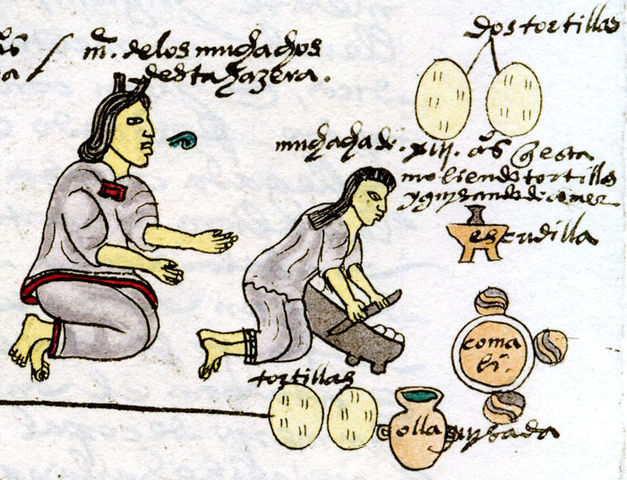
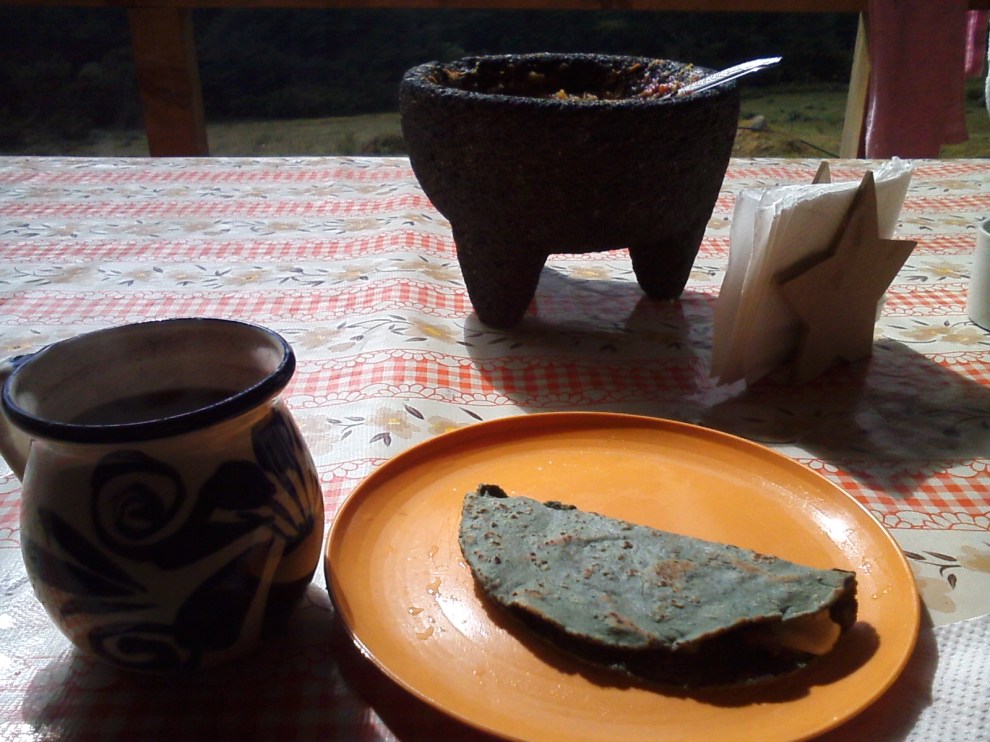
Our microcosm provides us with regular food stuff. We grow corn, beans and squash ever year in the traditional way on sharecropped land. (See Las tres hermanas) Our non-GMO organic corn not only provides year-round foods for our animals but also allows for equally healthy tortillas–the very foundation of Mexican cuisine. My sister-in-law runs a tortilleria (See Failing at your own business–Tortilleria), so I am relieved of this very time-consuming task. Corn is also used in tamales, pozole and a plethora of other traditional dishes.

tamal

Corn and lime boiling in preparation for milling for tortillas.

We also grow garbanzo (chickpeas) after the corn growing season is finished.  It makes for a nice snack, either raw or steamed, with the added benefit that the entire plant is eagerly consumed by our grazing animals.  Fiona, the donkey, is especially fond of garbanzo.

garbanzo

Steamed garbanzos

Our organically fed animals also provide us with delicious foodstuff. From our small herd of goats, we have daily milk and occasional meat. The milk we don’t drink right away is pastured right on the stove for later. We use it for creamy hot chocolate or honey-dripped oatmeal. The honey is from a local organic hive and delicious!

pasturizing milk

As we don’t have refrigeration, we dry our leftover meat into jerky strips. The dried meat theoretically should last several weeks. However, it rarely does due to the presence of a pre-teen, always ravenous, boy.

drying goat meat

Our chickens, ducks, and turkeys provide us with daily eggs and occasional meat as well. Just as with the goats, this means butchering. My husband has had years of practice at this and, therefore, our animals do not suffer needlessly.

butchering

We also keep rabbits and have recently added sheep to our backyard barnyard. Both provide occasional meat. (See Waskely Wabbits and Old MacDonald’s Farm). I’m hoping that our sheep will give us wool and perhaps milk later on as well. But as we haven’t had much success with sheep herding (See Birth and Death) it remains to be seen if that will actually happen or not.

full of tunas

Tunas are not hard to find after the rainy season.

La Yacata provides food, free of charge, for us as well. Cactus fruit is abundant towards the end of the rainy season. It’s not unusual for us to spend an afternoon foraging for pitayas (See Picking Pitayas) or tunas (See Picking tunas) or harvesting nopales (cactus leaves)(See Harvesting Cactus) for dinner.

feverfew

Feverfew

Tea can be made from hojas (leaves) or roots of a variety of naturally available plants. (See Feverfew tea and Lentejilla). Wild mushrooms are also found aplenty during the rainy season.

acebuche

Acebuche berries

Mesquite trees provide a chewy sweet treat for a snack. Acebuche trees have tart red berries that can be eaten right off the tree or made into a refreshing drink. Even the grass is edible. Quelite can be boiled like spinach.  (See Women in the Revolution–Marcelina)

chirimoya

Cherimoya fruit

We have moras (blackberries), chirimoya, guayaba, limones (lemons) and durazno (peach) in season in our own garden. We anxiously awaiting fruit from our granada and nispero trees this year. Our orange tree up and died last year, so it looks like no oranges this year. I hope to do some container gardening as well. Backyard gardening hasn’t been very successful with our free range chickens and rabbits out and about.

******************************************


disclosure

10 Comments

Filed under Alternative Farming, Animal Husbandry, Health, Homesteading, Native fauna and flora, Natural Healing