May Holidays in Mexico– El Día de los Trabajadores–Labor Day

May 1 is known as El Dia del Trabajo or El Día de Los Trabajadores (Labor Day). It was first celebrated in 1913 in Mexico with a protest march by workers, but it was not an official national holiday until 1923 or 1925. May 1 was the date chosen by the Congress of Socialists and Communists of the Second International in Paris in 1889 and is the date that most countries continue to commemorate it, with the notable exception of the United States.

The two most important incidents mentioned in conjunction with this holiday in Mexico are the 1906 riot in Cananea, Sonora and the 1907 riot in Rio Blanco, Veracruz.

The strike and subsequent riot in Sonora began at the Cananea Consolidated Copper Company. Mexican workers earned 3.5 pesos per day, while American workers, doing the same job, earned 5 pesos per day. Mexican workers protested during the Cinco de Mayo celebrations and went on strike on June 1.
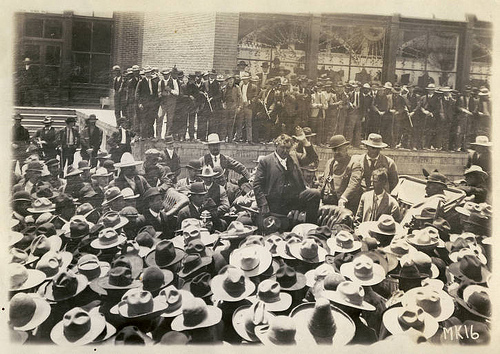
Canaea strike

Colonel Green addressing strikers at Cananea 1906

The strikers’ demands were as follows:

–removal of a specific foreman named Luis

–pay of 5 pesos for 8 hours work

–an employment quota that would ensure 75% of the jobs were for Mexicans

–responsible and respectful men to run the cages (elevators into the mines)

–promotions for Mexicans based on their skills

huelgacananea5

Armed Americans protect offices of Cananea copper company, June 1906.

During the protestations, American employees doused the protesters with water and shot at the group, killing three. Two of the American instigators were lynched and then burned by the demonstrators. Martial law was enforced by 275 Arizona Rangers from the U.S. who were summoned to protect the American investors’ interests. At least 23 people were killed in the confrontation.
rioblanco2

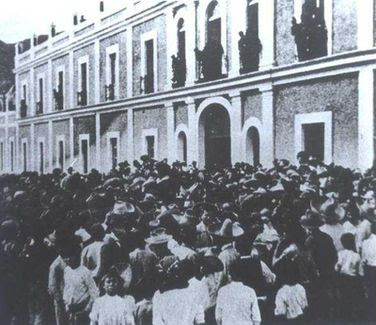
Workers protesting in front of the textile factory in Rio Blanco.

The Rio Blanco textile strike began in December of 1907. It started as a lock-out in protest of working conditions and the corrupt system of company stores. When the French owners appealed to Porfirio Diaz to mediate the conflict, the workers refused to return to work. The first casualties occurred when the store owners shot protesters. The Rio Blanco store, along with other company stores, were burned.

The Rio Blanco labor riot occurred over a two day period, January 7-8, in 1907. Mexican Federal troops killed up to 200 men, women and children, although the actual number varied according to sources. Soldiers fired point blank at protesters and then systematically hunted down those involved, imprisoning hundreds more.

These incidents were precursors to the Mexican Revolution. (See Women in the Revolution–Marcelina) and were key influences in the writing of the Constitution of 1917.

On this day, schools, banks, and other government offices are closed. Honestly, it depends on your boss whether this day is paid or not. Seems like labor laws in Mexico still lack a bit.

May is quite the month here in Mexico. Every time you turn around there is another celebration! For other Mexican May holidays see: El Día de Los Trabajadores, Conmemoración del Escuadron de Pelea 201, El Dia de La Santa Cruz y El Dia del Albañil, La Batalla de Puebla, Natalicio de Miguel Hidalgo, El Dia de la Madre,  Pascua de Pentecostés, El Día del Maestro, and El Dia del Estudiante.


*****************

Would you like to learn more about Mexican Holidays? cover holidays

11 Comments

Filed under Mexican Holidays

Harvesting cactus

I love cactus! It has a fresh, green taste that is all its own. And it can be found right in our little community, no trip to the fruteria (greengrocers) necessary. We’ve even planted some cactus in our backyard, however, it will be YEARS before they are big enough to harvest from.

nopal

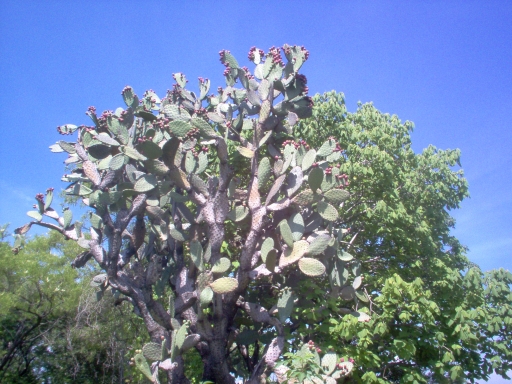
The nopal (cactus) is one of the fundamental symbols of Mexico.  It is considered la planta de vida (life-giving plant) as it seems to never die.  Fallen pencas (leaves) form new plants, therefore an apt symbol of the life-rebirth cycle found in the most ancient of Mexican myths.full of tunas

According to legend, the first nopal (cactus) grew from Copil‘s heart, son of Malinalxochitl, the moon, and Chimalcuauhtli.  Copil had attempted to murder his uncle Huitzilopochtli, the sun, because he had abandoned his mother.  According to legend, Huitzilopochtli defeated his nephew and removed Copil’s heart, which was later buried. The next day, the first nopal appeared, complete with the thorns of a warrior and flowers that blossomed with the love Copil had shown in defending his mother. This nopal (cactus) was discovered by the wandering Aztecs.  Atop the nopal was an eagle, devouring a serpent, over a lake, the sign the nomads had been waiting for.

flag

To have la cara de nopal (the face of a cactus) is to say that one’s indigenous ancestry is evident.  My husband has a decided cara de nopal and that isn’t a bad thing.

cara de nopal

Yes, I’m pocho (a Mexican who has turned his back on his ancestry usually living in the US) but I haven’t been able to get rid of this cara de nopal (Mexican face).

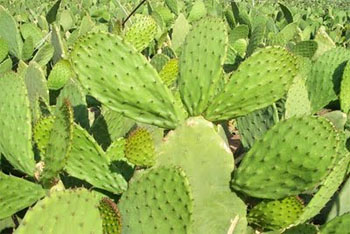
There is a technique however to harvesting. The pencas (leaves) should be a light green. Older pencas can be eaten, but they tend to have a bitter taste. The penca should be cut at the base, and handled gingerly. It is a cactus after all and there are espinas (thorns).

nopales to harvest

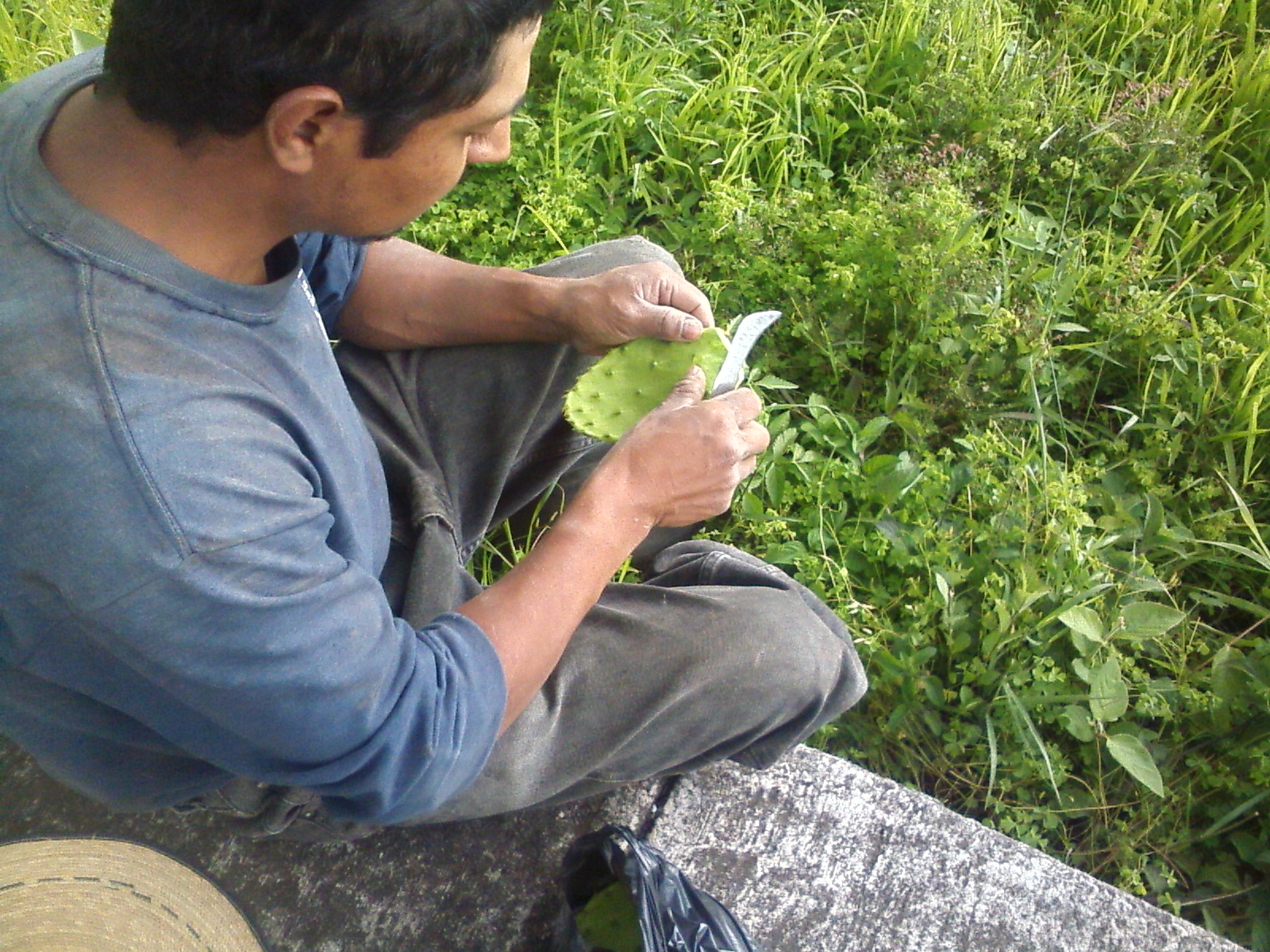
Once a good number have been collected, it’s time to despina (remove the thorns). It isn’t a terribly difficult process and practice makes perfect. The base of the thorn is cut, away from the cutter, and discarded. The outside edge is also skinned off. My husband always does this outside–less clean up involved. And that’s pretty much it. The cactus is ready for cooking.

dethorning cactusdethorning side

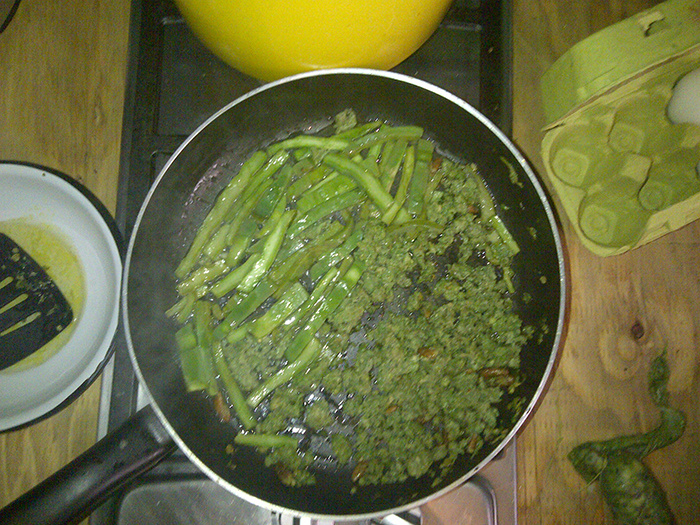
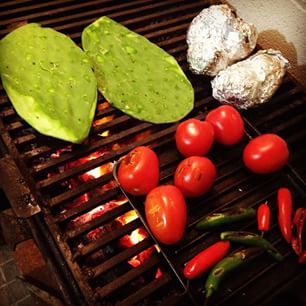
Cactus can be cooked as an entire leaf on the comal (griddle) or cut into pieces. It can be boiled or basted in tripa (intestine) juice, which is my favorite manner of preparation. It can be eaten warm or cold, used like a tortilla around cheese–a nopaldilla if you will–eaten as a salad with tomato and chili, or with beans and onions or ..well you get the idea.

boiled nopal

roasted nopal

nopales

A nice size bag of the nopales, tomato, onion and yellow chili mixture can be bought from the corner vendor for 10 pesos. Fast-food at its best!

Cactus also provides fruit in season, tunas (See Picking Tunas), the heart of Copil. Just more evidence that even in the desert, “the Earth provides enough for every man’s need” –Mathama Gandhi.

*****************************

disclosure

8 Comments

Filed under Mexican Cultural Stories, Mexican Food and Drink, Native fauna and flora

Let’s talk about food in La Yacata

Our whole purpose in living in off-grid rural Mexico is to become self-reliant. After 9 years of slow progress, we still aren’t there yet. But we are closer than we were.

ears-of-green-corn

Our microcosm provides us with regular food stuff. We grow corn, beans and squash ever year in the traditional way on sharecropped land. (See Las tres hermanas) Our non-GMO organic corn not only provides year-round foods for our animals but also allows for equally healthy tortillas–the very foundation of Mexican cuisine. My sister-in-law runs a tortilleria (See Failing at your own business–Tortilleria), so I am relieved of this very time-consuming task. Corn is also used in tamales, pozole and a plethora of other traditional dishes.

tamal

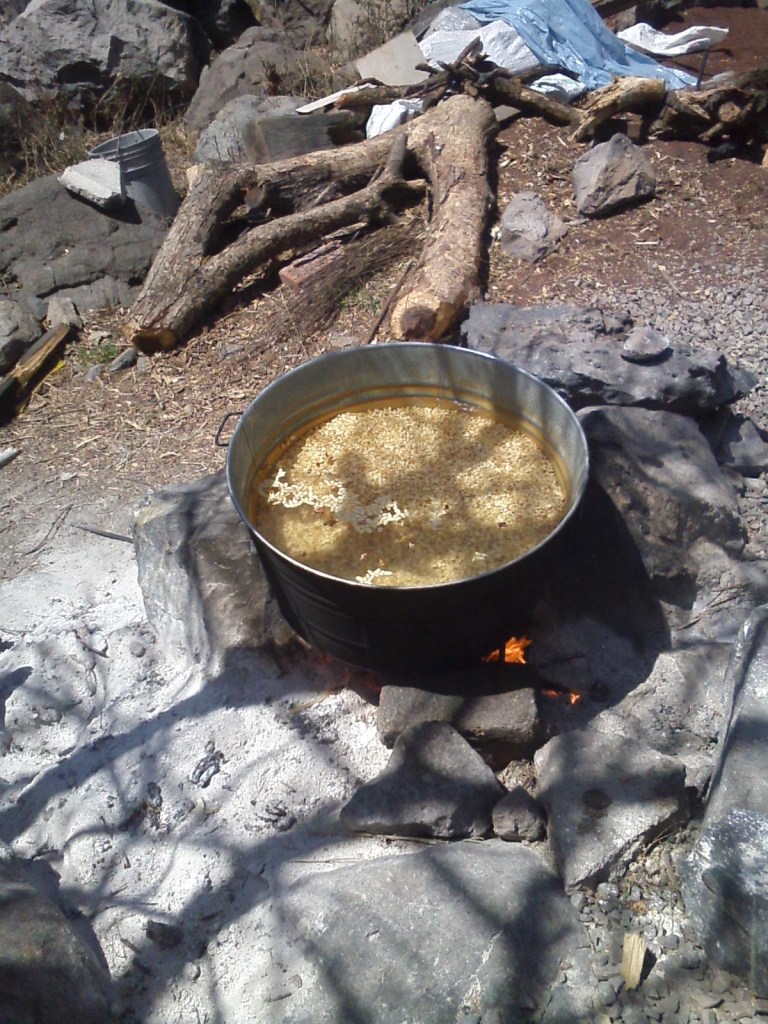
Corn and lime boiling in preparation for milling for tortillas.

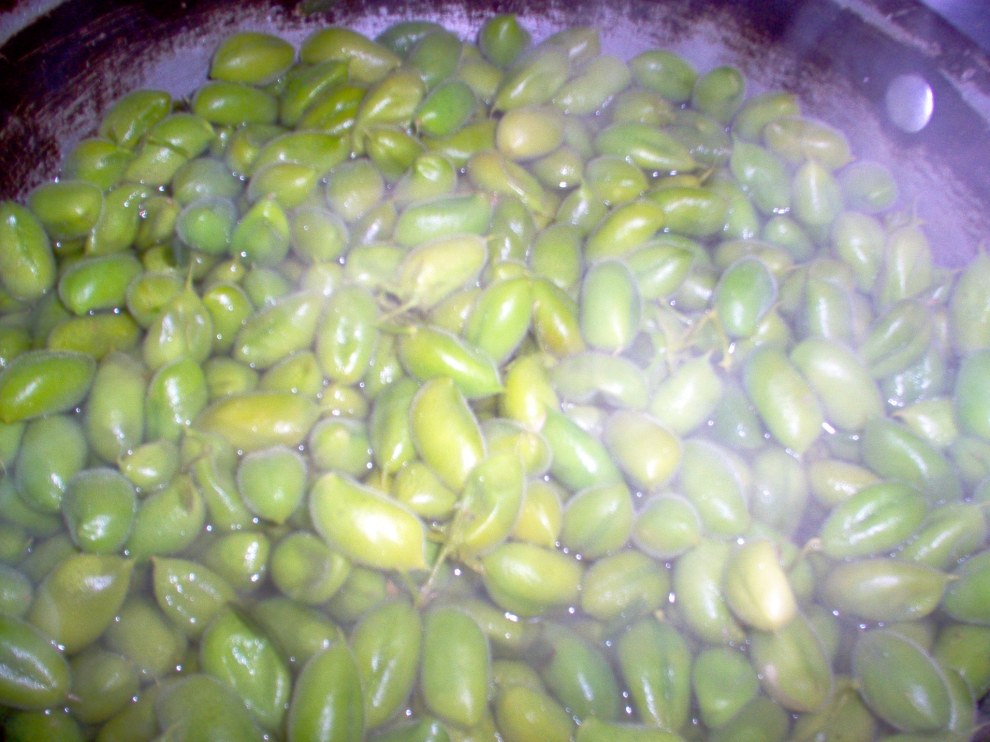
We also grow garbanzo (chickpeas) after the corn growing season is finished.  It makes for a nice snack, either raw or steamed, with the added benefit that the entire plant is eagerly consumed by our grazing animals.  Fiona, the donkey, is especially fond of garbanzo.

garbanzo

Steamed garbanzos

Our organically fed animals also provide us with delicious foodstuff. From our small herd of goats, we have daily milk and occasional meat. The milk we don’t drink right away is pastured right on the stove for later. We use it for creamy hot chocolate or honey-dripped oatmeal. The honey is from a local organic hive and delicious!

pasturizing milk

As we don’t have refrigeration, we dry our leftover meat into jerky strips. The dried meat theoretically should last several weeks. However, it rarely does due to the presence of a pre-teen, always ravenous, boy.

drying goat meat

Our chickens, ducks, and turkeys provide us with daily eggs and occasional meat as well. Just as with the goats, this means butchering. My husband has had years of practice at this and, therefore, our animals do not suffer needlessly.

butchering

We also keep rabbits and have recently added sheep to our backyard barnyard. Both provide occasional meat. (See Waskely Wabbits and Old MacDonald’s Farm). I’m hoping that our sheep will give us wool and perhaps milk later on as well. But as we haven’t had much success with sheep herding (See Birth and Death) it remains to be seen if that will actually happen or not.

full of tunas

Tunas are not hard to find after the rainy season.

La Yacata provides food, free of charge, for us as well. Cactus fruit is abundant towards the end of the rainy season. It’s not unusual for us to spend an afternoon foraging for pitayas (See Picking Pitayas) or tunas (See Picking tunas) or harvesting nopales (cactus leaves)(See Harvesting Cactus) for dinner.

feverfew

Feverfew

Tea can be made from hojas (leaves) or roots of a variety of naturally available plants. (See Feverfew tea and Lentejilla). Wild mushrooms are also found aplenty during the rainy season.

acebuche

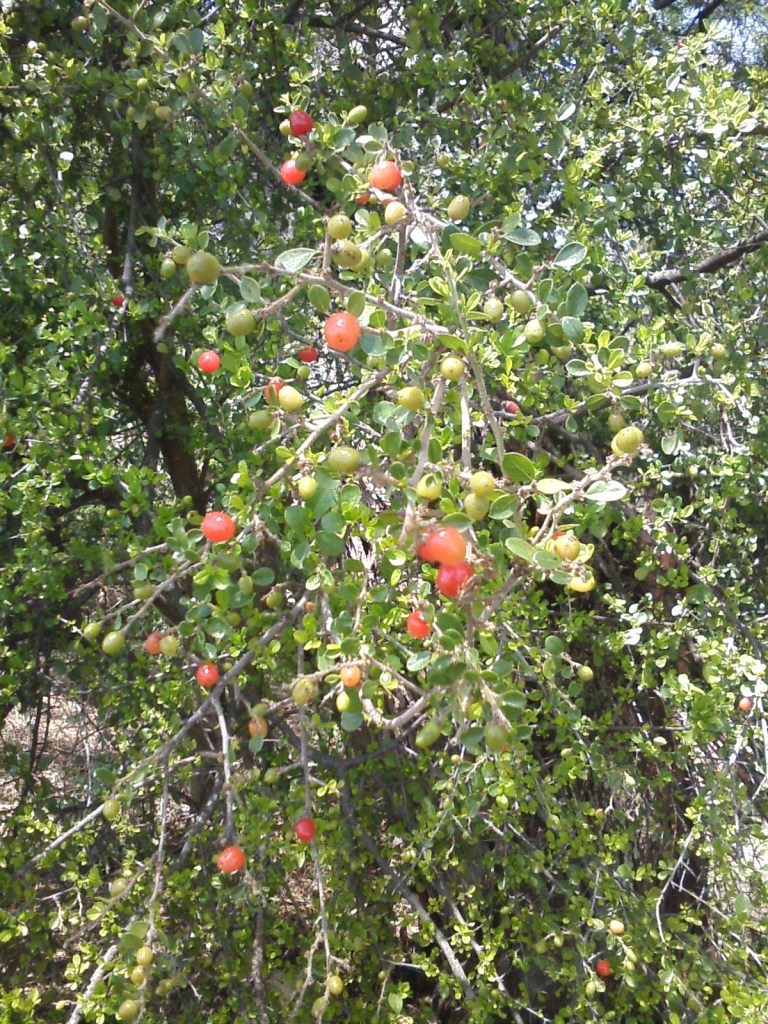
Acebuche berries

Mesquite trees provide a chewy sweet treat for a snack. Acebuche trees have tart red berries that can be eaten right off the tree or made into a refreshing drink. Even the grass is edible. Quelite can be boiled like spinach.  (See Women in the Revolution–Marcelina)

chirimoya

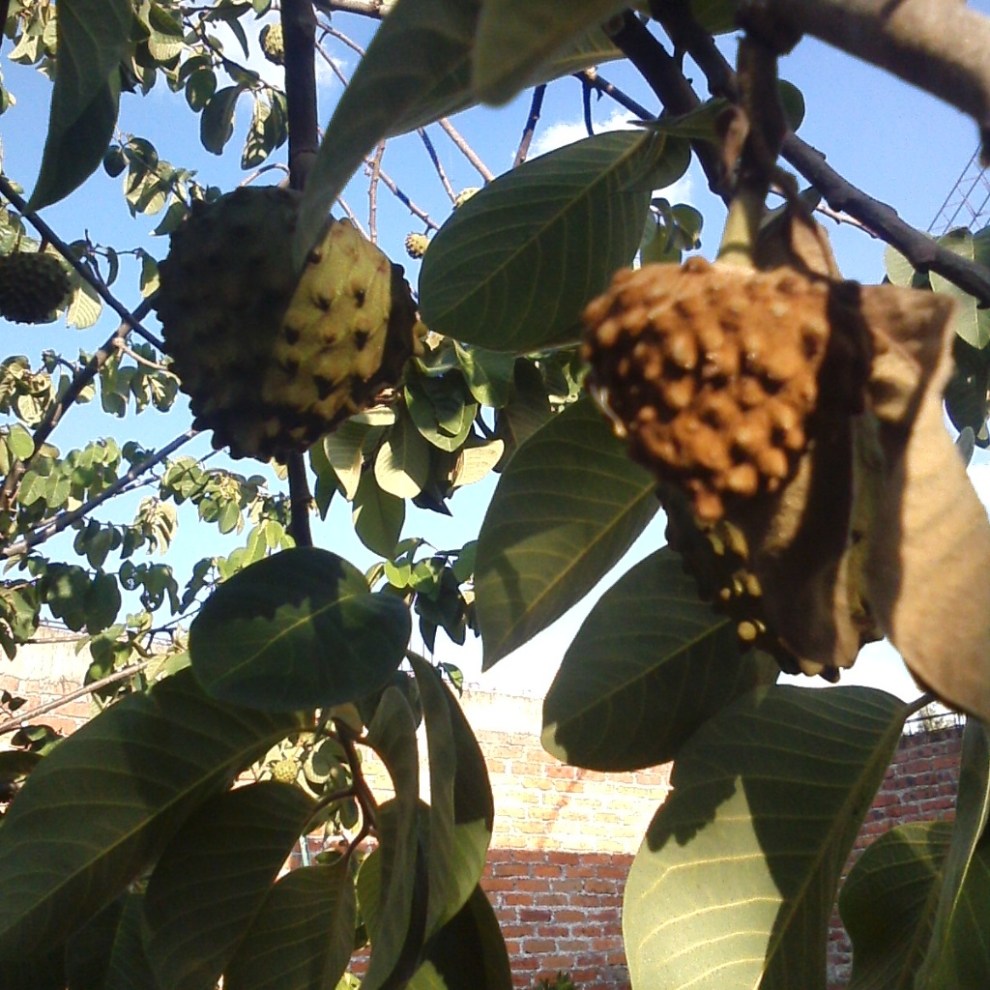
Cherimoya fruit

We have moras (blackberries), chirimoya, guayaba, limones (lemons) and durazno (peach) in season in our own garden. We anxiously awaiting fruit from our granada and nispero trees this year. Our orange tree up and died last year, so it looks like no oranges this year. I hope to do some container gardening as well. Backyard gardening hasn’t been very successful with our free range chickens and rabbits out and about.

******************************************


disclosure

10 Comments

Filed under Alternative Farming, Animal Husbandry, Health, Homesteading, Native fauna and flora, Natural Healing