2019 End of Year Recap

Where did 2019 go? I had some amazing experiences, including several firsts, this year that just made time fly by. Allow me to recap my adventures briefly, if you would.

In January, I chose the word ORGANIZE as my one-word description. I won’t say that I was uber-organized this year despite my 5-year calendar and my blogging planner, but I didn’t feel as overwhelmed as often and that’s saying something because look at all I accomplished this year! 

Early in the year, I took on another content writing job. Some weeks I find the topics tedious, but other weeks, they are not so bad. It certainly helped keep my income up since I cut back on my online teaching hours considerably. I also started reviewing books for Reedsy Discovery and have been enjoying that experience as well. 

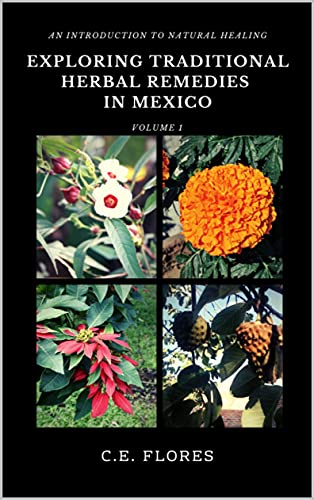
I most certainly stretched myself beyond my comfort zone in 2019. I submitted my Exploring Traditional Herbal Remedies in Mexico book to the Ultimate Bundles people and was accepted. I participated in my first podcast with Expat Mama Kimberlee Thorne-Harper. I also became an online presenter for the Work Freedom Summit. 

I created two online courses on CourseCraft. Surviving Voluntary Exile: Overcoming Common Obstacles to Making a Successful Life Transition and Book It: Everything You Need to Know to Publish Your Book on Amazon.

I reworked both the One-Year Blogging Planner and the International Event and Special Occasion List. I compiled a book edition of Surviving Voluntary Exile: How to overcome common obstacles to making a successful life transition and created a journal A Woman’s Survival Journal: A Guide for Making the Most of Your Life in Mexico.

I was able to get a fourth and final solar panel for our home, new glasses for myself and my son, and a motorcycle with my hard earned coins this year. My son and I were also able to spend a month with my family and friends in Pennsylvania and meet a long-time online BFF which wouldn’t have been possible without the online work I’ve found. Red and Terry joined the Flores Ranchito. And my son passed algebra 2 in his online classwork. 

Of course, not everything was peachy keen. I didn’t finish all the projects I began this year. My son is finding geometry challenging and may need to retake the course. I wasn’t able to visit my friend in Tennessee even though I really wanted to. I still have chronic health isssues and so do my parents. Our Puppy was poisoned and our hearts are still aching because of that. We didn’t have a bumper crop of goats. The crops didn’t do well and feeding the animals through the dry season is difficult. 

Overall, though, the good outweighed the bad in 2019 and I am grateful. How was your year?

4 Comments

Filed under Blogging, Economics

Ponche Navideño

Ponche is THE best drink Mexico has to offer during the Christmas holiday season. This year I decided to try and concoct it myself. Much to my delight, it turned out perfectly! So if you are interested in preparing this hot beverage for your New Year’s Eve festivities, let me share the recipe that Doña Lupe, one of my sister-in-law’s tortilla makers gave me.

There isn’t an exact quantity for each item because it depends on how big the pot you are using to boil it all in and your personal preferences. I’ll give you approximate measurements for 5.5-Quart pan. I recommend you don’t fill the pot to the top with water until you have all the ingredients in. 

  • 12 tejocotes, which are are small orange crabapples from the Crataegus Mexicana Hawthorn tree. If you can’t find tejocotes in your local market, crabapples will work. If crabapples are unavailable, you can leave this ingredient out or add additional green apples.
  • 1 peeled naranja (orange)
  • 1 length of caña (sugar cane) about three feet or so peeled and cut into pieces about 4 to 5 inches long.
  • 8 tamarindos with the shell and veins removed. Soaking them for a while makes it easier to remove the shell and veins. 
  • 6 guayabas cut into halves or quarters. 
  • 2 handfuls of pasas (raisins) or higos (figs) whichever you prefer. 
  • 1 large handful of jamaica (Hibiscus).
  • 3 or 4 sticks of canela (cinnamon).
  • 1 to 3 cones of piloncillo (brown sugar cone) depending on your personal preference and the size of the cone.
  • 1 manzana verde (green apple) sliced.
  • 1 pera (pear) sliced.

Top up the pot almost to the brim with water. Simmer on low for several hours, occasionally stirring with a wooden spoon to make sure nothing sticks to the bottom. The drink is served hot with bits of fruit and sugar cane in it. You can spice things up by adding some rum to the mixture, but it’s not necessary as it’s simply divine as it is. 

3 Comments

Filed under Mexican Food and Drink, Mexican Holidays

Natural Healing — Flor de Nochebuena

flor de noche buena.jpg

Most everyone knows that the poinsettia (Euphorbia pulcherrima) was adopted in the United States as a Christmas decoration when Joel Roberts Poinsett, the first United States Ambassador to Mexico, introduced the plant into the United States in 1825. So since this weed was so highly esteemed by the neighbors to the north, the Mexican too adopted this plant as a holy Christian symbol giving it the name Flor de Nochebuena (Christmas Eve Flower).

However, it was valued prior to Christianity reached the shores of México. The Poinsettia, or Cuitlaxochitl as it was known in Nahuatl, was used by the pre-Hispanic indigenous people to make clothing dyes and treat fevers.  It was also thought to host the souls of fallen warriors making it a symbol of new life.

Nochebuena grows wild in many areas of Mexico. It isn’t a small potted plant that you may be accustomed to seeing at Christmas though. It can grow between 10 to 15 feet high if left it its own devices.

There is a mistaken belief that the Flor de Nochebuena is toxic. Although other plants in the spurge genus are, the Euphorbia pulcherrima has a low toxicity level. The latex from the sap can cause allergic reactions. If the sap gets into the eye, it may cause temporary blindness. Ingesting parts of the plant is mildly irritating to the stomach and may cause diarrhea and vomiting.

In the states of Guanajuato, Michoacan, Puebla, and Mexico, the sap is applied directly to the skin to treat warts and labial herpes. The latex from the sap is also used as a depilatory in some areas. Apply the sap to the hairy area, allow to dry and then rip off.

In the states of Morelos, Puebla, and Sonora, an infusion of the bracts is used to increase the milk supply of nursing mothers. Sometimes the woman will lick the sap or eat raw leaves as well. This use comes from the Aztec belief that the plant contains milk since the sap it exudes is very milk-like in appearance. In fact, this use was recorded in the Florentine Codex as well as by Francisco Hernandez.

The leaves are used for external inflammations and arthritis. They are warmed and applied directly to the affected area. For a treatment of a swelling caused by a blow or a bruise, the bracts are boiled to make a poultice then lime is squeezed onto the area which is then wrapped. The ground leaves are also used to treat ringworm.

Infusions made from the bract combined with bugambilia and gordolobo (mullein) are used to treat heart conditions and respiratory infections. Infusions from the bracts are also used in to regulate menstruation. Another decoction from the plant is made to be used externally as a vaginal wash when there is excessive bleeding.

So this year, instead of tossing this decorate plant out after the holidays, perhaps you should add it to your home apothecary. 

*****

3 Comments

Filed under Health, Mexican Food and Drink, Native fauna and flora, Natural Healing