Hot Flashes and Herbs!

I first became interested in Mexican herbalism when I read a study reporting that Maya women in the Yucatan did not experience the drastic hormonal imbalances that plague Western women at menopause because their diet includes regular ingestion of wild yams. Of course, Western practitioners focused on the wild yam aspect and added it to their hormonal supplements for menopausal women not taking into account that these Maya women had been eating wild yam their entire lives. It was not something they started to eat later in their reproductive life, certainly not something that could be ingested in pill form.

My interest in herbs to help during the final reproductive transition period has become more intense since my first hot flash–man, was that a doozy. I can’t say that I’ve found a magic bean just yet, but learning more about herbs and what to expect during menopause has taken some of the shock factor out of this phase of my life. Of course, I’m still completely taken by surprise at each hot flash episode, but I know now that I won’t spontaneously combust, it only feels that way.

Of course, I’m all about helping women at any stage of life, including la tercer edad (the third age) which is fast approaching on my own horizon. So I am pleased to say that fine folks at Ultimate Bundles have done it again with their latest batch of courses, ebooks, workbooks and seminars.

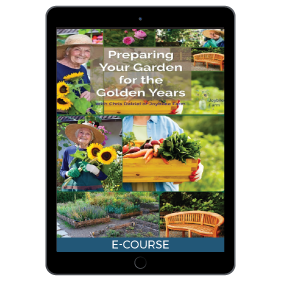
I’ve already signed up for and completed the Preparing Your Garden for the Golden Years course and have started diligently using the Menopause Symptoms Tracking Journal in the hope I can get a handle on this natural, but rough, phase of life. I plan on making the most of the years I have remaining! How about you?
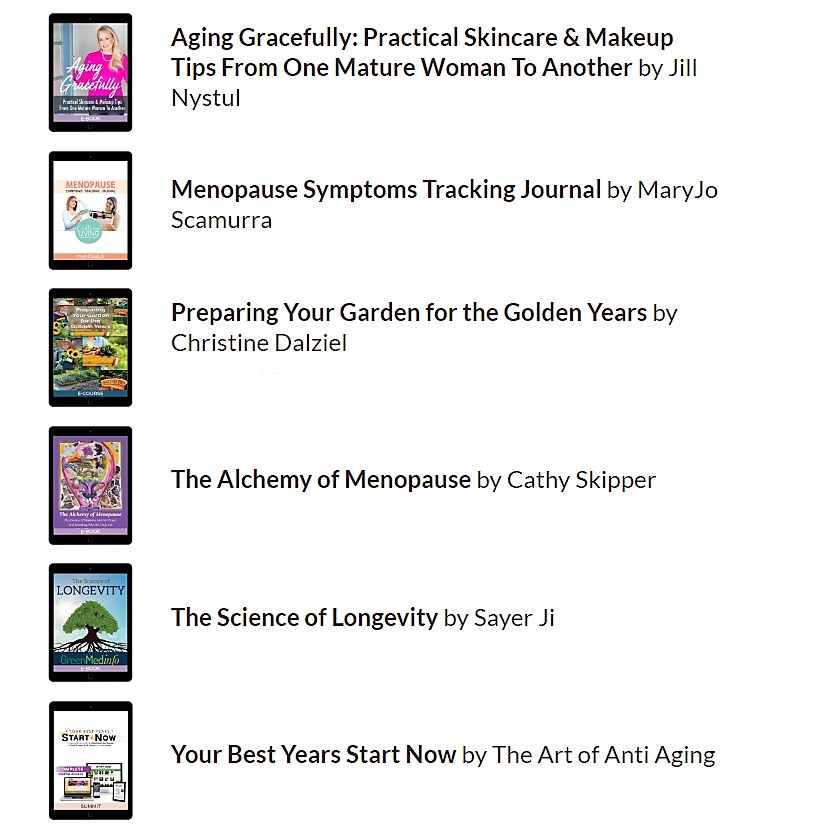
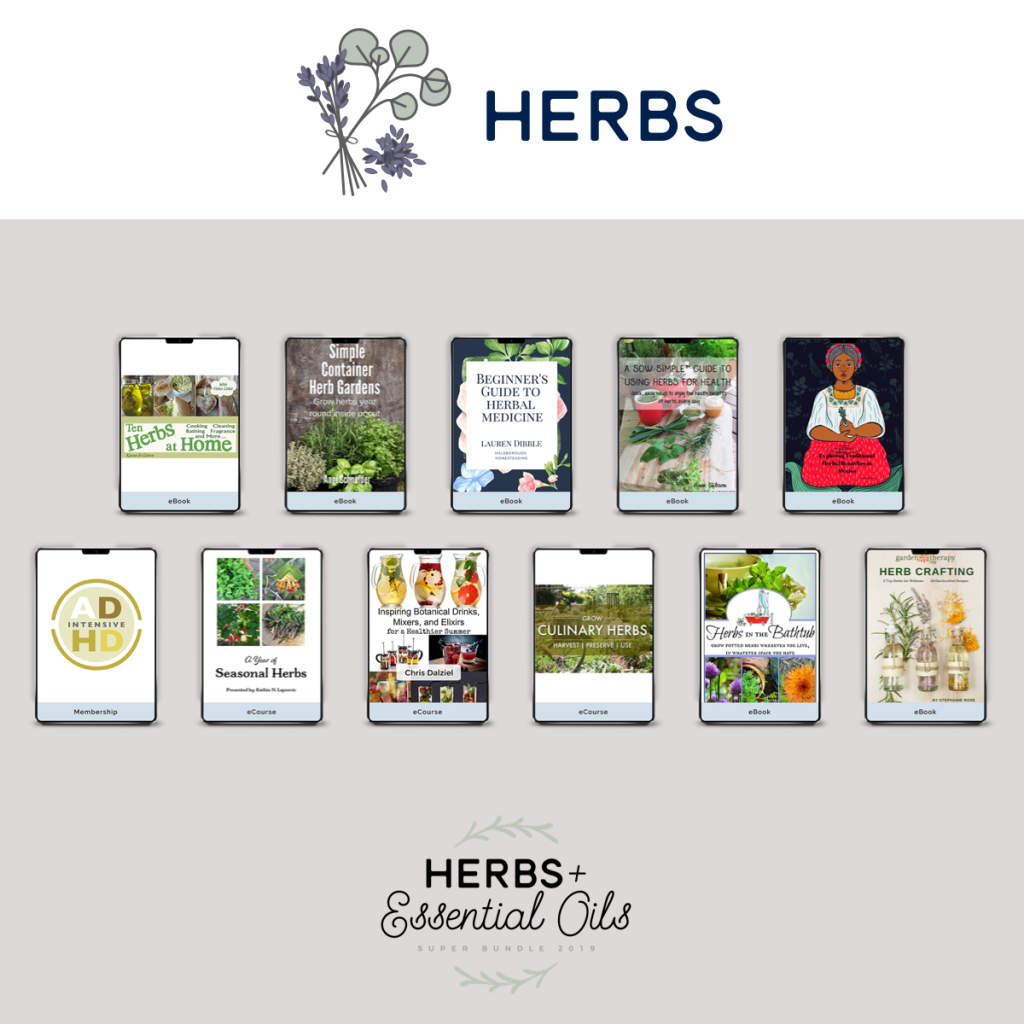
Not only does the Ultimate Women’s Wellness Bundle cover menopause with these amazing resources but you will ALSO get the chance to purchase the 2019 Herbs & Essential Oils Super Bundle which includes my book Exploring Traditional Herbal Remedies in Mexico

So to recap, one reasonable price ($37) gives you access to 79 products worth $4641.70 including 33 eBooks, 29 eCourses, 12 workbooks & printables, 3 summits & documentaries, and 2 audios. You can then upgrade to receive the Herbs & Essential Oils Super bundle with 29 eBooks, 4 Printables, and 7 eCourses worth $701.14 too.

Since I’m on the subject of hormones and herbs, I also wanted to mention that the Herbal Academy has a new intensive out. The Herbal Aphrodisiacs Intensive provides a basic overview of sexuality and how herbal aphrodisiacs can be called upon to offer support in various ways. Ooh-la-la! It’s available at a discounted rate until February 16. You can find more information HERE if you’d like to be herbally hot-to-trot for Valentine’s Day.

So many options! Why not get them all?
Leave a comment

Filed under Health, Natural Healing

2020 Courses towards “Improve”ment

I may have gone a little overboard. I know that I have actually. But there were all sorts of courses on sale in January at Udemy and the Woman’s Wellness Bundle from Ultimate bundles this week, that I decided to sign up for a whole bunch of courses. 

First Udemy. 

I’ve finished the Cognitive Behavioral Therapy Practitioner Certificate Course with Kain Ramsey. I have learned so much about active listening, goal setting, belief development and defining my core values. In fact, I liked Kain Ramsey’s presentation style so well, that I signed up for two of his other courses, the NLP Practitioner Certificate Course and Life Coaching Certificate Course. If you’ll recall, finishing the CBT course and taking at least one other are two of my goals for 2020. So I’m well on my way in this!

Then the Ultimate Women’s Wellness Bundle has a whole slew of courses to choose from. It’s not feasible for me to sign up for them all, although I’d love to, so I choose those that most aligned with my goals for this year.

As you may recall, I have hypothyroidism. With the uncertainty about the Mexican healthcare system this year, I need to be more proactive about taking matters into my own hands. For that reason, I signed up for the 14 Day Thyroid Alive! Kickstarter Program by Stephanie Wharton course.  Many of the thyroid courses I have taken in the past focus on recipes, which is problematic for living in central Mexico since I can’t find many of the ingredients. Although this course has quite a number of recipes, it also talks about the actual physical ailment of thyroid issues. Yeah!

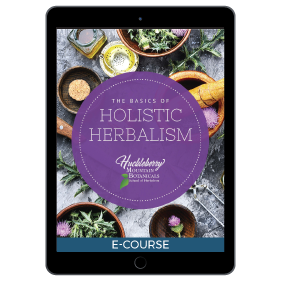
I also signed up for two herb classes which why they don’t directly fall under a goal subheading, are certainly things I am interested in. The Basics of Holistic Herbalism by Monica Mitzel and Preparing Your Garden for the Golden Years by Christine Dalziel. Ok, so I’m not exactly in my golden years, but they are closer than they were 20 years ago.  I finished the second course already and was pleased with the tips I learned in the course about how to make my garden more accessible, which herbs to plant for senior health, and that lavender is an excellent companion plant for apple trees.

I’m also working through two courses that so far have just blown me away. They are Love & Boundaries by Beautiful Minds Wellness and Emotional Resilience Training by Georgia Foster. The analogy of each of us is the star in our own movie really resonated with me in the Love & Boundaries class. Then the guided meditations in Emotional Resilience Training have made me experience relaxation like I’ve never felt before. I’m looking forward to finishing them up in a few weeks.

The Ultimate Women’s Wellness Bundle has a total of 29 eCourses for you to improve yourself, ranging from pregnancy care to menopause. Any one of these courses are valued at more than the entire bundle, and you get access to them all! I know I’m super excited about working my way through them over the course of the year. 

With the Ultimate Women’s Wellness Bundle you’ll get a total of 79 products worth $4641.70 which includes 32 eBooks, 32 eCourses & audios, 12 workbooks & printables, 2 summits & a documentary for $37. But act soon, because this deal ends on February 10. 

Leave a comment

Filed under Education, Health

A Chile By Any Other Name….

Last week I was doing some research and stumbled across a study highlighting the health benefits of cayenne pepper. The study stated that eating cayenne peppers increase digestive fluid production and boost the stomach’s defense against infections. It occurred to me that I didn’t know how to say cayenne pepper in Mexican Spanish.

So I started with Google which reported that it was “pimiento de cayena.” The lady at the molino (spice grinding shop) just looked at me blankly when I used that. Then I tried Wikipedia which said chile morrón. However, chile morrón is a bell pepper in our area.

Next I polled my Facebook group, Women Surviving Rural Mexico. One lady said she’d heard the term cayene (pronounced kai-en-nay). Another said chile dulce, which can also be used for bell peppers. And still another woman said chile piquín. Chile piquín in my area refers to very small, very spicy orange chiles. 

So I asked my sister-in-law who took a poll among her pistoleras (the ladies that make tortillas with her). They came up with the name chiltecpín roja. Doing some research on that term, I don’t think it is correct either. The word chiltecpin in Nahuatl means ‘flea chili’ and is a small, extremely hot, red chile. Incidentally, this variety is thought to be the oldest of the Capsicum genus ever cultivated.

The name game gets even more complicated when you realize that dried and fresh chiles have different monikers. The jalapeno becomes chipotle, poblano changes to ancho, chilaca dries and is then pasilla. The Anaheim chile becomes colorado, mirasol changes to guajillo, serrano dries and is then chile seco. The bola chile dried is cascabel.  

None of this helped me find out the name for the cayenne pepper, unfortunately. If anyone can give me some insight on this, I’d appreciate it! 

On the other hand, a little more digging produced the fact that any of the chiles in the Capsicum annuum family will provide similar health benefits. These chiles have been used as a spice and medicinally in Mexico since before the Spanish arrived, the uses of some of which I’ve experienced myself. 

For example, chile cola de rata (Chile de árbol) toasted on the comal will certainly clear your nasal cavity. A generous bite of chile piquín will instantly banish a headache, after your eyes stop watering that is. Getting chile juice on your hands and touching another body part will stimulate circulation rapidly and painfully.

The chile has been acknowledged by UNESCO as an Intangible Cultural Heritage of Humanity. Evidence points to the chile being part of the indigenous diet as far back as 6500 BC and domesticated by 4100 BC. Excavations under the Pyramid of the Sun at Teotihuacan have uncovered fossilized remains of Capsicum chiles dating back to CE 150-250.

Chile continues to be a primary ingredient in Mexican cuisine. Chile seed shakers are on the table in the restaurants that serve birria. Bell peppers are mixed in the nopal servings. Every salsa, including guacamole, is spiced with this little fruit. Even the candy often has chile powder on it! 

Capsaicin is the active ingredient in chile peppers. Capsaicin is what gives them medicinal properties and their spiciness. The more capsaicin in a pepper, the spicier it is.  Interestingly, you can develop an immunity to the effects of capsaicin over time. So those who consume chiles regularly don’t receive the same benefits as those that ingest them only on occasion. On the other hand, long-term consumption of capsaicin has been shown to reduce high blood pressure. 

Eating chiles increases energy expenditure and core body temperature which is lowered again through perspiration. Capsaicin reduces the production of ghrelin, the hunger hormone, and reduces the risk of stomach ulcers

Capsaicin can also reduce pain when applied in a cream to the skin. It decreases the amount of a neuropeptide that travels to the brain to signal pain. Capsaicin cream is recommended for muscle, joint, lower back, and post-operative pain. It can also help lessen pain from nerve conditions like shingles. Capsaicin cream has been successful in the treatment of psoriasis as well. 

Capsaicin slows the growth of cancer cells and causes cell death for prostate, pancreatic and skin cancers. Chiles contain antioxidants including vitamin C, vitamin E, beta carotene, choline, lutein, zeaxanthin, and cryptoxanthin which give them their red color. 

Capsaicin has antimicrobial and anti-virulent activity and is useful in combating Streptococcus pyogenes. Cayenne chile in particular has been shown to suppress the development of 16 different fungal strains. 

In Mexico, chile powder and olive oil are mixed for a liniment to treat joint and back pain. It can be sprinkled on food to improve digestion and circulation. Eaten whole, chiles are useful to promote sweating to break a fever. 

The seeds can be rubbed on hands or feet to warm the areas up. Be careful not to get any in your eyes. If that happens, use hair to rub them to reduce the burning. It works, amazingly enough. If you have long hair, don’t be offended if someone grabs a hunk over lunch to do just that.

So even though I still don’t know exactly what cayenne pepper is called in Mexico, chiles are a healthy addition to any diet!

****

Would you like to read more about Mexican traditional remedies?

3 Comments

Filed under Mexican Food and Drink, Natural Healing