Natural Healing — Gordolobo

My son has had a dry cough most of the month of January. His aunt recommended an infusion made from gordolobo, ajo (garlic), limón (lime), canela (cinnamon) and sweetened with honey. Before I had him drink this concoction, I thought I’d investigate a little more about gordolobo.

According to my little Aztec medicine book, gordolobo (which translates to English as fat wolf) has the botanical name of verbascum thapsiforme sdahere and other common names of vervasco, Cirio de Nuestra Señora, and Flor de Gran Candelero. Gordolobo is often translated as common mullein which is Verbascum thapsus. However, based on the botanical names, it seems that gordolobo is a type of mullein but not common mullein, so the translation is not correct.

I went to this handy site called The Plant List for some verification. There I found that most likely verbascum thapsiforme sdahere is another name for Verbascum densiflorum Bertol, dense-flowered mullein. I can’t verify this is the same plant entirely because gordolobo is only sold dried at the market and I’ve never seen a flowering plant to compare it to photos of the dense-flowered mullein. Nor could The Plant List. It gave itself a rating of 2 out of 3 on identification confidence. 

The Verbascum or mullein family has 360 species in it and it seems safe to say that gordolobo is a subspecies within that plant family. One study found that there wasn’t much variation between species when their compounds were compared. Therefore, it’s probable that many of the medicinal uses of common mullein will be true for the verbascum thapsiforme sdahere plant sold at the Mexican market. 

Gordolobo has been used by the indigenous people of Mexico for centuries, long before the Spanish arrived. Besides being used for cough, sore throat, and respiratory issues, it is often used as a treatment for hemorrhoids and varicose veins.

Mullein contains triterpene saponins, volatile oil, mucilage, flavonoids and bitter glycosides. It’s been approved by the German Commission for the treatment of respiratory catarrh. It has anti-inflammatory properties and mullein tea, made from the flowers and leaves, has been shown to be beneficial for sore throats, hoarseness, bronchitis, tonsillitis and dry cough.

The flowers have sedative and bactericidal properties. Flower extracts have been shown to be effective when used as treatment against E-coli, Staphylococcus aureus, Staphylococcus epidermidis and Klebsiella pneumoniae.

Some of the remedies I found in my Antigua Recetario Medicinal Azteca were:

For croup, gordolobo infusion is used as a gargle. 

For colds, make a tea from the flowers and leaves of three branches plus the branch of 1 malva (mallow) boiled in ¾ liters of water. This quantity makes three cups. 

Essential oil made from gordolobo is recommended for angina pain. It should be taken three times a day before meals. 

If gordolobo is used as an intestinal cleanse, fresh leaves should be boiled in milk rather than water. 

The leaves can be applied as a poultice for burns, hemorrhoids and varicose veins. Five grams of gordolobo should be boiled in ¼ liter of water when making the poultice.

Another tea remedy for cough, lung infections, sore throat and bronchitis calls for two tablespoons of dried gordolobo in two cups of water boiled for five minutes. Cover and steep for five more minutes. The infusion is a yellow color, which isn’t surprising since the flowers are yellow. It doesn’t have any taste nor scent to speak of. 

Precautions:

Gordolobo is a soft, wooly plant. It has been known to cause dermatitis when handled regularly.

Although gordolobo is the term most commonly used for mullein, in Mexico this name is also used for several other varieties of plants including Greater Burdock (Arctium lappa), Plume Poppy (Bocconia frutescens), Tapered Cudweed (Gnaphalium attenuatum), Pseudognaphalium chartaceum, and Coltsfoot (Tussilago). Be sure you identify the plant being sold to you before using it as a medicine.

Since my husband had also developed a dry cough, I mixed up a batch of the Garlic tea cold buster (garlic, lime and honey) and added some gordolobo to the mix. They both seemed to sleep better that night.

*** 

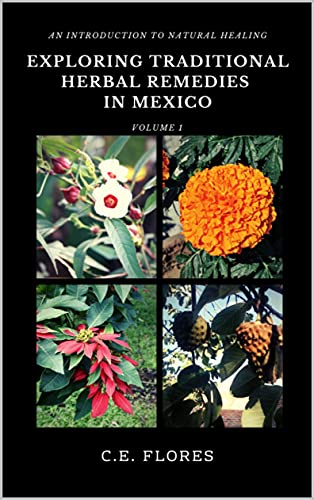
Interested in natural remedies? Uncover herbal remedies from traditional Mexican sources for healing and wellness in the Exploring Traditional Herbal Remedies in Mexico series.
4 Comments

Filed under Health, Native fauna and flora, Natural Healing

Playing Tourist in Mexico: A Collection of Adventures from Women Traveling in Mexico

Kindle Version

Last year, the ladies of the SOTB Blogging Group (Patty M. Vanegas, Susi Schuegraf, Lynne DeSantis, Karen Swanson, Jill Michelle Douglas, Emily Lee Garcia and me) combined our stories into one amazing travel book. I’m pleased to announce that Playing Tourist in Mexico: A Collection of Adventures from Women Traveling in Mexico is now available on Amazon as both a Kindle book and a full-color paperback

Paperback Version

Have you ever wondered what Mexico is really like? In Playing Tourist in Mexico: A Collection of Adventures from Women Traveling in Mexico you can share in the travels of seven women to 45 different locations throughout Mexico.

Not only are places like Mexico City and the beaches of Baja California included, but also remote but equally delightful places like Dolores Hidalgo, Guanajuato the birthplace of independence, and Paracho de Verduzco, Michoacan, a mountain town dedicated to handcrafting guitars.

You’ll see a different beauty in Mexico through the eyes of these women as they galavant hither and yon experiencing the sights, tastes, and sounds of this amazing country.

Amazon sets the prices for books published through them and well, in my opinion, the paperback version is quite pricey because of that. As my favorite readers, I have a previous version of this book that you can download if you are interested in reading the adventures we had without paying an arm and a leg!

Free Version

If you’ve already read this fun travel book, then we’d love if you would leave a review on Amazon or Goodreads!

Leave a comment

Filed under Tourist Sites in Mexico

Grocery Shopping and Food Preparation Tips for Rural Mexico

One problem you might have when you move to rural Mexico is you haven’t the foggiest idea where to look for the food you’ve become accustomed to or how to prepare the food options available to you. 

I know that happened to me. Pasta seemed simple enough, yet every time I made a batch, it turned into an inedible hunk of goo. Another problem food of mine was rice. I’d been used to Uncle Ben’s instant rice and it took some time and a few unsalvageable batches to learn how to prepare regular rice. Who knew that you needed to lightly brown the pasta and rice before cooking? 

Recipe books that I brought with me, even though that were geared toward Mexican cuisine, were useless to me. I wasn’t able to find the ingredients called for. A can of stewed tomatoes–not hardly. More helpful were my mom’s handwritten recipe cards with my grandmother’s and great-grandmother’s cooking instruction. More recently, a blog reader sent me a delightfully useful book called Cooking and Curing with Mexican Herbs by Dolores L. Latorre which has been so helpful in varying my meal repertoire.

Then there’s the whole shopping experience. Name brands that you’ve come to love and enjoy are not available. Nor are some essentials even on the shelf. Grape jelly is a prime example. None of our local stores carry grape jelly. Chocolate chips are another. No chocolate chips in the baking section. Pretzels? Forget it!

Prices on goods also are a big adjustment. Although you could get a huge jar of peanut butter for the kids’ PB & J lunch for a reasonable price north of the border, that’s not true in Mexico where peanut butter is an imported product. If you are living on pesos, peanut butter might be out of your budgeted price range.

So unless you live near a Costco or Walmart, you may need to adapt your food acquisition strategies.  Because of portion sizes and freshness, you may find you are doing shopping every day rather than once a week. Variations in food availability and quality make meal planning more challenging, but not impossible.

One way to cut back on grocery expenses is to prepare a large meal during the day and have the leftovers for dinner rather than preparing something entirely different.  We don’t have a fridge, so anything left over after dinner is portioned among our animals, although with a teenager in the house, that usually isn’t much. Then tomorrow, we’ll have something different.

Living in rural Mexico means that spaghetti sauce and ketchup are luxury items now rather than staples for us. If you absolutely must have them, buy those that are in boxes tend to be less expensive than imported brands in cans or jars. The boxed spaghetti sauce is a bit bland, so be prepared to spice it up. Pick up some oregano at the fruteria or molinera and maybe even some fresh mushrooms to saute and add.  Meatballs? Make your own. I don’t know about which part of rural Mexico you live in, but there’s no frozen food section at the corner market in my area.

Stock up on rice and beans and learn how to prepare them. Adding garlic, onion or a chili pepper while the beans are simmering adds some flavor. You’ll find a number of different varieties of beans to change the menu up a bit, however, you’ll need to make peace with having beans more days than you may like. A crockpot can be a lifesaver here!

Unfortunately, there will be days when you run out of gas to cook with. When that happens, it’s a good idea to have some canned goods on hand. A can of beans on tostadas with tomato, onion, and cheese requires no cooking.  Again, if you have a crockpot–you’ll be fine if the gas runs out. Of course, we aren’t above cooking over the open flame, either in our fireplace or our outdoor cooking area.

If you buy cheese, lunch meat or bacon from the deli counter, ask for a certain amount suelto (loose) rather than buying something prepackaged. Your pesos will go further that way.  If you want to make a sandwich, then get freshly made bolillo instead of Bimbo white bread. Again, it’s less expensive and tastes better. 

Regular power outages or brownouts in some areas mean a fridge isn’t a reliable way to store fresh food. Condiments come in minuscule portions because without refrigeration, they will go bad quickly. Mayonnaise, jelly, even chilis can be bought in very small containers meant to be consumed within a day or two of opening. Milk can come in a jug, bag or in a box. Boxed milk does not need refrigeration until after it is opened. 

Take advantage of the weekly market for lower-cost food items. Those stalls set up on random corners will also have fresh and scrumptious stuff you can pick up.

Buy fruits and vegetables in season and save money. A variety of fresh fruit and vegetables are available year-round. However, there’s no guarantee that any of the items are organic so be sure to peel those that can be peeled or wash them in a three parts water and one part vinegar solution. Many Mexican women soak everything in Microdyn or Bacdyn, both of which contain the active ingredient ionized silver and I suppose it works too.  

If you can or have a food dehydrator, you can store seasonal fruits and vegetables in this way. Another solution to a high grocery bill is to grow your own herbs and foodstuff. Seeds packets can be found in the semilleria or there are a few places you can order online. Check out Rancho Los Molinos. You won’t be able to order seeds online since they are prohibited for importation although Baker Creek Heirloom Seeds gets around this by sending them to Mexico via Germany.

Although pancake mix is easily found in most stores, the stuff that is being passed off as maple syrup (miel) isn’t much more than colored sugar water, which is very disappointing. Common pancake toppings include fresh fruit, jelly, cajeta, and honey. Pancakes or french toast are easily prepared comfort food at our house.

Typically you’ll find a whole aisle of different cooking oils. I suggest trying a few to find one you like to cook with. On the other hand, you might find that cooking with manteca (lard) gives your food, especially the beans, more flavor. Fresh manteca is often found at the carniceria. If you don’t see it, ask, it may be behind the counter. 

The bars of stuff packaged as margarine in our area tastes foul to me. There are a few places that sell actual cow’s milk butter in town, which is more palatable. It is more expensive though, so we only buy it once in a while.

If your meat comes out too dry, which happens to the best of us, salsa is the fix-all! Slather it on and no one will be the wiser. Make your own salsa if you are in any way sensitive to hot and spicy foodstuff because even though you’ve been assured that it “no pica” a Mexican’s definition of spicy and yours may be different. Salsa also makes a good meat marinade. I add my sister-in-law’s tomatillo salsa which she sells at her tortilleria to chicken or beef strips while I’m cooking them and my family loves it. 

At first, the whole process of finding and preparing food in rural Mexico can be overwhelming. Take heart! Soon enough you’ll be making delicious dishes and amaze yourself with your cooking ingenuity!

What other shopping or cooking adaptations have you made since moving to rural Mexico? What cookbooks have you found useful?

4 Comments

Filed under Mexican Food and Drink