Tag Archives: living in rural Mexico

Let’s talk about food in La Yacata

Our whole purpose in living in off-grid rural Mexico is to become self-reliant. After 9 years of slow progress, we still aren’t there yet. But we are closer than we were.
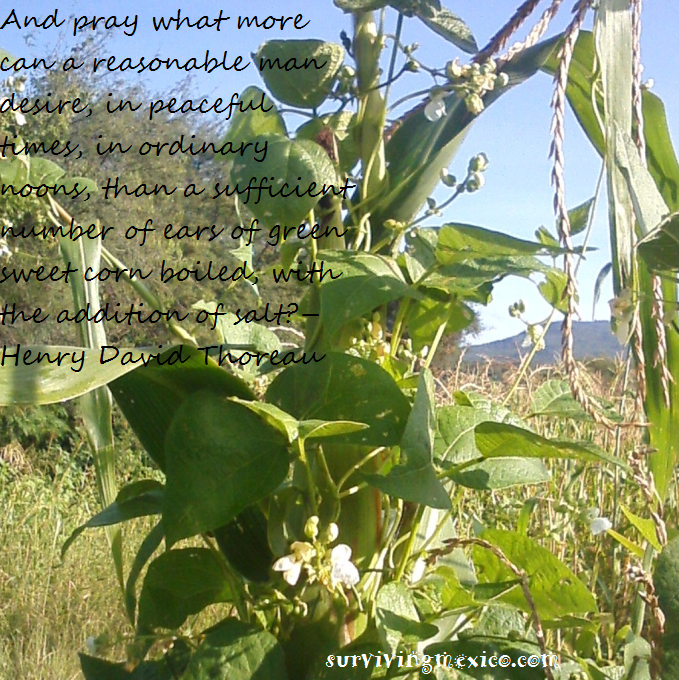
ears-of-green-corn

Our microcosm provides us with regular food stuff. We grow corn, beans and squash ever year in the traditional way on sharecropped land. (See Las tres hermanas) Our non-GMO organic corn not only provides year-round foods for our animals but also allows for equally healthy tortillas–the very foundation of Mexican cuisine. My sister-in-law runs a tortilleria (See Failing at your own business–Tortilleria), so I am relieved of this very time-consuming task. Corn is also used in tamales, pozole and a plethora of other traditional dishes.
tamal

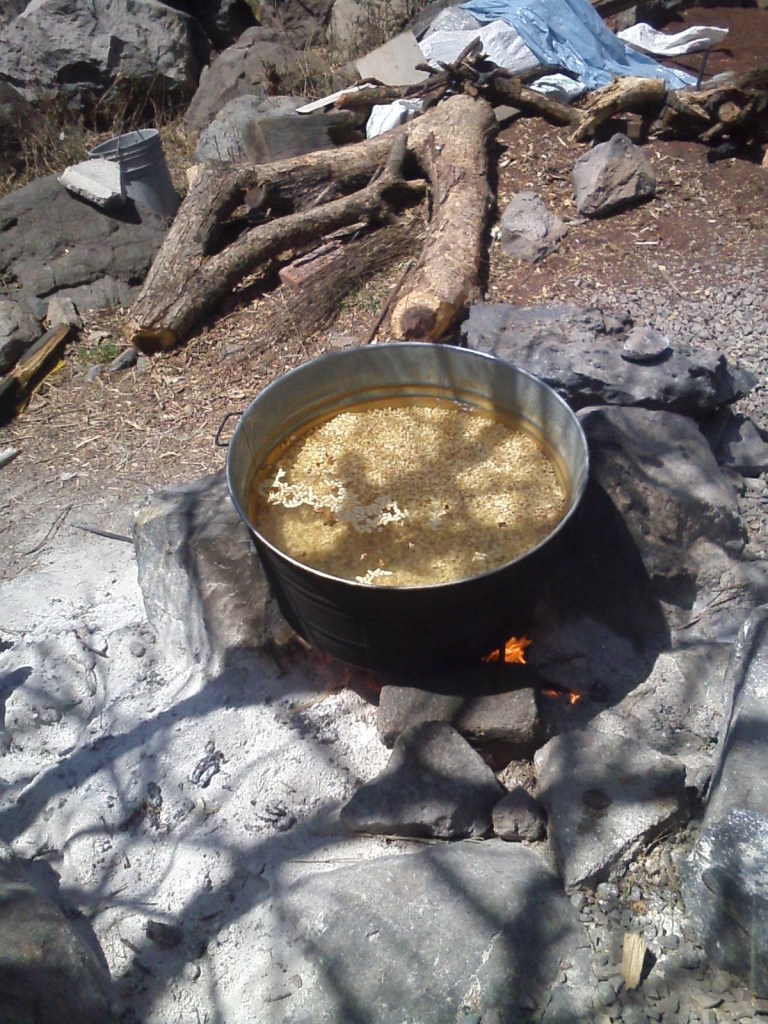
Corn and lime boiling in preparation for milling for tortillas.

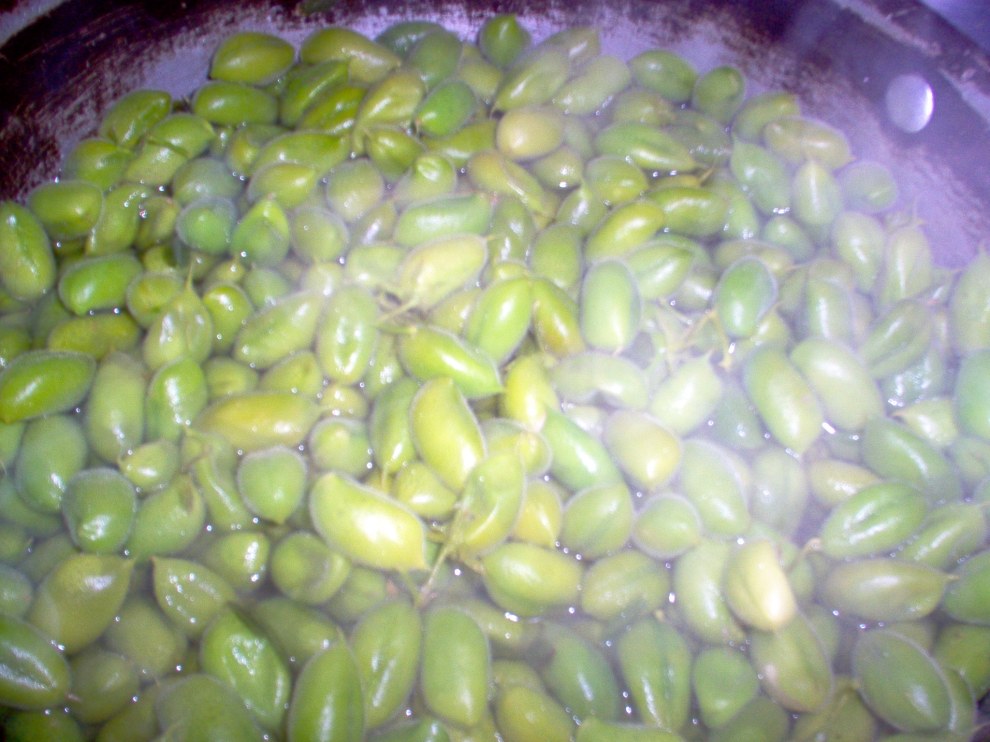
We also grow garbanzo (chickpeas) after the corn growing season is finished.  It makes for a nice snack, either raw or steamed, with the added benefit that the entire plant is eagerly consumed by our grazing animals.  Fiona, the donkey, is especially fond of garbanzo.
garbanzo

Steamed garbanzos

Our organically fed animals also provide us with delicious foodstuff. From our small herd of goats, we have daily milk and occasional meat. The milk we don’t drink right away is pastured right on the stove for later. We use it for creamy hot chocolate or honey-dripped oatmeal. The honey is from a local organic hive and delicious!

pasturizing milk

As we don’t have refrigeration, we dry our leftover meat into jerky strips. The dried meat theoretically should last several weeks. However, it rarely does due to the presence of a pre-teen, always ravenous, boy.

drying goat meat

Our chickens, ducks, and turkeys provide us with daily eggs and occasional meat as well. Just as with the goats, this means butchering. My husband has had years of practice at this and, therefore, our animals do not suffer needlessly.

butchering

We also keep rabbits and have recently added sheep to our backyard barnyard. Both provide occasional meat. (See Waskely Wabbits and Old MacDonald’s Farm). I’m hoping that our sheep will give us wool and perhaps milk later on as well. But as we haven’t had much success with sheep herding (See Birth and Death) it remains to be seen if that will actually happen or not.
full of tunas

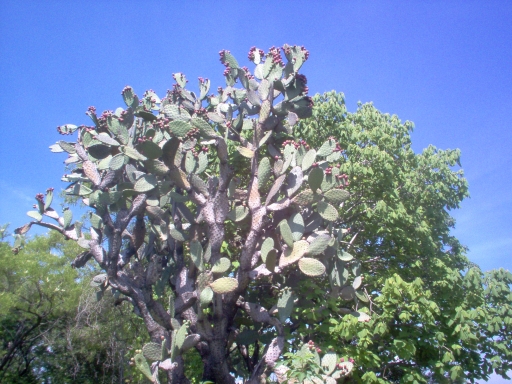
Tunas are not hard to find after the rainy season.

La Yacata provides food, free of charge, for us as well. Cactus fruit is abundant towards the end of the rainy season. It’s not unusual for us to spend an afternoon foraging for pitayas (See Picking Pitayas) or tunas (See Picking tunas) or harvesting nopales (cactus leaves)(See Harvesting Cactus) for dinner.
feverfew

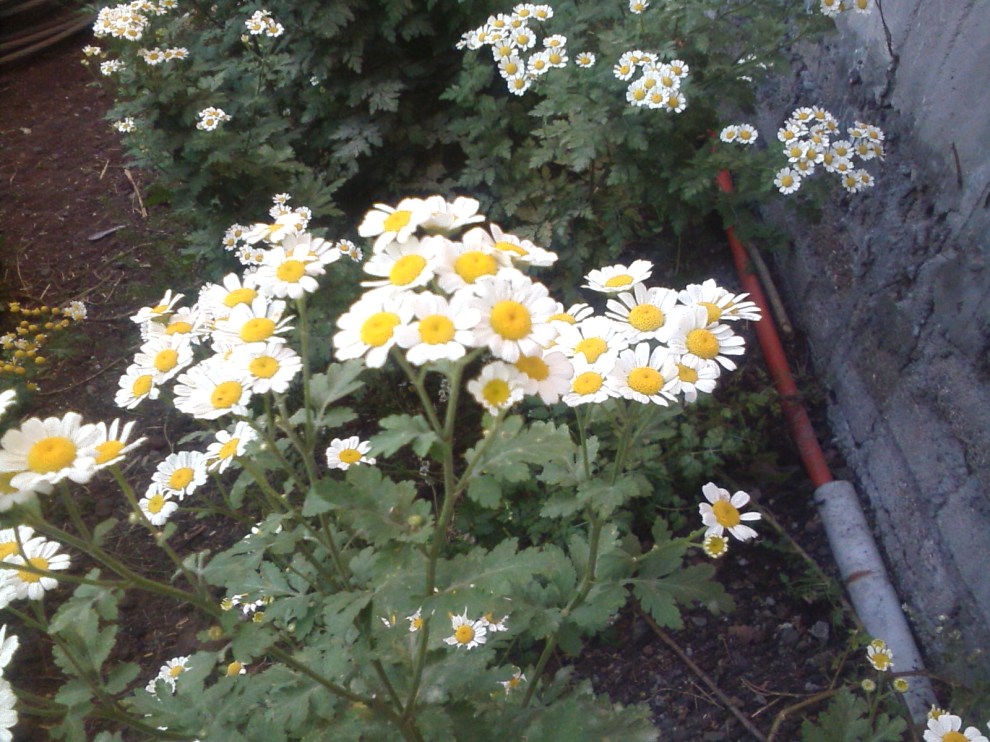
Feverfew

Tea can be made from hojas (leaves) or roots of a variety of naturally available plants. (See Feverfew tea and Lentejilla). Wild mushrooms are also found aplenty during the rainy season.
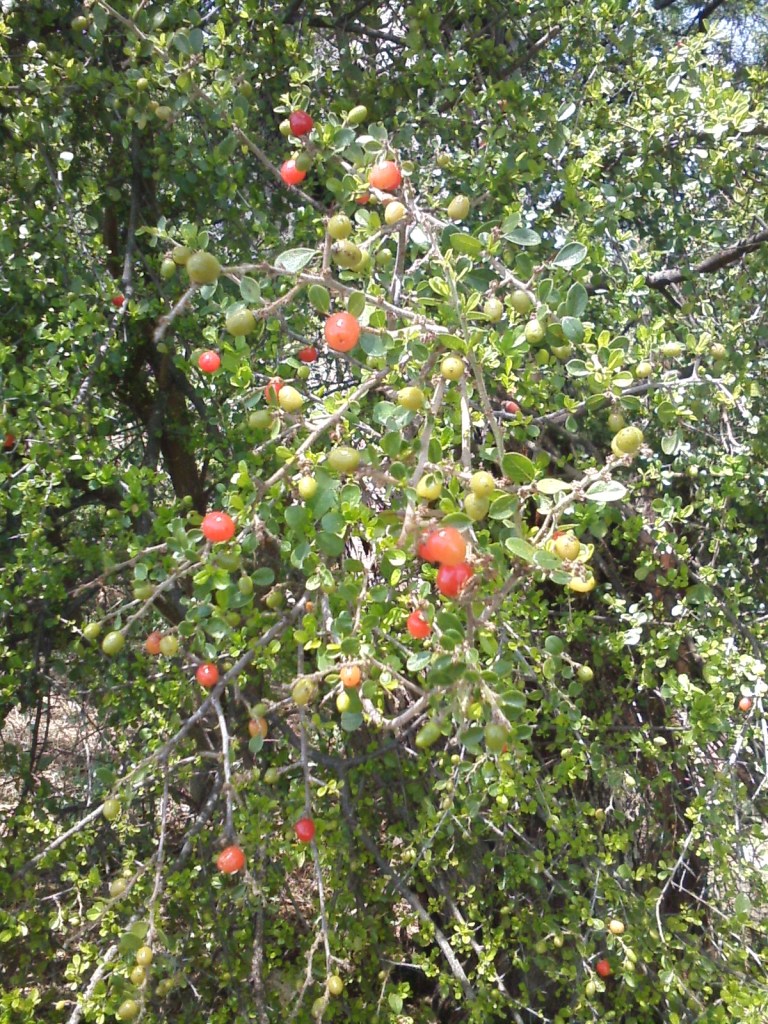
acebuche

Acebuche berries

Mesquite trees provide a chewy sweet treat for a snack. Acebuche trees have tart red berries that can be eaten right off the tree or made into a refreshing drink. Even the grass is edible. Quelite can be boiled like spinach.  (See Women in the Revolution–Marcelina)
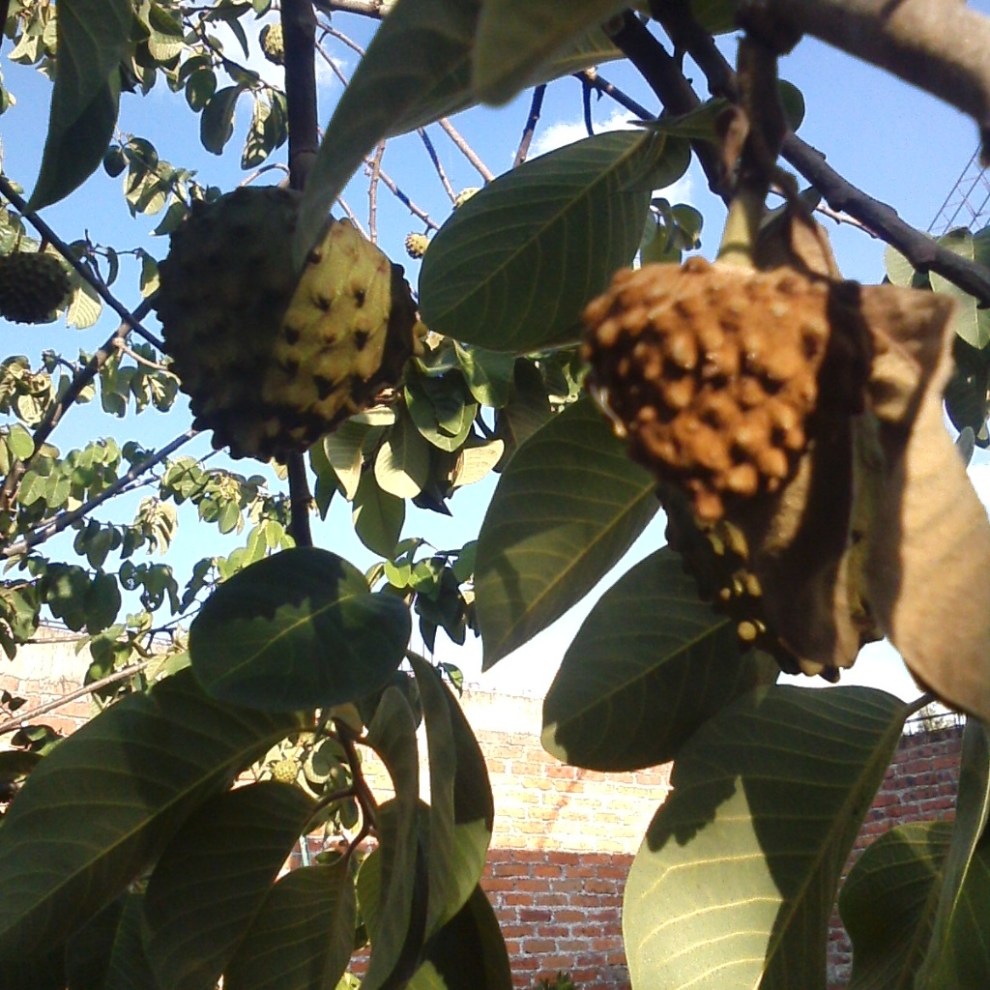
chirimoya

Cherimoya fruit

We have moras (blackberries), chirimoya, guayaba, limones (lemons) and durazno (peach) in season in our own garden. We anxiously awaiting fruit from our granada and nispero trees this year. Our orange tree up and died last year, so it looks like no oranges this year. I hope to do some container gardening as well. Backyard gardening hasn’t been very successful with our free range chickens and rabbits out and about.

******************************************


disclosure

10 Comments

Filed under Alternative Farming, Animal Husbandry, Health, Homesteading, Native fauna and flora, Natural Healing

Questionaire for La Yacata revolution

Mountains of paperwork and no appreciation makes being a member of the mesa directiva in La Yacata, pesada (cumbersome).

Mountains of paperwork and no appreciation makes being a member of the mesa directiva in La Yacata, pesada (cumbersome).

As I wrote in the last Revolution update, I was fed up with the general attitude expressed by the Yacata colonos (community members) and had decided to work on my serenity and my plans for a solar powered system instead of all this horse poop. So I wrote my letter of resignation and sent it to Super Prez. However, before I could comfortably throw in the towel, there were a few things that I wanted to finish up.

With the light at the end of the tunnel in mind, I organized the padron (property owner list) into colonias (neighborhoods) and sent out avisos (announcements) to every single one with the date and time of their appointment in SuperPrez’s office to fill out their encuesta (survey). With approximately 450 property owners, scheduling appointments every 15 minutes from 10 am to 2 pm Monday thru Saturday, it took 3 weeks. Each Saturday, my husband delivered the avisos for the upcoming week and SuperPrez had his secretary come into the office instead of where he had her working on a job site, to receive the people. Quite a bit of effort to say the least.

However, after 3 weeks, there was a grand total of 60 surveys completed. Those 60 surveys actually totaled 93 lots, with the addition of SuperPrez’s lots, made a grand total of 33% of all property owners. Disgruntled but determined to finish up, I then compiled the results and sent them on to SuperPrez for consideration.

The survey had 6 questions. Each question had a yes or no box to check and a space for open comments. Here is an English version of the questions and the overall response of the 60 community members who took the time to complete the survey.

Are you aware that since the formation of the current mesa directiva (which is SuperPrez, me, the secretary G. and the 3 vocales (underlings)) the main objective has been to regularize our community and complete the urbanization projects that are necessary? Yes 56 No 4  Why? I go to the meetings.

Are you aware that the only way to get escrituras (property titles) for the lots in La Yacata is by completion of all the urbanization projects in the community? (i.e. water, electric, sewer, pavement, sidewalks)?Yes 55 No 5 Why? It’s the law.

Are you aware that the costs of all of the urbanization projects in the community are the responsibility of each of the property owners in the community? Yes 55 No 5 Why? It’s a private community.

Are you aware that the urbanization already in place in La Yacata must be done again because they do not meet current code requirements and must be done as defined by law in order to get property certificates?Yes 48 No 12 Why? They were done wrong.

Are you in an economic position to begin making monthly installments in order to begin the urbanization of the community? Yes 19 No 41 Why? No work.

Do you have any suggestions about the monthly installments needed in order to complete the urbanization of the community?Yes 24 No 36 Why? Longer period to pay.

Two of the 60 survey participants marched into SuperPrez’s office and carried on a bit saying that SuperPrez is making illicit deals with the Presidencia (town hall) and this is all just a ploy to take their money. Whatever.

It seemed with these results, there would be no advancement with our plans for development. SuperPrez came to chat the evening before the junta (community meeting) and basically said the same. He was also annoyed that after all the time, money and effort we had put into this during the last 2 years, we had such little support from the community members. (Rateros–Really?) We speculated that perhaps the majority of those who had bought lots in La Yacata never had the intention of habitation. (See Good Fences Make Good Neighbors, No Honor among thieves) Perhaps they thought of it as a get rich quick scheme, buy low, sell high. We decided to give them the option of electing other representatives in our place. Seems like what the majority wanted after all.  Until tomorrow morning then…

**************************

disclosure


1 Comment

Filed under Electricity issues, La Yacata Revolution, Water issues

After ecstasy the laundry

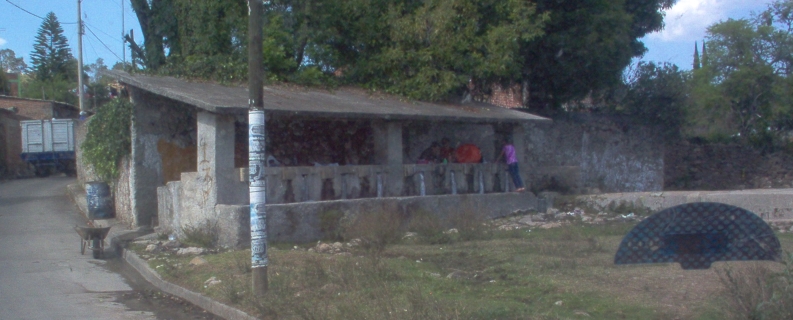
local laundrymat

A local laundry mat, although not the one we use.

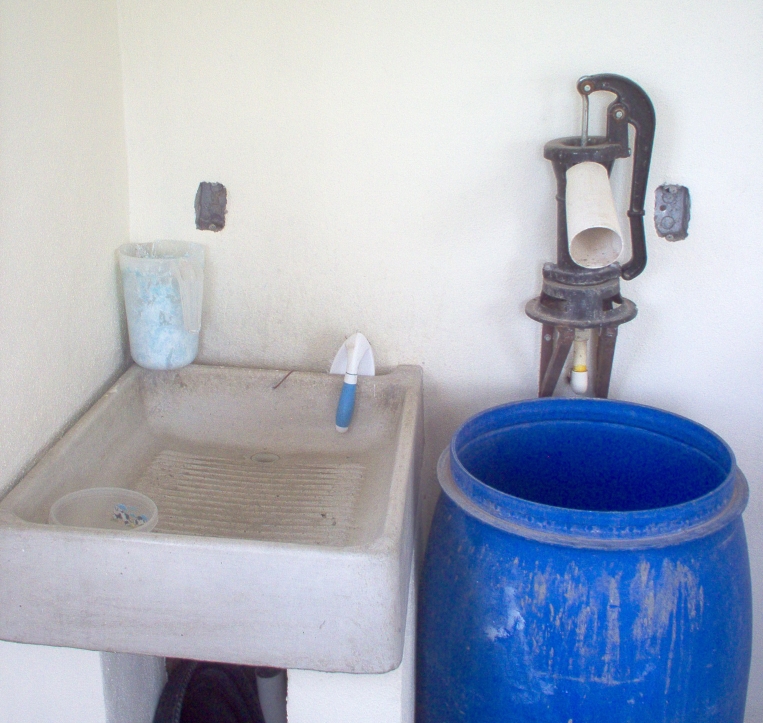
Laundry is another big water use.  We have a specially constructed laundry area on the second floor.  Instead of hauling buckets of water from the ajibe (dry well) we have a hand pump.  My mom sent it to us from the States as we were unable to find any sort of non-electric pump in the whole of México.  It’s wonderful!  My son’s job is to fill the barrica (barrel).  My job is to wash the clothes on the washboard using a Tupper ware container to scoop the water from the barrica (barrel).  My husband’s job is to wash the really heavy things, like blankets.  The wash water goes down another pipe into our garden and waters the plants.

laundry area

Our second-floor laundry area, complete with hand pump connected to the aljibe (dry well).

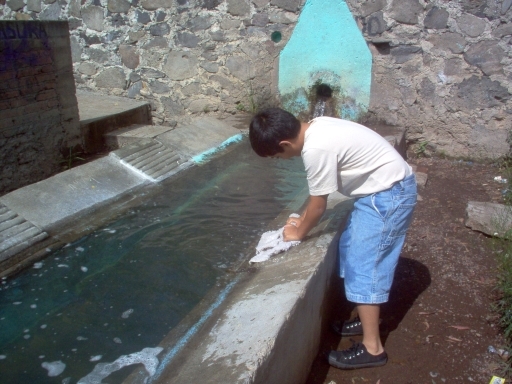
Sometimes, however, we are out of water at the house. This requires a trip to Quiahuyo. There is another natural spring there that has been divided into two area. One side feeds the lake, the other is diverted into a wash trough. The wash water goes to a swampy area near the lake and the plants filter the soap (which is typically biodegradable) from the water, which then runs into the lake.

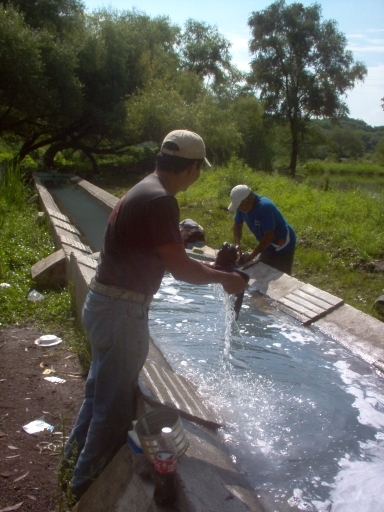
Washing in the arroyo (stream) is not an easy task. Therefore, everyone has to pitch in and help. As it is uncommon to see men washing in the arroyo (stream) when my husband, son, and father-in-law come with me to wash, we are the object of mirth. The passers-by laugh, make comments about the gringa washing with the marimachos (men who are effeminate). Well, most of those comments come from the machismos (macho men) drinking their caguamas (beer) in the shade by the lake. The women who pass, however, say quietly in passing ‘que bueno’ referring both to my own industriousness and the fact that my men are assisting.

doing the laundry

My husband and father-in-law doing the wash.

everybody helps out

Everybody helps out.

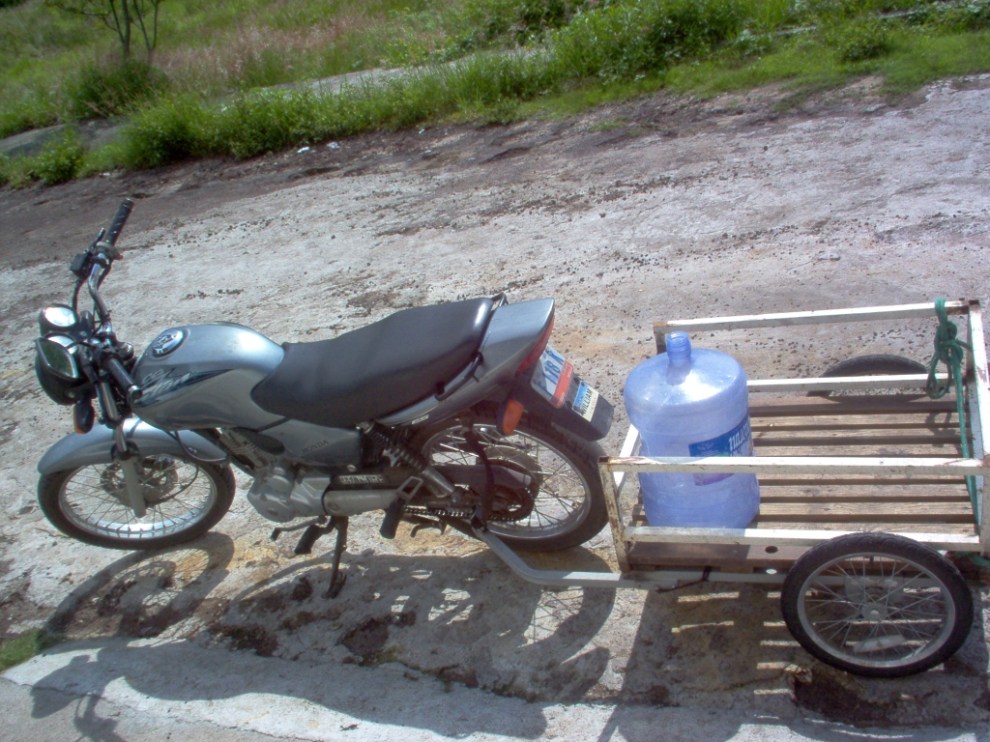
Then the wet clothing is loaded back in the truck (or in our moto cart) and hauled back to the house, up to the second floor, and hung out to dry. Besides the fact that we don’t have electricity to run a dryer, clothes dryers are rare, even among the wealthy. The sun is all a body needs to dry. However, make sure the clothes are hung inside out to reduce the amount of sun bleaching.

moto cart

My husband converted an old bicycle trailer into this nifty moto cart.

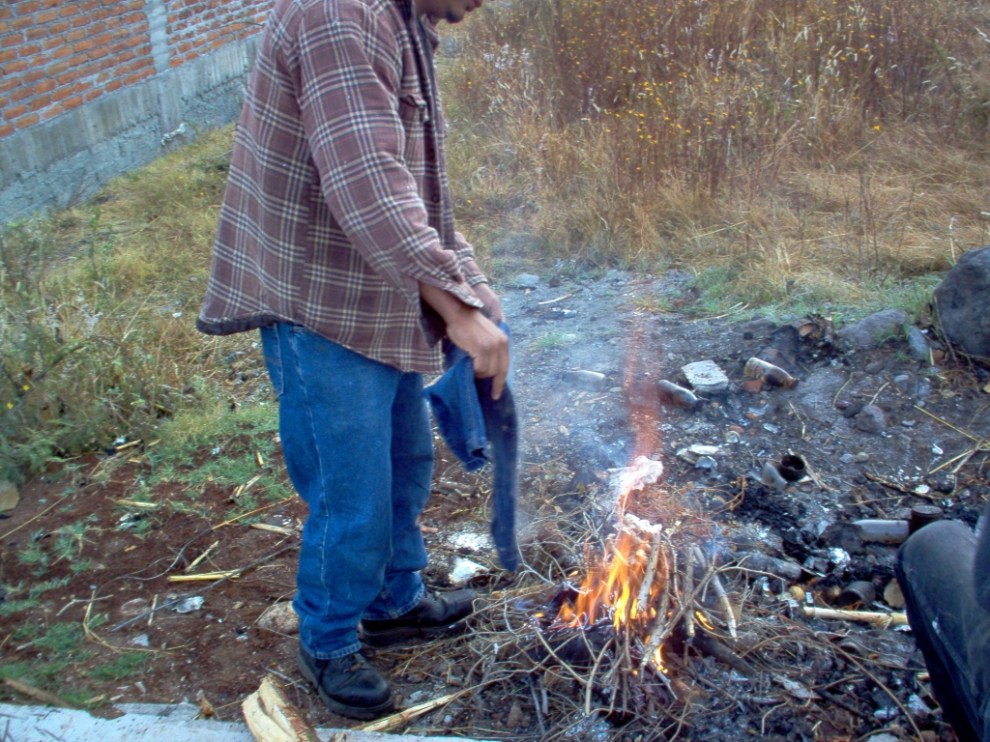
On occasion, an article of clothing is needed and the sun hasn’t been shining. So, we improvise. A little fire and a few minutes and its dry enough to wear in a pinch.

the emergency dryer

A bit of fire and instant dryer.

**************************************

disclosure

12 Comments

Filed under La Yacata Revolution, Water issues