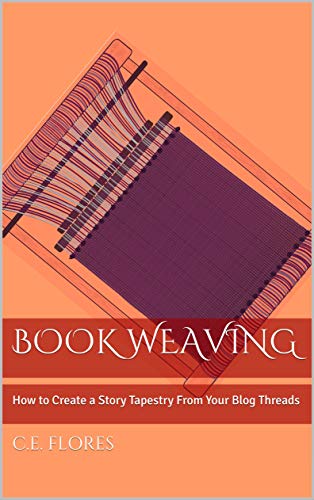
It’s designed for bloggers who want to make something tangible from their blog posts. I’d love feedback from anyone who has some thoughts on how I could make the information more interesting or if there are gaps in the material provided on how to structure a book.
I’m offering the eBook for free for the next few days, so be sure to get your copy from Amazon.
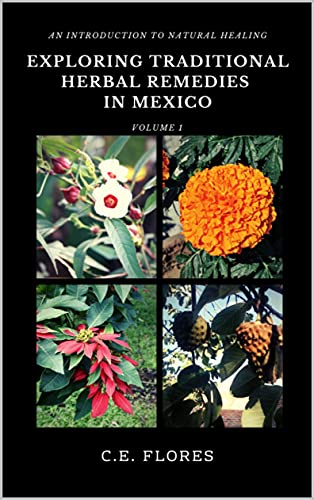
I’d also like to remind everyone that the eBook version of Exploring Traditional Herbal Remedies in Mexico is now available for download for those of you that purchased it as a pre-order. I had to wait until the Ultimate Bundles Herbs & Essential Oils bundle was finished before I could offer it on Amazon. The eBook version is a fraction of the price of the paperback version, so you’re getting quite a deal!
I’m working on a three-book series about self-publishing this month, so look for that announcement in the (hopefully) near future. Meanwhile, gardening is going well, those quarantine projects are slowly coming along, and we have our fingers crossed the rains will begin soon!
If you’ve been quarantined, you may find it a blessing in disguise. Perhaps you have more family time or can sit quietly with your cat for a while. Maybe, however, someone in your house is sick or in the high-risk category for contracting an airborne illness like COVID-19. What better time to enroll in an herbal class and learn about boosting your immunity naturally!
Herbs are not a “cure” for COVID-19, however, utilizing herbal infusions may be useful in reducing the severity of the most troubling symptoms like cough, aches, pains, and difficulty breathing. Incorporating more herbs and plants into your diet can strengthen your body’s immunity over time. And you can do that by adding some as seasonings to your regular meals, making teas and tinctures or just eating them raw.
Herbal Academy is committed to educating the world about herbs and their benefits. Last week, I shared the newest online offering, The Mushroom Course. Right now you can enroll with a discount of $50 until April 6 and start learning about the beneficial properties of fungi.
This week I wanted to let you know that several of Herbal Academy’s programs are 50% off.
The Introductory Herbal Course is designed for those with little or no herbal knowledge. You can preview a lesson from this course here.
The Intermediate Herbal Course is meant for those that have some understanding about the practical use of herbs for wellness. Both courses are 50% off for the next three weeks.
Even at this reduced rate, you might find the budget too tight and the future just too uncertain to justify these classes right now. That doesn’t mean you need to give up on your herbal education entirely, however. Huckleberry Mountain Botanicals offers free herbal content for you to enjoy.
I know I’m using this time to reflect on my health, make determined decisions to improve my wellness levels, and take the time to appreciate what I have. What about you?
As if you needed another reason to consume honey regularly, here’s a little bit of information about the sacred Melipona honey.
The Maya used the honey from the native stingless bee Melipona beecheii extensively in their traditional remedies. They believed that illnesses that could be cured with this honey had supernatural origins. It was used to treat both “hot” and “cold” infirmities including respiratory and digestive ailments, cataracts, pterygium eye and conjunctivitis, as well as wounds, burns, fevers and poisonous stings and bites.
The reason supernatural illnesses could be treated with this honey was because they believed it was a sacred gift from the gods, specifically the bee god Ah Muzen Cab. The Maya communities continue to use this sacred honey to treat cancer, sinusitis, typhoid, laryngitis, bronchitis, cough, bacterial infections and postpartum issues. It has and continues to be used as a sweetener, an antibiotic and the main ingredient in the fermented drinks balché and Xtabentun.
When Francisco Hernandez de Cordoba first arrived in the Yucatan in 1517, he encountered enough bee yards producing honey that was traded throughout Mesoamerica. The importance of this activity is evidenced in the Madrid Codex, one of the four surviving Maya codices, which was devoted entirely to beekeeping.
Honey contains iron, calcium, potassium, magnesium and vitamins B1 to B8. It is antimicrobial, antiseptic and anti-inflammatory, making it ideal for pain alleviaion in the throat, and as a result of burns and ulcers. Applied topically, it will moisturize the skin and is beneficial in wound healing. Honey can help ameliorate thyroid disturbances and reduce the risk of developing diabetes as well as fight cancerous cells.
The amount of nutrients that honey contains varies according to the local plant source.To determine whether a particular batch of honey is pure, drop a spoonful into a glass of water. Adulterated honey dissolves, while pure honey remains in a ball. Honey can be stored at room temperature. If it crystallizes, setting it in a pan of hot water will liquidize it again.
Melipona honey is slightly different than honey made from other types of bees. It is more watery, less prone to crystallization and contains more fructose than glucose giving it a distinct taste. The honey from these stingless bees has more antioxidant and anti-inflammatory properties than honey produced by stinging bees.
The Melipona bees are in danger of extinction. The ecosystem which they have co-existed for centuries is being destroyed. They are also facing increasing competition with the Apis mellifera bees since commercial beekeepers prefer their more abundant honey production to the native species. If you are in the Yucatan, be sure to take advantage of the local sacred Melipona honey available to you.
Precaution: Honey should never be given to children under one year of age because it may cause botulism.





![gailhampshire from Cradley, Malvern, U.K [CC BY (https://creativecommons.org/licenses/by/2.0)]](https://survivingmexico.com/wp-content/uploads/2020/02/bee-picture.png?w=1024)


 Surviving Mexico