You know how I love plants! That’s why I’m so excited to share the latest free resources from Herbalism Conferences.
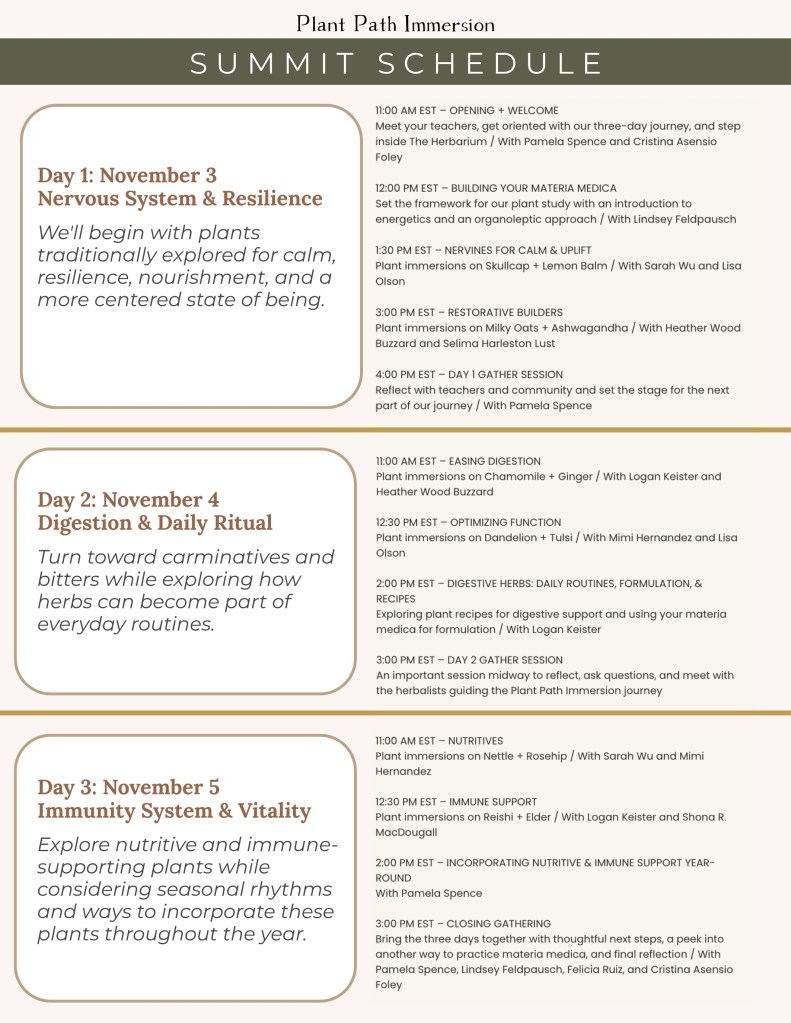
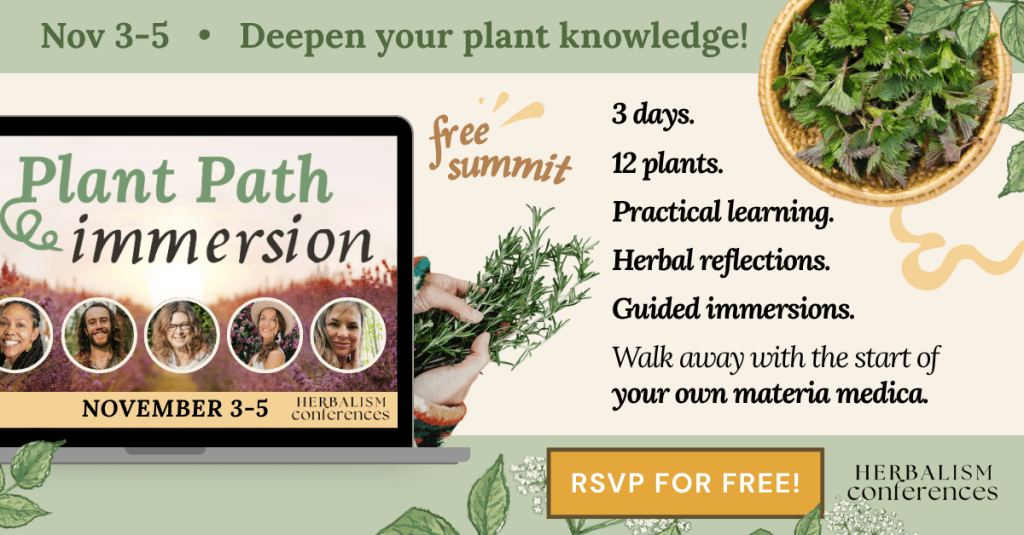
Take this opportunity to explore the fascinating world of herbalism through Plant Path Immersion, a free online herbalism summit taking place November 3–5. Whether you are an experienced herbalist or just beginning to explore the world of plant medicine, this three-day learning experience offers an opportunity to deepen your knowledge, strengthen your connection with plants, and develop resources to support your ongoing herbal studies.
The summit brings together experienced herbalists and the developers behind more than 200 plant profiles for The Herbarium, one of the leading herbal reference libraries. Through plant exploration, sensory observation, and practical learning, participants can begin building their own materia medica—a personal collection of information about plants, their characteristics, traditional uses, and roles in herbal practice.
What Is Plant Path Immersion?
A materia medica is an essential resource for anyone studying herbalism. It provides a way to document observations, organize plant knowledge, and return to what you have learned as your understanding develops. Plant Path Immersion is designed to help you create and expand this personal reference while exploring the unique qualities of 12 plants.
Throughout the summit, you will have opportunities to:
- Build your own materia medica. Develop a personal collection of plant knowledge that you can revisit and expand over time.
- Explore 12 plants. Investigate plants connected with the nervous system, digestion, immunity, and vitality.
- Develop your sensory awareness. Use observation and direct sensory experience to cultivate a deeper connection with plants.
- Explore the bigger picture. Discover how individual plants fit into broader herbal practices and how herbal learning can help us pay closer attention to nature’s rhythms.
Rather than simply collecting facts, Plant Path Immersion encourages a more engaged approach to learning. By observing plants, documenting what you discover, and connecting individual insights to a wider body of knowledge, you can develop a more meaningful and lasting herbal practice.
Plant Path Immersion takes place online November 3–5 and is free to join.
Discover Reishi: A Free Herbal Guide
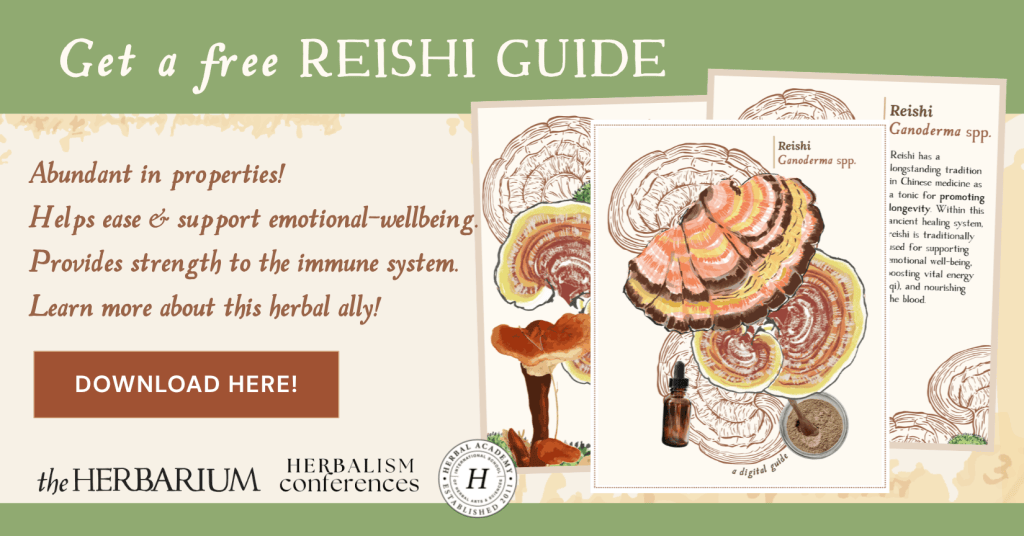
One of the highlights for anyone interested in functional mushrooms is the opportunity to learn more about reishi (Ganoderma spp.). On the final day of Plant Path Immersion, herbalist Logan Keister will host a session on this fascinating mushroom.
Reishi has a long history of use in traditional herbal practices and continues to attract interest among people exploring the world of functional mushrooms. Learning about reishi offers an opportunity to consider how fungi fit into broader herbal traditions and how their characteristics can be documented as part of a developing materia medica.
To help you explore this subject further, Herbalism Conferences has also created a free downloadable ebook dedicated to reishi.
The guide includes a detailed monograph and three nourishing recipes, providing an accessible way to expand your knowledge and bring your interest in reishi into the kitchen.
Try This Recipe: Mushroom Immunity Broth
One of the recipes featured in the reishi guide is Mushroom Immunity Broth. Combining reishi with a selection of nutritive herbs, aromatic ingredients, and roots, this broth can serve as a versatile base for comforting everyday meals.
Reishi contributes the mushroom component, while garlic and ginger add flavor. Astragalus, calendula, nettle, and dandelion root bring additional botanical variety to the preparation, and fresh parsley provides a bright herbal note.
Use the finished broth as a base for soups and stews or incorporate it into rice, quinoa bowls, and other favorite dishes.
Ingredients
- 4 oz reishi (Ganoderma spp.) mushroom
- 4 fresh garlic cloves, minced
- 1–2 oz fresh ginger (Zingiber officinale) rhizome, grated
- 1 handful fresh parsley (Petroselinum crispum) leaves, chopped
- 4 tablespoons astragalus (Astragalus mongholicus) root
- 4 quarts water
- 6 tablespoons calendula (Calendula officinalis) flower
- 4 tablespoons nettle (Urtica dioica) leaf
- 2 tablespoons dandelion (Taraxacum officinale) root
- Sea salt, to taste
Directions
- Wash and chop the fresh ingredients.
- Place all the ingredients in a large saucepan with the water and mix well.
- Cover and simmer for 45 minutes or longer.
- Strain the broth and season with sea salt to taste.
- Use as a base for your favorite soups, stews, rice dishes, quinoa bowls, and other comfort meals.
A note on preparation: Use food-grade ingredients from reputable suppliers and follow appropriate preparation guidance for the particular reishi product you purchase. Reishi preparations are not suitable for everyone and may interact with medications, so consult a qualified healthcare professional if you have health concerns or take medication. This recipe is a culinary preparation, not a treatment for immune or other medical conditions.
Continue Your Learning with Lifetime Access
For those who want to return to their herbal studies beyond the live summit, Herbalism Conferences also offers a Plant Path Immersion Lifetime Access option.
Having ongoing access to a learning experience can be valuable when studying herbalism. Plant knowledge develops through repeated observation, reflection, and practice. Being able to revisit educational material can help you review concepts, reconnect with plants you have studied, and continue developing your personal materia medica.
If you would like to explore the lifetime-access option, find the details here:
Make Time for Your Herbal Journey
Whether you are interested in developing a materia medica, exploring 12 plants in greater depth, learning more about reishi with herbalist Logan Keister, or finding inspiration for your herbal kitchen, Plant Path Immersion offers several ways to engage with the world of herbalism.
You can begin with the free online summit, download the complimentary reishi ebook and its three recipes, or explore the lifetime-access option if you want to continue your learning beyond the event.
Explore the opportunities and choose the path that best supports your herbal journey:
The more time we spend observing plants, documenting our discoveries, and learning from experienced herbalists, the more opportunities we have to deepen our understanding of the natural world. Plant Path Immersion is an invitation to make that learning a more intentional part of your herbal practice.