It’s that time again! A new Herbs and Essential Oils offering from Ultimate Bundles is available. Honestly, it’s hard to get essential oils where I live in central Mexico, so I’m only lukewarm about those items. But the herb stuff! Now that’s what I’m talking about!
With COVID and now the flu season kicking into high gear, I’ll be spending just as much time at home as I have for the past few months in self-quarantine. My fingers are tingling to get started on some of the resources in the bundle. Who wouldn’t want to try some Healthy Herbal Sweets? There’s an ecourse for that! EEEK! Exciting!
Then for those of you homeschooling, there’s a Mom and Me Herb Bundle Lesson with printables to keep those little minds active! And the Quick and Easy Family Favorite Recipes: Use Essential Oils in the Kitchen to Make Your Food POP with Flavor! ebook will liven up your dinner table.
If you’re looking for gift giving ideas, then you can’t go wrong with the DIY Herbal Gifts for Men, Herbs and Essential Oils in Soap Making, Natural Facial Soaps, and Relaxing Home Spa: 24 Natural Recipes for Self-Care ebooks.
If you really want to dive into herbal lore, then Medicinal Herbs Materia Medica Starter Pack ebook, The Herb Study Notebook: A Printable Guide to Deepen Your Herbal Knowledge, One Herb at a Time printable, and Making Herbal Preparations 101 by Herbal Academy ecourse are sure to please. You know I’m a big fan of Herbal Academy courses!
If you are interested in what you can do to boost your immunity with herbs, then An Herbal Winter, Simple Remedies for Cold and Flu Season, and the Echinacea 101: How to Use Effectively During Cold and Flu Season ecourses will appeal. The Happy & Healthy Holidays: The Ultimate Guide to Using Essential Oils for Health, Home, & Hosting, Healing Kitchen Herbs: 12 Common Herbs With Powerful Medicinal Benefits, and Herbal Teas for Winter Health ebooks will certainly make interesting reading in that regard as well.
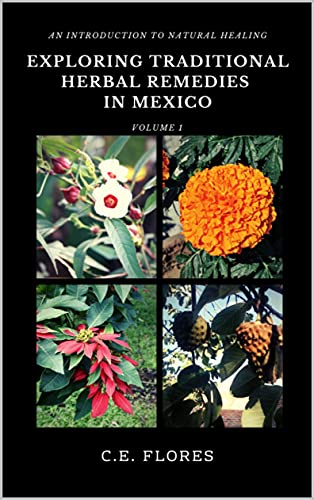
Now, it’s time to toot my own horn here. My latest herbal compilation Traditional Mexican Herbal Remedies is part of the bundle. It includes 20 herbs, or rather 19 and miel sagrado (sacred Melipona honey) and their medicinal use by Mexican healers as well as scientific research on their effectiveness in treating a variety of ailments. This little book is ONLY available through Ultimate Bundles which will ONLY be available November 16 – 20.
All in all, you’ll get 18 ebooks (including mine), 11 courses, 6 printables and workbooks, worth a total of worth $684.36 for $37. WHOO HEE! I’m all set to liven up my self-quarantine with a little herb action! How about you?
I’ve decided to make herbs a priority over the next few months. I’m in the middle of several additional research projects relating to herb use in Mexico. Then, I’m in the process of building my family’s immunity with delicious herbal additions to our daily food and beverage intake. I’m always up for more herbal identification and application skills. When I find something that I’m excited about, I like to share. SO…..
Today, through November 12, you can sign up to enjoy the FREE webinar Three Powerful Herbs to Support Relaxation and Energy sponsored by Ultimate Bundles and presented by Heather from Herbal Academy. Awesome! I’m psyched!
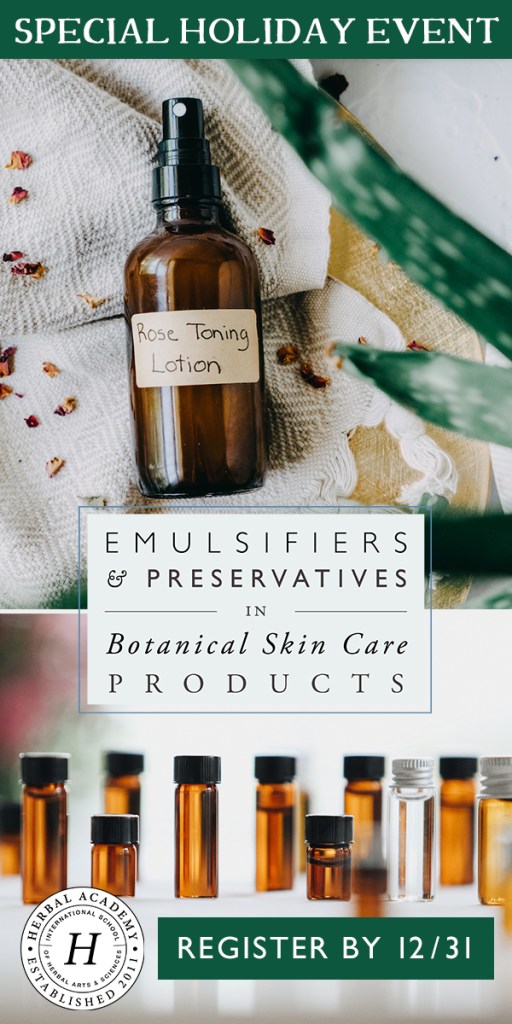
Additionally, Herbal Academy has a new course! Registration opens today for the Emulsifiers and Preservative in Botanical Skin Care Products Intensive from Herbal Academy. This two-part workshop is specially designed for those of you who love making skin care products from natural ingredients.
Session 1 will help you gain an understanding of why we need emulsifiers and preservatives in order to keep creams, lotions, and other emulsions stable and safe for long-term use. Session 2 will have you creating radiant, nourishing topical skin care recipes using some of our favorite herbal ingredients.
The workshop is only $27 with an optional Skin Care Preparations Testing Journal upgrade. Since we’ll be homebound mostly this winter, why not use this time to learn some new skills?
Calabaza was a ritual offering presented in honor of the dead during the month of Miccailhuitontli by the Aztecs and is still considered an appropriate addition to the altar during El Dia de Los Muertos celebration in Mexico in the form of calabaza en tacha (candied squash).
In addition to a delightful culinary treat, calabaza has been used medicinally to treat intestinal parasites, gastric disorders, obesity, diabetes, and nervios (nerves).
Cooked squash of any variety is good anytime to calm the nerves. If you’d like to find a way to incorporate more squash in your diet, horchata de semillas de calabaza is a refreshing beverage. Take 100 grams of squash seeds (pepitos) and 5 grams of hierbabuena fresca (fresh spearmint leaves). Add ¼ liter of milk and piloncillo (cone brown sugar) to taste. If you are using it medicinally, drink for three days in a row for stomach ailments.
Domesticated Calabaza
There are five varieties of calabaza cultivated in Mexico today.
Cucurbita moschata (including butternut squash) is referred to by a variety of other names including calabaza de Castilla, calabaza de casco, calabaza de pellejo, calabaza cuaresmeña, calabaza caliente, calabaza de pepita menuda, támala, calabaza de camote, calabaza torpe, ayote, Xnuk kuum, Nujuch kuum, and Xmejen kuum (Maya). The seeds, roots, flowers, and squash from the cucurbita moschata variety are used to treat urinary tract infections and skin ailments. The extracted oil has antioxidant properties.
For parasites, one remedy calls for a concoction of 30 grams of aceite de ricino (castor oil) and a pinch of salt. This is paired with calabaza en tacha made from C. moschata without the skin served in ½ cup of milk.
Another parasite treatment consists of a handful of toasted or raw seeds known as pepitas also from the cucurbita moschata variety of calabaza (pumpkins) and a few hierbabuena (spearmint) leaves eaten on an empty stomach.
The flowers of the cucurbita pepo are eaten seasonally with blue or yellow corn tortillas, most often in quesadillas. To prepare the flowers, they are boiled and the water is discarded so that any toxins are eliminated. The flowers are also served as part of salads or stuffed with cheese. The roots, leaves, squash, and seeds of this variety are used to stimulate the appetite.
Cucurbita pepo is also known as calabaza de comer, calabaza de manteca, calabaza de carrizo, calabaza mediana, Tsol, Tsool, Tzol (Maya) tempranilla, and mensejo. The grated raw peel from the cucurbita pepo is applied to burns and hemorrhoids as it is effective in wound healing. This variety, from root to fruit, is used in several areas of Mexico to improve health in general. It has a pancreatic lipase inhibition effect.
Cucurbitaargyrosperma is also known as calabaza caliente, calabaza de las aguas, calabaza pinta, calabaza de casco, calabaza criolla, calabaza pipiana, calabaza tapona, calabaza rayada, pipián, or calabaza guajolota. The seeds, flowers, young stems, and tender squash are eaten. The squash is made into a pulp and applied externally to treat skin ailments.
Cucurbita ficifolia is known as chilacayote, chilacayo, or chilaca. In Nahuatl, this variety was chilicayotli from the word tzilacayotli originally which translates to “smooth squash”. The young stems are eaten as a vegetable. When this squash is fully mature, it is fibrous and is used to make the sweet cabellos de ángel (angel’s hair) treat. Other candied squash made from this variety are dulce de alcayota, cayote en hebras, mermelada de calabaza, mazamorra de calabaza.
In Chiapas, the seeds are toasted and set in honey to make palanquetas (a candy bar). C. ficifolia has a marked hypoglycemic effect. It also has antioxidant and anti-inflammatory properties. Extract from C. ficifolia has been shown to be promising in the treatment of obesity.
Cucurbita maxima is also known as zapallo. Its seeds are the snack pepita rusa (Russian pumpkin seeds), eaten salted and toasted. This variety includes the red or orange pumpkin most people associate with Halloween. It is native to South America. In Chiapas, this variety is called malayota because it resembles tamale dough when pulped.
C. maxima has been shown to quickly decrease high blood glucose levels. C. maxima seed oil is useful in treating an overactive bladder. Ayo-nelhuatl (cucurbita maxima) root is mentioned in Libellus de Medicinalibus Indorum Herbis as part of a concoction used as an after-birth vaginal wash.
Wild Calabaza
These five are the most commonly cultivated calabazas found in Mexico. However, there are other wild calabazas that are used medicinally as well.
Cucurbita foetidissima (Buffalo Gourd) is a wild calabaza whose sour fruit is used medicinally after being cooked. The seed sprouts and roots are toxic and should never be ingested. The leaves and roots are used medicinally in Chihuahua. In other states, the roots are used to make soap because of its saponin content.
This variety is also known as calabacilla amarga, cohombro, hierba de la víbora, calabaza amargosa, calabacilla loca, calabacilla silvestre, calabaza de burro, chili coyote, calabaza hedionda, calabaza silvestre, calabaza del diablo, calabacilla de burro, Cua-cua (Chontal), chichic-amole and guelto-lana (Zapotec).
Apodanthera undulata (AKA calabaza hedionda or melon loco) is made into a pulp and used topically in the state of Guanajuato. The seeds are used to stimulate appetite in Jalisco and Zacatecas where it is known as calabaza amarga or calabaza loca.
In addition to the medicinal applications already mentioned, all calabazas varieties have antifungal and antibacterial properties. One more interesting cucurbita is the Cayaponia tayuya. The roots of this squash, native to the Amazon, have been useful in treating rheumatoid arthritis and also been proven helpful in the treatment of Epstein-Barr and skin tumors.
It just goes to show that a plant we may overlook may be full of beneficial properties.









 Surviving Mexico