Category Archives: Natural Healing

Natural Healing — Yerba de Sapo

Yerba de Sapo / Eryngium carlinae

One day, I was out foraging for wildflowers and came across the unique blue-tinged beauty above. I took a picture of it, but for the longest time couldn’t find anyone who could identify it. Several weeks later, the indigenous herb seller at the local tianguis (flea market) had a basket of these flowers dried. Delighted, I asked what the name of it was and what it was used for. He gave me the name “yerba de sapo” and with that, I was off on my investigations. 

Yerba de sapo translates as toad’s herb in English. The particular variety I encountered is Eryngium carlinae but there are more than 200 varieties in this species around the world. Some sources say this plant is blue thistle, others record it as button snakeroot or sea holly, and yet another source lists it name as Eryngo

The name in Spanish isn’t any less confusing. Yerba de sapo can also be spelled hierba de sapo, however, this is also the term used for Eryngium heterophyllum, another variety of the Eryngium genus with similar health uses. Other names include cabezona and cardón. 

It has been used since the time of the Aztecs as a restorative tonic, remedy for kidney problems, and weight loss aid. The mashed leaves were used to make a poultice for sore eyes. It was also used to regulate menstruation. 

For kidney ailments, a handful of yerba de sapo is boiled in a quart of water. Then one small glass is taken before breakfast. The herb guy recommended a handful of the herb should be boiled along with a bit of palo de brasil (Haematoxylum brasiletto) and palo azul (Eysenhardtia texana) in a tea drunk daily, to lower cholesterol levels and reduce weight.

A tea made from just the leaves is used to treat cough and whooping cough. The roots are edible and sometimes eaten toasted for urinary tract infections. The juiced roots are prescribed as an aphrodisiac, to improve urinary function or induce contractions. Combined with other herbs, it is used in a gonorrhea treatment. It is also used to treat kidney stones and as a cancer remedy. Yerba de sapo is often prescribed to allieviate angina pain and reduce arteriosclerosis.

Few scientific studies have been done on eryngium carlinae. However, those that have been conducted show promising results for its medicinal use. It has been shown to be effective in the treatment of diabetes. It has a hypocholesterolemic effect, meaning that yes indeed, it will lower your cholesterol. It reduces lipid peroxidation in the brain, kidney, and liver while increasing the catalase activity having antioxidant properties. It is antibacterial and has been approved as a beverage with renoprotective effects, thus good for the kidneys. 

Eryngium carlinae grows in chalky or limestone soil and higher elevations. In fact, the specimen I came across during my foraging trip was in the mountains near El Cerro de Los Amoles in what had been a limestone evacuation area. The plant does not like to be moved, but it can be propagated with root cuttings. 

Precautions:

Because it can stimulate uterine contractions, yerba de sapo should never be taken during pregnancy. It should not be ingested for more than eight weeks so as not to cause kidney damage. Those that are allergic to fennel, dill, or celery may experience an allergic reaction. 

***

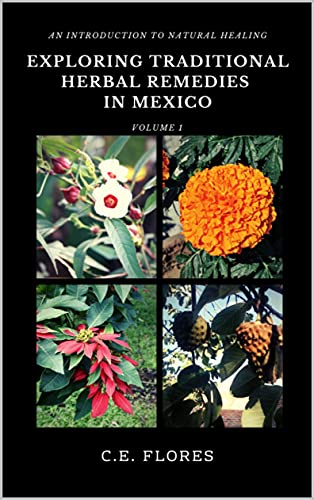
Interested in natural remedies? Uncover herbal remedies from traditional Mexican sources for healing and wellness in the Exploring Traditional Herbal Remedies in Mexico series.

Leave a comment

Filed under Health, Native fauna and flora, Natural Healing

Natural Healing — Peyote

Peyote / Lophophora williamsii

Peyote (mescal button) is best known for its hallucinogenic properties. This small, spineless cactus has a large quantity of mescaline which can cause euphoria, hallucinations, depersonalization, and psychoses. It is not physically addictive and does not produce life-threatening symptoms unless there are preexisting conditions that its ingesting aggravates. It does contain hordenine which increases blood pressure. The hallucinogenic tea made from peyote is bitter and causes nausea. 

It has traditionally only been ingested as part of religious ceremonies and therefore hasn’t developed into a recreational drug in Mexico. Peyote (Lophophora williamsii) is known as hikuri in Huichol, the language indigenous people in the state of Nayarit. Other names for the Lophophora williamsii include kamaba by the Tepehuán in Durango. The Tarahumara in Chihuahua use the term honanamé. The Cora call this plant houatari. The Nahuatl word peyotl which is the word peyote is derived from roughly translates as “silk cocoon” or “caterpillar’s silk” referring to the white wooly strands found on the top of the plant.

Among the Huicholes, Cora, and Tarahumara, the plant is sacred. Yearly pilgrimages are taken by the Huicholes by devotees to the desert area in San Luis Potosi where the peyote grows.  

Peyote has been used medicinally for thousands of years in Mexico, possibly as far back as 5,700 years ago. Peyote remnants have been found in a burial cave that dates back to 810 to 1070 CE in Coahuila, Mexico

Peyote was used prior to the arrival of the Spanish. Bernardino de Sahagún described the hallucinogenic effects of peyote in his work Historia general de las cosas de la Nueva España in 1558. He wrote “There is a plant that recalls the truffle; it is called peyotl, it is white in color and is produced in the northernmost regions of the country. Those who eat it see surprising and laughing things. This drunkenness lasts two or three days, and then it goes away. This plant is commonly consumed by the Chichimeca; It supports them and gives them courage for combat, sheltering them from fear, thirst, and hunger. The use of this drug was in the hands of the fortune-tellers and witches, and especially of the wearers of charms.“

As its use was tied so closely to religion, the Catholic priests sent to convert the native Mexicans were determined to stop its use completely lest the souls of the new Christians be contaminated. The Spanish Inquisition prohibited peyote use in Mexico in 1620. A confessional from 1760 contains the questions “Have you killed anyone? How many have you killed? Have you eaten the flesh of man? Have you eaten peyote?” implying that murder, cannibalism, and peyote use were on the same grievous sin level. 

Traditionally, peyote is also used in rural areas of Mexico to treat fever and as a general cleansing of both body and soul. Thin slices of the cactus are soaked in water, but not boiled, which is then drunk by the person with a fever. Sunstroke is also treated with sliced pieces soaked in water. However, in this case, the water and slices are placed in a glass and then poured over the person’s head. 

There’s more to this little cactus then hallucinations. Peyocactin is an antibiotic derived from the peyote cactus effective against 18 different penicillin-resistant bacteria. Extracts from the Lophophora williamsii have also been shown to stimulate the immune system. Hopefully, further research will be done on this medicinal plant in the future.

Note: Although peyote is not illegal in Canada nor in Mexico, it is limited in use in the United States to religious ceremonies. In the U.S. it is considered a controlled substance. Lophophora williamsii is an endangered species and should not be harvested in the wild. 

***

Interested in natural remedies? Uncover herbal remedies from traditional Mexican sources for healing and wellness in the Exploring Traditional Herbal Remedies in Mexico series.

1 Comment

Filed under Health, Native fauna and flora, Natural Healing, Religion

Natural Healing –Alfalfa

Medicago sativa arrived in Mexico with the Spanish colonists in the 16th century as fodder for their horses. The original Arabic word al-faṣfaṣa has evolved to alfalfa, which is how it is referred to in North America. It’s still commonly used as animal food. However, alfalfa is also used to strengthen lungs, treat kidney inflammation and anemia, as a relaxant, to prevent scurvy, and alleviate rheumatism in traditional Mexican medicine. 

Studies have shown that alfalfa stems and leaves reduce cholesterol absorption and atherosclerotic plaque formation. Regular ingestion reduces hyperglycemia levels. It also has antimicrobial, antifungal and antibacterial properties. Alfalfa is also antioxidant and may protect the brain from damage as a result of strokes. The plant loses potency when dried, so using fresh leaves, flowers, and roots is best. 

As a detoxifier, three teaspoons of lightly crushed leaves are steeped into a cup of boiling water daily. For kidney infections, a full plant with roots and two Agave lechuguilla plants are boiled in a half liter of water for five minutes. Another remedy calls for four complete agave lechuguilla plants and one full alfalfa plant with roots. Boil them for five minutes a liter of water. Allow it to cool. Drink half in the morning before breakfast and half in the afternoon before dinner. Alfalfa is effective in reducing painful urination and can help with peptic ulcers as well. It has a mild diuretic effect, making it a useful digestive aid. 

For nerves, one cup is taken every other day with 25 grams of new leaves boiled in a half liter of water for three minutes. For anemia, the flowers and leaves are used in a decoction. 

Blend lime, alfalfa and water into a beverage for lung remedies. For general well-being, and to avoid scurvy, fresh leaves are often added to soups, atole, or eaten with tortillas by children. Not surprisingly, alfalfa has properties known to improve immune system functioning

As a treatment to encourage increased lactation, 50 grams of new leaves are boiled in a liter of water and given to the new mother. Since it has been shown that alfalfa has significant estrogenic activity, if the low milk production issue is due to hormones, this is an effective remedy. Alfalfa has also been useful in treating hot flashes and night sweating in menopausal women and increasing thyroid functioning. 

Boiled alfalfa seeds sweetened with honey is prescribed to alleviate rheumatism. However, raw alfalfa seeds and sprouts are toxic and can cause lupus-like symptoms in certain individuals. Seeds should never be taken during pregnancy or while breastfeeding. 

Alfalfa has a grassy taste, as you might expect. It’s not a strong flavor and can be easily added to blended juices if you are considering including this herb in your regular diet.

***

Interested in natural remedies? Uncover herbal remedies from traditional Mexican sources for healing and wellness in the Exploring Traditional Herbal Remedies in Mexico series.

Leave a comment

Filed under Health, Natural Healing