Did you know that in addition to corn and chocolate being native to Mexico, avocados, peanuts, squash, tomatoes, sweet potatoes, and papaya are all Prehispanic delights?
Avocado is thought to have originated in the state of Puebla. The oldest evidence of avocado use dates to about 10,000 BC, found in a cave located in the town of Coxcatlan. The word avocado comes from the Spanish aguacate which comes from the Nahuatl word āhuacatl which goes back to the proto-Aztecan word *pa:wa. The Nahuatl word also can be translated as testicle. Since this fruit was considered an aphrodisiac, perhaps because of its similarity to male reproductive organs, young girls were kept indoors during the annual avocado harvest.
Aguacate maduro, pedo seguro. Ripe avocados–farts for sure!
Without the avocado, there would be no Guacamole! The name Guacamole comes from the Nahuatl work āhuacamolli which translates as avocado sauce (see Mole).
The tomato also comes from Mexico. The name comes from the Nahuatl word tomatl which translates as “fat water.” The Aztecs cultivated the tomatl and came up with a new species they called xitomatl which translates as “plump thing with a navel.”
A la mejor cocinera se le va un tomate entero. A whole tomato can escape the best cook.Meaning everyone makes mistakes.
And what would salsa be without the tomato?
The papaya was also a common domesticated fruit in Mexico before the arrival of the Spanish. It was called chichihualtzapotl in Nahuatl which meant zapote nodriza (mothering or nursing zapote.) The papaya had medicinal value to the indigenous peoples of Mexico. The Aztecs applied papaya fruit to their skin for relief from insects bites. Asthma was treated with boiled papaya leaves applied to the chest.
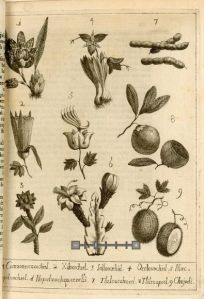
Nine flowers of Mexico
The modern day name for the zapote fruit, papaya, comes from the Mayan word páapay-ya which means zapote jaspeado (marbled or spotted zapote).
Peanuts may have been domesticated in Argentina or Bolivia. However, its cultivation in Mexico was well-established before the arrival of the Spanish. Peanuts were called tlalcacahuatl or tlalli auh cacahuatl in Nahuatl which gives us the Mexican Spanish word cacahuate that is used today.
One of our local peanut vendors in Moroleon, GTO
Me vale un reverendo cacahuate. It’s as important to me as a holy peanut. Meaning it’s not important to me at all.
The oldest pumpkin seed found was in the Guila Naquitz Cave in Oaxaca and dates as far back as 7000 BC. Squash has been cultivated in the Tehuacan and Oaxaca valleys and in Tamaulipas since 6000-5000 BC. Its cultivation predates the domestication of maize and beans by about 4,000 years. (See Las Tres Hermanas)
Squash was a ritual offering presented in honor of the dead during the month of Miccailhuitontli by the Aztecs and is still considered an appropriate addition to the altar during El Dia de los Muertos celebration in Mexico in the form of calabaza en tacha (candied pumpkin).
Sweet potatoes are native plants that are found from the Yucatan on down south to Venezuela. The Maya domesticated the plant at least 5,000 years ago. In Mexico, sweet potatoes are known as camotes which comes from the Nahuatl word camotli. Camotes enmielados (honeyed sweet potatoes) are yet another specialty food traditionally made and served for El Dia de Los Muertos.
I hope you’ve enjoyed this little week-long foray into traditional eats in Mexico as much as I have! And remember–La vida es un camote agárrese de donde pueda. Life is a sweet potato. Hold on to it where you can.
Mole (pronounced moe-lay) comes from the Nahuatl word mōlli (sauce) or chīlmōlli (chile sauce). There are some misconceptions here that mole is only the brown chocolate sauce that in Mexico is called mole poblano. As you will see, mole comes in quite a variety of delicious flavors, all of which have chiles rather than chocolate as the common ingredient.
There are several legends about the origin of mole. One is that the nuns at the Convent of Santa Rosa is Puebla were in a lather about the visit of the archbishop. They rustled up what ingredients they had on hand and dumped it all in a pot to simmer. They killed the old turkey wandering around the yard too. When the archbishop arrived, they served poor ol’ Tom turkey smothered in the sauce made from leftovers. When asked, the nuns declared that they had made “mole” (a mix).
Then there is the legend that the monk Fray Pascual invented the dish, again to serve to the archbishop, or maybe it was the viceroy, there seem to be several versions. While the monk was preparing the meal, a sudden wind knocked over the spices into the pots where the turkey was simmering magically creating mole.
I say, poppycock! Mole predates the Spanish invasion in Mexico. Bernardino de Sahagun writes about mollis being used in a number of indigenous dishes in his work General History of the Things of New Spain. A popular Aztec dishes of the time was the totolmolli (turkey hen or chicken in mole sauce).
Where doubt sets in is in the use of chocolate in the sauce. Both the Aztecs and Mayans considered chocolate sacred. Therefore, it was reserved for the highest level priests and royalty. Thus, to include chocolate in a dish for the common people would have been considered sacrilege. That doesn’t mean that there were NO sauces with chocolate, only that they were not served to those who were not priests or royalty. (See Chocolate) Perhaps Cortes was fortunate enough to be served chocolate mole as he was considered a reincarnation of the god Quetzalcoatl and the recipe got out. We may never know.
Up until recently, mole was the standard dish eaten at celebrations of all social economic classes in Mexico. The expressions Ir a un mole (to go to where there is mole) means to attend a wedding, one of the traditional ceremonies that customarily served mole. Nowadays, the upper classes have stopped preparing and eating it, preferring imported foodstuff to traditional at their parties. This is yet another loss in the ongoing processes of colonization. Language, food, and customs are insidiously being replaced. Women no longer learn the art of cooking mole from their mothers. Mothers no longer teach their daughters.
In a few remaining places, the preparation of mole is still a community event, usually in honor of a patron saint or local holiday. In these communities, each person involved has a part to play in the production, much like the tamaladas that gather to make tamales (See Tamales). There is always one person, usually a woman, who is given the honorary position of molera, the head chef. It is she who makes the final determination on how much of each ingredient is to be used.
That is no easy task. Mole poblano has about 20 different ingredients. Oaxacan moles can have more than 30. Recipes are approximate, variations are practically limitless. But, under the direction of the molera, the ritual of the mole is not lost.
In general, when making mole:
Mole ingredients can be classified into 4 distinct groups–the chiles, sour ingredients (like tomatillos), sweet ingredients (like fruit and sugar) and thickeners (nuts or tortillas). Ingredients are roasted and ground into a powder or paste. This is mixed with water or broth and simmered while being stirred constantly until it thickens. Chocolate, if included, is added at the end of the cooking process. It’s always served over something, meat, poultry, eggs or rice.
It’s important that those making mole not become angry, otherwise the mole will boil over or spoil.
The paste or powder can be prepared separately and often can be purchased to reduce the steps in making this unique dish. Interestingly enough, these powders have such a strong scent that they have been registered as explosives at the Mexico City airport. This strong flavoring is the basis of the expression “en su mero mole.” Mole is an acquired taste and to be in your own mole, is similar to the English expression to be or not to be one’s cup of tea.
Below, I’ve provided a link to recipes of a number of mole sauces.
Moles with chocolate
Mole poblano is the most well-known mole. It is considered one of the national dishes of Mexico. It is often served with turkey when prepared for weddings, birthdays and baptisms. During the Christmas holiday season, it is often served over shrimp garnished with rosemary.
Mole coloradito is made to be served over pork, chicken or beef and it is a red brick color. It is a specialty of Oaxaca.
Mole negro also known as mole oaxaqueño is one of 7 distinctive types of mole made in Oaxaca. Mole negro is served with chicken, turkey or pig head. It has up to 34 ingredients and 6 types of chiles. It also has bananas, gingerbread, almonds, peanuts, avocado leaf, cinnamon and chocolate among other ingredients.
Mole xiqueño is the specialty of Xico, a town in the state of Veracruz. It’s a fruity mole with raisins, xoconostle, bananas and nuts in addition to the chocolate.
Moles without chocolate
Chirmole, also known as chilmole or relleno negro is a dark mole and is common in Yucatan.
Huaxmole, also known as guaxmole or mole de guaje is made with guaje seeds, also known as huaxin, cacalas or cascalhuite, which taste like garlic. It was traditionally prepared for holy day festivals and served over goat meat.
Mole de caderas also known as mole de chivo is a specialty of the states Oaxaca and Puebla. It is meant to be served over goats that have been fed large quantities of salt, giving the meat a distinctive flavor. It is traditionally prepared during the annual goat butchering festival, usually sometime between October and December. During the festival, there is a “danza de la matanza” which ends with the sacrificial killing of a male goat. There is also an altar prepared by the butchers who make offerings and prayers so that the goat harvest is at least as good as if not better than the previous year.
Mole Michoacan. This red mole is prepared with pumpkin seeds and they must not have shell nor salt so the final flavor is not altered and is a speciality of Michoacan.
Mole Amarillo is another of the Oaxacan specialties. It gets its yellow color from the yellow chihuacle chile. It’s also seasoned with hoja santa which gives it a licorice flavor.
Mole chichilo from Oaxaca is served with beef and comes in negro (black) and rojo (red) depending on the manner the chiles are prepared. Of the seven specialty moles of Oaxaca, mole rojo is the spices.
Mole prieto, also known as tlilmolli, comes from the state of Tlaxcala. It has traditionally been part of the ritual festivity in honor of the goddess Toci, patron saint of textiles and health. It prehispanic rituals, this mole was served with deer, turkey or Xoloitzcuintle, a Mexican hairless dog bred specifically for food. Nowadays, it is served with pork. During the pre-festival preparations, a bottle of liquor is buried and a cross made of nopales and chilpotle is placed over the spot. This is done to prevent the mole from boiling and spoiling.
Mole verde, yet another mole from Oaxaca, uses green tomatoes, parsley, and green chiles to give it its distinctive herb flavoring. It’s often served over chicken with chayote, green beans, and white beans.
Pipián is a peanut or pumpkin seed sauce served over chicken. It comes in rojo (red) and verde (green). Pipian verde is also made with ajonjoli (sesame seeds) or pepitas (pumpkin seeds)
Mole tamaulipeco, from the state of Tamaulipas, is served over chicken stuffed with olives. Ingredients include onion, garlic, olives, raisin, tomato, tomatillo, cinnamon, thyme, parsley and capers among others. It’s often served with white rice with chiles and carrots in vinegar.
Mole Soups
Mole de olla is more of a soup rather than a sauce. It is made of xoconostle, squash, green beans, corn, potato, chambarete (beef shank) simmered into a broth of chile guajillo and chile pasilla, seasoned with garlic, onion, and epazote. It is served with pieces of chopped serrano pepper and lemon.
Mole de panza is cow stomach stew, also known as menudo. Mole de panza uses cilantro rather than oregano as seasoning.
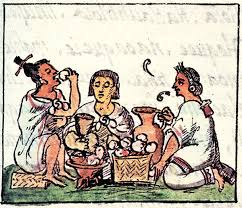
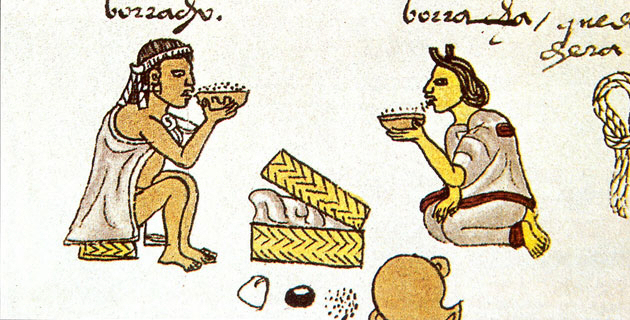
Hospitality was always a part of prehispanic life in Mexico. When guests arrive, they weretypically offered tasty and carefully prepared meals and beverages. These culinary delights were passed on generation after generation. Girls were not considered marriageable until they could grind corn and make atole.
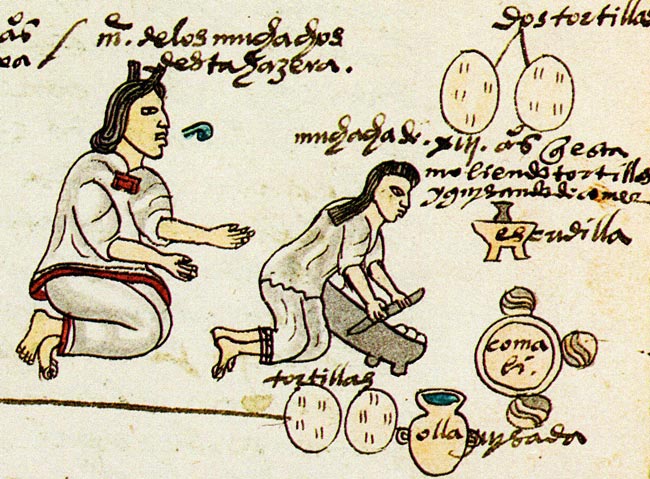
An excerpt from the Mendoza codex showing a mother teaching her daughter at about the age 13 in the arts of cooking.
So what’s atole? Glad you asked. Atole is a corn-based drink somewhat like gruel. The word comes from the Nahuatl word atolli. Atole Blanco (white) is the base drink without sugar or other flavorings, also called atole de masa.
There are oodles of flavors available. Atole negro (black) is made with the shells of the cacao bean. Atole de pinole is cornmeal atole flavored with piloncillo (brown sugar), a popular beverage among the Tarahumara people. Chileatole is prepared with chocolate, chile peppers, vanilla, and honey. There is also a salty chile atole made with green chiles, onion and epazote.
Atole de pepita chica is flavored with toasted and ground pumpkin seeds. Atole de maiz de teja is made with toasted and ground sunflower seeds. Atole de changunga, also called atole de nanche, is made from the small, yellow fruit of the same name and is a traditional drink of Purepecha people in Michoacan.
So how does one make atole? In 1651, Francisco Hernandez reported that “Atolli was eight parts water and six parts maize, plus lime, cooked until soft. The maize was then ground and cooked again until it thickened.”
There you have it, folks! The secret recipe. If you need more specifics, click on one of the recipe links or videos I’ve included in this post.
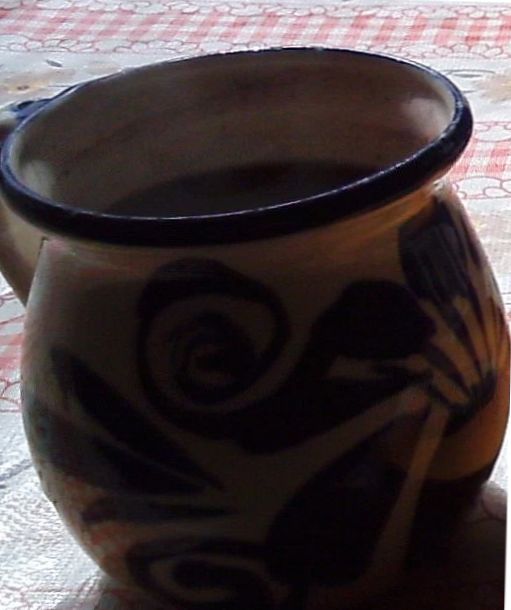
Remember, the best atole is cooked in an olla de barra (clay pot) and served in a clay cup. The Mayan loved their atole so much they even went so far as to have glyph engraved vessels for their drinks, complete with the maker and flavor listed.
As the extensive list above demonstrates, although atole is sweetened, it’s not always sweet. The following Mexican dichos (sayings) make reference to this fact.
When newly in love, you might hear this expression “Contigo la milpa es rancho y el atole champurrado.” (With you the corn field is as scenic as the countryside and the atole is always sweetened with chocolate) But later on, after a few years, once the romance has dimmed, you just might hear “Más vale atole con risas que chocolate con lágrimas.” (It’s better atole with laughter than chocolate with tears.) Simple and happy over rich and sad any day!
************************************************** Buy 2x1Kg of Naturally Sweet Stevia and Get A Box of Sachets FREE






 Surviving Mexico