

The last Friday of every month during the school year, except December and Semana Santa, is the dreaded CTE (Consejo Technico Educativo) meeting for teachers formerly known as Organo Colegiado Escolar (OCE).
The now redesigned CTE meetings are a direct result of recent educational reforms passed into law by the esteemed Mexican President Pena-Nieto. In theory, additional teacher training is a good idea. After all, the Mexican educational system definitely has room for improvement. But…..
The CTE forum is based on a teacher training program used in Chile, modified to suit the Mexican government’s agenda. Instead of open and frank discussion and problem-solving, the content of the CTE meetings is carefully orchestrated by the Ministry of Public Education (SEP). Each meeting is to focus on a reglamento (statute) and there is no room for individual school differences based on the assumption that the teachers, students, and schools in Oaxaca and those in Mexico D.F. are equal in every way. Everybody must be on the same page as the program progresses. (Educational Reform and State Power in Mexico)
In addition, each school is to submit a proyecto escolar (school project) complete with short and long term goals. Again, in theory, that seems reasonable. However, the school projects must be approved or the school risks losing accreditation. So it’s no surprise that the projects are, more often than not, chosen from a government approved list rather than designed by each school to meet its needs.
As if that isn’t enough, individual teachers are required to submit el plan de maestro (teacher’s plan) which demonstrates how each teacher plans on incorporating the school project and reglamentos (statutes) set up by the CTE into his or her teaching.
So we have this 3-tiered plan of action in school reformation which sounds progressive, to be sure. However, government control is rampant. Subject matter is carefully monitored. Textbooks are issued by SEP and both teachers and schools must render an accounting at the end of the school year. The CTE meetings are yet another way the federal government of Mexico is exerting its influence on the educational system.
The national news has been highlighting some questionable activities on the part of teachers to support the new reforms. One practice that surprised me was the passing on of teaching degrees to the children of the teachers who had obtained them. The teaching credentials are considered an inheritance much as a title of Don was under Spanish rule. But that age-old tradition took a back seat to other “concerns.” Probably because nepotism is alive and well here in Mexico.
Fun Fact for ya–Did you know that the current president is related to four former governors in his state and that his cousin took over his governorship when he was elected as president?
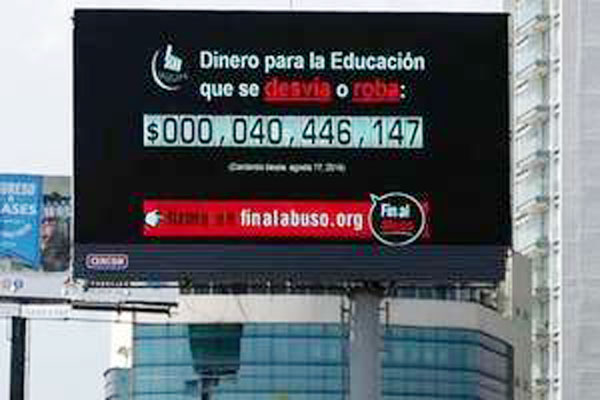
Another less than kosher practice was discovered when a census of current teachers was conducted. There were thousands of teachers throughout Mexico that were receiving government pay for teaching at non-existent schools. Reportedly there were even 70 teachers nationwide earning more than the President himself. I find that hard to believe. Perhaps the dean of UNAM could be raking in those big bucks. But really, even the Mexican Institute for Competitiveness (IMCO) reported that the average teacher’s monthly salary at only about $2,000 USD. Being a teacher myself, I find this estimate still too high.

Looking at another source, the World Salaries comparison reports Mexican teachers earn between $651 USD and $1,018 USD. That seems to me a far more believable figure since my own teacher salary is under even that amount. The inflated IMCO figures have been used to prejudice the general public against teachers. Based on those figures, the agency reports that teachers are the highest paid occupation in Mexico. That’s an eye opener for ya! I’d like to see the census of politicians receiving excessive pay and compare their paychecks before I make any judgment on this particular issue. (See Mexican Officials Feather their Nests while Decrying US Immigration Policy)
Just as an interesting side note—Did you know that the current president of Mexico receives somewhere between $13,307 USD and $20, 857 USD each month before taxes? Nobody seems clear on the exact figure of Sr. Pena-Nieto’s salary. Did you know that the current president will continue to receive a lifelong pension after his term ends? Did you know that there are currently 5 ex-presidents receiving this lifelong pension?
Then another 1,440 teachers in Hidalgo all had the same birthday and were over 100 years old. Those dastardly teachers! However, the state officials clarified that those marked with the birthdate December 12, 1912 have child support deducted from their salaries and the birthday is a way of noting that.
Another little tidbit–Pena-Nieto has been accused of being a deadbeat dad. He fathered an illegitimate son in 2005, while married to his first wife (who died under mysterious circumstances in 2007). He claims he pays up, but the mother of his child disagrees and outed him on Facebook in 2012.
Finally, there was the recent arrest of the former president of SNTE teacher’s union for embezzlement. Elba Esther Gordillo even made Forbes Most Corrupt People in Mexico list. But don’t worry, it’s not just teachers that are corrupt. Pena-Nieto’s own uncle, Arturo Montiel Rojas, also made the list.

So based on these questionable teacher practices, the federal government has stepped up their vigilance. There has been extreme resistance to reforms from the National Union of Education Workers (SNTE) and the National Committee of Education Workers (CNTE), but not for the reasons that are often publicized.
For instance, one of the new requirements will be the mandatory testing of all teachers, principals, counselors and staff. The assessment designed by the National Institutes for Educational Evaluation (INEE) must be satisfactorily completed during a two-year period. If teachers do not pass, they will no longer be allowed to teach, but will be assigned administrative positions or be forced to accept voluntary retirement. A teacher that does not take the test will not be allowed to continue in his or her current position.

The SNTE and CNTE are not opposed to teacher testing but insist that this will not solve the underlying problems in the Mexican education system. One teacher described the situation in this allegory paraphrased below:
‘The government has seen that our students are in an educational “bus” that is in poor condition, like the trambillas (chicken buses). The shocks are gone, the brakes don’t work, the steering wheel is loose, the floor is rusted through and so on. The government sees that our children take this bus over a rough road, hardly even a road, full of dangerous curves, holes, steep cliffs and so on (Mexican society) So the government’s solution to this is to take the driver of the bus (the teacher), give him a new suit, a fancy cap, train him to fly planes even. Then, after all that specialized training put him back in the same bus that runs over the same road. The problems that the educational system face are not being addressed in additional teacher training.’–Professor Alberto at the November 27th CTE multi-grade meeting in Moroleon.

Another issue that protesting groups highlight is the top-down approach to educational reform as demonstrated in the CTE sessions and the national exams. The teacher unions insist that exams should be created from the bottom-up with teachers in the classroom contributing to state-administered exams that take into account the disparity of income, culture and even language found throughout Mexico.
While Mexico has eliminated the yearly national exam called ENLACE, the National Institute for the Evaluation of Education (INEE) began implementation of another exam administered to sixth graders in elementary school, third-year secondary students (ninth graders) and third-year high school students (12th graders) called PLANEA.
At our last CTE meeting, we were given a chart that showed the results of the PLANEA from last year. Guanajuato state was next to last for the results of this exam. The top performing district was Mexico City, followed by Colima.
Ok, looking at just that information–
Mexico City is the 8th wealthiest city in the world. Schools within the district are under the domain of the federal government rather than State control. So it would be safe to bet that schools are more than adequately equipped with all the modern doodads that make learning interactive and fun. Federal teachers are paid much higher than State teachers, another incentive there. And as the federal curriculum comes from the same source the PLANEA, students taught that curriculum are in a good position to score well on the exam.
Colima, ranking in a #2 on the PLANEA exams is Mexico’s fourth smallest state and the second-lowest population but is considered to have the highest standard of living and lowest unemployment rate in Mexico. Again, it seems that the prize goes to the elite. Within the state, there are only 307 preschools, 510 elementary schools, 131 middle schools and 57 high schools.
Now let’s look at Guanajuato, ranking next to last on the PLANEA exams. This state has over 4,000 preschools, 4,600 elementary schools, 1400 middle schools and 650 high schools. Aren’t we comparing apples to oranges here?
All in all, based on the results of the PLANEA only 12% of students in Mexico have adequate academic skills. At the last CTE meeting, teachers of Guanajuato, me being one, were berated for the low scores because it has to be the teachers fault, right? (See Mexico Public Education: New Student Achievement Test Finds Elementary and Middle School Students Still Perform Poorly)

But what’s this all about really? Here are some headlines that you might not have seen with all this publicity on educational reform–
Mexico Plans to Eliminate 246 Social Programs in 2016
Nearly a Dozen Dead After Violent Few Days in Mexico’s Guerrero
Mexican President Has Spent Almost $1 Billion in Publicity
Mexican Lawmakers Demand Peña Nieto Declare Financial Assets
Violence, Impunity in Mexico Put Governance, Democracy at Risk
Drug Violence Fueling Displacement in Guerrero, Mexico
Mexico readies for 2016 Domestic Drug Policy Debate
Leaked Intelligence Points to Top Level Corruption in El Chapo Escape
Pemex: Oil Theft Up by 44% in Mexico
Mexico Local Officials Behind Mass Grave in Morelos
The Implications of Mexico’s Rising Deportations
No Keystone, No Problem: TansCanada Turns to Mexico Expansion
Violence, drugs dash Mexico Triqui people’s dream of new start far from home
Yes,’ Carlos Slim Is Linked to Drug Trafficking
***********************************************






 I am thankful for the hardship of living in Mexico. Things that I wouldn’t even bat an eyelash at in my own community require mental and physical exertion here, more than I ever dreamed of. It’s not just the blatantly difficult things in my life, like doing laundry in the arroyo (See A
 I am thankful for the lessons I have learned along the way and those that I have yet to learn. I have learned that I can not impose my will on others (See







 Surviving Mexico