The gorgeous yellow trumpet bush, locally known as retama, grows wild in La Yacata. It’s a favorite of hummingbirds, so I always am delighted when it sprouts up in the backyard. My husband, not so much. He says it’s only good to make tea to stimulate the appetite and that it’s a horrible tea to drink, speaking from experience.
That couldn’t be all this lovely plant was capable of, so off I went to track down its medicinal properties. The botanical name is Tecoma stans and it is native to the Americas. It is drought-resistant and prefers rocky soil, which makes La Yacata an excellent habitat for it. Throughout Mexico, it is known by many names including flor amarillo, Hierba de San Pedro, Palo de arco, and tronadora.
In Nahuatl, it was known as tecoma xóchitl (flower in the form of a vase), Candox, Nixtamal Xóchitl and used medicinally by the Aztecs. In Maya, it is K’anlol or Xk’anol.
In Mexico, traditional remedies still use the stems, flowers, leaves, branches, bark and root of this plant to cure. An infusion of the flower stems is given to reduce the effects of a hangover. Tea made from the roots is prescribed as a diuretic. The leaves are used to make a decoction drunk before breakfast for nine days to treat gonorrhea.
To treat whooping cough, a decoction is made from the leaves of the retama, cabbage rose petals, and stems of tasajo cactus. Retama is also included in remedies to treat adult onset diabetes. The leaves and flowers are used to treat the common cold, fever, headache, kidney problems and jaundice. The flowers and leaves are also applied externally as a poultice to treat skin infections. A tea made from the flowers is made to calm menstrual cramps.
I’ve started gearing up for a holiday season without much social interaction this year. Mexico is moving towards full reopening. Campeche was the first “green” state on the COVID scale. However, the state that I live in, Guanajuato, still has rising cases and is in fact second after Mexico State or third if you could Mexico City as a separate entity.
So since I’m not planning on spending time at el Panteon for El Dia de los Muertos, watching the parade for El Dia de la Revolucion or sing in unison during Las Posadas, I did some thinking about how I could enjoy my holiday season without social events.
Happily, I can still enjoy traditional dishes without leaving my home. Hot chocolate, tamales, pozole, pan de muerto, and ponche here I come! I’m also working on more Mexican herb monographs (which will be available shortly through Ultimate Bundles! I’m so excited!). I’m kept busy with our animals and teaching the huge increase in online classes, too.
If you are struggling to find something to look forward to, Herbal Academy has some amazing new courses available and I’m rubbing my hands together in glee!
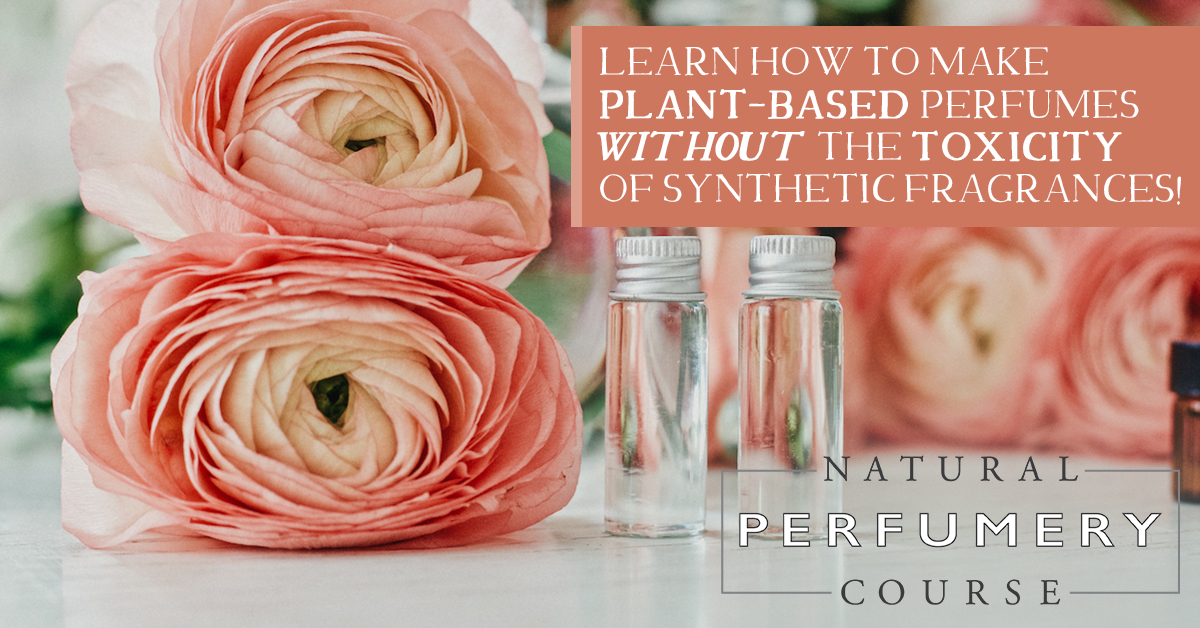
The Natural Perfumery Course is open for pre-registry until October 18 for $39. Not only does it look to be an amazing class, but it’s just the thing to make your own perfume for holiday gifts this year. The class includes 7 lessons, 20 recipes as well as several perfumery plant monographs. A little natural scent does wonders for your mood! And if you know a budding herbalist, this would make the perfect gift!
Herbal Academy is also offering a Botanical Nootropics Intensive Course through The Herbarium. Nootropics refers to substances that enhance cognitive function, brain-boosters if you will. This 3 lesson course will help you become more familiar with how herbs affect brain function.
One-year access to The Herbarium is $45, but a 3-day trial membership is just $3. With membership, you’ll get access to the new course and six other short courses in addition to 170 herb monographs, more than 200 articles, videos, ebooks, and podcasts.
If the state of the world is getting you down, the Herbal Self-Care for Stress Management Course can help. In his class you’ll learn how lifestyle practices, herbs, and food choices can impact your wellbeing. And don’t forget to download the Cold and Flu Season Ebook FREE for even more herbal care tips.
Herbal Academy has a number of other classes that I’ve enjoyed over the years. Taking charge of my health through natural healing has been one of the things that have kept me even keeled during this uncertain time. The classes are informative and the practical applications fun. Working with herbs is an extremely satisfying experience–one that I highly recommend.
So herbs, herbs, and more herbs are on my agenda for the next few months. What are you planning this holiday season?
When basil was first used in Mexico, medicinally is a little unclear. The plant ocimum basilicum is most often referred to as albahaca or alhábega in Mexico. The origin of those words implies that basil was yet another herb that came with the Spaniards since herbs with the prefix al- were Moorish derivatives. So in Mexico, you’ll find albahaca blanca (white basil), albahaca corriente (wild basil), albahaca de castilla (Castile basil), albahaca de la tierra (ground-growing basil), albahaca morada (purple basil), and albahaca arribeño varieties among others.
However, some believe that at least one variety, Ocimum campechianum (Cinnamon basil), known as albahaca de monte (mountain basil), is native to Mexico. The fact that there are terms in Nahua (talachía) and Maya (Kha-kal-tun) for Ocimum basilicum seem to support that theory, as do some of the traditional medicinal uses.
Albahaca is used to treat bilis, a Mexican infirmity that is believed to be caused by sudden rage (coraje). Bilis is the Spanish word for bile. The Aztecs believed that the liver was one of the three centers of energy. Strong emotions were centered in the liver, which would then become enlarged when there was an excess of emotion. It was thought that after this extreme emotional outburst, the person would show symptoms of bilis, including intestinal inflammation, gas, constipation, vomiting.
One remedy for bilis included leaves from albahaca, tomato, estafiate (white sagebrush), yerba buena (spearmint), orégano de monte, and a piece of nopal root from the Opuntia cactus. The herbs and root are simmered for 10 minutes, then strained. One cup is drunk daily for 9 days before breakfast.
Albahaca is generally used for digestive issues, which may or may not be caused by bilis. Twenty grams of basil and 200 grams of water are drunk three times daily to stimulate digestion. Ocimum basilicum is an effective remedy for preventing colitis, gastric ulcers, and diarrhea.
If your upset stomach or attack of coraje is caused by parasites, albahaca has you covered there too. Intestinal parasites are treated with 10 grams of albahaca and 100 grams of water drunk on an empty stomach. Another remedy for expelling parasites calls for fresh basil simmered for 15 minutes and strained. One or two drops of anise oil are added to the tea and drunk as needed.
Caída de mollera (sunken fontanel) is another Mexican ailment that is often treated with albahaca. This condition occurs when the soft spot on a baby’s head seems to be concave. Newborn babies are not held upright in the belief that this will cause caída de mollera.
In addition to a sunken soft spot, other symptoms include vomiting or diarrhea. A sunken fontanel is often a sign of dehydration. Traditional treatment for caída de mollera includes giving the baby weak infusions of albahaca or manzanilla (chamomile), which soothe the digestive system and provide some of the needed liquids as the baby recovers.
Isihuayo is a term used to describe the displacement of a woman’s uterus after she has given birth. Talachía (AKA albahaca) is used to help settle her organs back into place. The woman squats over a steaming infusion of Ocimum basilicum as part of after-birth cleansing rituals. As albahaca has antiseptic, antibacterial, and antidepressant properties, this may be an excellent way to get a new mother back on her feet.
In many areas, it is believed that brujas (witches) can not tolerate the smell of basil. So you’ll sometimes find a basil plant along with an aloe vera plant (which witches reportedly fear) at the entrance of a business as a ward against evil. Although I can’t attest to the anti-bruja effectiveness of albahaca, it is a reasonably efficient insect repellant.
Albahaca is also used in Mexico to help with breathing issues. One remedy calls for boiling 6 leaves in ¼ liter of water for five minutes and then allowed to cool. This is drunk morning and night without added sugar for five days. Studies have shown that the anti-inflammatory properties found in basil are indeed useful in the treatment of asthma and lung inflammation.
If you have canker sores, try gargling with 40 grams of albahaca and 200 grams of water. Remember, basil is anti-bacterial, and it just might bring you some relief. If you have an earache or are experiencing ringing in the ears, ground leaves on a cotton ball placed in the ear might help.
For rheumatism, a rub can be made with one liter of alcohol and equal parts of albahaca, ruda (rue), and romero (rosemary). Use this linament on affected areas for 8 days. Basil has is an analgesic which would explain why this treatment is so effective. Migraines are also reduced in frequency and severity after basil essential oil is applied to the temples every eight hours.
Regulation of menstruation is another condition that albahaca is called upon to remedy. One method is to drink 4 cups of 100 grams of basil per liter of water. Another technique consists of a spoonful each of dried ruda (rue) albahaca, and yerba buena (spearmint) steeped in a cup of boiled water.