
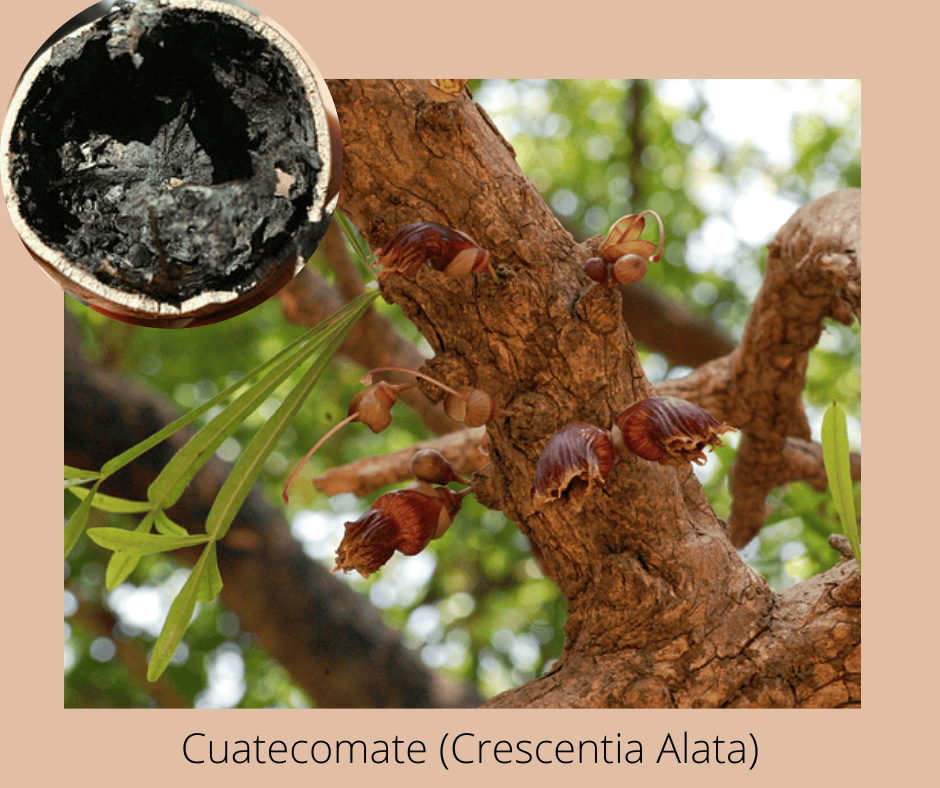
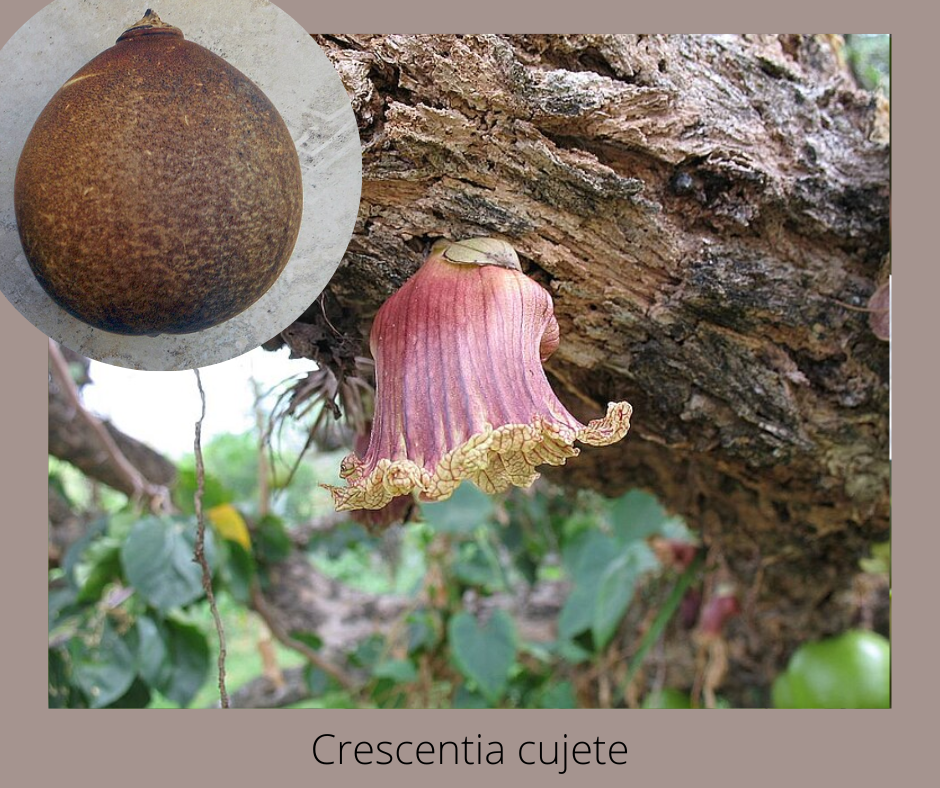
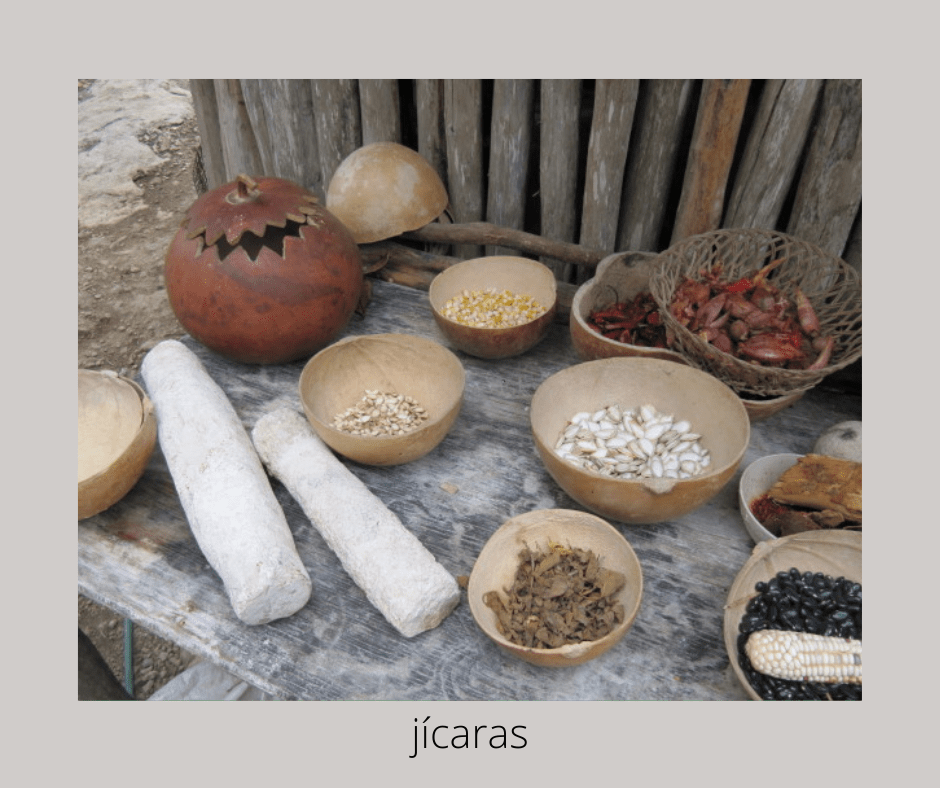
Cuatecomate with a spelling variant coatecomate (Crescentia alata) is in the same family as the jícara (Crescentia cujete), and in some areas, the term jícara is used for both plants. Cuatecomate produces much smaller fruits that are more appropriately sized for cups and maracas rather than bowls. Geographically, cuatecomate is more plentiful on the Pacific coast of Mexico and Central America compared to Crescentia cujete found along the Yucatán peninsula. Both species are cauliflory, meaning flowers and fruits grow directly from the main trunk rather than on the branches.
In Michoacán, Crescentia alata is known as sirián or cirián. In Oaxaca and Guatemala, it is called morro and chookari in Rarámuri. Tecomate, ayale, guaje cirián, huaje cirial, and aval are other common names. In English, this variety is Winged Calabash. Botanical synonyms include Pteromischus alatus, Crescentia trifolia, Parmentiera alata, Crescentia ternata, Otophora paradoxa,
The wood ash is an ingredient in tamales nejas. The seeds are toasted and ground and made into horchata de morro. The dried seed is toasted on the comal (griddle) and flavored with salt and limón (Citrus aurantifolia) as a sweet snack. The fruit pulp is a good source of vitamin A and ascorbic acid. However, it is toxic to some livestock and birds.
Caramelos de Morro are prepared by boiling two liters of water in a clay pot with the pulp of four morros, panela (dehydrated sugar cane), and cinnamon sticks. Once everything is soft, mix until it looks gelatinous. Remove from heat while continuing to stir. Once it reaches room temperature, shape small balls and wrap them in tissue paper.
In traditional Mexican medicine, cuatecomate is prescribed for whooping cough, colds, kidney and liver issues, dysentery, respiratory conditions, and burn care.
A leaf decoction is applied as an astringent for hemorrhoid reduction and to stimulate hair growth. A leaf infusion is prescribed for diarrhea made from 75 grams of leaves per ½ liter of water. One or two cups a day are recommended.
The flower is heated on the comal (griddle) until the sap can be removed for ear infections with no more than three drops for each ear.
A tincture made from the seeds is rubbed on the chest for pain. The fruit shell is dried, ground, and made into a poultice for burns. A root infusion is given to manage diabetes.
The fruit pulp is crushed, mixed with honey, and applied to sores or bruises. A decoction of the fruit pulp sweetened with panela is prescribed for stomach issues or inflammation.
A tincture for lung ailments and breathing issues is made by making a hole at the point where the stem connects and removing the pulp but not the seeds. The nearly empty shell is filled with mezcal and left to ferment for two days. After which, the patient takes a shot of the liquid three times a day. Another tincture calls for sugarcane alcohol allowed to steep in the shell for seven days along with the leaves of the guayacán amarillo (Handroanthus chrysanthus) and administered daily by the tablespoon on an empty stomach.
Studies have shown that cuatecomate possesses significant anti-inflammatory activity, and is antimicrobial, and antibacterial.
Cough Expectorant Tincture
- 2 liters of water
- 2/3 of a garlic head (Allium sativum)
- 2/3 of a medium-sized onion (Allium cepa)
- 27 g of cuatecomate pulp (Crescentia Alata)
- 27 g of bugambilia morada bracts (Bougainvillea spectabilis)
- 27 g of mercadela (Calendula officinalis)
- 27 g of saúco (Sambucus mexicana)
- 27 g of gordolobo (Gnaphalium spp.)
- 14 g of cinnamon stick (Cinnamomum zeylanicum)
- 14 g of ocote bark (Pinus montezumae)
- 14 g of coyotitos de eucalipto buds (Eucalyptus camaldulensis)
- 14 g of eucalipto dólar leaves (Eucalyptus cinerea)
- 1200 ml of honey
- 80 ml of 96° alcohol
- Heat the water along with the cinnamon stick and ocote bark.
- When the water is hot, add the garlic and onion and let them steep for five minutes.
- then add the flowers and leaf ingredients.
- Boil for an additional 15 minutes.
- Remove from heat and strain.
- Let it cool a bit before adding the honey.
- Stir thoroughly.
- When it is completely cool, add the alcohol, which acts as the preservative.
- Bottle it and seal it when completely cool.
***
Are you interested in natural remedies for healing and wellness? Discover a treasure trove of traditional Mexican herbal remedies in the ‘Exploring Traditional Herbal Remedies in Mexico‘ series. Learn about the rich history and cultural significance of these remedies and how they can benefit your health.





_2-06575.jpg)

_bowls.jpg)