
Tag Archives: tomato

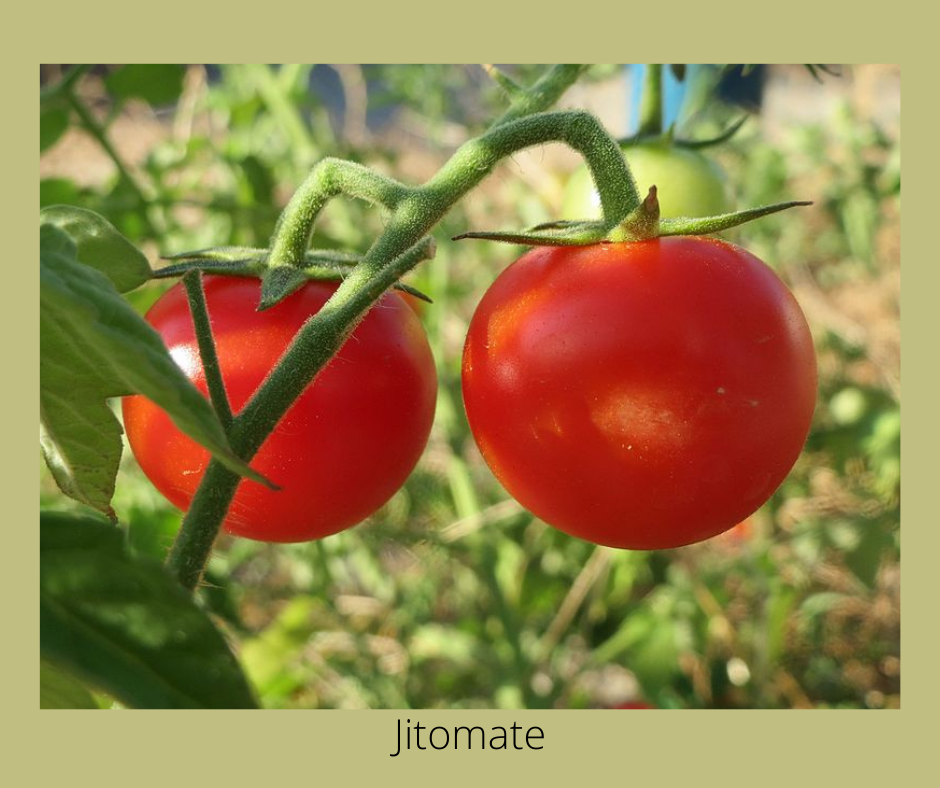
Natural Healing — Jitomate

Photo credit: AnRo0002

The term used in Mexico for these red, delicious fruits is jitomate (Solanum lycopersicum) from the Nahuatl work xitomatl. Tomate is more commonly used for the green husked fruit tomatillo (Physalis philadelphica). Other names include Aadi-maxi in Otomí, bachuga in Cuicatleca, bti’ux in Zapoteca, and ts’ulub’p’ak in Maya. Botanically, the jitomate is a fruit rather than a vegetable because it contains the seeds of the plant. Nutritionists, on the other hand, classify them as vegetables based its low fructose content. 

The original progenerate Solanum pimpinellifolium was native to Ecuador and Peru with fruits the size of peas. The indigenous people, including the Aztecs, worked at cultivating the plant until it became a staple food source. In fact, Bernardino de Sahagún, stated there were a number of varieties he discovered in the Tenochtitlán market including “ large tomatoes, small tomatoes, leaf tomatoes, sweet tomatoes, large serpent tomatoes, nipple-shaped tomatoes,” and tomatoes of all colors from the brightest red to the deepest yellow.”

Hernán Cortés himself may have taken the first jitomate (a small yellow one) to Spain in 1521.

The Spanish introduced the jitomate to the rest of Europe where it was initially viewed with suspicion since it is part of the nightshade family and therefore related to belladonna, a known poison. The leaves and green fruit do contain tomatine, which is toxic, but the ripe fruit does not. 

Linnaeus classified the plant as Solanum lycopersicum in 1753. However, in 1768, Philip Miller moved the plant into its own genus Lycopersicon esculentum. Genetic study supports Linnaeus’s classification although some herbals and scientific papers that I consulted in my research still use Miller’s classification.

The jitomate is full of goodness. It is anti-cancer, antimicrobial, antimutagenic, anti-inflammatory, anti-neurodegenerative, and anti-platelet. It has antioxidant and cardioprotective properties. Recent studies have found that its antimicrobial activity makes it an effective treatment for symptoms of coronavirus as it mitigates acute lung inflammation and damage. 

Traditionally, jitomate has been used medicinally as a treatment for diabetes, cancer, asthma, cataracts, and heart disease in Mexico. It’s considered a “cold” food item and used to treat “hot” infirmities. 

Juice from a ripe jitomate is squeezed in the eye infected with conjunctivitis 3 to 6 times a day. A mouthwash for oral thrush is made from 20 albahaca (Ocimum basilicum) leaves, 1 jitomate leaf, and the juice from a cebolla (Allium cepa) boiled in 1 liter of water.

A jitomate leaf is applied to cold sores. For fever, two tomatoes are boiled then wrapped as a plaster on the feet and left on overnight. The leaves are prepared in an infusion for a wound wash. The fruit pulp is also used as a facial tonic.

***

Interested in natural remedies? Uncover herbal remedies from traditional Mexican sources for healing and wellness in the Exploring Traditional Herbal Remedies in Mexico series.
Leave a comment

Filed under Alternative Farming, Health, Mexican Food and Drink, Native fauna and flora, Natural Healing

Fruits and Vegetables

Did you know that in addition to corn and chocolate being native to Mexico, avocados, peanuts, squash, tomatoes, sweet potatoes, and papaya are all Prehispanic delights?

avocado pictograph
Aztec pictograph indicating “the place where avocados grow.”

Avocado is thought to have originated in the state of Puebla. The oldest evidence of avocado use dates to about 10,000 BC, found in a cave located in the town of Coxcatlan. The word avocado comes from the Spanish aguacate which comes from the Nahuatl word āhuacatl which goes back to the proto-Aztecan word *pa:wa. The Nahuatl word also can be translated as testicle.  Since this fruit was considered an aphrodisiac, perhaps because of its similarity to male reproductive organs, young girls were kept indoors during the annual avocado harvest.

Aguacate maduro, pedo seguro.  Ripe avocados–farts for sure!  

Without the avocado, there would be no Guacamole! The name Guacamole comes from the Nahuatl work āhuacamolli which translates as avocado sauce (see Mole).

The tomato also comes from Mexico. The name comes from the Nahuatl word tomatl which translates as “fat water.” The Aztecs cultivated the tomatl and came up with a new species they called xitomatl which translates as “plump thing with a navel.”

A la mejor cocinera se le va un tomate entero.   A whole tomato can escape the best cook. Meaning everyone makes mistakes.

And what would salsa be without the tomato?

The papaya was also a common domesticated fruit in Mexico before the arrival of the Spanish. It was called chichihualtzapotl in Nahuatl which meant zapote nodriza (mothering or nursing zapote.) The papaya had medicinal value to the indigenous peoples of Mexico. The Aztecs applied papaya fruit to their skin for relief from insects bites. Asthma was treated with boiled papaya leaves applied to the chest.

cacahuate
Nine flowers of Mexico

The modern day name for the zapote fruit, papaya, comes from the Mayan word páapay-ya which means zapote jaspeado (marbled or spotted zapote).

Peanuts may have been domesticated in Argentina or Bolivia. However, its cultivation in Mexico was well-established before the arrival of the Spanish. Peanuts were called tlalcacahuatl or tlalli auh cacahuatl in Nahuatl which gives us the Mexican Spanish word cacahuate that is used today.

peanut seller
One of our local peanut vendors in Moroleon, GTO

Me vale un reverendo cacahuate.  It’s as important to me as a holy peanut. Meaning it’s not important to me at all.

The oldest pumpkin seed found was in the Guila Naquitz Cave in Oaxaca and dates as far back as 7000 BC.  Squash has been cultivated in the Tehuacan and Oaxaca valleys and in Tamaulipas since 6000-5000 BC. Its cultivation predates the domestication of maize and beans by about 4,000 years. (See Las Tres Hermanas)

Squash was a ritual offering presented in honor of the dead during the month of Miccailhuitontli by the Aztecs and is still considered an appropriate addition to the altar during El Dia de los Muertos celebration in Mexico in the form of calabaza en tacha (candied pumpkin).

Sweet potatoes are native plants that are found from the Yucatan on down south to Venezuela. The Maya domesticated the plant at least 5,000 years ago.  In Mexico, sweet potatoes are known as camotes which comes from the Nahuatl word camotli. Camotes enmielados (honeyed sweet potatoes) are yet another specialty food traditionally made and served for El Dia de Los Muertos.

I hope you’ve enjoyed this little week-long foray into traditional eats in Mexico as much as I have!  And remember–La vida es un camote agárrese de donde pueda.  Life is a sweet potato.  Hold on to it where you can.

***********************************************************************


8 Comments

Filed under Carnival posts, Mexican Cultural Stories, Mexican Food and Drink, Mexican Holidays, Native fauna and flora, Natural Healing