Category Archives: Religion

Christmas in México–La Virgen de Guadalupe

virgen

The Virgen de Guadalupe (Virgin of Guadalupe), a.k.a. Nuestra Reina de México, La Empresa de las Americas and The Protectress of Unborn Children, is the most revered religious and political image in México and her feast day on December 12 kicks off the Christmas season in grand style.

So who is the Virgin of Guadalupe? According to Catholic sources, on December 9, 1531, a peasant by the name of Juan Diego, saw a vision on the Hill of Tepeyac, outside of Mexico City. The site was formerly a shrine in honor of the goddess Tonantzin, “Our Sacred Mother” but had been burnt to the ground by the Catholic missionaries. The reported vision was in the form of a young dark-skinned girl and spoke Nahuatl, an indigenous language. She instructed Juan Diego to build a shrine in her honor at this site. Juan Diego went and told the Archbishop this story. Juan Diego insisted that this vision was the La Virgen María (the Virgin Mary), but the Archbishop wanted proof, so Juan Diego returned to the site and asked for a miracle. The vision told Juan Diego to gather flowers, and the apparition arranged them on his poncho. When Juan Diego opened his poncho in front of the Archbishop on December 12, the flowers fell to the floor, and the fabric showed an imprint of the image known today as the Virgen de Guadalupe. (LA VIRGEN DE GUADALUPE)

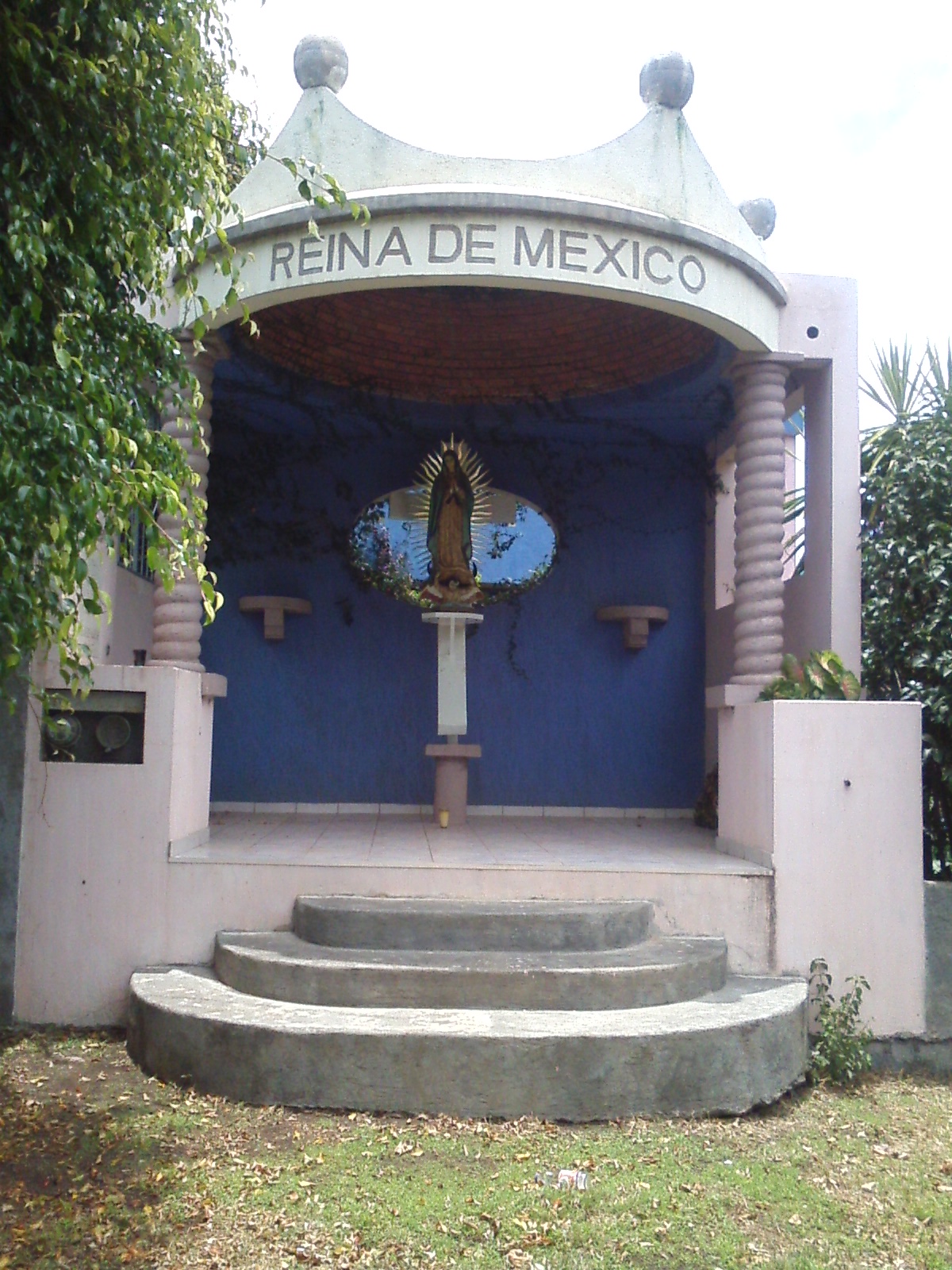
Juan Diego was given sainthood, and the Catholics were given México.The poncho (tilma) is on display in the Basilica of Our Lady of Guadalupe behind bulletproof, climate-controlled glass, for any who wish to see but not touch. So basically, La Virgen de Guadalupe is Mary, the mother of Jesus, but not.
la reina de mexico

Even more than the religious influence, the image of La Virgen de Guadalupe has been a unifying political force in México. The first president of México, José Miguel Ramón Adaucto Fernández y Félix changed his name to Guadalupe Victoria (Victory of Guadalupe) in her honor. Father Miguel Hidalgo, in the Mexican War of Independence (1810), and Emiliano Zapata, in the Mexican Revolution (1910), led their armies with Guadalupan flags emblazoned with an image of Our Lady of Guadalupe. El Grito de Dolores, (See Mexican Independence Day) ends with the passionate cry of “Death to the Spaniards and long live the Virgin of Guadalupe. José María Morelos adopted the Virgin as the seal of his Congress of Chilpancingo. All because her blessing guarantees success like no other to a true Mexican.

This holds true for namesakes as well. There is no end to the men and women (Lupes, Lupillos, Lupitas, Lupillas) that carry the sacred name of La Virgen as their personal Saint and enjoy the festivities on December 12 as their Saint Day.

tepeyac

So how is La Virgen’s de Guadalupe’s feast day celebrated? Beginning on December 3, there is a 9-day novena (See La Novena) which ends on December 12th. If you need special intervention for a personal cause, you can make the pilgrimage to México City to lay your plea at her feet during this time. If you are not able to make the trip, shrines pop up all over México, so you still get a chance no matter where you are, although the surest and most direct route for prayer answering remains at the shrine in the Basilica. Don’t worry about oversleeping, fireworks in her honor begin before the sun shines. On the morning of December 12, home and church shrines are serenaded with Las Mañanitas as you would any other Mexican on his or her Saint day and birthday.(NOVENA A LA VIRGEN DE GUADALUPE)(Mananitas a La Virgen De Guadalupe: La Reina)
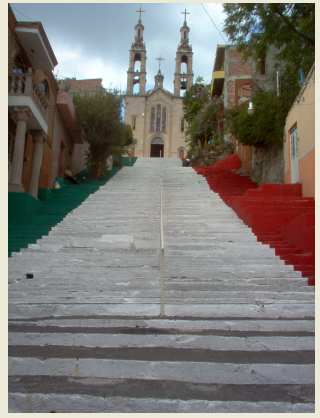
virgen church

In Moroleón, the street Tepeyac is closed and a sort of tianguis (See Failing at your own business-Tianguis) street fair is set up. Street vendors sell their things, kiddie rides are available, and at the end of it all, up a long, long flight of stairs, you can attend mass at the templo (church) in Uriangato.

The Virgin of Guadalupe Religious Statue

********************

disclosure

16 Comments

Filed under Mexican Holidays, Religion

Natural Healing–Maguey AKA Agave

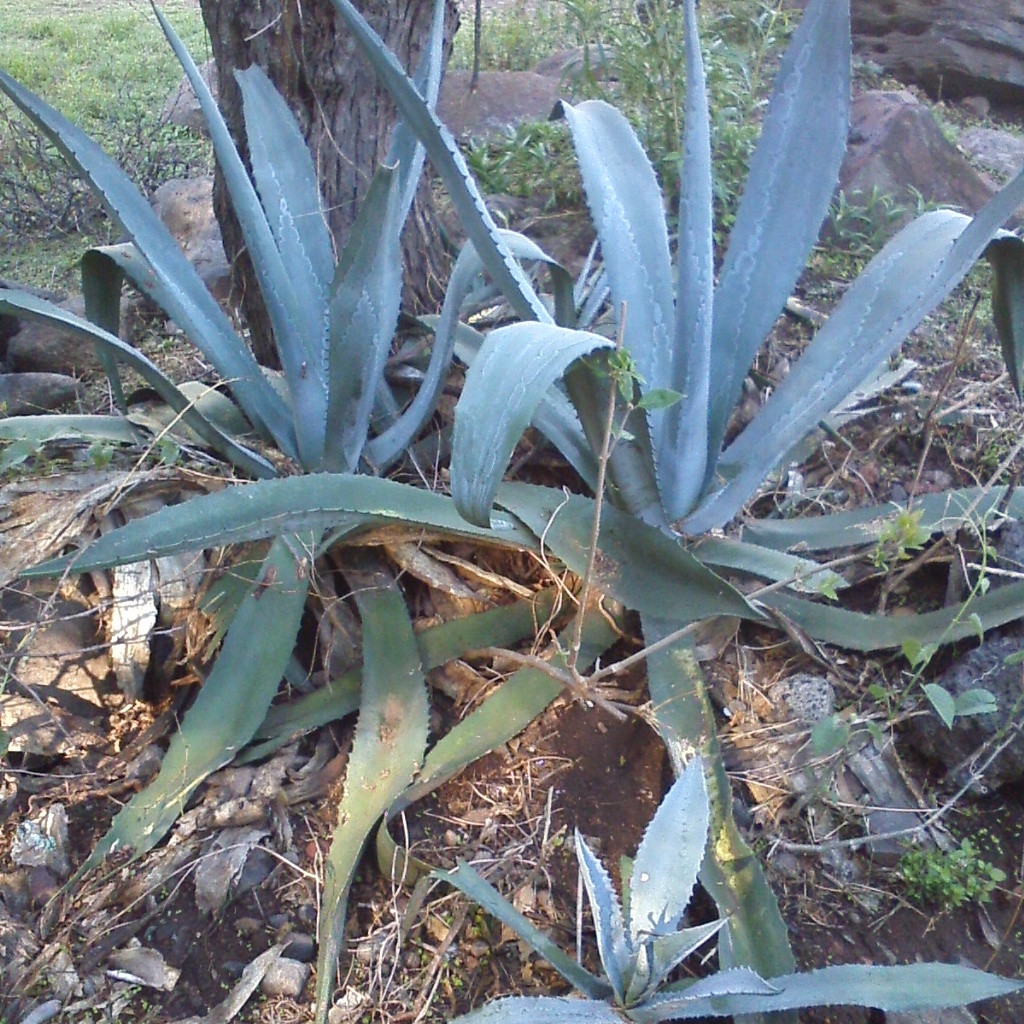
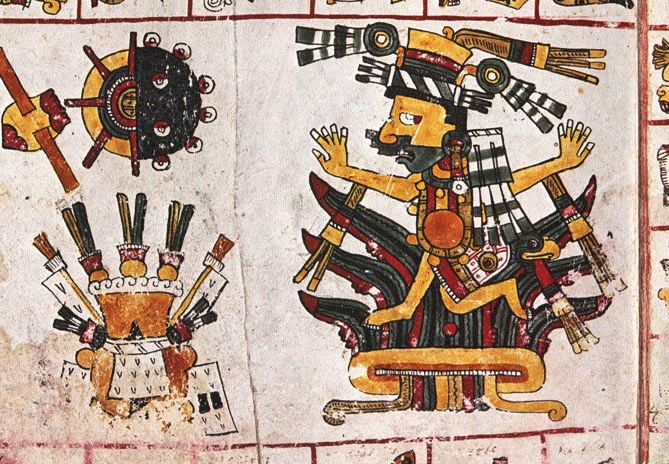
maguey Since time unknown, the maguey or agave plant has been used by the people in Mexico for clothing, medicine, shelter, fuel, alcohol and tools. Fibers, called pitas, were taken from the plant and woven into cloth. Thorns were used as sewing needles. Pencas (leaves) were dried to burn as fuel or overlaid for roofing. The sap was used as a sweetener, as medicine or distilled for alcohol. The Aztecs/Mexica even had a specific patron deity for this plant, the goddess Mayahuel.
goddess Mayahuel

The goddess Mayahuel

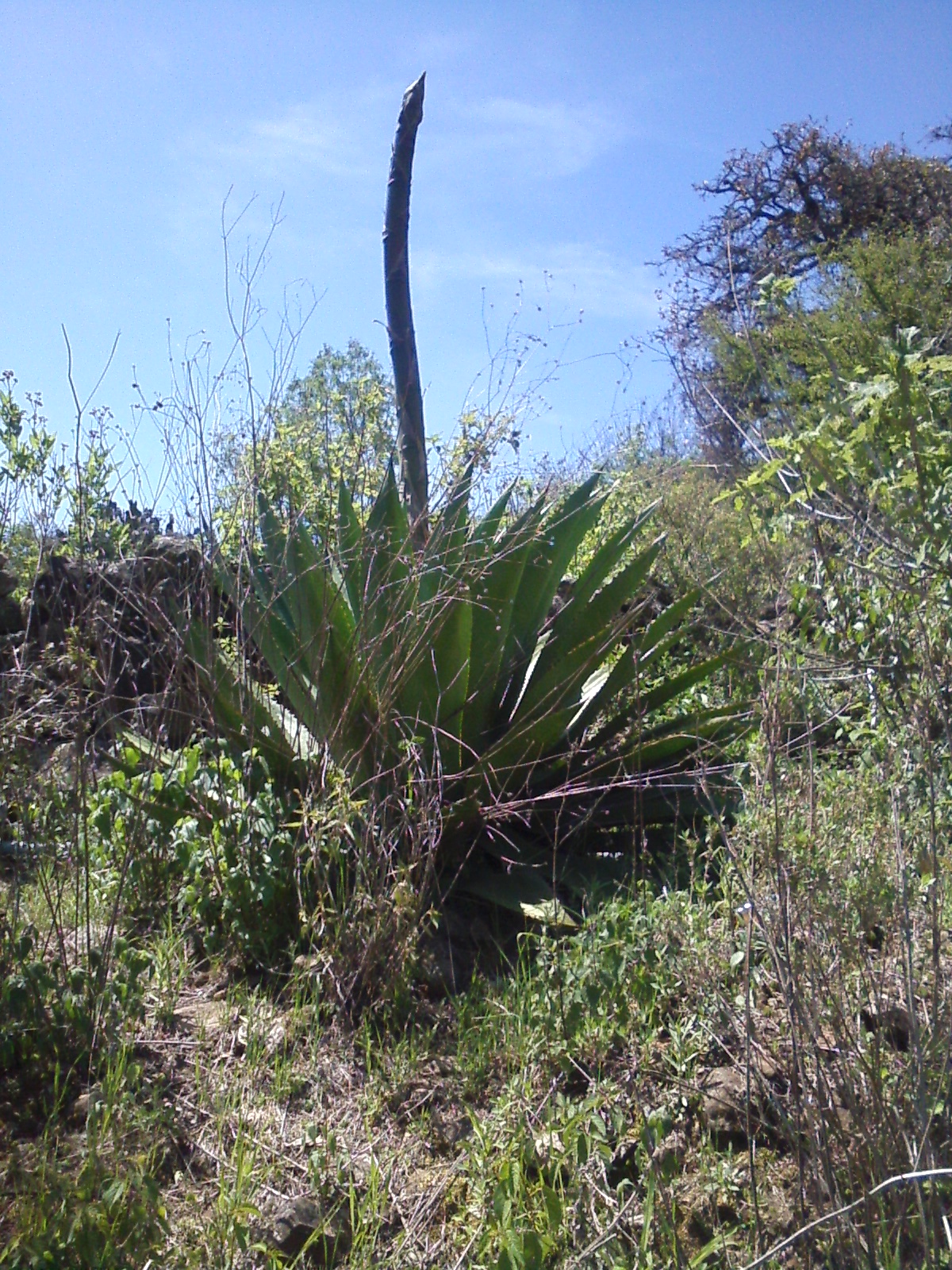
The maguey or agave plant is often mistaken for sábila (aloe vera), but is not closely related. Nor is it a cactus. The maguey can grow without irrigation and can withstand a great variation of moisture and temperature. It grows wild, but can also be cultivated.It may take 10 to 12 years for a maguey plant to be mature enough to “flower”. The “flower” is a large, obtrusive stalk that grows right from the middle of the plant. After flowering, the plant typically dies. flowering maguey To harvest, the stalk is cut before it blooms, leaving a hollow where the aguamiel (honey water) is collected. This juice can be fermented into an alcoholic drink which the Aztecs called octli, and is now called pulque. For tequila or mezcal, the sap is collected by heating the center of the plant in ovens and then distilled.
pulque god Tezcatzoncatl

The Aztec/Mexica god of pulque wine, Tezcatzoncatl.

According to my trusty source, Antiguo Recetario Medicinal Azteca, this plant is more than just making tequila or pulque. It can treat syphilis, accelerate the formation of scarring on wounds, cure gonorrhea, can be used as a strong stomach and intestine antiseptic (the sap has antibiotic properties which was also used to kill both staphylococcus aureaus and E. coli bacteria) and is useful as a laxative. Additionally, Bernardino de Sahagún attested in his book Historia General de las cosas de la Nueva España, that aguamiel was also used as a treatment for sore throats by the Aztecs.
drinking pulque

Drinking pulque.

Antiguo Recetario Medicinal Azteca suggests that for syphilis treatment, water and 10 drops of the sap from the root of the maquey should be drunk in the morning and 10 drops in the afternoon on the first day of treatment. The second day the dosage should be 20 drops and so on until 200 drops are ingested in each day. For aid in scar formation, heat the pencas (leaves) and squeeze out the juice much as you would with aloe vera. (See Animal Doctoring) The juice should be boiled with a little sugar until thickened. The salve should be placed on a cloth and tied around the wound. Gonorrhea can be treated by drinking the 1/4 cup of cooked aguamiel (maguey juice) for 15 days. For stomach and intestine cleansing, it is recommended to drink one glass of aguamiel with breakfast. While most pharmaceutical companies would poo-poo the use of maguey in treatment, these recipes have been around a long time and there may be some basis for using maguey medicinally. maguey agave We have even used the maguey penca in cooking goat. We dug a large hole and lined it with rocks which we then lined with dethorned maguey leaves. The goat was cut into pieces and put in a pot and then the hole was topped with another maguey leaf. The meat cooked, or steamed, overnight and was as tender as could be. Delicious!

**************************************************************

Interested in natural remedies? Uncover herbal remedies from traditional Mexican sources for healing and wellness in the Exploring Traditional Herbal Remedies in Mexico series.

7 Comments

Filed under Health, Native fauna and flora, Natural Healing, Religion

Battle of the Brujas

Talismans, candles, curses, prayers, tarot readings and more available here at the Bruja store!

Talismans, candles, curses, prayers, tarot readings and more available here at the Bruja store!

Tortilla sales had dropped off drastically and my sister-in-law was worried.  If she couldn’t make a go at the tortilla business, what other line of work would she get into?  She fretted a few days, hoping it was only a temporary problem.  But then the menudo (tripe soup) didn’t sell on Sunday, which was unheard of.

She trotted off to see Chencha.  Last time she went, Chencha told her that her sister L had thrown something at the local (store) that affected her sales.  (See Failing at your own business—Tortilleria).  This time, Checha said that the low sales were caused by a fat, unkempt woman.  My sister-in-law identified her as the woman who sells tortillas around the corner.  I expect this woman might have bad feelings for T, since my sister-in-law makes an awesome tortilla de prensa (pressed tortilla) and I would imagine this woman’s sales had dropped off, eliciting the envy that caused the black magic use and subsequent panteon (cemetery) dirt throwing.

So Chencha prescribed a candle and some spray and T went back to work.  Sales continued to be slow the following week.  When clearing up one afternoon, she discovered 5 yellow manchas (spots) that certainly hadn’t been there the day before.  She used a fibra (scouring pad) and agua bendita (holy water) and scrubbed until the dots were gone.

Later she was talking to me about these problems.  She couldn’t understand why someone would have so much envdidia (envy) as to do these things.  She certainly didn’t feel threatened by the tortilla place around the corner, or the one down the street.  In her opinion, each did what he or she could to get by and as long as her tortillas sold, she didn’t care who else sold tortillas in the area.

I told her that most people didn’t think like that, especially here.  It seems if someone gets ahead, those around him or her become jealous.  There is even a common saying here.  If someone gets something new, or is doing well in business, those that remark on the new purchase or success expect the person to dar el remojo (cut).  Remojo literally means to soak or wet.  So those asking for the remojo (soaking) are asking to be showered with the same splash of success as the new owner.  Once upon a time, the remojo was literally something given by the new owner to those around him or her as a way prevent envy of those who did not have a new item, child, spouse, etc.  It isn’t a practiced custom anymore, per se,  but the expression and the intent remains.

So apparently, T hadn’t fulfilled the requirements of the remojo and the ensuring envidia (envy) sparked these problems.  She placed a sábila (aloe vera) plant at the entrance of her local to absorb the mal vibra (bad vibrations) and bravely carried on.

Her persistence paid off and sales again were steady.  She has since hired a worker to help her meet the demand!

***********************

disclosure

1 Comment

Filed under Employment, Mexican Cultural Stories, Religion