Category Archives: Natural Healing

Natural Healing — Gordolobo

My son has had a dry cough most of the month of January. His aunt recommended an infusion made from gordolobo, ajo (garlic), limón (lime), canela (cinnamon) and sweetened with honey. Before I had him drink this concoction, I thought I’d investigate a little more about gordolobo.

According to my little Aztec medicine book, gordolobo (which translates to English as fat wolf) has the botanical name of verbascum thapsiforme sdahere and other common names of vervasco, Cirio de Nuestra Señora, and Flor de Gran Candelero. Gordolobo is often translated as common mullein which is Verbascum thapsus. However, based on the botanical names, it seems that gordolobo is a type of mullein but not common mullein, so the translation is not correct.

I went to this handy site called The Plant List for some verification. There I found that most likely verbascum thapsiforme sdahere is another name for Verbascum densiflorum Bertol, dense-flowered mullein. I can’t verify this is the same plant entirely because gordolobo is only sold dried at the market and I’ve never seen a flowering plant to compare it to photos of the dense-flowered mullein. Nor could The Plant List. It gave itself a rating of 2 out of 3 on identification confidence. 

The Verbascum or mullein family has 360 species in it and it seems safe to say that gordolobo is a subspecies within that plant family. One study found that there wasn’t much variation between species when their compounds were compared. Therefore, it’s probable that many of the medicinal uses of common mullein will be true for the verbascum thapsiforme sdahere plant sold at the Mexican market. 

Gordolobo has been used by the indigenous people of Mexico for centuries, long before the Spanish arrived. Besides being used for cough, sore throat, and respiratory issues, it is often used as a treatment for hemorrhoids and varicose veins.

Mullein contains triterpene saponins, volatile oil, mucilage, flavonoids and bitter glycosides. It’s been approved by the German Commission for the treatment of respiratory catarrh. It has anti-inflammatory properties and mullein tea, made from the flowers and leaves, has been shown to be beneficial for sore throats, hoarseness, bronchitis, tonsillitis and dry cough.

The flowers have sedative and bactericidal properties. Flower extracts have been shown to be effective when used as treatment against E-coli, Staphylococcus aureus, Staphylococcus epidermidis and Klebsiella pneumoniae.

Some of the remedies I found in my Antigua Recetario Medicinal Azteca were:

For croup, gordolobo infusion is used as a gargle. 

For colds, make a tea from the flowers and leaves of three branches plus the branch of 1 malva (mallow) boiled in ¾ liters of water. This quantity makes three cups. 

Essential oil made from gordolobo is recommended for angina pain. It should be taken three times a day before meals. 

If gordolobo is used as an intestinal cleanse, fresh leaves should be boiled in milk rather than water. 

The leaves can be applied as a poultice for burns, hemorrhoids and varicose veins. Five grams of gordolobo should be boiled in ¼ liter of water when making the poultice.

Another tea remedy for cough, lung infections, sore throat and bronchitis calls for two tablespoons of dried gordolobo in two cups of water boiled for five minutes. Cover and steep for five more minutes. The infusion is a yellow color, which isn’t surprising since the flowers are yellow. It doesn’t have any taste nor scent to speak of. 

Precautions:

Gordolobo is a soft, wooly plant. It has been known to cause dermatitis when handled regularly.

Although gordolobo is the term most commonly used for mullein, in Mexico this name is also used for several other varieties of plants including Greater Burdock (Arctium lappa), Plume Poppy (Bocconia frutescens), Tapered Cudweed (Gnaphalium attenuatum), Pseudognaphalium chartaceum, and Coltsfoot (Tussilago). Be sure you identify the plant being sold to you before using it as a medicine.

Since my husband had also developed a dry cough, I mixed up a batch of the Garlic tea cold buster (garlic, lime and honey) and added some gordolobo to the mix. They both seemed to sleep better that night.

*** 

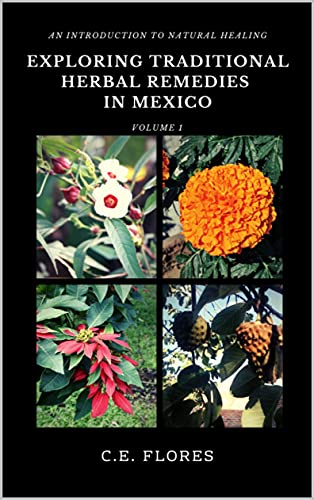
Interested in natural remedies? Uncover herbal remedies from traditional Mexican sources for healing and wellness in the Exploring Traditional Herbal Remedies in Mexico series.
4 Comments

Filed under Health, Native fauna and flora, Natural Healing

Natural Healing — Flor de Nochebuena

flor de noche buena.jpg

Most everyone knows that the poinsettia (Euphorbia pulcherrima) was adopted in the United States as a Christmas decoration when Joel Roberts Poinsett, the first United States Ambassador to Mexico, introduced the plant into the United States in 1825. So since this weed was so highly esteemed by the neighbors to the north, the Mexican too adopted this plant as a holy Christian symbol giving it the name Flor de Nochebuena (Christmas Eve Flower).

However, it was valued prior to Christianity reached the shores of México. The Poinsettia, or Cuitlaxochitl as it was known in Nahuatl, was used by the pre-Hispanic indigenous people to make clothing dyes and treat fevers.  It was also thought to host the souls of fallen warriors making it a symbol of new life.

Nochebuena grows wild in many areas of Mexico. It isn’t a small potted plant that you may be accustomed to seeing at Christmas though. It can grow between 10 to 15 feet high if left it its own devices.

There is a mistaken belief that the Flor de Nochebuena is toxic. Although other plants in the spurge genus are, the Euphorbia pulcherrima has a low toxicity level. The latex from the sap can cause allergic reactions. If the sap gets into the eye, it may cause temporary blindness. Ingesting parts of the plant is mildly irritating to the stomach and may cause diarrhea and vomiting.

In the states of Guanajuato, Michoacan, Puebla, and Mexico, the sap is applied directly to the skin to treat warts and labial herpes. The latex from the sap is also used as a depilatory in some areas. Apply the sap to the hairy area, allow to dry and then rip off.

In the states of Morelos, Puebla, and Sonora, an infusion of the bracts is used to increase the milk supply of nursing mothers. Sometimes the woman will lick the sap or eat raw leaves as well. This use comes from the Aztec belief that the plant contains milk since the sap it exudes is very milk-like in appearance. In fact, this use was recorded in the Florentine Codex as well as by Francisco Hernandez.

The leaves are used for external inflammations and arthritis. They are warmed and applied directly to the affected area. For a treatment of a swelling caused by a blow or a bruise, the bracts are boiled to make a poultice then lime is squeezed onto the area which is then wrapped. The ground leaves are also used to treat ringworm.

Infusions made from the bract combined with bugambilia and gordolobo (mullein) are used to treat heart conditions and respiratory infections. Infusions from the bracts are also used in to regulate menstruation. Another decoction from the plant is made to be used externally as a vaginal wash when there is excessive bleeding.

So this year, instead of tossing this decorate plant out after the holidays, perhaps you should add it to your home apothecary. 

*****

3 Comments

Filed under Health, Mexican Food and Drink, Native fauna and flora, Natural Healing

Herbal Academy Annual Holiday Sale

All courses on sale now - up to 25% off!

Yippee! Herbal Academy has begun its Annual Holiday Sale! All courses and herbalist path package will be on sale for up to 25% off the regular enrollment price from Tuesday, December 3 until Friday, January 3

As you know, I’ve taken a number of courses from the Herbal Academy and have absolutely LOVED each and every one. 

Take a look at what I thought about the Craft of Herbal Fermentation here.

The Craft of Herbal Fermentation Course by Herbal Academy

Materia Medica was the one that began my love affair with Herbal Academy!

Register for the Materia Medica Course!

See what I thought about the Herbal Self-Care for Stress Management here.

Enroll in the Herbal Self-Care for Stress Management Course

Check out my review of the Botany and Wildcrafting Course here.

Learn how to wildcraft and identify plants confidently in the Botany & Wildcrafting Course!

Wait! There’s more!

Register for $50 off the Botanical Skin Care Course for a limited time Preview Lesson from the Introductory Herbal Course Herbalism Courses for all levels

Now’s the time to take advantage of these sale prices! All courses and herbalist path package will be on sale for up to 25% off the regular enrollment price from Tuesday, December 3 until Friday, January 3. The best investment this holidays is in knowledge!

All courses on sale now - up to 25% off!

Leave a comment

Filed under Natural Healing