Category Archives: Mexican Food and Drink

Natural Healing–Wandering Jew Matali tea

wandering-jew

My interest was piqued one day at the tianguis (flea market) in Valle de Santiago when the elderly woman wrapped in her dark blue rebozo against the cold that sold us the plant (for 10 pesos). She mentioned that this plant, which I knew as Wandering Jew, was called “Sin Verguenza” (Without shame) because it propagates without any special care whatsoever.  She then said that it was good for treating diarrhea.  I had not heard anything ever before about the medicinal uses of Tradescantia zebrina, so when I began my Herbal Materia Medica course through Herbal Academy, I added it to the list of herbs I wanted to investigate more thoroughly.

Before I had even begun my investigation, my husband plucked and ate a leaf as a cure for his upset stomach one day.  As he didn’t die, and in fact, felt much better, I thought there might be something to this old wives’ tale.

I found out that Tradescantia zebrina was native to Mexico. However, I didn’t find anything in English about its medicinal use except a vague reference to a tea made from its leaves called Matali. So that’s what I searched for.  Bingo!  Youtube video and everything!  Matali is a tea common in Tabasco used for treatment for urinary infections and kidney issues.  

The preparation in the video was far from exact, so I tried digging deeper.  One recipe for a kidney cleanse instructed boiling the leaves in water and allowing it to cool.  Add lemon juice and honey.  

There was no mention on how many leaves or how long to boil the concoction.  

Apparently, I wasn’t the only one looking for this recipe.  Yahoo respuestas led me to yet another recipe.  There I was told that there is no exact number of leaves used in making the tea.  Boil some, taste, and if it seems weak, add some more leaves.  If it is too strong, add more water to dilute the tea.  Okie Dokie.

There was a separate recipe for dysentery treatment. An unspecified number of leaves should be crushed with a bit of water. The mixture should then be strained.  Mountain honey (the best I could figure miel de monte translates as) and lemon juice are added.  This tea should be drunk 3 times a day for the duration of the illness.

Much to my surprise, I found the Chinese Traditional Medicine also listed a tea made from the Wandering Jew for stomach ailments.  In Chinese, this plant is called Shui Gui Cao (Water Turtle Grass) and is recommended for kidney issues.  Here I found some harvesting advice (don’t touch the sap because it might cause skin irritation) and a description of what the tea tastes like “slightly tasteless with a light herbal aroma having a purple/pink color after being boiled for a few hours.”

A few HOURS?  Well, that’s still not specific enough.  So I kept searching.

Finally, I found a site that gave a more precise recipe.   Use 200 g each time.  Soak 15 pieces of red dates in a container.  Wash the Shui Gui Cao 3 times.  Boil 1.5 liters of water.  Add the Shui Gui Cao, red dates and 12 slices of ginger.  Cook on low heat for 1.5 hours.  Add brown sugar for sweetness.  It can be reheated for maximum benefits.  Drink 2 to 3 hours after eating or on an empty stomach for best results.  

Another site gave the same recipe, however, cautioned not to use an aluminum pot to make the tea since it would cause a chemical reaction and result in a slow form of poisoning.  Ok.  Good to know!

There were quite a few things this tea was accredited to cure including bladder problems, piles, uric acid, blood in the stool, pulmonary tuberculosis, cough, kidney infection, poisonous snake bite, vaginal discharge, urinary infection, hemoptysis, nephritis dropsy, acute conjunctivitis, swollen larynx, even diabetes.

The diabetes cure had a recipe too.  Make a cup of tea using 3 leaves.  Drink 3 cups per day.  If making the tea is too bothersome, you can just eat one leaf 3 times per day.

I wasn’t the only person to look deeper into medicinal use of the Wandering Jew plant. One study showed that a methanolic leaf extract from the Tradescantia zebrina plant had the highest antioxidant content of the plants studied.  Antioxidants are good.   Dr. Jim Duke’s Phytochemical and Ethnobotanical Database cited a 1969 study by Maximino Martinez listing this plant as a treatment for dysentery.

wandering-jew-tea

Well, with this information, it was time to make matali myself.  I boiled a handful of leaves for 2 hours as instructed and got weak tea colored water. It wasn’t pink.  And it tasted like, well, boiled water.  So maybe I didn’t put enough leaves in it.  I thought I’d try just making a cup with 3 leaves.

I choose leaves with the purplest underside, boiled the water and added the leaves.  AND….the water turned out exactly the same color.  I sampled it, and it was tasteless, although I did notice my tongue had a thin coating of blah afterward, so much so that I went and brushed my teeth and tongue to get rid of the feeling.  

Update May 2020

I had so many comments about matalí tea that I thought I’d try making it a second time, to see if I could get the pink color. This time, I cut the leaves lengthwise and instead of boiling them, I allowed them to steep in boiling water. 

To my disappointment, no matter how long I allowed them to steep, the water remained decidedly not pink. However, the tea tasted much better. It had a plant flavor rather than the BLAH that resulted from boiling the leaves. 

Some interesting tidbits shared by readers include:

According to Thomas Ngumi, in Kenya the leaves are used as vegetables among the Kamba community. 

David de la Rosa’s brother in Guatemala makes matalí tea using 7 leaves in 0.75 liters of water, boiling for about 3-5 minutes. David claims that drinking the tea every other day has reduced his brother’s prostate and improved his urination, as well as reducing his PSA levels. 

Wes Lowrence told me that the tea is brown until he adds lemon juice to lower the pH level, then it turns a brighter color. 

Another commenter suggested cutting the leaves to release the inside portions, then pour the boiling water over it, which is what I attempted this time. He also suggested that I wait until it cools for the pink/purple color. Chilling it overnight before straining will intensify the color. 

One reader shared that her Chinese grandmother boiled the leaves in water along with their flowers. There was no specific amount of water, leaves or boiling time. She used this concoction to reduce the “heat” in the body as defined by traditional Chinese medicine. 

Another interesting bit of information that Shannon shared with me is that the Mexican president 

Andrés Manuel López Obrador had a dinner engagement with all the country’s governors in January 2020. The beverage served reportedly was matalí. The article included a picture and sure enough, each attendee had a glass of extremely pink drink. 

I did, however, notice that the scientific name mentioned in the article was Tradescantía Zebrina Purpusii which is a darker variety of Tradescantia zebrina

Mystery solved! The variety needed to get the pink color is indeed different. However, the medicinal properties are very similar. We continue to use Tradescantia zebrina as a home remedy for acid reflux and heartburn here. Instead of bothering with the tea, we just eat a leaf or two and experience nearly immediate relief.

********************************************
31 Comments

Filed under Mexican Food and Drink, Native fauna and flora, Natural Healing

Natural Healing–Coriander Cilantro tea

Continuing with my free Herbal Academy Materia Medica Course, I decided to try teas made from the other local herbs I was investigating.  (See Hibiscus Tea, Feverfew Tea) Coriander, known as cilantro in Mexico, is used in an endless variety of local cuisine.  I love cilantro!  It has such a fresh flavor! I was amazed to discover that not everyone has the same reaction when eating cilantro.  Some people taste soap, metal or dirt instead of freshness.  Apparently, it’s a genetic thing. (See A genetic variant near olfactory receptor genes influences cilantro preference) How unfortunate! Coriander has quite a number of health benefits. cilantro-tea Coriander seeds contain zinc, which helps with digestion, copper, which is used to produce red blood cells, potassium, which helps control blood pressure and heart rate. They contain bioactives that have antimicrobial, antiepileptic, antidepressant, antimutagenic, anti-inflammatory and anxiety inhibitors. Coriander seeds have been shown to lower blood sugar, ease Irritable Bowel Syndrome, decrease blood pressure, contain an antibacterial compound that fights Salmonella choleraesuis, thus useful in cases of food poisoning,  lower cholesterol, be useful in treating urinary tract infections, and been shown to prevent neurodegenerative disease when included in diets high in turmeric, pepper, clove, ginger, garlic, cinnamon. Coriander Seed Tea is recommended for cystitis relief. Simply steep one teaspoon of whole coriander seeds for 5 minutes for each cup. Strain and add honey or sugar. Cilantro (coriander) leaves are also jammed packed with good stuff.  It’s rich in antioxidants and dietary fiber and is a good source of vitamin K, which helps in building bone mass, vitamin C, and vitamin A.  Cilantro has been shown to bind the heavy metals arsenic, cadmium, aluminum, lead, and mercury together which helps the body eliminate them altogether.  Cilantro has also been proven to regulate the body’s oxidative defense systems which in turn protects us from oxidative stress. Cilantro has been shown to be as effective as valium in lowering anxiety and improving the quality of the sleep cycle.  Like the seeds, the leaves also lower blood sugar levels and help protect against cardiovascular disease because of its high potassium level.  Cilantro lowers total cholesterol and triglycerides. It can prevent oxidative damage associated with cardiac damage and prevent myocardial infarctions. Cilantro can help prevent colon cancer. And that’s just the tip of the benefits iceberg! cilantro-tea-cup-elixir So in line with my herbal classes, I decided to make cilantro tea. The recipe calls for 2 teaspoons of fresh leaves per cup.  Steep up to 10 minutes.  Remove leaves.  Add sugar or honey.  I also added a bit of orange peel to the concoction.   I’ll be honest and say that the taste was ho-hum.  It tasted, well, like cilantro tea.  I think I’ll get all the goodness in solid form like maybe salsa, pico de gallo, on tacos with onion, and so on.  In any form, it’s a tasty part of our Mexican diet and not too difficult to grow.  I’ll post more information once I harvest my first batch this year!

************************

Interested in natural remedies? Uncover herbal remedies from traditional Mexican sources for healing and wellness in the Exploring Traditional Herbal Remedies in Mexico series.

3 Comments

Filed under Mexican Food and Drink, Native fauna and flora, Natural Healing

Fruits and Vegetables

Did you know that in addition to corn and chocolate being native to Mexico, avocados, peanuts, squash, tomatoes, sweet potatoes, and papaya are all Prehispanic delights?

avocado pictograph
Aztec pictograph indicating “the place where avocados grow.”

Avocado is thought to have originated in the state of Puebla. The oldest evidence of avocado use dates to about 10,000 BC, found in a cave located in the town of Coxcatlan. The word avocado comes from the Spanish aguacate which comes from the Nahuatl word āhuacatl which goes back to the proto-Aztecan word *pa:wa. The Nahuatl word also can be translated as testicle.  Since this fruit was considered an aphrodisiac, perhaps because of its similarity to male reproductive organs, young girls were kept indoors during the annual avocado harvest.

Aguacate maduro, pedo seguro.  Ripe avocados–farts for sure!  

Without the avocado, there would be no Guacamole! The name Guacamole comes from the Nahuatl work āhuacamolli which translates as avocado sauce (see Mole).

The tomato also comes from Mexico. The name comes from the Nahuatl word tomatl which translates as “fat water.” The Aztecs cultivated the tomatl and came up with a new species they called xitomatl which translates as “plump thing with a navel.”

A la mejor cocinera se le va un tomate entero.   A whole tomato can escape the best cook. Meaning everyone makes mistakes.

And what would salsa be without the tomato?

The papaya was also a common domesticated fruit in Mexico before the arrival of the Spanish. It was called chichihualtzapotl in Nahuatl which meant zapote nodriza (mothering or nursing zapote.) The papaya had medicinal value to the indigenous peoples of Mexico. The Aztecs applied papaya fruit to their skin for relief from insects bites. Asthma was treated with boiled papaya leaves applied to the chest.

cacahuate
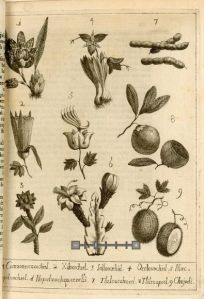
Nine flowers of Mexico

The modern day name for the zapote fruit, papaya, comes from the Mayan word páapay-ya which means zapote jaspeado (marbled or spotted zapote).

Peanuts may have been domesticated in Argentina or Bolivia. However, its cultivation in Mexico was well-established before the arrival of the Spanish. Peanuts were called tlalcacahuatl or tlalli auh cacahuatl in Nahuatl which gives us the Mexican Spanish word cacahuate that is used today.

peanut seller
One of our local peanut vendors in Moroleon, GTO

Me vale un reverendo cacahuate.  It’s as important to me as a holy peanut. Meaning it’s not important to me at all.

The oldest pumpkin seed found was in the Guila Naquitz Cave in Oaxaca and dates as far back as 7000 BC.  Squash has been cultivated in the Tehuacan and Oaxaca valleys and in Tamaulipas since 6000-5000 BC. Its cultivation predates the domestication of maize and beans by about 4,000 years. (See Las Tres Hermanas)

Squash was a ritual offering presented in honor of the dead during the month of Miccailhuitontli by the Aztecs and is still considered an appropriate addition to the altar during El Dia de los Muertos celebration in Mexico in the form of calabaza en tacha (candied pumpkin).

Sweet potatoes are native plants that are found from the Yucatan on down south to Venezuela. The Maya domesticated the plant at least 5,000 years ago.  In Mexico, sweet potatoes are known as camotes which comes from the Nahuatl word camotli. Camotes enmielados (honeyed sweet potatoes) are yet another specialty food traditionally made and served for El Dia de Los Muertos.

I hope you’ve enjoyed this little week-long foray into traditional eats in Mexico as much as I have!  And remember–La vida es un camote agárrese de donde pueda.  Life is a sweet potato.  Hold on to it where you can.

***********************************************************************


8 Comments

Filed under Carnival posts, Mexican Cultural Stories, Mexican Food and Drink, Mexican Holidays, Native fauna and flora, Natural Healing