Category Archives: Animal Husbandry

Forcibly Green–Obligatory Organic

Welcome to the April edition of the Simply Living Blog CarnivalGoing Green cohosted by Mandy at Living Peacefully with Children, Laura at Authentic Parenting, Jennifer at True Confessions of a Real Mommy, and Joella at Fine and Fair. This month, we write about going green and environmentally friendly living. Please check out the links to posts by our other participants at the end of this post.

***
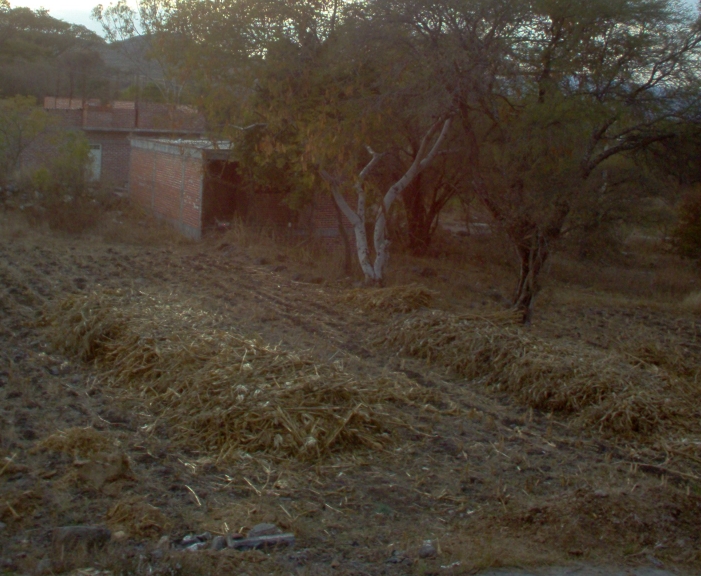
rastrojo

After the corn is harvested, it is laid out to dry completely then milled to make feed for our animals.

It’s easy in a modern world, to discount the effect one person has on the environment. The trash truck comes and hauls away the trash. The sewer flushes away excrement. The wind blows away car exhaust. The immediate surroundings remain clean. Now suppose all those conveniences are taken away. There is no trash truck, no sewer, no filter to clean the water, no running water for that matter. Would a person reexamine how he or she lives and make an effort to be more mindful in green living? Well, it depends on the person I guess.

Once upon a time, in a previous life, I thought I was more or less living “green.” I would go to the grocery store, pick up organic produce, buy organic canned and packaged food, use a filter for my water tap, use organic clothing when it was on sale, separate recycling and drop it off at the local bins, piddle with plants, use cloth bags and pat myself on the back for being concerned with the environment. Silly girl!

Now I live in an alternative life, where there is no choice but to be green.

When I go to the fruteria (fruit and vegetable store), I have only one option–local in-season produce or nothing at all. While not necessarily by choice, I am reducing greenhouse gasses since the food travels a relatively short distance to reach the market. I also do not contribute to pollution and waste caused by packaging and processing. All the fruits and vegetables are in their natural, ripened state, ready for purchase by the kilo, not can. I use a canvas bag for shopping whenever possible, not because it reduces the plastic bag waste residue (although I’m all for that) but because I am charged 50 centavos more for the bag, and these days every peso counts.

Corn and beans are a staple in the diet here, both for animals and people. Corn tortillas are a part of every meal. The Mexican government controls the corn prices. Of course, that means that inflation is unchecked. Since we arrived, the price of a kilo of tortillas has gone from 6 pesos to 13. Bodega Aurrera (a branch of Wal-mart) is mysteriously allowed to sell tortillas at a price below the federal mandate and offers a kilo for 8 to 10 pesos, but their tortillas have the consistency of cardboard.

With the prices of seed corn rising every season, it is now cheaper for the tortillerias (tortilla makers) to buy corn flour imported from the U.S. where Monsanto rules. As of 2005, Monsanto has garnered permission to sell their GMO seeds in México, overriding farmers’ protests. It really is only a matter of time before economics destroy the legacy of corn in the land where it was first cultivated.
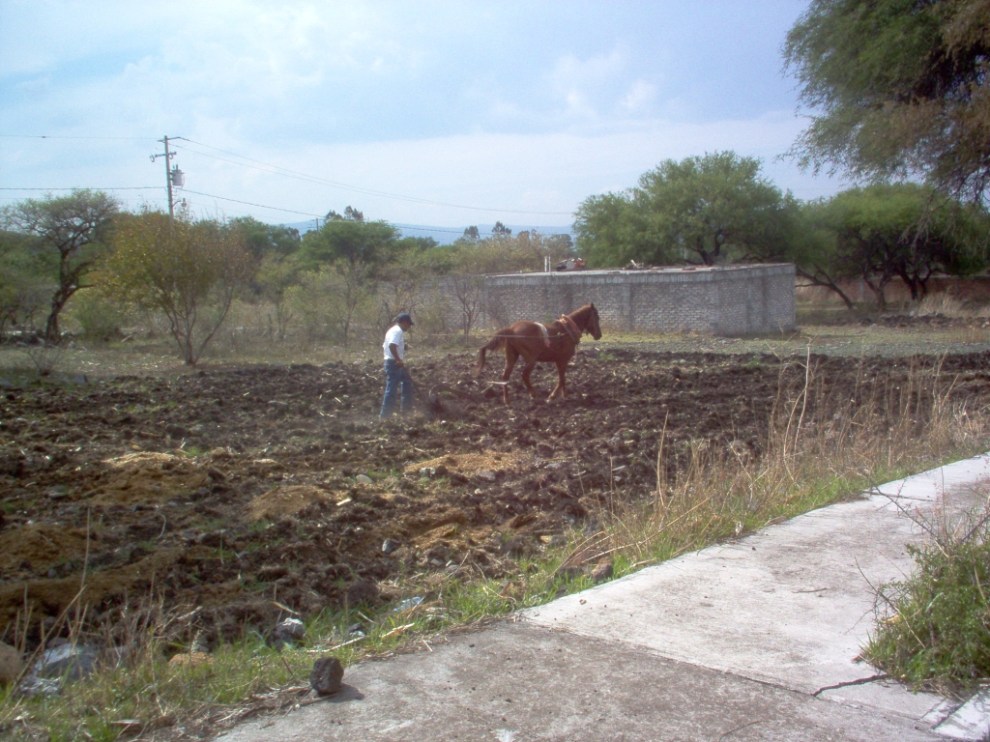
farming

My husband with Red preparing the field for planting.

So in order to maintain ourselves, we’ve had to expand our own cultivation. The growing season for this part of México is from June until November when the rainy season starts. So in June, we plant corn, beans, and squash on lotes prestados (borrowed lots) with a sort of sharecropping deal in the traditional way. The beans grow up and are supported by the corn stalks, and the squash plants fill in the ground between the stalks. We grow organically because every bit of the plant is used as food for ourselves (squash flower tacos are super awesome) or our animals (rastrojo is ground dried corn stalk and feeds our goats and horses through the dry season).

A liter of milk now costs 11 pesos, and a kilo of eggs (about 8 or 9 eggs) costs 30 pesos. There was a recent outbreak of avian flu among the commercially raised Mexican chicken population. Beef and pork products are “eat at your own risk.”  It’s only common sense that for our own health and pocketbook, we look for alternatives. We drink raw organic goat’s milk and are provided with organic eggs and meat from our own mini-ranch.

The Mexican government has a full-scale advertising campaign aimed at the conservation of water. Mexicans are advised to turn off the shower while they soap up. Bathtubs are a luxury nearly unheard of. Washing cars or watering lawns are simply not done. Millions of Mexicans still live without running water. Our own community of La Yacata is one of those areas. So water conservation is not merely of a matter of turning off the faucet while brushing your teeth. We take it seriously.
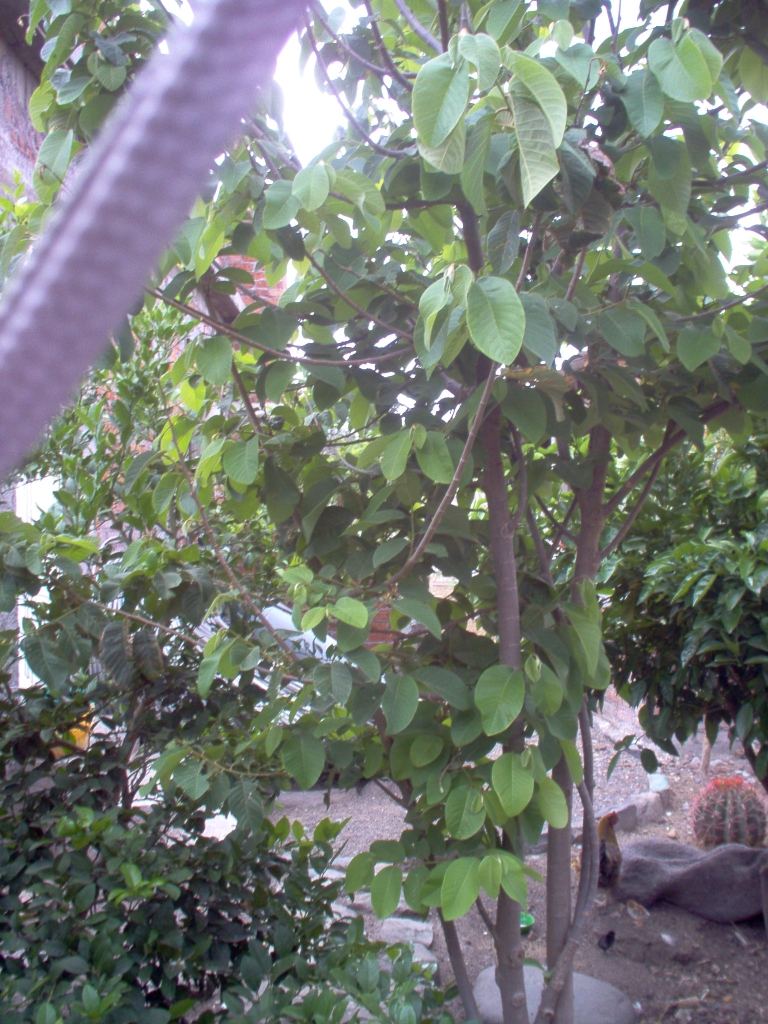
backyard

Our cherimoya tree in the back yard is watered by a pipe that brings wash water from the second floor to the tree roots.

El agua es bendito. (Water is Holy). We reuse nearly all of our gray water to water the fruit trees and plants in the backyard. We have orange, lime, lemon, cherimoya, mora (blackberry), peach, and granada (pomegranate), chayote and guayaba. Our animals do not have standing troughs but are given portioned servings of water. We do these things, not necessarily because they are good for the planet, although that is a great reason, but because the cost and effort of replenishing our water supply are extreme.
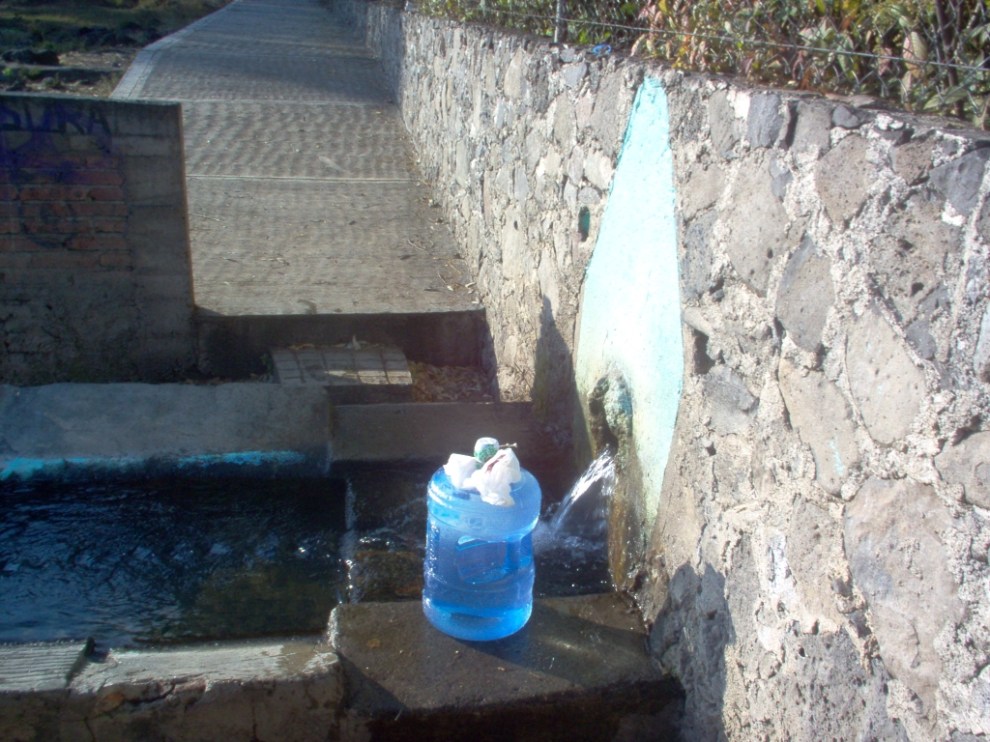
garafon

Filling our drinking water container from the natural springs in a nearby community.

At the same time, the government is encouraging water conservation, it reiterates that the water from the tap is not drinkable and everyone has to use bottled watered (sold by the Pepsi and Coke companies). A garafon (container) of water costs between 17 and 21 pesos. Sometimes, that’s out of our budget. So we go to presas (springs) in nearby communities and fill our garafon (container) from there. Until you have survived your first bout of churro (diarrhea) from drinking dirty water, you will never understand the importance of keeping the water supply clean.

How clean is your water? 

bottle recycle

Plastic can be sold to recycling centers here in Mexico however it pays so little per kilo that you have to gather a lot to make it worthwhile.

The trash tractor does not come to La Yacata for daily pickup. So what do we do with the garbage? Organic trash is given to our animals, no waste there. Anything metal can be resold for a few pesos as fierro viejo (old metal) to places that reuse and resell it. We have even gone hunting for scrap metal to resell when times are tough. Plastic trash is a problem, though. Although there are now places that will buy plastic to recycle, it pays so very little that only the most desperate junta botellas (collect bottles). We try not buy plastic in the first place, to reuse bottles when we can, or we are forced to burn them. Yes, this causes air pollution, but we haven’t come up with a viable solution to this yet.

Our neighbor, who has only lived there about a year, has contaminated his immediate environment (and ours) with his plastic trash. This is a problem for us, for it is always possible that one of our curious goats may ingest a plastic bag which will kill it. The trash heaps also attract coyotes and wild dogs and rats. I guess he’s just not too concerned with green living.
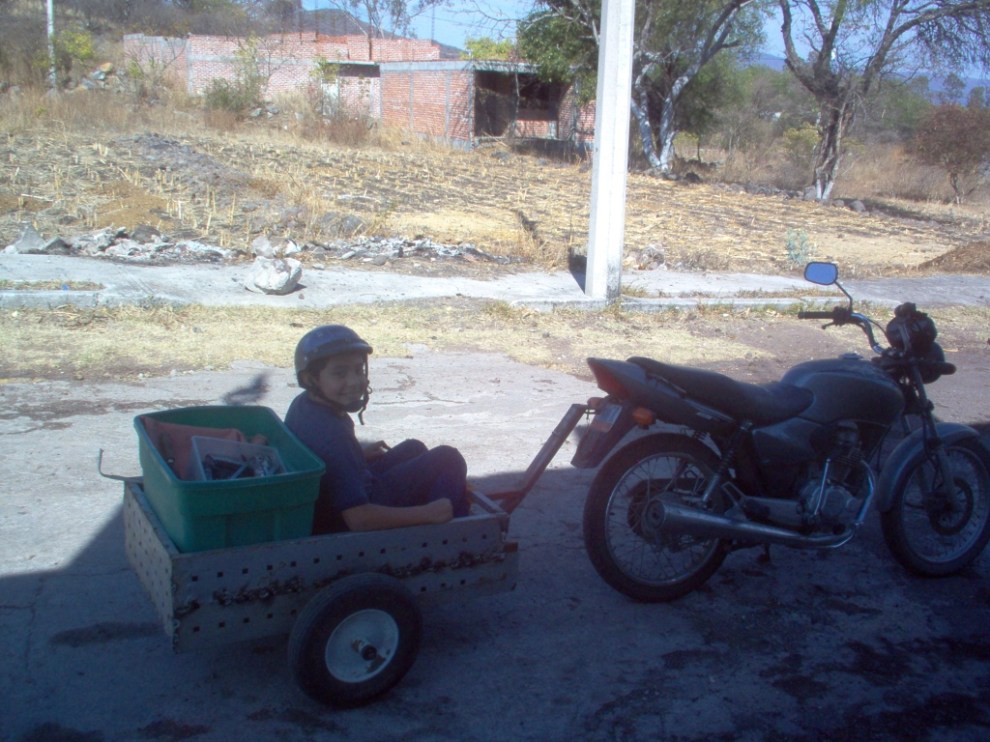
side car

Moto-cart. Just the thing for transporting!

The Mexican government also regulates the prices for petroleum and gas prices have steadily been increasing. We have a truck, however, more often than not, we do not have enough pesos on hand to fill the tank, so it just sits there. Our everyday transportation consists of motos (motorcycles), my husband and I each have one. Using a moto cuts down on emissions, which is great, and provides other benefits like more money in the pocket and easy parking. I love my moto.

It seems to me that in general, people do not get excited until a dump is opened in their neighborhood or a factory that contaminates the water supply is built down the road. Then the “not in my backyard” motto unites the community into looking for different options with active protests. I admit to having been one of those people in my previous life. I did the least bothersome and let someone else worry about the rest. However, it’s been made clear to me that my “backyard” is larger than I imagined. In La Yacata, living green is an economic necessity. The price for contaminating the environment is too steep for us to pay. How about you?

***************************************

disclosure
**********************************************************

Thank you for visiting the Simply Living Blog Carnival cohosted by Mandy at Living Peacefully with Children, Laura at Authentic Parenting, Jennifer at True Confessions of a Real Mommy, and Joella at Fine and Fair. Read about how others are incorporating eco-friendly living solutions into their everyday lives. We hope you will join us next month, as the Simply Living Blog Carnival focuses on Daily Lives!

  • Green Renovating: A Lot, A Little, Not So Much Laura at Authentic Parenting ponders about the many things that have an impact on eco-friendly renovating
  • Growing Native in My Flower Beds – Destany at They Are All of Me takes the guilt out of her flower habit by switching from high maintenance flowers to native plants which not only lessens her gardening load, but also benefits the local wild life.
  • Baby Steps – Kellie at Our Mindful Life shares how her family became more sustainable, one step at a time.
  • A Greener Holiday – Sara from Family Organic discusses the overwhelming amount of “stuff” that comes with every holiday and talks about how to simplify instead.
  • Forcibly Green–Obligatory Organic – Survivor at Surviving Mexico talks about her family’s evolution from passive to active green and sustainable living.
  • Giving It Away – Juliet Kemp of Twisting Vines writes about the role of Freecycle, the giant karmic lending library, in her simple and green living.
  • Simply Sustainable – Mandy at Living Peacefully with Children discusses her family’s attempts to live in harmony with the earth by living simply and more sustainably.
  • How Does Your Yarden Grow – Alisha at Cinnamon&Sassafras writes about an ongoing permaculture project, converting her grass lawn into a mower-free paradise.
  • Green? – Is it about ticking the boxes? sustainablemum shares her thoughts on what being green means in her life.
  • Using Cloth Products To Reduce Household Waste – Angela from Earth Mama’s World shares how her family replaced many disposable household products with cloth to reduce their household waste.
  • Going Green in Baby Steps – Joella of Fine and Fair shares some small, easy steps to gradually reduce your environmental impact.
  • Are You Ready To Play Outside?! – Alex from AN Portraits writes about gardening, and playing in the dirt, and how it’s O.K. to get dirty, play in the dirt, play with worms, for both adults and kids.
  • Lavender and Tea Tree Oil Laundry Booster – At Natural Parents Network, Megan from The Boho Mama shares an all-natural way to freshen laundry.

21 Comments

Filed under Animal Husbandry, Carnival posts, Economics, Homesteading, Water issues

Separating the sheep from the goats

herd

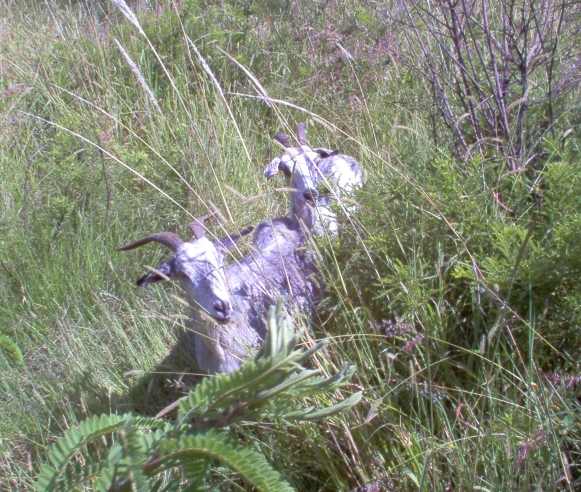
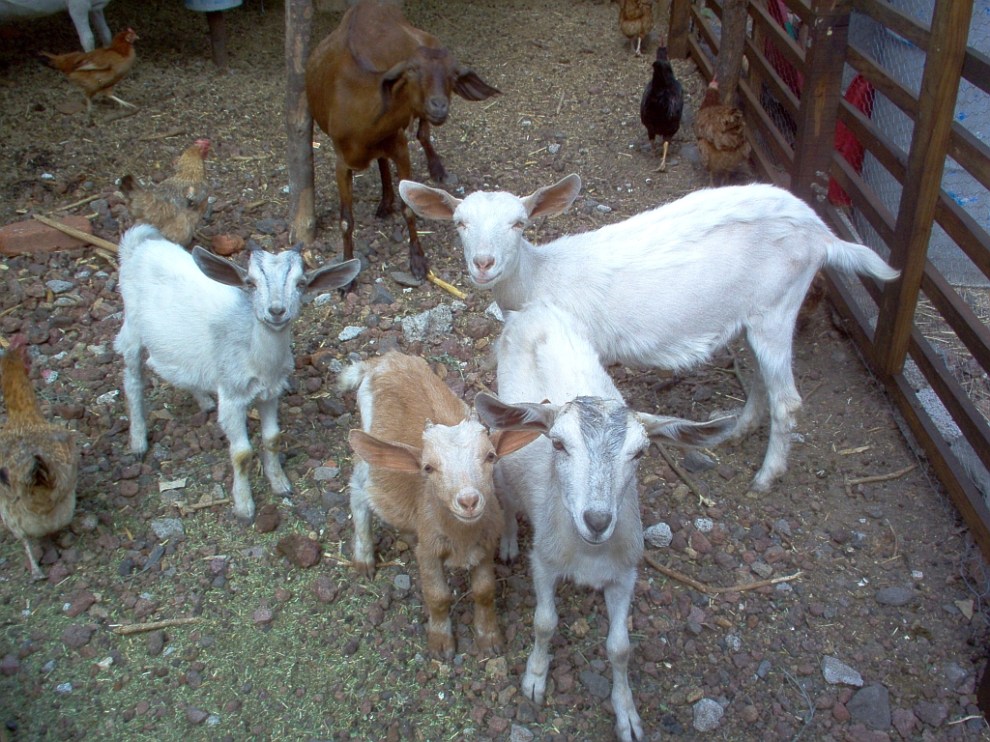
Our goat herd posing for a picture at our mini-ranch

Mini-ranching on a lot that measures a mere 7 x 20 meters requires careful animal selection. Our animals must be sheltered from the torrential downpours of the rainy season and the staggering heat during the dry. So larger animals like cows were not in the plan. Instead, we opted for goats.

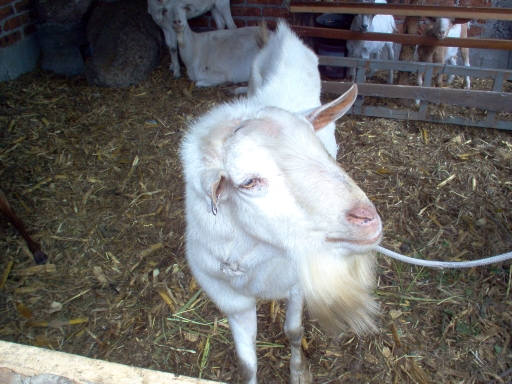
There’s a quite a bit of bad hype about goats but managed properly we have found them preferable in every way to sheep. Goats eat more of a variety of the native plants that grow in La Yacata, are hardier, healthier, give more milk and complain less. They stay bunched around the female boss goat and although sometimes like to dar la vuelta (take a walk) do not startle as easily as sheep.

rainy season foreging

Finding something to eat in the rainy season is no problem at all.

Yes, they like to jump. Duchess is a champion jumper. She managed to spring off the wall and hurtle over the 5-foot fence several times a day. My husband then added another 2 feet of wire, and now she stays put.

almanzo

Almanzo our rent-a-stud

Yes, the macho goats smell. And smell quite a lot during the breeding season. You see, apparently, male pee is like cologne to a female goat, and a macho goat will want to be at his best to entice the ladies, so pees on his own face in the hopes of a little romance. Male goats, if they still have their horns, also have odor areas behind the horns and in a mature male, it does reek! Most of the stud muffins we borrowed or rented for the breeding season (we don’t keep a male goat all year around) have been dehorned and deodorized, so the smell is not quite so bad. Macho goats are a bit territorial when it comes to their flock of beauties too. Once I thought I’d go in the pen to refill the water that had been accidentally spilled while Almanzo was in residence. Well, he didn’t take kindly to my intrusion into his harem, and when I turned to try and scramble out, he gave me a full head-butt on my backside and knocked me 5 feet or so to the wall. Fortunately, he was dehorned, and the only thing damaged was my pride. Nowadays, when there is a macho gigolo in residence, only my husband enters for feeding and watering.

sheep and goats

Goats have hooves that if not worn down by walking or regular filing, grow into enormous curved claws that cripple them. The terrain in La Yacata is well suited for hoof maintenance. Our goats go out several hours a day, jump around on rocks, play king of the mountain and munch vinas (bean-like crunchy seed pods that grow on mesquite trees).

vinas

Vinas (seed pods from a mesquite tree) a goat delicacy!

For the most part, my husband’s “uncha, uncha” keeps them together. My son and I apparently do not have the same authority in our voices, and when it has been up to us to care for the herd for the afternoon, it has been a delight for the goats and a frustration for us. Just like at school when a substitute teacher is in, chaos reigns!

Goats provide milk and meat for our family, although we learned early on not to name those destined for the butcher’s knife. It is awfully hard psychologically to eat the pets! Goat destinies are determined at birth. Girl goats will be breeders, and boy goats are either sold or cooked. After a girl goat’s first successful pregnancy and delivery, we can determine if she is a keeper or to be sold. Keeper goats are those that have good milk production, have twins or are excellent caretakers. Tweedledee, for example, adopted King and Queenie (twins that we purchased shortly after their birth) AND our two little twin sheep whose mother did not have any milk, Vaquita and Torito, in addition to her own kid Princess. Unfortunately, good mothering instincts is not a hereditary trait like twinning. Princess had her first kid this year, but continued nursing from her mother refused to nurse or care for her daughter Spring and managed to find a way to drink her own milk. We sold Princess, and Tweedledee adopted her grandkid Spring.

IM000182.JPG

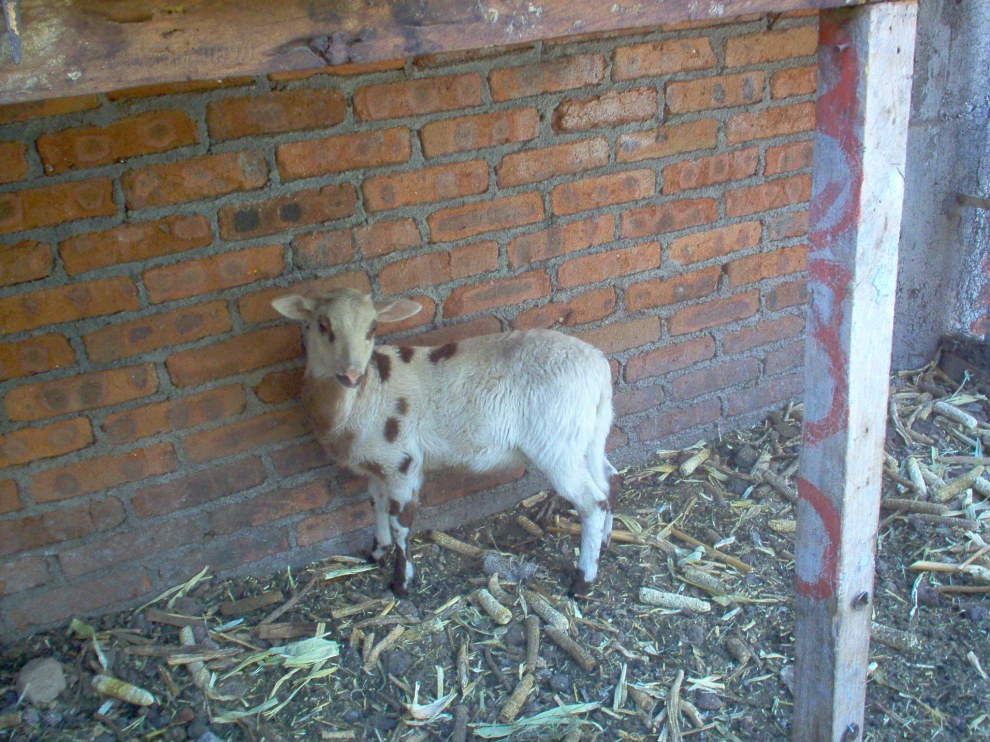
Vaquita the sheep

My husband has tried twice now, unsuccessfully to keep sheep with our goats. Borregos (sheep) are finicky eaters, so aren’t as delighted with foraging as our goats and thus, require additional alfalfa purchases. They also prefer to eat from the ground rather than a trough but since they won’t eat food that has poop pellets in it, waste more food. Sheep startle easily and then run blindly around. One day, my husband and I left the herd with our son and went up the hill, no more than 5 minutes away, to tie the horses. When we got back, my crying son told us that the 2 new sheep had run off and now were at the bottom of a neighbor’s ajibe (dry well). Fortunately, the water was only up to their necks, but it took some doing to haul them out. And talk about bleating! Sheep carry on whether there is food in the trough or not. Once one sounds the alarm, the rest pick up the tune.

queenie

Queenie sounds the alarm when food supplies run low!

That’s not to say that goats don’t holler when dinner is late. Queenie is notorious for it! She decided it is her duty to let us know when food supplies are running low, even with a mouthful of food.

Then there is the problem of housing two machos–one goat and one sheep. Of course, each wants to be head macho and butt heads for the title. And according to my husband, a goat that has been serviced by a sheep, even though no offspring results, becomes sterile. I’m not sure if that is true but necessitates keeping the machos in a separate area and tied which then limits their completion of their husbandly duties for their own species.

the tweedles

Tweedledee and Tweedledum

All in all, we’ve decided that sheep are not for us. So far this year, Princess has given us Spring and Duchess (an excellent mother although without much extra milk) has provided us with Winter. And just yesterday, Queenie has presented us with Rey (King) and Royal. With grandmas TweedleDee and TweedleDum, we have a manageable herd, and once the kids are a bit older, we will have more milk that we know what to do with! For awhile, I was making homemade bread with the excess organic goat milk and organic eggs our little mini-ranch produced and had quite a little business going there. However, at this moment, our chickens are in the off-season (when they don’t lay very many eggs due to the number of hours the sun shines) and the goats all have hungry kids, which leaves us just enough milk for our morning coffee and that’s it.

**********************

Online Entrepreneur Herbal Course

disclosure

17 Comments

Filed under Animal Husbandry, Homesteading, Native fauna and flora

Miss Piggy didn’t bring home the bacon

Miss Piggy

Allow me to introduce Miss Piggy. The stalk with the red grain on it is called maiz sorgo.

This month, my husband is pig-sitting. Yep, that’s right. He has loaned out what was once Miss Piggy’s bungalow to someone who is building pig corrals in La Yacata. But I’m not happy about it.

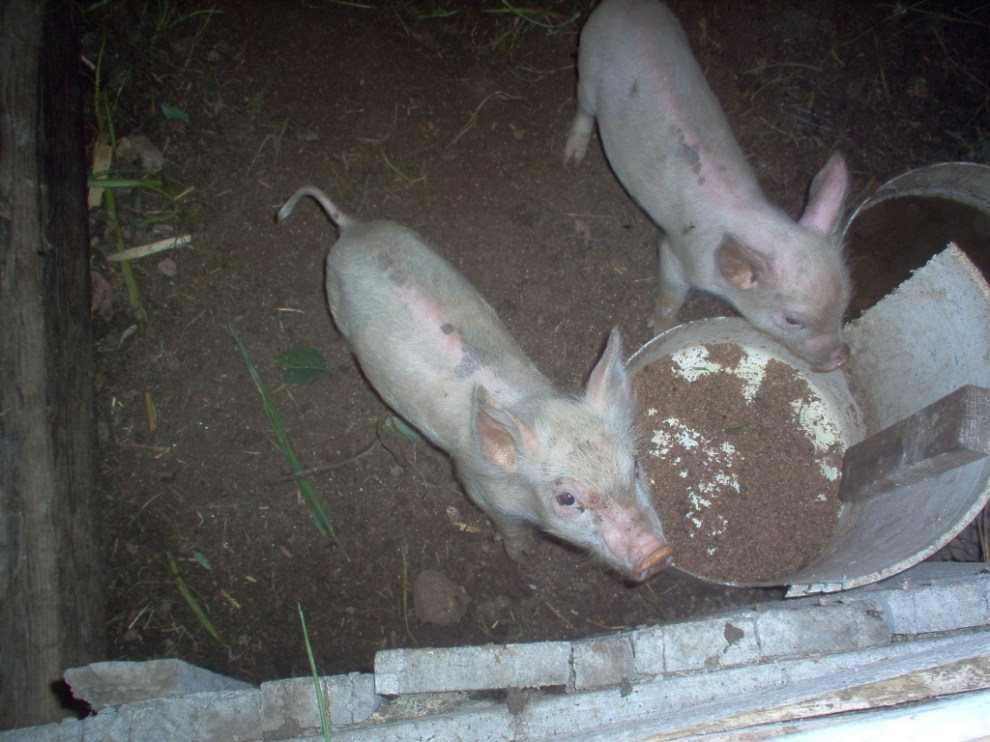
First, this was to be supposedly a week or so home away from home for 3 piglets. But we are now pushing a month with our 8 piggy guests. Then management (us) was not providing the intercontinental breakfast with this service, nor the daily room cleaning. However, the owners are a bit lax with their service provisions, and the 8 little piggies are not so quiet with their protestations about a dirty room and late dinner.

And then there is the dinner itself. The owners bring the typical churros (pellet processed pig food) and then add a creative dish of raw chicken intestine. Every fly in La Yacata comes to dine. I objected strongly to this diet, but being a gringa what do I know? According to the owners, that’s the way it’s always done.

Now one of these little ladies has developed a prolapsed rectum due to diarrhea caused by this diet. It’s as awful as you might imagine, so I’m not posting any pictures of that. Even after I pointed out that they needed to provide a better quality food or the other 7 will suffer the same fate (there isn’t any cost-effective treatment and will end in her death), the response was that’s the way it’s always done.

And truth be told, it is. Last year I was all gung-ho to get a pig. We had a perfect little space in the back. Thus began the quest for Miss Piggy. We traveled hither and yon asking about at pig farms. We discovered that those who raised pigs for meat were raising sterilized animals. I didn’t want a sterilized animal, my vague piggy plan had lots of piglets in the picture. So we kept looking.

We went in search of breeders. Town after town, no luck. Some pig breeders had a litter ready to sell, but wouldn’t just sell us one. It was all 6 or none. Seems pigs were sold by weight to the bigger commercial companies that came once a week to the market. The pig breeder said he would get a better price if he had more pigs on the scale.

And the places these pigs were living. EEEWWWW! Now, I’m not exactly a city girl. We rented a house next to a pig farmer when I was a girl. But there was nothing to compare that large, open, clean-air pen with the corrals that these pigs lived in. The floors and walls were cement so that the pigs wouldn’t dig around in them. They were barely big enough for these enormous monsters to turn around in. And they were built at a slant so that their liquefied excrement would drain out of the corral and into an open drainage ditch which eventually connected to the sewer of the owner’s home. The idea was to grow the pigs as quickly and as mammothly as possible and then sell them to the carnicerias (meat markets) for carnitas (deep fried pork). So the feed these growers used was, yep, you guessed it, a combination of the pig processed feed (churros) and chicken intestine (for protein).

Eventually, we did find a pair of unsterilized piglets. I felt that one pig was enough to begin with, so we gave the little boy pig to my in-laws to take care of. Unfortunately, my mother-in-law didn’t take kindly to having another mouth to feed, and he became carnitas before he was even big enough to provide a mouthful of meat for each family member.

din-din time!

Waiting for the milk to go on their cereal of milled maiz sorgo.

cereal with milk

Yummy! Couldn’t even wait til we had the milk all poured before they started in!

But we kept Miss Piggy. (You need to know that we only give names to animals that we don’t plan on eating, helps to keep the psychological effect of eating one’s pets to a minimum.) She gobbled up the mixture of milled maiz sorgo (a red grain) and goat’s milk that was her main feed. Occasionally, just for variety, there were corn bits mixed in or a dash of alfalfa or this weedy sunflower looking plant that didn’t have a flower called gelite that she just absolutely loved.

She was quite the lady, kept her bungalow as clean as a whistle. She pooped in one corner, had her water in another, ate from a third, and slept in the final corner. She pranced about and greeted us happily. When we cleaned her pen, we gave her poop to the chickens, who found all sorts of overlooked treasures. As her diet was all natural, it was ickier to clean up the dog poop than hers.

Miss Piggy queen of the bungalow

Posing for pictures!

I had some notion that we could train Miss Piggy to go out with the goats and dig to her heart’s content in the fallow fields, but once established in her bungalow, Miss Piggy had no desire to roam. She wouldn’t come out for all the coaxing in the world.

However, one day when my husband was out of town, and I was late with dinner, she managed to get out and eat all our young fruit trees down to nubs. When I got home, she was back in her pen, the only sign she had been wandering about were tiny hoof prints all about the muddy back yard and of course, no trees.

My husband kept saying she wasn’t growing as fast as she should. I suppose compared to the behemoth porkers in those fattening pens, she didn’t grow as big or as fast. But she didn’t smell, she didn’t have an excess fly infestation, she didn’t have any health problems and I was happy with her growth.

But came the day when her cost outweighed her benefits, and she had to be sold. An Amish leprechaun with a silver hoop earring came one day to take her to market. And that was that.

****************************************

Goods Shop by Herbal Academy – botanically inspired products

disclosure

18 Comments

Filed under Animal Husbandry