Category Archives: Religion

Christmas in Mexico–Villancicos

singing to baby jesus.jpg

Villancicos are religious songs now primarily sung and performed during the Christmas season in Mexico. Quite a number of the villancicos played nowadays are just Spanish translated versions of English Christmas carols. However, there are some quite unique songs. Many of these songs came from Spain and were brought to Mexico during the conquest.

One of the songs that I was delighted to hear this past Christmas was  Los peces en el río en el río–literally The Fish in the River. The students at the school I work at did a delightful performance this past Christmas Event. Actually, they performed the song twice since there was no communication between the program coordinator and the music teacher prior to the evening’s performance. That does seem to happen a lot where I work. Anyway, in the song, the Virgin Mary calmly goes about her pre-birth preparations while fish jump in jubilation in the nearby river in anticipation of the event. She brushes out her hair, she washes the diapers and washes herself.

The English translations are my own, so it probably won’t match anything you might search out on Wiki. The translated versions I came across didn’t really make any sense.

Los peces en el río

La Virgen se está peinando
entre cortina y cortina.
Los cabellos son de oro
y el peine de plata fina.

The Virgin is combing her hair
you can see her between the curtains.
Her hair is golden
and the comb the finest silver.

ESTRIBILLO:
Pero mira cómo beben
los peces en el río.
Pero mira cómo beben
por ver a Dios nacido.
Beben y beben
y vuelven a beber.
Los peces en el río
por ver a Dios nacer.

CHORUS:
But look how they drink
the fish in the river.
But look how they drink
to see God born.
They drink, and they drink
and come back to drink some more,
the fish in the river,
to see God born.

La Virgen lava pañales
y los tiende en el romero,
los pajarillos cantando,
y el romero floreciendo.

ESTRIBILLO

The Virgin washes diapers
and hangs them on rosemary branches.
The little birds are singing
and the rosemary is blossoming.

CHORUS

La Virgen se está lavando
con un poco de jabón.
Se le han picado las manos,
manos de mi corazón.

ESTRIBILLO

The Virgin is washing herself
with a little bit of soap.
Her hands are irritated (or sore)
the hands of my love.

CHORUS

Another song that isn’t in your typical English Christmas carol list is Campana sobre Campana (The Bells of Bethlehem). Again, this song was repeated twice during the Christmas event at my school, but hey, who’s counting?

In this song, it talks about the bells of Bethlehem rung by angles when the Christ child was born. Of course, there is no more historical evidence for the heavenly bell ringing than the drinking fish of the previous song, but when has that ever stopped anyone?

Campana sobre Campana

Campana sobre campana
y sobre campana una
asómate a la ventana
verás a un niño en la cuna.


One bell after another
and after another–one (1 o’clock)
Come to the window
to see a child in the crib

(Coro)

Belén
Campanas de Belén
que los ángeles tocan
que nuevas me traéis.


Chorus:

Bethlehem
Bells of Bethlehem
that the angles ring
What news have you brought me?


Recogido tu rebaño
a donde vas pastorcillo?
Voy a llevar la portal
requesón, manteca y vino

(coro)

Among your flock (or with your flock)
where are you going little shepherd?
I’m taking the path (or way)
bringing cheese, lard, and wine.

Chorus

Campana sobre campana
y sobre campana dos
asómate a la ventana
porque esta naciendo Dios

(Coro)

One bell after another
and after bell –two. (2 o-clock)
Come to the window
because God is being born.

Chorus

Caminando a media noche
¿donde caminas pastor?
le llevo al niño que nace
como a Dios mi corazón

(coro)

Walking at midnight,
where are you walking to shepherd?
I bring my love to the child that
was born as God

Chorus

Campana sobre campana
y sobre campana tres
en una cruz a esta hora
del niño va a padecer

(Coro)

One bell after another
and after bell –three. (3 o-clock)
On a cross, at this hour
the child will suffer.

Chorus

I’m happy to report that the art of composing villancicos has not died out. I have been fortunate enough to work with maestro Sergio and have heard his original compositions performed. I hope you enjoy them as much as I have.

Video 1

Video 2

Video 3

disclosure

1 Comment

Filed under Carnival posts, Mexican Holidays, Religion

El Dia de Los Muertos–Visible Mourning

que halloween ni que

I’ve had it up to here hearing about Mexican Halloween. It isn’t. It isn’t about dressing up, spooky stories, demons, or blood. Not Freddy Kruger, not poltergeists, not witches, warlocks or ghosts. It’s not about haunted houses, trick or treating, carved pumpkins or parades. It isn’t even about death.

It’s about life.

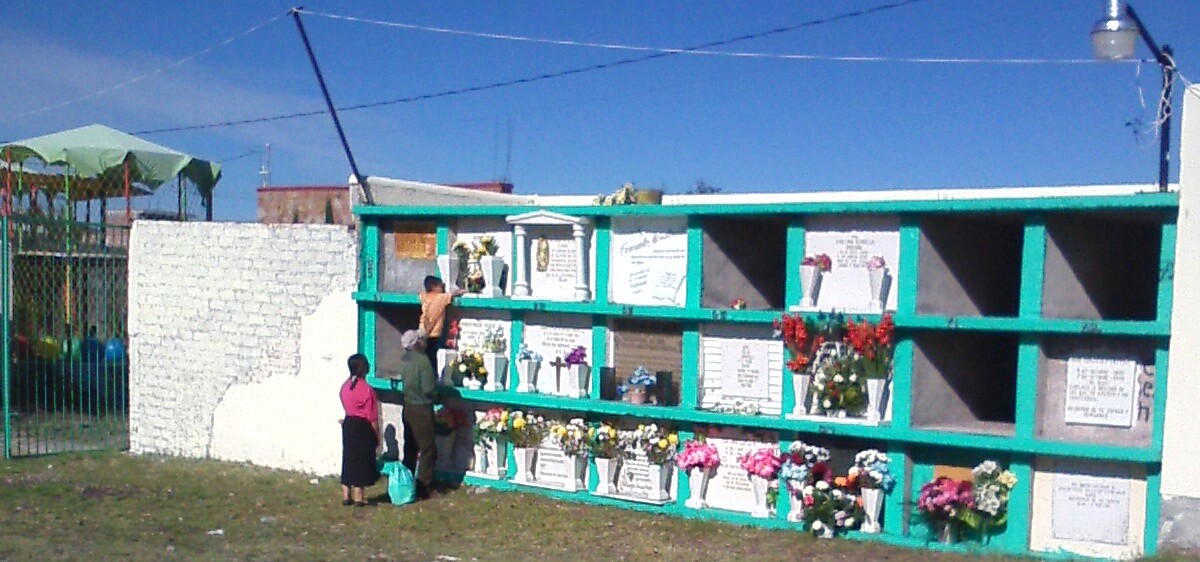
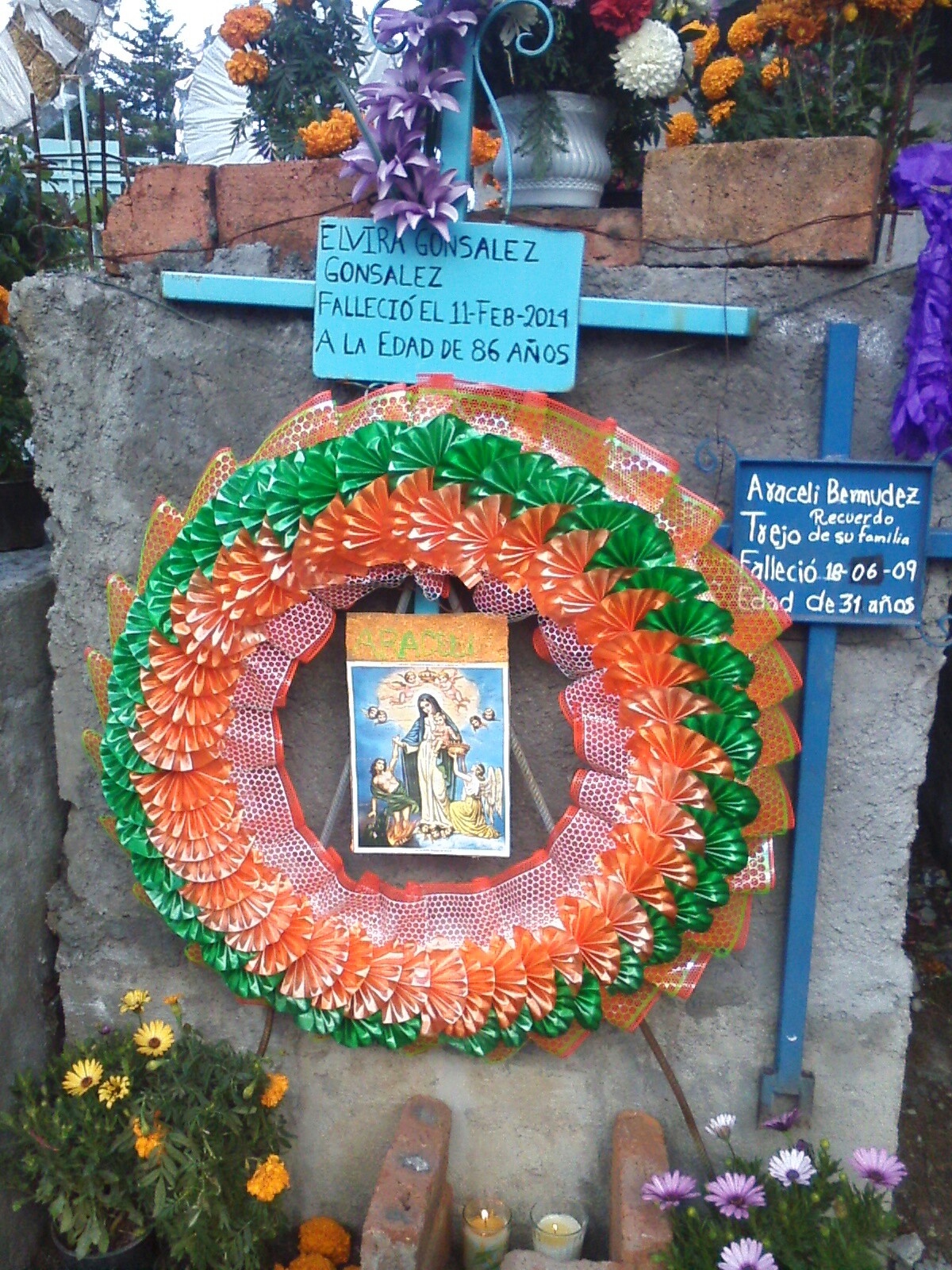
The celebration El Dia de Los Muertos in Mexico is the commemoration of the lives of our dearly departed and the acknowledgment of the loss the living experience with each death. Although I’ve lived in Mexico for almost 10 years, this is only the third year that I have participated in El Dia de Los Muertos events. And why is that? Because up until then, there was no one to visit at the cemetery. Three years ago, my mother-in-law was killed in an accident with a police vehicle. Two years ago, my husband’s grandmother in Cerano died at the age of 89. Now we have family to visit at the cemetery. And we do.

wpid-cam03971-1.jpg

We clean and place flowers. We sit and remember. We laugh, and we cry. It’s more like Memorial Day in the United States. Or maybe Veteran’s day. So it’s hard for me to understand the touristy aspect that has sprung up in larger areas.

student altar

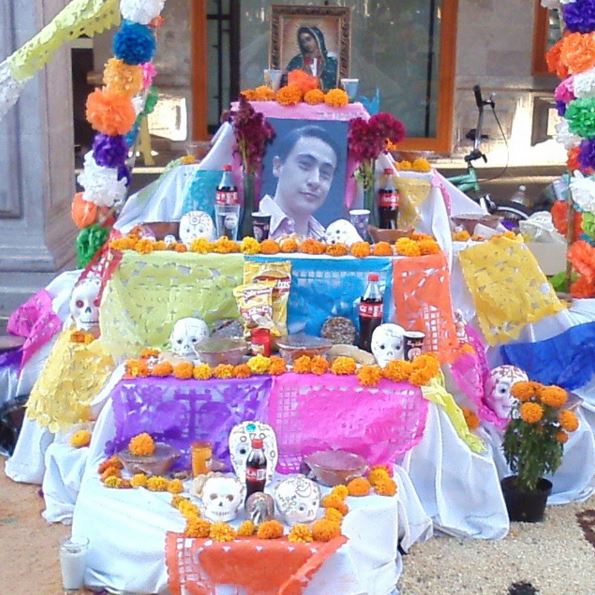
The altars that are constructed in the town center in Moroleon are typically in honor of recently deceased community members. It’s a community mourning ritual. There are altars for recently deceased students, teachers, bakers, metalworkers, shopkeepers and more. The platforms constructed outside homes in Cerano are even more personal. So what would motivate someone to go to some community of which they are not a member to gawk at this mourning ritual?

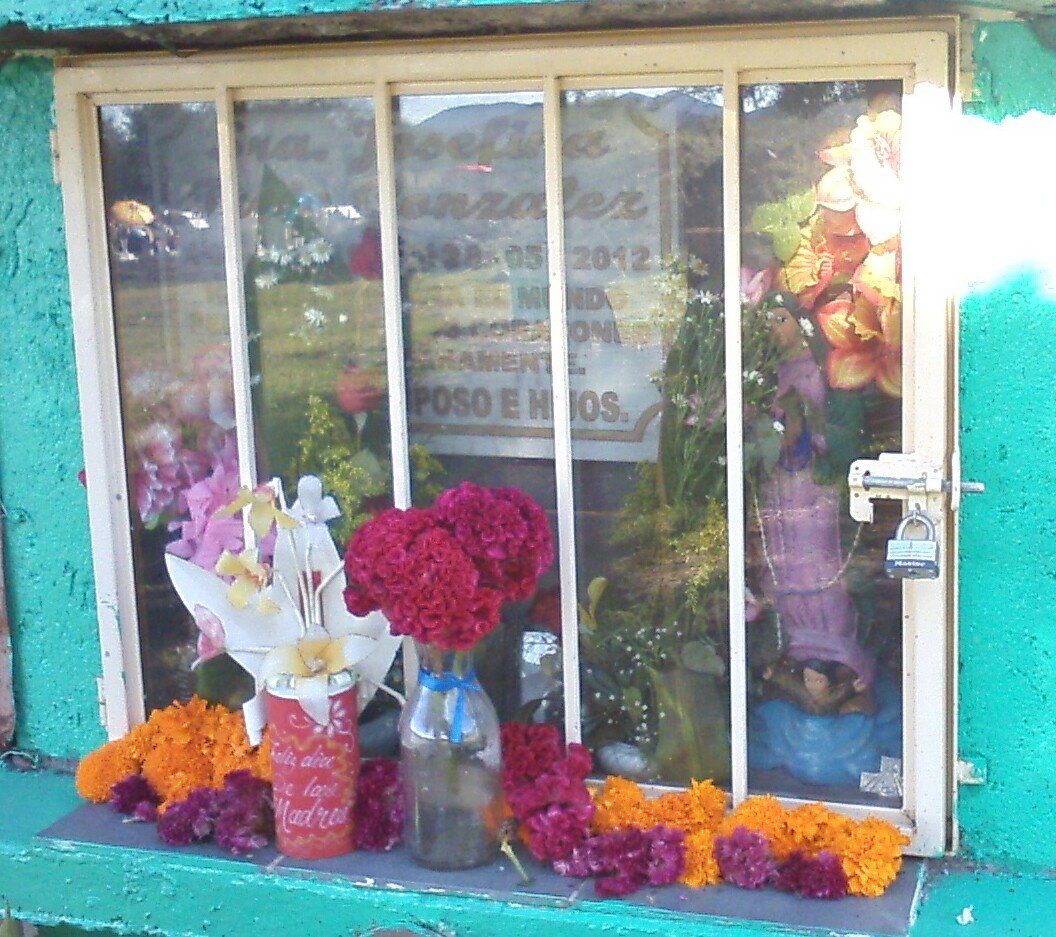
A child's crypt. Notice the toy cars and pacifier behind the glass.

A child’s crypt. Notice the toy cars and pacifier behind the glass.

El Dia de Los Angelitos, November 1, is even more personal. Altars constructed in the town center or outside homes are created in memory of children who have died–some recently, some not so recently. It’s a personal homage. It’s not for me to intrude on this public manifestation of grief. After all, it is no more or less than a visible reminder that the dead are gone but not forgotten. Families visit the graves of their “little angels” and leave flowers and toys. Brothers and sisters are made aware that there was another that remains a part of the family although no longer physically present.

wpid-cam03975-1.jpg

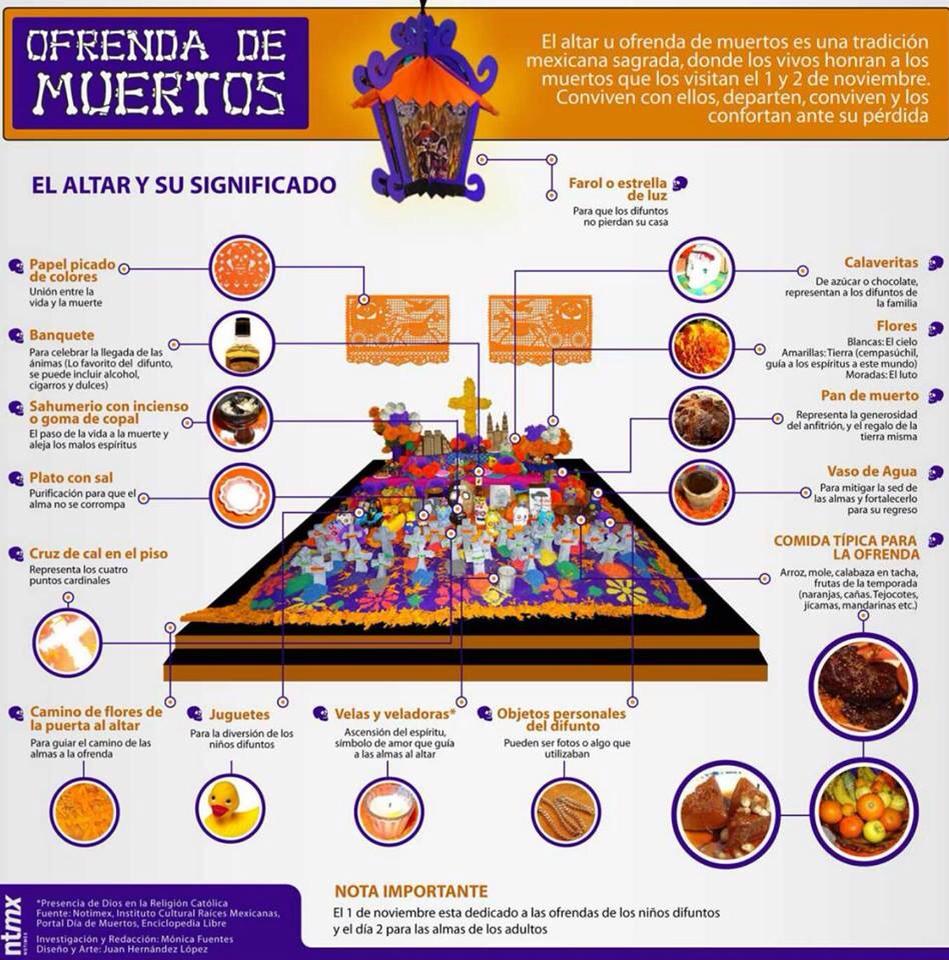
The sugar skulls are personal–you don’t buy a bag. You buy one and have a name written on its forehead. The figurines are personal–the catrinas are frolicking about in death much as the deceased did in life–drinking, dancing, singing, making music, even making love. The offerings left at the grave or incorporated into the alters are personal–favorite sweets, favorite toys, favorite drinks. The home altars are personal. Each one is constructed with the deceased in mind.

ofrenda

Perhaps it is the fact that these personal traditions are done publically that gives the impression that it is something to gape at–like one would at the zoo or a museum. Death and loss are not hidden away here. They are accepted as a part of life, not detached from it. Is this idea such a curiosity in modern times that guided tours are needed?

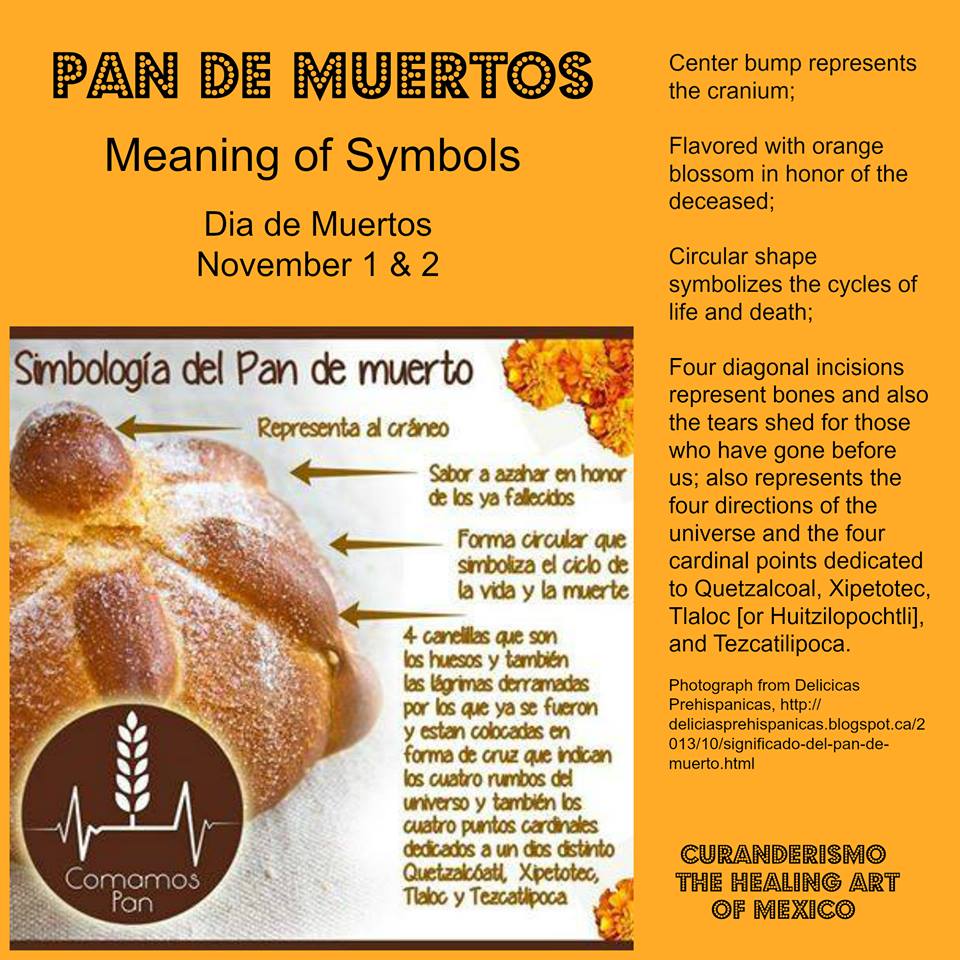
pan de muerto

The rituals of El Dia de Los Muertos bring comfort to the living. The altar or ofrenda is constructed just so. The days of remembrance are sacred. But times are changing….

The school board waited until the last possible moment to authorize the day free from classes. The official calendar has November 2 listed as a school day, while November 16 is a non-school day for El Buen Fin, in some effort to compete with the US’s Black Friday. What does that teach the children about the value of tradition?

This year at the panteon (cemetery) in Moroleon there was a sign telling visitors to denunciar (report) people stealing from the graves. What do they steal? Flowers? Children’s toys? A bottle of coke? Who would take these things? For what purpose? Has it really come down to a culture that steals from the dead rather than honors their memories?

Some larger towns and cities now provide parades, contests, theatrical presentations, mass-produced foodstuff, and trinkets. Wal-mart even offers a Halloween/Day of the Dead mixed selection for your buying pleasure. This tradition that in 2003 was named as an Intangible Cultural Heritage of Humanity is now up for sale.

wpid-cam03982-1.jpg

But for us, the ritual that is El Dia de Los Muertos remains personal. It reminds us that those that have preceded us in death remain part of our present lives. They helped shaped who we are today.  It isn’t a fascination with death.  It isn’t an obsession with death.  It’s an acknowledgment of death and a celebration of life.

SOTBS Blog Hop Op1Sq

    Have a Day of the Dead themed blog post? Link it up here!  

An InLinkz Link-up 

disclosure

17 Comments

Filed under Carnival posts, Cultural Challenges, Death and all its trappings, Mexican Holidays, Religion

May Holidays in Mexico– Pascua de Pentecostés–Pentecost Sunday

pentecostes-el-greco

A special mass is held on Pascua de Pentecostés (Pentecost Sunday), and the church is decorated in red fifty days after Easter.  The red decor is used primarily as a representation of the tongues of fire that appeared over 120 heads Jesus’ followers on Pentecost as described in the bible in Acts 2:1-31.  The tongues of fire were believed to be manifestations of God’s holy spirit and bestowed the ability to speak in “tongues” (other languages) to those gathered.  Those that had received the holy spirit in this form were charged with spreading the teachings of Christ throughout the world.

It is always observed on a Sunday, so as not to interfere with the work-week. May has a plethora of Mexican holidays already. This year (2015) the mass is Sunday, May 24.

Catholics are supposed to fast the evening before and there is a novena (9-day prayer) beginning El Jueves de la Ascension and ending on Pascua de Pentecostés (See La Novena).

first comunion color

As a high holy day, Pentecost Sunday is the big First Communion and Confirmation day. I suppose the idea is that you will be especially blessed by making your Catholicism known on this day. That little extra blessedness might just make the difference down the line.  Better to safe than sorry right?

May is quite the month here in Mexico. Every time you turn around there is another celebration! For other Mexican May holidays see: El Día de los Trabajadores, Conmemoración del Escuadron de Pelea 201, El Dia de La Santa Cruz y El Dia del Albañil, La Batalla de Puebla, Natalicio de Miguel Hidalgo, El Dia de la Madre, El Jueves de la Ascensión, Pascua de Pentecostés, El Día del Maestro, and El Dia del Estudiante

**********************

Are there religious holidays observed in Mexico that leave you baffled?

cover holidays

9 Comments

Filed under Mexican Holidays, Religion