Category Archives: Natural Healing

Huckleberry Mountain Botanicals

Would you believe I found another awesome herb resource? You already know that I’m a huge fan of the Herbal Academy and have taken several courses online with them. But today, I’d like to introduce you to Huckleberry Mountain Botanicals.

My first course was The Basics of Holistic Herbalism was incredibly comprehensive. Herbalism isn’t just about taking this or that herb to improve your health you know. It’s about looking at the body as a whole and determining where herbs can provide support as part of a regular, herbally enhanced diet.  

This course started with a refresher botany section. Herb identification is vitally important, especially if you have moved to a totally different environment like I have. We wouldn’t want to poison anyone now, would we, especially since I taste the herbal concoctions on myself. After that, there was a section on medicinal properties of types of herbs, very useful.

But we weren’t finished learning yet! Session three covered the skin as an organ and talked about interactions herbs can have on it, followed by the digestive system in session four. When using herbs as medicine, it’s important to note each individual’s reaction to herbs because of his or her skin sensitivity and digestive process. It’s not just a matter of popping herbal capsules and hoping for the best.

The last section in this course discussed stress and pain. Yes, there are some herbs that can help with these conditions, but looking at the causes of stress and pain holistically and developing better coping strategies was emphasized rather than just herbal application.

So what else does Huckleberry Mountain Botanicals offer? Oodles of herb stuff! 

Let’s start with the free stuff, my favorite. Periodically, there are free informative herbal webinars that you can attend! Yippee! The next one is in March, but I don’t see what the topic will be just yet. Then there’s loads of free herbal content. Who doesn’t want to improve their herbal understanding without paying a dime? 

Are you interested in growing your own herbs and making your own concoctions like I am? Then you should check out the Cultivating Herbs Bundle and the Herbal Preparations Bundle

To step things up a bit, there are some courses for the professional herbalist including the Fundamentals of Holistic Herbalism Certificate Program and Nutrition for the Herbalist which begins in November. 

Are your kids interested in herbs? Then you should know that the Children’s Herbal School begins on June 15. What a great way to spend their summer productively!

So there you have it folks! Yet another fabulous herbal resource for those of you interested in herbs!

****

Leave a comment

Filed under Health, Homesteading, Natural Healing

Natural Healing–Jengibre

Ginger (zingiber officinale) is reported to have arrived in Mexico first in Cuernavaca with the Spanish in the 1500s. Cultivation commenced and ginger exports back to Europe began shortly thereafter. Mexico remains one of the top 30 ginger exporters in the world. Ginger is known as jengibre in my area of Mexico but it is also called ajenjibre in other areas and has a variant spelling of jenjibre. 

Jengibre is most often used for gastrointestinal complaints in Mexico. A pinch of powdered root in your cup of yerba buena (spearmint) or manzanilla (chamomile) will help with nausea. This anti-queasy effect occurs because ginger’s active principles work directly on the intestinal tract by stimulating saliva production, digestion activity and food absorption thereby relieving nausea, constipation and flatulence. Along the same lines, ginger improves kidney function and lowers blood glucose

Ginger is also effective as an anti-inflammatory compound, a warming agent, a pain remedy, antidepressant and useful in lowering cholesterol. Ginger has antibacterial and antifungal properties. It works as a warming agent by improving blood circulation through stimulating the heart muscle and diluting the blood. It is also effective in treating migraine headaches

When we all had a particularly bad case of a dry cough that lingered earlier this year, we found that ginger works well as a natural cough suppressant. That anti-inflammatory action mentioned earlier relaxes membranes in the airways, reducing the cough reflex. To brew yourself some ginger tea, add 20 to 40 grams of fresh ginger root slices to hot water and sweeten with honey (another natural cough suppressant). 

***

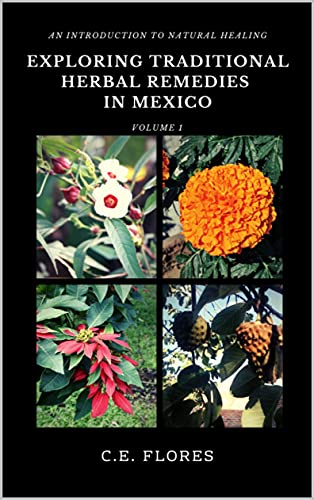
Interested in natural remedies? Uncover herbal remedies from traditional Mexican sources for healing and wellness in the Exploring Traditional Herbal Remedies in Mexico series.
Leave a comment

Filed under Health, Natural Healing

Natural Healing–Lavanda

I love the scent of lavender (la lavanda). Although I can find the plants readily enough at the viveria (plant nursery), I was surprised at how little it is used in traditional Mexican remedies. 

Lavandula angustifolia is native to the Middle East and India. It was brought to Spain by the Arabs in the seventh century. The Spanish brought it to Mexico in the 1500s along with a host of other medicinal herbs. 

There are several lavender fields that are open to the public in Mexico. One is not so very far from where I live in Mineral de Pozos, Guanajuato and the other is in Rancho San Martín, Puebla. Since we are heading to San Miguel de Allende later this year, we’ll have to see if we can stop and smell the lavender on the trip. 

The properties of lavender are fairly well known. It is antibacterial, antifungal, antiseptic and antispasmodic. Used as a wash on wounds, it can reduce the chances of infection. Applied as a rub, it is useful in the treatment of headaches, muscle pain, and cramps. Mixed with vegetable oil, lavender essential oil makes an excellent natural bug repellent.

In Mexico, the leaves are brewed in a tea for indigestion.  Lavender scent has been shown to increase appetite and ingesting lavender has properties that protect against the development of gastric ulcers

The soothing scent has been shown to reduce tension and elevate mood. It improves sleep quality and reduces chronic pain. Massaging the scalp with a combination of thyme, rosemary, lavender, and cedarwood has been helpful in the treatment of alopecia areata

I have to admit that I’m not overly fond of lavender tea because it tastes too astringent to me. That is until I had the most delightful natural tea mix. It contained jamaica (Hibiscus sabdariffa), Flor de Azahar (citrus Aurantium), Flor de Tila (Ternstoemia lineata), Flor de Manita (Chiranthodendron pentadactylon), Hojas de Naranjo (Citrus aurantium), Melisa (Cedronella Mexicana), Manzanilla (Matricaria chamomilla) Pasiflora, (Passiflora Ciliata), Limon, (citrus medica), Yoloxochitl (Talauna Mexicana), Rosa de Castilla (Rosa centifolia) and Lavanda (Lavandula angustifolia). It was absolute heaven in a cup of tea!

Some of these herbs, I’ve already done some research about, while others wait to be explored. I’m quite excited about it and hope to be able to source my own tea blend with these herbs in the future. 

***

Interested in natural remedies? Uncover herbal remedies from traditional Mexican sources for healing and wellness in the Exploring Traditional Herbal Remedies in Mexico series.

1 Comment

Filed under Health, Natural Healing