Category Archives: Mexican Food and Drink

Bone Broth

Recently among the Prepper and Homesteading groups I follow, there’s been a lot of excitement about bone broth.  Apparently, it’s the best thing to come along since sliced bread.  Only, it isn’t something new.  We’ve been making bone broth for years.

For those of you not familiar with bone broth, it’s the liquid that results from boiling the bones of an animal, poultry, fish, sheep, goat, cow, pig.  That’s it. (Bone Broth Basics, Nourishing Broths, Bone Broth Benefits: From Digestion to Joint Pain, Traditional Bone Broth in Modern Health and Disease, Making Real Homemade Chicken Stock or Bone Broth, Gut-Healing Bone Broth Recipe)

It’s SOOOOO healthy.  Look at this list of health benefits!

Alphabetical Listing of Conditions that Broth Benefits

aging skin, allergies, anemia, anxiety, asthma, atherosclerosis, attention deficit, bean maldigestion, brittle nails, carbohydrate maldigestion, Celiac Disease, colic, confusion, constipation, dairy maldigestion, delusions, dental degeneration, depression, detoxification, Diabetes, diarrhea, fatigue, food sensitivities, fractures, Gastritis, grain maldigestion, heart attack, high cholesterol, hyperactivity, hyperchlorhydria (reflux, ulcer), hyperparathyroidism (primary), hypertension, hypochlorhydria, hypoglycemia, immunodepression, increased urination, infectious disease, inflammation, Inflammatory Bowel Disease (Crohn’s Disease and Ulcerative Colitis), insomnia, intestinal bacterial infections, irritability, Irritable Bowel Syndrome, Jaundice, joint injury, Kidney stones, leaky gut, loss of appetite, meat maldigestion, memory, muscle cramps, muscle spasms, muscle wasting, muscle weakness, Muscular Dystrophy, nausea, nervousness, Osteoarthritis, Osteomalacia, Osteoporosis, pain, palpitations, Periodontal Disease, pregnancy, rapid growth, restlessness, Rheumatoid Arthritis, Rickets, seizure, shallow breathing, stupor, virility, vomiting, weakness, weight loss due to illness and wound healing

My first real exposure to bone broth was at Mama Sofia’s dinner table.  Mama Sofia is now nearly 100 years old.  Think on that!  She served us up some chicken broth and there was a chicken foot in it.  The broth was absolutely delicious, but I didn’t know how to eat the chicken foot.  My son, only 4 at the time, was also taken aback.  He couldn’t stop staring at it.  My husband’s aunt Caro finally picked up the chicken foot and said that this was her favorite part because she could use the toenails to scratch the top of her mouth.  She was teasing of course.  Once the bone was out of the way, we all tucked in. 

We tend to have either chicken or beef soup at least once a week.  Twice a week when it’s colder.  There isn’t a set recipe.  We use whatever happens to be in season.  The guy who runs a vegetable stand in front of his house always has a small bag of freshly cut vegetables for 12 pesos and then we add whatever else we have at the house.

Today, for example, we made beef soup with 2 kilos of soup bones, 3 garlic cloves, first of the season squash, some carrots, an ear of yellow corn, a bit of cilantro, 2 chayotes, a medium sized onion, a tomato, 6 small potatoes, a hunk of cabbage, a piece of cauliflower, a joconol (yet another type of cactus fruit), a piece of broccoli and a handful of chickpeas, a handful of green beans and salt to taste.  Sometimes we have nothing but potatoes and onions available, so that’s what we use.

Let me tell you, a mugful of broth from this hodgepodge soup is just the thing right before bed.

These middle-class ladies that have “discovered” bone broth might be on to something. That something being real food is better.
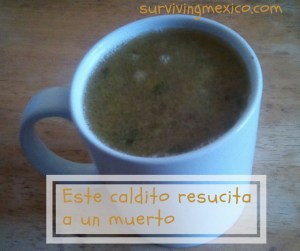
This broth will raise the dead–South American saying

Sometimes I wonder why it is I feel more alive here in Mexico.  I still have health problems, life sure ain’t easy, money is ALWAYS an issue.  It could be as simple as there’s no fluoride in the water.  Or perhaps it’s the constant challenge of managing in a culture not my own.  Or just maybe it’s the bone broth.

********
3 Comments

Filed under Health, Homesteading, Mexican Food and Drink

Rainy Season Foraging

I’ve already written about how foraging is part of our lifestyle. (See Gleaning) Our animals are taken out of their corrals and allowed free foraging daily.  Recently this mass exodus has not just been limited to the goats, sheep, and horse, but also the chickens, ducks, and rabbits delightedly head out to the tall grass for vittles.

When the Earth provides such abundance, it really is a sin against nature not to harvest its bounty (See Tunas, Pitayas, and Cactus) both man and beast.  Of course, each season brings its own flavors.  This past month, we did some rainy season foraging.

Not edible!

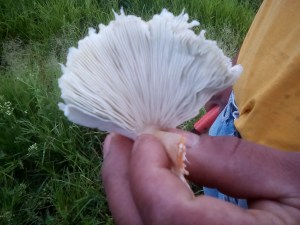
Lots of rain mean lots of mushrooms.  This year was hardly a bumper crop, but we did get a meal or two out of the mushrooms.  I always let my husband harvest these as I’m still a little unsure of choosing the right ones.  Both types of mushrooms that grow in droves during the rainy season look like partially opened umbrellas.  The edible mushrooms are pink underneath.  The poisonous ones are brown or white underneath.

Then there is this plant that my husband called toritos (little bulls).  I’m pretty sure that’s not its name.  The interior of the seed pods before it hardens up is edible. It tastes, well, beany.  Once the pods harden, they darken to an almost black color and two pointy prongs pop out at the end.  My husband and his brothers used these mature seed pods as bulls in their play way back when.

Another edible plant is what my husband calls quesitos (little cheeses) because once peeled it resembles a cheese wheel.  These are bitter in taste.  I’ll pass.

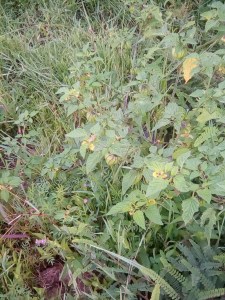
This pretty flower turns into tiny metallic colored berries.  They sort of taste like blueberries.  Apparently, there are several varieties of this plant differentiated by the flower color but all giving the same sort of berry.  Anyone know the name of this plant?

Stopping on our nature hike to take a picture in Los Amoles, I found tomatillo growing wild at my feet.  Tomatillo is used in all sorts of savory Mexican dishes.  It has a tart or tangy flavor to it.

Not edible!

The fruit developing on this plant is not to be eaten, according to my husband, although it bears an uncanny resemblance to a squash.

Verdolaga (purslane) is found year-round.  Cooked up it has the consistency of spinach with a sort of tangy taste.  It’s often used in green salsa.  

This plant is called Chichi de burra (Donkey boobs).  The pods are edible and taste like figs.

The tubular petals from this flower (Klip Dagga) have nectar that can be sucked out making it a favorite of chuparosas (rose suckers otherwise known as hummingbirds) and mariposas (butterflies).  They grow in large bunches under the mesquite tree near our house.  It’s my favorite place to be at the tail end of the rainy season.

This is not an all inclusive list of wild edibles by any means.  Every year, I learn a little bit more about the flora and fauna that surround me.  Where else can I get a glimpse of a mountain lion, a roadrunner, and fox in one day?  Where else do butterflies of every imaginable color and size flutter in clouds?  Where else are daily humdrum activities stopped with the glimpse of a hummingbird? La Yacata remains the place to be for me!

**********************Enroll now in the Herbal Academy Introductory Course!


Leave a comment

Filed under Alternative Farming, Mexican Food and Drink, Native fauna and flora

Natural Remedies–Garlic tea

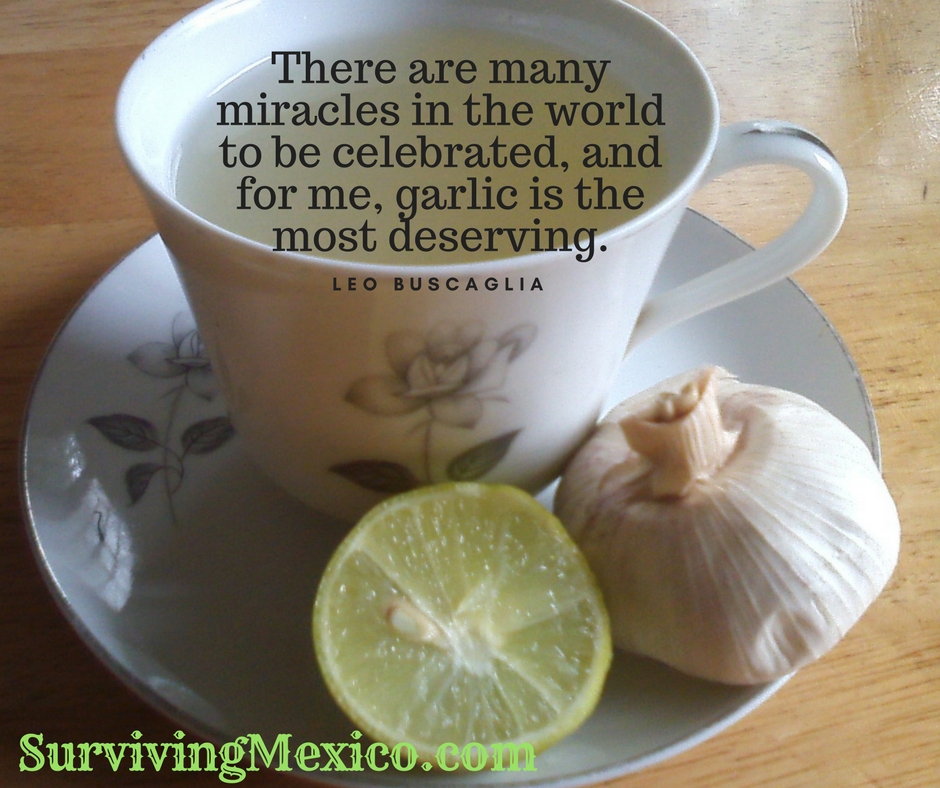
Although nowadays a common ingredient in Mexican cuisine, did you know that garlic (Allium sativum) arrived in North America with the Spanish conquerors along with onions, pigs, cows, chickens, cheese, and rice? Garlic was quickly adopted both as a spice and medicinal herb.  Even today, traditional curanderos use a garlic clove inserted into the ear as a treatment for earaches, with olive oil for burns, in brandy and brown sugar for asthma, and with honey for a cough. Garlic is also believed to provide protection from negativity and evil spirits. Apparently, no one told the author of my little book Antigua Recetario Medicinal Azteca that garlic wasn’t used by the Aztecs because there is quite a section about the medicinal use of garlic reportedly used by said people. Here are some of the recipes I found: To stimulate appetite and help with digestion: Eat 3 cloves of garlic raw with a bit of water before a meal or cook an entire garlic head in a liter of water, adding lemon juice and sugar to taste. To help with anemia: Eat a salad prepared with radish, lettuce, tomato and raw garlic with a bit of oil and salt. To reduce blood pressure: Mince a garlic clove and drink it in a glass of water. For asthma or a cough: Boil 8 peeled and pressed cloves in a liter of water.  Add a little oregano.  Strain.  Add 2 tablespoons of honey.  Take a tablespoon every hour until better.  OR Boil ½ head of garlic in a liter of milk with 2 carrots.  Sweeten with honey.  Drink warm before bed. To rid the body of parasites: Mince a head of garlic and warm in ¼ liter of milk without boiling.  Allow to steep 3 or 4 hours.  Strain.  Drink before breakfast for 9 or 10 days. For scorpion stings: Mash a garlic clove and use it as a plaster over the affected area.   For rabies:  Soak 100 grams of garlic minced into little bits in a liter of water overnight. Strain and sweeten to taste.  Take several cups a day. For light burns: 3 or 4 garlic cloves mashed and mixed with oil as a plaster over the affected area. For athlete’s foot:  Use garlic powder on the feet and change the socks every day.  (The Aztecs wore socks?) For rheumatism relief: Rub 2 halved garlic cloves on the painful area whenever you need to.  Do not get the treated area wet.  The recipe wasn’t precise as to the time you should not get wet. Two hours?  Two weeks?  Who knows? Not to be outdone my little book Antiguo Formulario Azteca de Yerbas Medicinales. Manual imprescindible de los secretos indigenas also had a section on garlic. In order to give these garlic claims more credence, the author cited an incident a few days before publication concerning a man in Barcelona who had been bitten by a rabid dog and ate garlic and onions for 8 days thereby effecting a cure. While I wasn’t able to find any scientific evidence to back up this rabies claim, using garlic as a wound poultice does aid in healing. This book also added the following to the scorpion sting treatment: To be extra sure, use a sterilized knife to cut the wound open in the form of a cross before applying the garlic plaster. Both books also highlighted the medicinal use of garlic essential oil and referred to Dr. Helle de Berlin.  While I was trying to look up Dr. Helle in the cyber world, I came across a plagiarized copy of Antigua Recetario Medicinal Azteca online published under the name Herbolarios Anonimos.  While several other sites refer to Dr. Helle’s pamphlet on garlic essential oil, I was unable to find the original.  (Budda de la Medicina, La Belleza de la salud con el ajo, el cebolla y el limon, Tintura de ajo como medicamento, Las curas con ALOE–AJO CEBOLLA–LIMON, Tintura de ajo como medicamento) In a nutshell, the esteemed Dr. Helle assured everyone in his famous pamphlet that twenty drops of garlic essential oil diluted in water is good for the heart, helps the liver function better, improves digestion, cures hemorrhages, helps reduce fatigue, headache, and melancholy, and aids in insomnia.  I’d feel more confident in the curative effects of those 20 drops if I could find some information on Dr. Helle.  Wouldn’t you? However, don’t be so quick to poo-poo these herbal remedies despite the more outlandish claims.  Scientific research has proven garlic to be a near miracle plant.  Quite a number of the aforementioned cures are medically sound. (Health Benefits of Garlic: The Medicinal Use of Garlic) Look at what garlic can do for you: Garlic is good for your heart.  It fights cancer.  Garlic is good for your liver and fights bacterial infections including Salmonella, Staphylococcus aureus, and  Escherichia coli. Garlic is good for the digestive system. It aids the process of expelling parasites, including giardiasis and Candida albicans. Garlic is especially good for women as it both increases milk flow for nursing mothers, possibly by making the breast milk taste better which encourages the baby to nurse longer, and reduces the severity and occurrence of yeast infections. Garlic helps with the common cold and reduces cough. Garlic helps treat depression.  It aids in injury recovery. Garlic is an important component in the treatment of heavy metal poisoning, a primary cause of Alzheimer’s. Garlic is useful in the garden as well.  Planted around other crops reduces disease, deters pests and increases the nutritional value of the soil and nearby plants. Believe it or not, the whole plant is edible, not just the bulb. I have a pot of garlic sprouting in my back room.  As the tops grow, called scapes, I can clip a few bits and add them as flavoring just like you would with the clove.  The scapes or flowers aren’t quite as strongly flavored as the clove but are tasty nonetheless. I have big plans of making a little garlic patch out back.  My hope is I’ll have enough in a few years to make my own garlic powder or essential oil. Of course, my efforts at gardening have been repeatedly thwarted.  (See Failing at Container gardening) Continuing with my herbal tea series, I decided to try some Garlic Cold Buster Tea.  We are in the rainy season, after all,  and it’s likely somebody in my house will catch a cold before things dry out again.   There are many miracles in the world to be celebrated, and for me, garlic is the most deserving. It was pretty straight forward.  Boil 3-6 peeled and halved cloves in 3 cups of water. Add 1/2 cup of lemon juice.  That was about 7 smallish lemons from our tree out back.  Add honey to taste and serve. The tea was a lemonade color, probably because I didn’t skimp on the lemon juice and wasn’t half bad.  I don’t think that I will replace my morning tea with this concoction but in times of illness, it would be no bother. There are some things to keep in mind when using garlic.  Some people have a sensitivity to garlic and will find it irritates their stomachs.  You should not ingest large quantities of garlic when taking blood thinners. Garlic will give you bad breath and body odor.  (Duh) And finally, applying raw garlic to your skin may irritate the skin.
*************************

Interested in natural remedies? Uncover herbal remedies from traditional Mexican sources for healing and wellness in the Exploring Traditional Herbal Remedies in Mexico series.

6 Comments

Filed under Mexican Cultural Stories, Mexican Food and Drink, Natural Healing