Category Archives: Mexican Cultural Stories

Tortillas

The creation story of the Maya recorded in the Popol Vuh explains how the gods created man in a sort of trial and error kind of creation. The first attempt consisted of mud men which resulted in mindless creatures with no strength that were easily dissolved in water. So then the gods tried wood men. This type of being was stronger but lacked that infinitesimal spark the gods were looking for. After much discussion, the gods crafted humans from a mixture of yellow and white corn. Finally, this was a being with strength, intelligence and agility. Thus the race of humans was born.
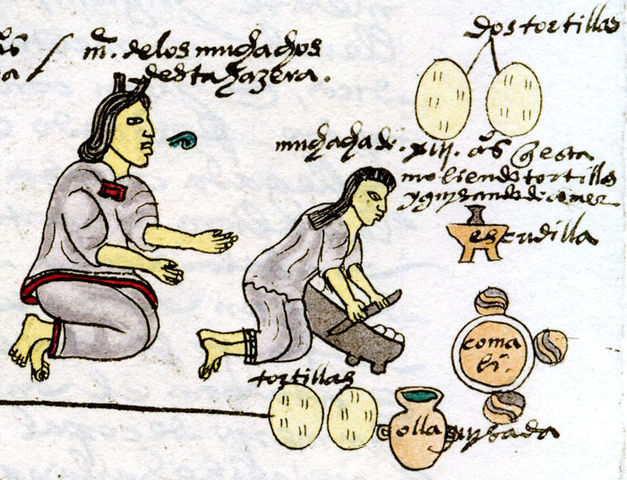
627px-Tortilleras_aztecas

Being people of the corn, maize has a sacred place in Mexican culture. Maize was domesticated about 10,000 years ago in the Balsas River Valley in south-central Mexico. Mexico is home to more than 2,000 identified varieties of native corn and has the oldest varieties found in any place in the world.

Is it any surprise that the corn tortilla remains an essential part of the Mexican diet?
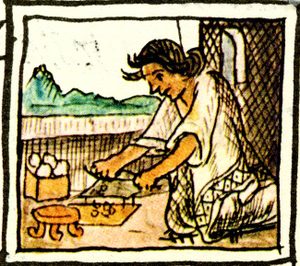
florentine_codex_metate_3

The name tortilla comes from the word tlaxcalli in Náhuatl which comes from the longer word tlaxcalli tlán. The place nameTlaxcala means “the place of the tortilla” maybe giving some insight on where the tortilla was first developed. In Maya, tortillas are called waaj. In Totonaco, chaw. In Mixteco, ndíta. In Zapoteco, eta or gueta. In Otomi, hme. In Rarámuri, remeke.

Although there are now tortillerias (places that manufacture tortillas) where tortillas are machine pressed, it’s still possible to find delicious hand-pressed tortillas in a variety of colors wherever you are in Mexico. (See Tortilleria)

Making tortillas by hand is a very time-consuming process.

IM000773.JPG

Removing kernels

First, the dried corn is removed from the cob. It is possible to buy bags of corn and skip this step, though.

The corn is then sifted to remove stones and dirt, then poured high so that the wind takes any chaff left over.

Next corn is then boiled until soft with lime and the husks removed.

This is called nixtamalization. This process increases nutritional value, flavor and aroma of the while reducing mycotoxins when compared to unprocessed grain.
metate.jpg

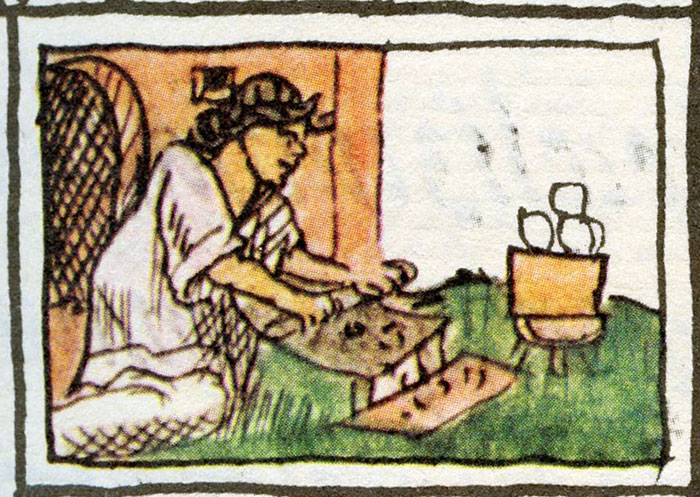
The softened and peeled corn is then milled. Many tortillerias offer this service as hand grinding with a metate takes much longer .

The resulting doughy mix is called masa. Masa can be used for a variety of other delightful culinary treats which I’ll talk about in another post. (See Tamales)

tortillas

For tortillas, the dough is formed into small balls and then pressed flat. The now flattened result is transferred to the comal (heated flat pan) and toasted on one side, then flipped to be toasted briefly on the other. The finished product is removed and stacked.

There is a cara (face) to the tortilla which should be eaten that side up. I have yet to mastered being able to determine which side is the cara, but my son and husband have no problem, often flipping the tortilla before eating so that it is right side up. In the event that your taco is put together wrong, you might hear “le ponen los cuernos” (literally to put on the horns). This refers to the belief that in the event of an upside down taco, the preparer will be betrayed by his or her romantic partner. Hmm, maybe I’d better try a little harder to get that taco right side up.
cam04058.jpg

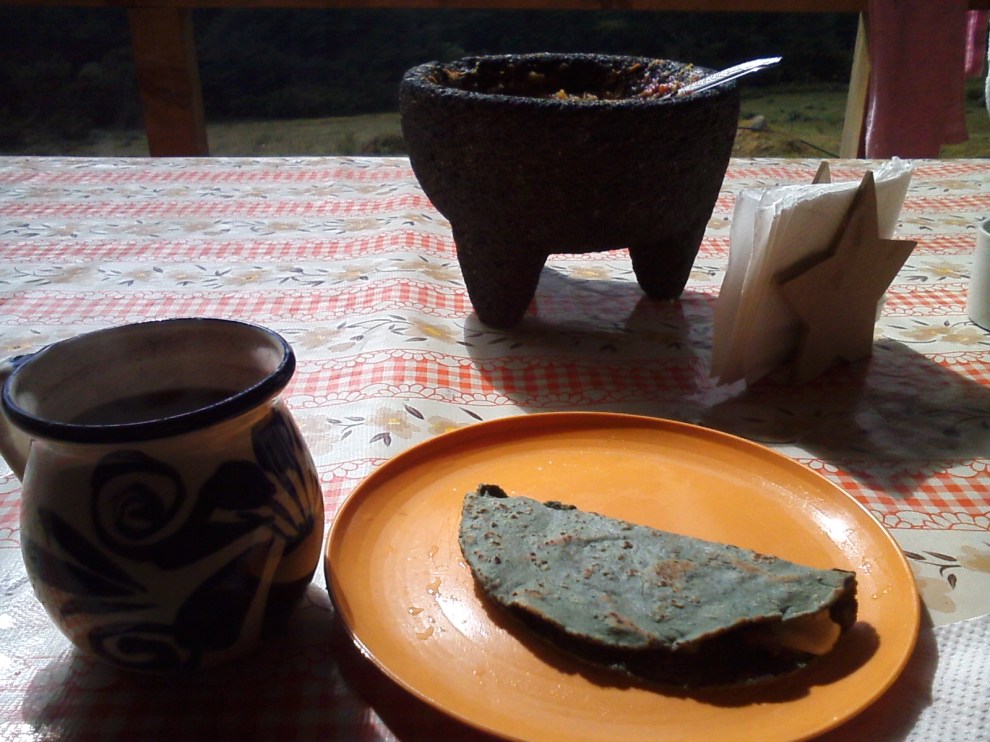
Tortillas come in a variety of colors mostly based on the type of corn used for the masa. When we went to the Monarch Butterfly Reserve, our delicious quesadillas were made from blue corn. I’ve also seen where tortillas can be made from cactus but haven’t had the pleasure of a taste of those yet.

The Write Tribe Festival of Words #5

disclosure

6 Comments

Filed under Carnival posts, Homesteading, Mexican Cultural Stories, Mexican Food and Drink, Native fauna and flora

Playing Tourist–Patzcuaro, Michoacan

cam04111-1.jpg

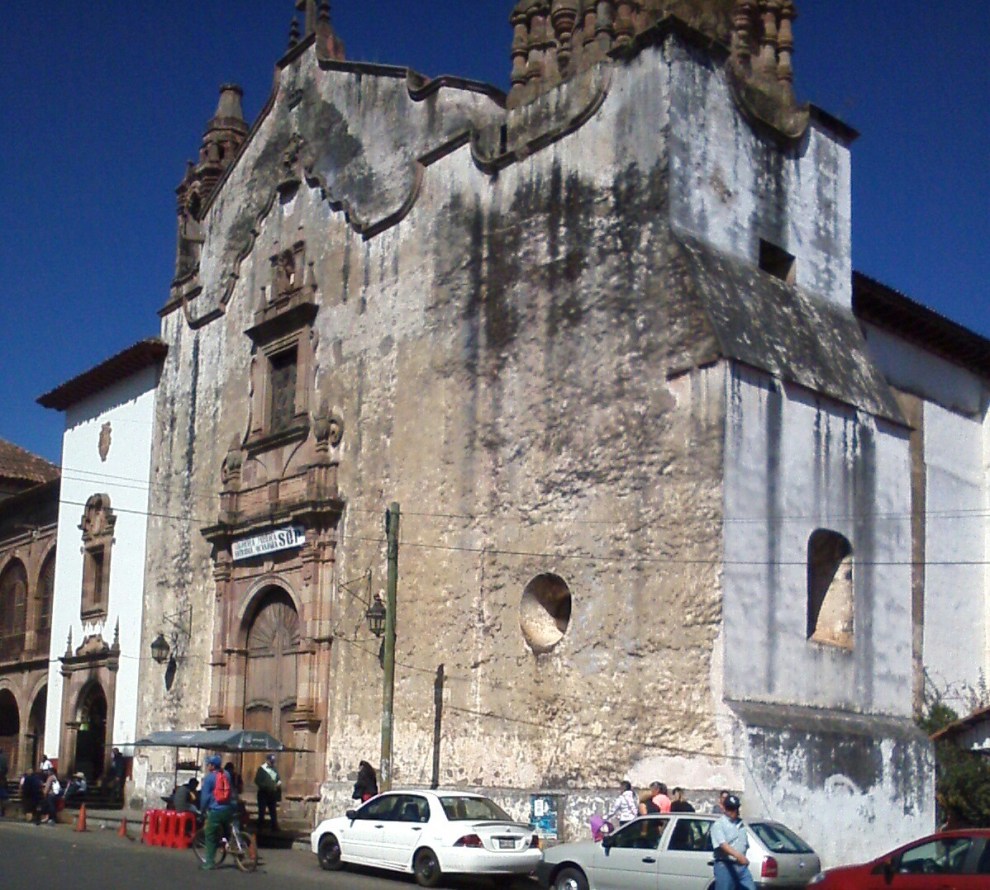
Ex-monastery of San Agustin in Pátzcuaro, Michoacán, Mexico

Patzcuaro, Michoacan is yet another Pueblo Mágico within easy driving distance from La Yacata, so there was nothing to be done but go. Its original name was Tzacapu-Hamúcutin-Pásquaro which roughly translates as Donde están las piedras (los dioses) a la entrada de donde se hace la negrura (where the stones of the gods are at the entrance to where they make the blackness) which sounds ominous. A better English translation would be ‘The entrance to the gates/entrance of Paradise’ or some such idea. The indigenous of the area held the belief that lakes were portals to the otherworld, so it comes as no surprise that there is a lake just outside of Patzcuaro proper.

cam04103-1.jpg

Fountain in the center of Patzcuaro, Michoacan in honor of Bishop Vasco de Quiroga.

The Purépechas founded the town sometime before 1300 mostly as a religious center. The Spanish arrived in 1522, and the town remained a religious center with a very small population until about 1539 when the bishop Vasco de Quiroga dedicated himself to the repopulation and revitalization of the area. He was well received by the native people, even earning the nickname Tata Vasco.

In 1776, the indigenous of the area staged a revolution which was put down in 1777. In 1886, the railroad Morelia-Pátzcuaro was finished, and in 1899, Patzcuaro had its first electric lights. That amazes me since La Yacata is still waiting for electricity in 2016!

cam04109-1.jpg

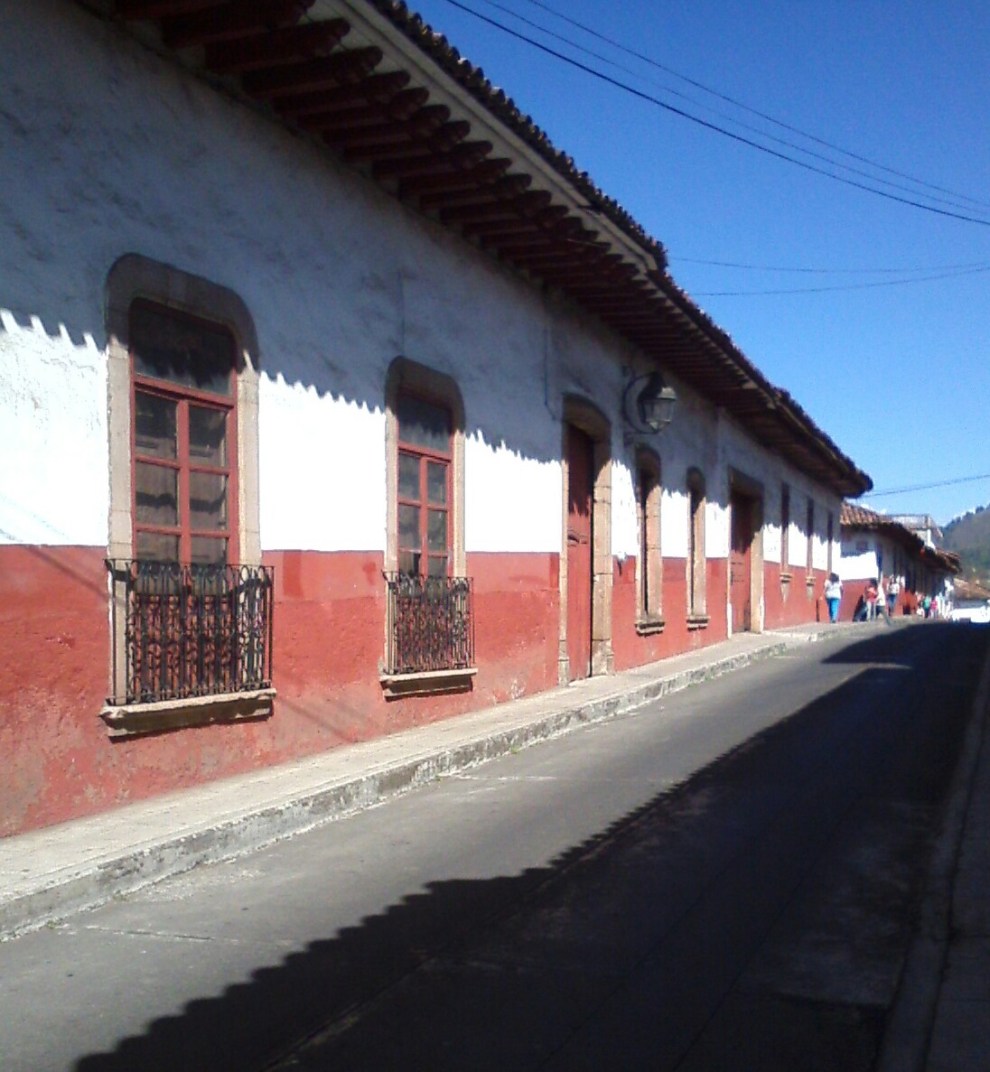
Since then, it has been a popular tourist area, known for its pottery and basketry. It really is a beautiful little town, done up in the red and white style, with cobblestone streets, much like Cuitzeo.

Our underlying reason for visiting Patzcuaro was my quest for a foot-pedaled sewing machine. Someone told me that these could be found there. So there we went. The road was clearly marked, unlike our trip to the Monarch Butterfly Sanctuary and we were able to take the libre (free) road the entire way.

There happened to be a tianguis (flea market) in the centro (downtown), but there wasn’t much of interest for us. Most vendors were hawking new toys and boxes of cookies for Los Santos Reyes. We did enjoy some gorditas de nata and fresas con crema (strawberries with whip cream).

Around la plaza, we noticed that there were a number of American-styled coffee houses instead of the more typical taco stands. It really smelled heavenly but was pricey, so we opted not to buy any. In line with the town’s tourist popularity, there were quite a number of gringos (white English speaking people) enjoying their cups of joe, playing chess or reading. The stores were chocked full of delightful artesenia (arts and crafts) but at prices that were not accessible to the average Mexican or to us, for that matter.

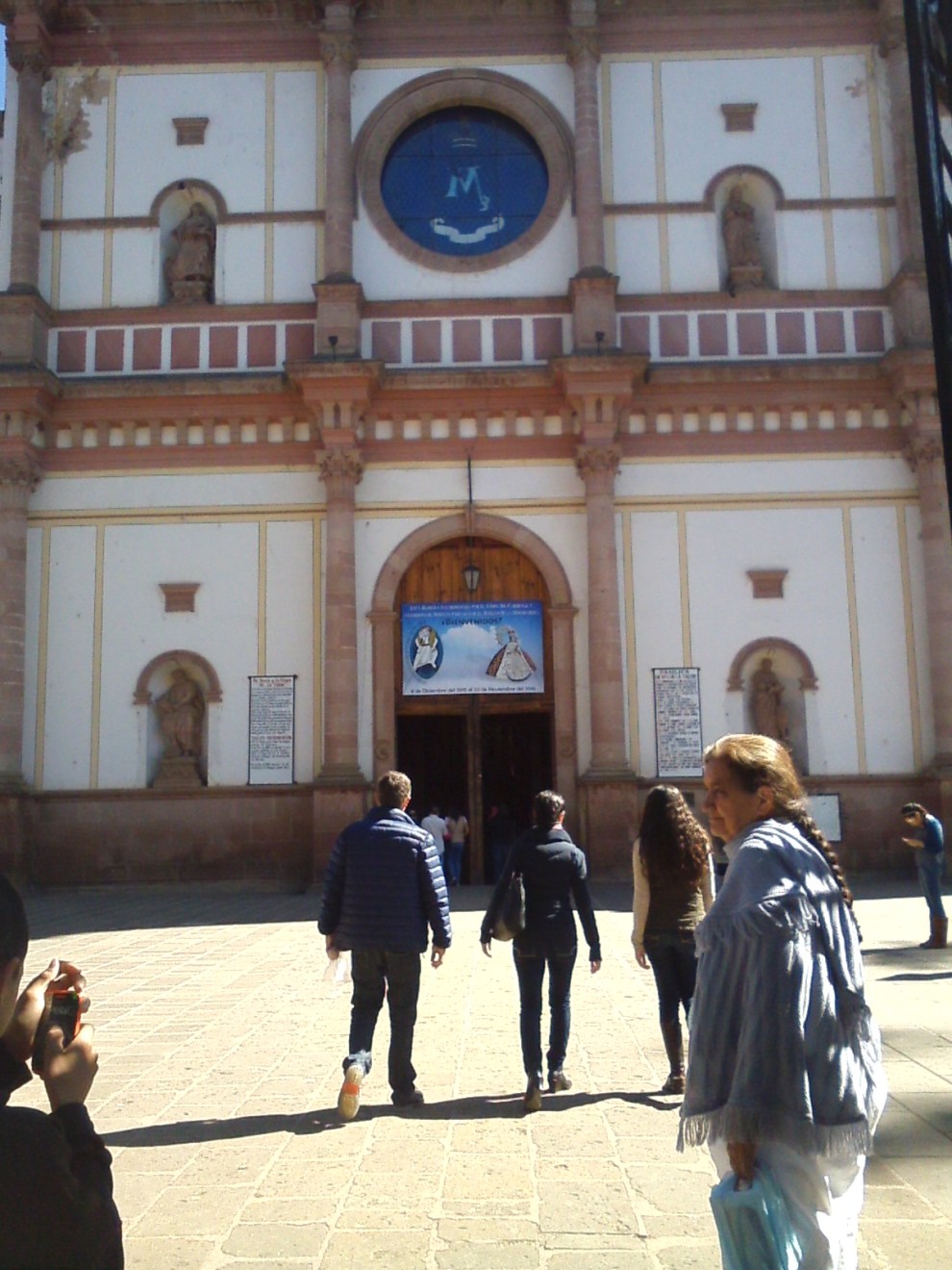
cam04112.jpgWandering around town, we came across the Basílica de Nuestra Señora de la Salud, built on a Purépecha/Tarasco pyramid platform. Notice the sign by the fence warns against tieing up your horses or leaning against it. I didn’t see much in the way of horses for that to be a current problem. There, outside the Basilica, vendors were selling prayer cards, rosaries, statues and peyote/marijuana cream for arthritis. Nuestra Señora de la Salud seems to be the same virgin found in Soledad, so I expect pilgrimages are made here as well to petition her curative powers. Tata Vasco’s remains are also housed within the Basilica.

We finally found the Singer Sewing store, and they had a foot-pedaled machine on display. However, the elderly owner would not sell it to me because she said it was a piece of crap, China made rather than hecho in Mexico (made in Mexico). My son pointed out that was just as well since if we did buy the machine, how would we get it in Myrtle (the VW bug) and back home? Good point.

cam04115-1.jpg

We stopped at a yonke (junk yard) and picked up some pieces for the revitalization of Myrtle and had a late lunch at Las Jacarandas just outside of Cuitzeo. An excellent day trip if rather uneventful.

****************************************


disclosure

1 Comment

Filed under Mexican Cultural Stories, Religion, Tourist Sites in Mexico

The History of Moroleon for Kids ebook

Today is the last day to download FREE The History of Moroleon for Kids by yours truly and the fabulous illustrator Claudia Guzes!

portada 2


How much do you really know about Moroleon?

***Why is there a celebration every January 15 in Moroleon?

***Did Moroleon support or resist the Cristeros?

***Which indigenous groups peopled the area?

***When did the first European settlers arrive?

***Why is the main Catholic church called El Templo del Señor de Esquipulitas?

***How did Moroleon get its name?

***Who attacked Moroleon in the early 1900s?

***Why are businesses closed on Thursday afternoons?

Find out the answers to these and more about the history of Moroleon in this book artfully designed with children in mind.

********************

disclosure


3 Comments

Filed under Book Reviews, Mexican Cultural Stories, Tourist Sites in Mexico