
Guaco is the common name for plants in the Aristolochia genus, not to be confused with Cleome serrulata or Mikanie guaco, which are also known as guaco. There are at least 500 species of Aristolochia, mostly found in the tropics. Approximately 65 are native to Mexico. At least three have been very recently discovered and named; Aristolochia purhepecha found in Michoacán; Aristolochia chiapensis native to Chiapas; Aristolochia emiliae in Jalisco.
Guaco flowers have a strong odor to attract insects, which then become caught in the perianth tube. Once an insect has been captured, the hairs wither, and the insect is released, now covered with pollen.
Most often, guaco is prescribed for stomach ailments or pain relief from poisonous bites and stings. Although guaco is the most common name in Mexico, some species of the plant have other regional names.
Aristolochia plants have been shown to be anticancer, antibacterial, antiparasitic, and antiviral. They also have antiplatelet, antioxidant, anti-inflammatory, and neuroprotective activity. Additionally, the plants have demonstrated antifibrotic activity and anti-diabetic potential. Many varieties cause changes in the estrous cycle, and no remedy containing guaco should ever be taken by pregnant women as the plant is toxic.
A few studies have been done on specific plants in the Aristolochia genus. Aristolochia taliscana exhibits antimycobacterial, anti-inflammatory, trypanocidal, and neuroprotective activity. A plant decoction is made to treat malaria.
Aristolochia trilobata (bejuco guaco) demonstrates antinociceptive and anti-inflammatory effects. A vaginal douche to treat infection is made by boiling a leaf in ½ cup of water and the root is heated and placed directly on a throbbing tooth infection.
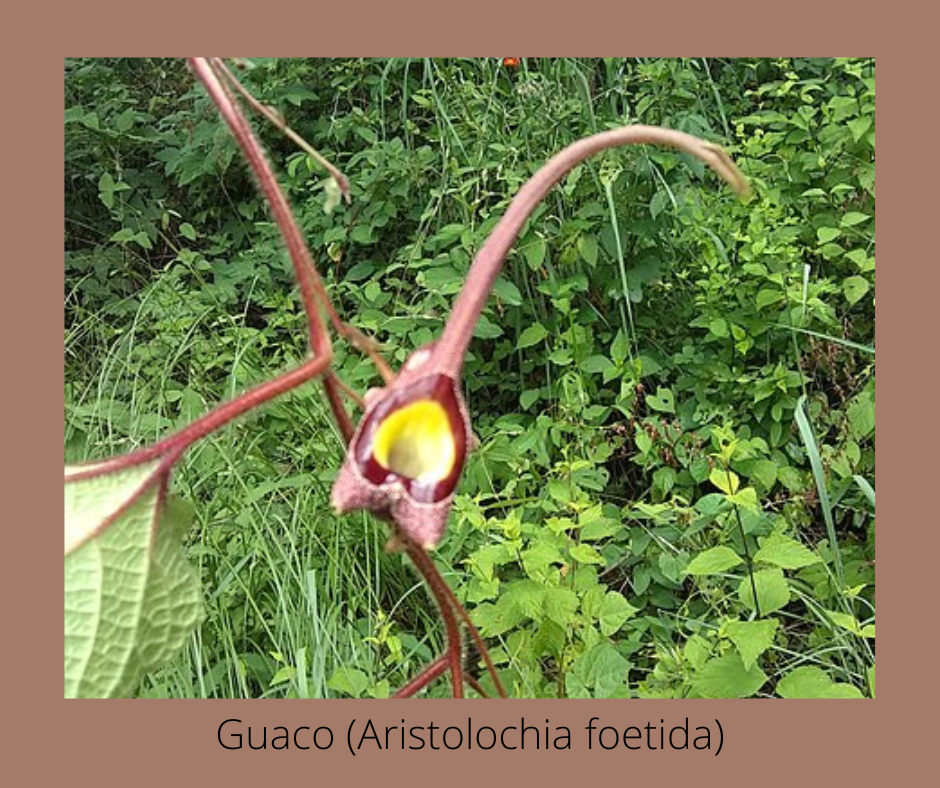
Photo credit: Zazil Dellamary
Aristolochia foetida shows cytotoxic potential against breast cancer cells.
Aristolochia Mexicana is tlacopatli in Nahuatl and was used to treat urinary tract infections and speed labor during a difficult birth. Francisco Hernández reported its use in the treatment of abscesses, dysentery, and deafness. He described two varieties, coayxtelolotli (Aristolochia odoratissima) and Tomahuactlacopatli (Aristolochia pringlei), utilized in the treatment of venomous bites and stings.
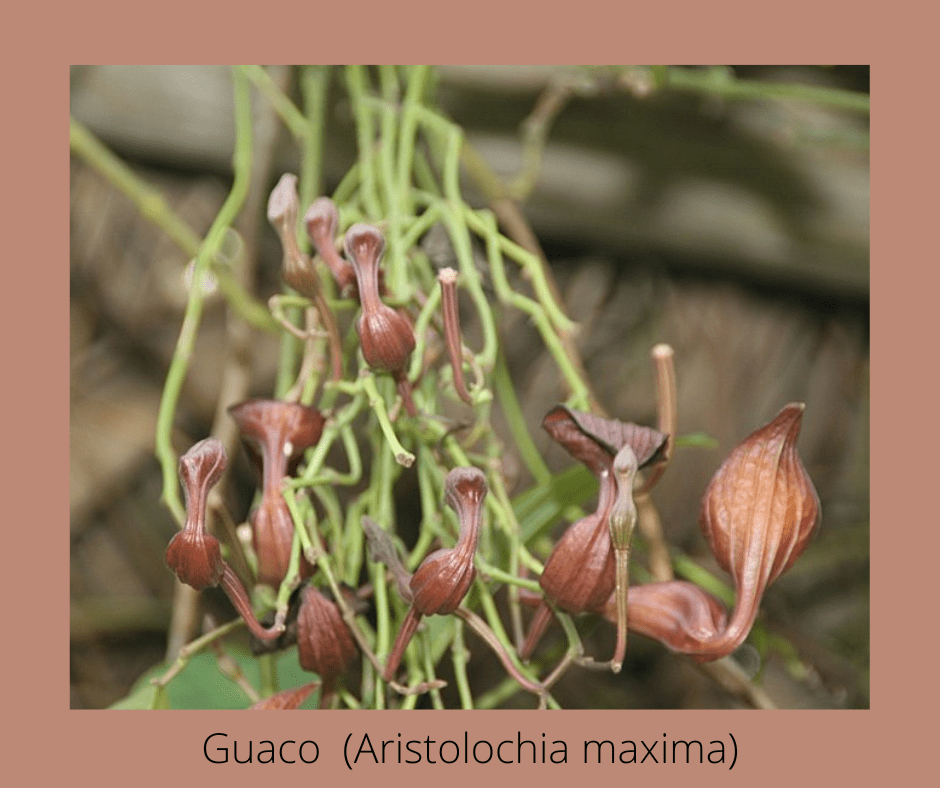
Aristolochia maxima has the botanical synonyms Aristolochia geminiflora and Aristolochia constricta. It’s native to South and Central America. In Guatemala, it is known as canastilla and in parts of Mexico, it is known as tecolotillo and wako aak’ in Maya. It’s often prescribed as a root decoction for stomach pain. Studies have shown that it reduces the severity of opiate withdrawal symptoms.
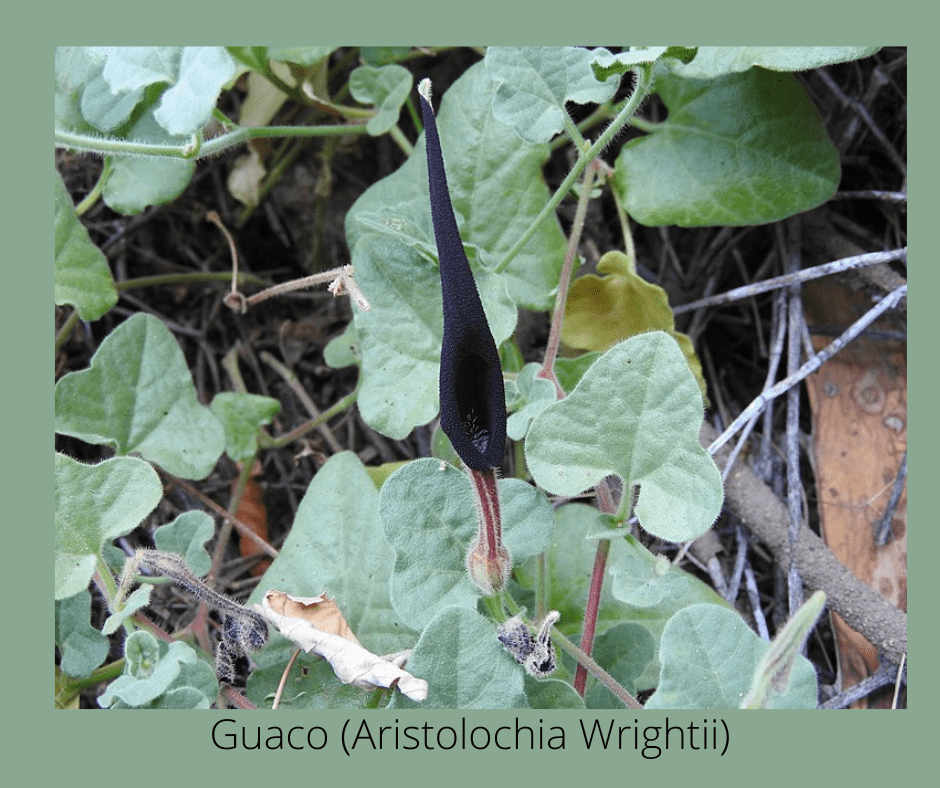
Photo credit: Hesner Coto Fuentes
Aristolochia brevipes, with its botanical synonym Aristolochia Wrightii, is often referred to as hierba del indio. It has anti-cancer properties, as well as antimycobacterial and anti-tuberculous activities. Boil five guaco leaves in a liter of water and drink a room-temperature glass every day as a cancer preventative. Gallbladder pain can be treated with the same infusion three times a day cada tercer día (every other day).
Aristolochia monticola, another variety known as hierbo del indio, is used in Baja California Sur for bilis (excessive rage), digestive issues, and intestinal parasites. It is also used in diabetes treatment and eye infections (lagañosos). For intestinal parasites, one root Aristolochia monticola section is boiled along with the estafiate root (Artemisia ludoviciana subsp. mexicana) and taken daily before breakfast.
Aristolochia Watsonii, with its botanical synonym Aristolochia porphyrophylla, has stinky flowers that resemble a rat’s ear. The entire plant is toxic. However, it has been used as a treatment for snakebite, in a leaf decoction to reduce fever, and as a substance to expel the placenta after birth.
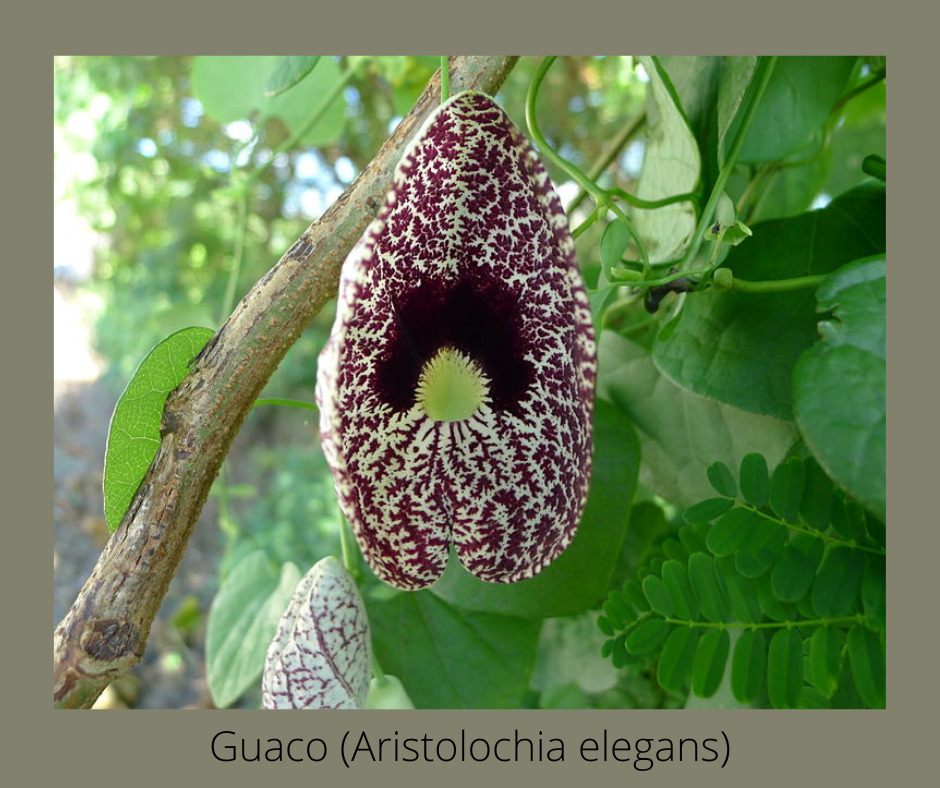
Photo credit: John Tann
Aristolochia elegans, known as Flor de Cálico or flor de patito, is often used as an anti-venom. Studies have shown that the roots are an effective treatment for scorpion sting symptoms. The plant also demonstrates antiparasite and antimycobacterial activity.
A poultice for scorpion stings is made by dampening the crushed plant with warm water and placing it on the stung area. In addition, a hot infusion is made with one leaf in a cup of boiling water drunk at three-hour intervals until the pain subsides.
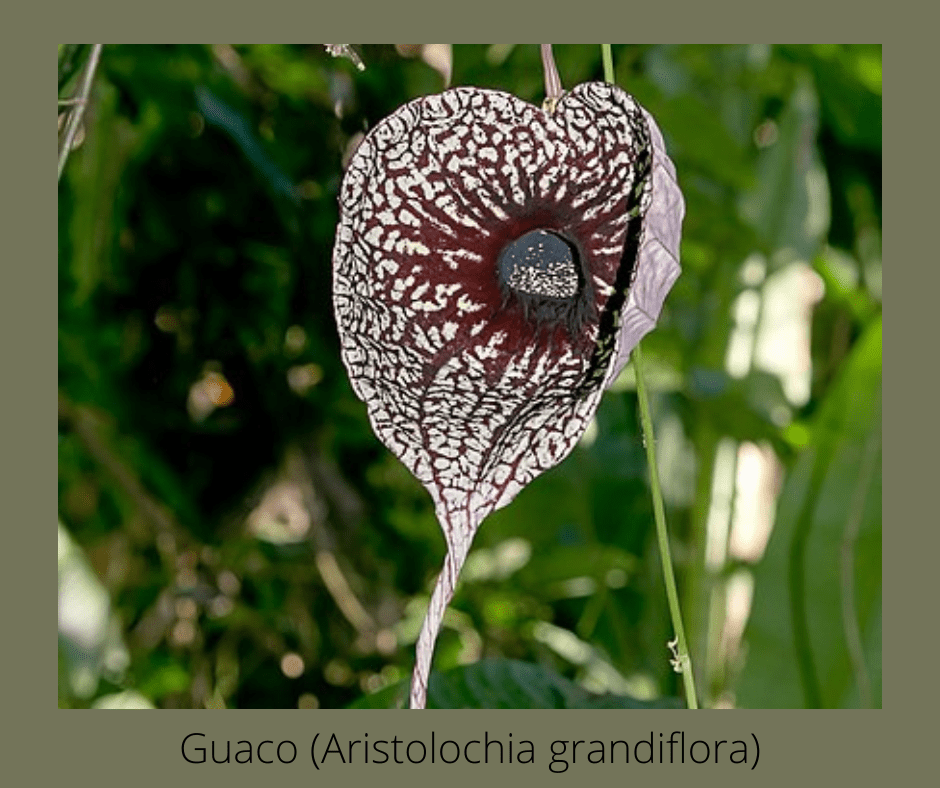
The entire Aristolochia grandiflora plant is used as an anti-venom in the event of snakebite. The leaves are made into a poultice for rheumatism pain. Aristolochia asclepiadifolia Brandegee, native to Veracruz, is prescribed for dysentery and poisonous stings and bites.
One cup of a tincture, about ten milliliters, made from five guaco stem pieces about six cm long, soaked in five liters of aguardiente (liquor), is a recommended diarrhea treatment. Because of the toxicity of the plant, it should only be administered once per illness period. If diarrhea continues after this treatment, another remedy should be given that does not include guaco.
Aristolochia odoratissima, also known as cuaco, sombrerito, hediondilla is prescribed as a stimulate, diuretic, and antipyretic. The leaves are used as a poultice for swollen lymph nodes, venomous bites or stings, and sciatic or arthritis pain. A tea infusion made from the roots or flowers is prescribed for arthritis pain. Studies show that the plant does provide an analgesic effect.
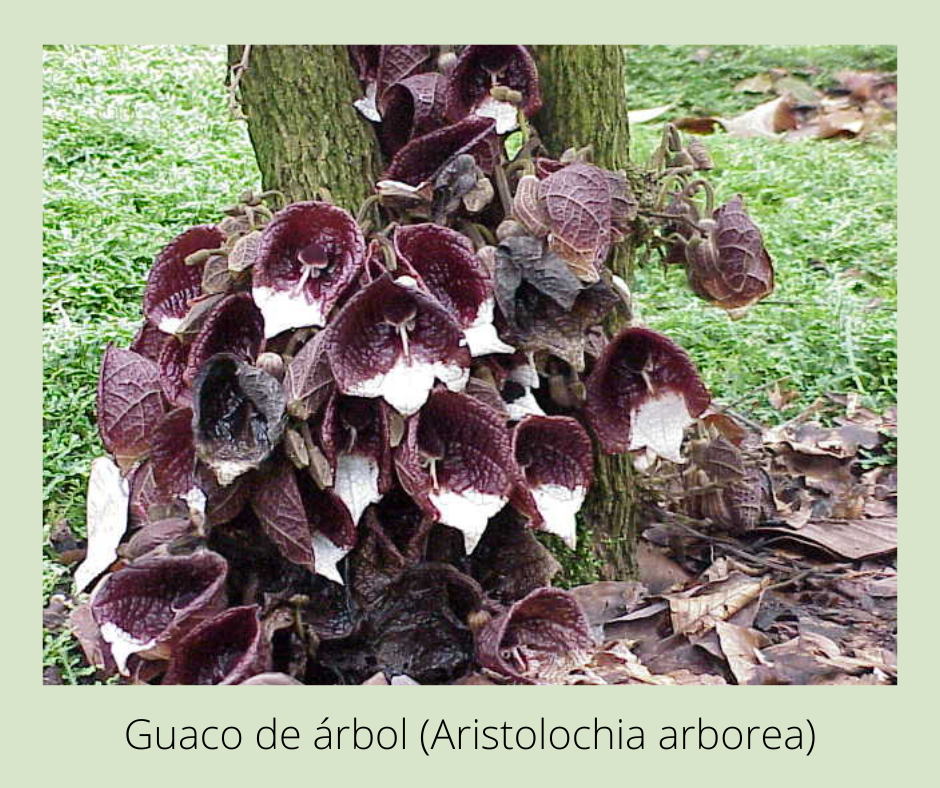
Aristolochia ovalifolia and Aristolochia arborea (guaco de árbol) are used as snake bite treatments in Veracruz. Aristolochia pentandra is the species used in Tabasco and Yucatán. Additionally, Aristolochia pentandra is given for stomach pain (empacho) and used in wound care. An antiseptic wash is made from the flowers. Aristolochia impudica (guaco de palo) is prescribed for snake bites, cough, heart pain, and diarrhea.
One snake bite treatment calls for five 2.5 cm guaco stem sections harvested from a mature plant, a dry seed from the crucetillo (Randia monantha Benth), and a piece 3 to 5 cm of contrayerba (Dorstenia contrajerva L.) These are added to a liter of aguardiente (alcohol) to make a tincture. After being bitten, the person should drink a “trago” (shot) of the tincture and head to the nearest clinic or hospital for further treatment.
As a treatment for cansancio (fatigue), the guaco tincture does not include crucetillo or contrayerba. One tablespoon is recommended each week. As a treatment for skin diseases, small amounts of shade-dried root powder are taken orally for 48 days.
***
Interested in natural remedies? Uncover herbal remedies from traditional Mexican sources for healing and wellness in the Exploring Traditional Herbal Remedies in Mexico series.





.jpg)
.jpg)


;_Cap_Rock.jpg)
.jpg)
.jpg)
