You’d think that only leaving the house for essential items would mean that I have a whole lot of time on my hands. To my surprise, I have found that simply isn’t true. Granted, I am working 3 online jobs/gigs right now. However, I thought for sure I’d have a chance to start in on that large pile of mending that needs done. I even ordered a new pair of pinking shears in preparation. Three weeks into January, the pile is just as intimidating as it was in December.
I also thought I’d have more time to work on my books. Silly me. No new books are forthcoming for January. Maybe February? I did however make some regrouping progress. Amazon has added a “series” feature and I “created” two series from my books I’ve already published.
The first series, A Beginner’s Guide to Self-Publishing Your Book, is for would-be writers. It includes: Book Building: A Beginner’s Guide to Crafting Your Book, Book Hawking: A Beginner’s Guide to Marketing Your Self-Published Book, and Book It: A Beginner’s Guide to Self-Publishing and Marketing on Amazon.
The second series is A Woman’s Survival Guide to Living in Mexico and it isn’t finished yet. I have at least three more titles to include in that series. But as of today, the series includes: A Woman’s Survival Guide to Disasters in Mexico: A Framework for Empowered Living Through Crisis, Surviving Voluntary Exile: Overcoming Common Obstacles to Making a Successful Life Transition, A Woman’s Survival Guide to Mexican Healthcare, A Woman’s Survival Guide to Holidays in Mexico, and A Woman’s Survival Journal: A Guide for Making the Most of Your Life in Mexico.
The neat thing about the series setup is that readers can check to see if they have purchased all the related books in the series or not. And if they haven’t, you can order them all with 1-click.
There. I’ve tooted my own horn enough for today. Hopefully I’ll have some new releases in short order. If not, perhaps that pile of mending will disappear.
Since we are still waiting on my son’s INE, and I’m not one to sit around idly, in December I started the process of creating a MONEY teen checking account from Capital One. I figured that it would be simpler since the account would be tied through my Capital One 360 account and he wouldn’t have to go through so much verification.
Well, I was partially correct. Setting it up from my account was a breeze. However, my son getting access to it wasn’t. First, we ran into the snafu of not having a cell phone number in the United States for the app to contact. So, I made my son call the bank and request the verification number to be sent to my Skype number, as my account was verified. He had the joy of uploading his ID, talking with a variety of bots and actual people, having the ID picture rejected several times, and finally convincing the powers that be that he was who he said he was and made the phone number change.
It didn’t work. The next week, he called again. After the verification process rigamarole, the woman at the other end said that since the Skype number was registered to my account, the system would not use it to verify his. Great.
So after some further research, I found that I could have up to 10 Skype numbers. I added a secondary phone number and had my son call again. Another long, drawn out verification process was needed for the phone number change. There was a further delay when the agent repeatedly entered my son’s email address incorrectly. Spelling it out seemed to help. Well, spelling it out the third time helped.
Then, my son was getting an error message when he tried to sign in to his account. The page asked for his postal code but then said it was invalid when he entered it. So he asked the agent to check the address on his account, which was fine. However, the agent said that the page he was being prompted at was not a secure site. He’d never seen this page and it was a security breach in the system. Hmm.
Making a new attempt at signing in brought my son to the correct page. Since all his facts were correct and the new phone number was acceptable, he was able to sign in. Hallelujah!
It’s super easy for me to transfer funds from my account to his and to keep tabs on his balance. He’s all raring to go to set up a Paypal account, but he needs to wait for the debit card to arrive. It’s on the way, traveling through my Power of Attorney in Tennessee, so it should be too long before he can make online purchases just like dear ol’ mom.
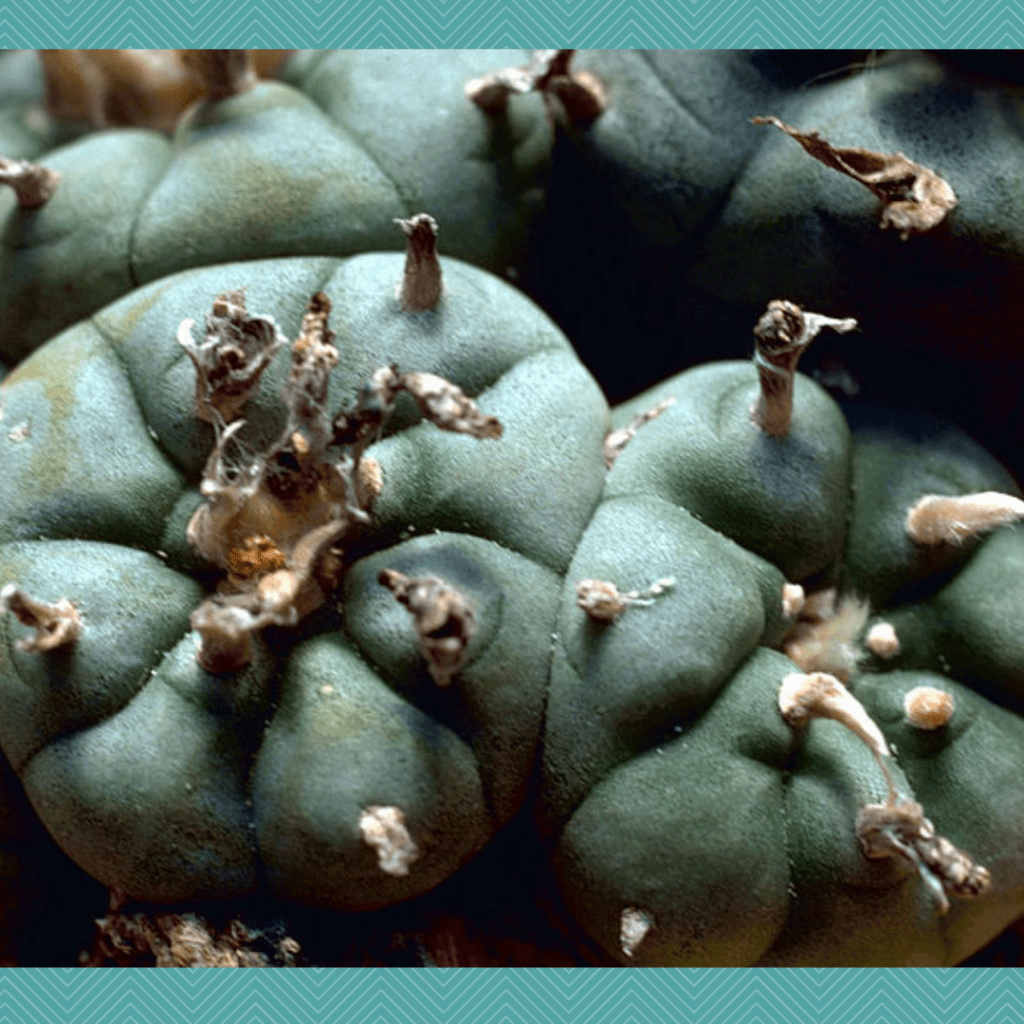
Peyote (mescal button) is best known for its hallucinogenic properties. This small, spineless cactus has a large quantity of mescaline which can cause euphoria, hallucinations, depersonalization, and psychoses. It is not physically addictive and does not produce life-threatening symptoms unless there are preexisting conditions that its ingesting aggravates. It does contain hordenine which increases blood pressure. The hallucinogenic tea made from peyote is bitter and causes nausea.
It has traditionally only been ingested as part of religious ceremonies and therefore hasn’t developed into a recreational drug in Mexico. Peyote (Lophophora williamsii) is known as hikuri in Huichol, the language indigenous people in the state of Nayarit. Other names for the Lophophora williamsii include kamaba by the Tepehuán in Durango. The Tarahumara in Chihuahua use the term honanamé. The Cora call this plant houatari. The Nahuatl word peyotl which is the word peyote is derived from roughly translates as “silk cocoon” or “caterpillar’s silk” referring to the white wooly strands found on the top of the plant.
Among the Huicholes, Cora, and Tarahumara, the plant is sacred. Yearly pilgrimages are taken by the Huicholes by devotees to the desert area in San Luis Potosi where the peyote grows.
Peyote has been used medicinally for thousands of years in Mexico, possibly as far back as 5,700 years ago. Peyote remnants have been found in a burial cave that dates back to 810 to 1070 CE in Coahuila, Mexico.
Peyote was used prior to the arrival of the Spanish. Bernardino de Sahagún described the hallucinogenic effects of peyote in his work Historia general de las cosas de la Nueva España in 1558. He wrote “There is a plant that recalls the truffle; it is called peyotl, it is white in color and is produced in the northernmost regions of the country. Those who eat it see surprising and laughing things. This drunkenness lasts two or three days, and then it goes away. This plant is commonly consumed by the Chichimeca; It supports them and gives them courage for combat, sheltering them from fear, thirst, and hunger. The use of this drug was in the hands of the fortune-tellers and witches, and especially of the wearers of charms.“
As its use was tied so closely to religion, the Catholic priests sent to convert the native Mexicans were determined to stop its use completely lest the souls of the new Christians be contaminated. The Spanish Inquisition prohibited peyote use in Mexico in 1620. A confessional from 1760 contains the questions “Have you killed anyone? How many have you killed? Have you eaten the flesh of man? Have you eaten peyote?” implying that murder, cannibalism, and peyote use were on the same grievous sin level.
Traditionally, peyote is also used in rural areas of Mexico to treat fever and as a general cleansing of both body and soul. Thin slices of the cactus are soaked in water, but not boiled, which is then drunk by the person with a fever. Sunstroke is also treated with sliced pieces soaked in water. However, in this case, the water and slices are placed in a glass and then poured over the person’s head.
There’s more to this little cactus then hallucinations. Peyocactin is an antibiotic derived from the peyote cactus effective against 18 different penicillin-resistant bacteria. Extracts from the Lophophora williamsii have also been shown to stimulate the immune system. Hopefully, further research will be done on this medicinal plant in the future.
Note: Although peyote is not illegal in Canada nor in Mexico, it is limited in use in the United States to religious ceremonies. In the U.S. it is considered a controlled substance. Lophophora williamsii is an endangered species and should not be harvested in the wild.




 Surviving Mexico