
Manchas’ in the HOUSE!

So at least one miracle occurred in my world this year. Manchas is BACK! Here’s how that went down.

Yesterday when my son was giving water to Lady, who was tied across the street, he saw a white blur in the nearby mesquite tree. He called out to it, and it mewed back. Of course, he knew that he’d never be able to approach, so he ran and got me. 

I came rushing out, and sure enough, it was Manchas. The tree branch was low enough that I could have reached her, except for the fact that it was surrounded completely by brambles. As much as I pushed in, I couldn’t get close enough. 

Manchas panicked at my blundering and ran down the tree to an even more secure location. I circled around and called to her. She mewed back but would not be coaxed out. So my son, ever limber, climbed a tree and moved toward her so she would leave her hiding spot. She did move but in the opposite direction. 

I spotted her through the abandoned house, and she stopped and mewed at me, then took off running. I had to take the long way ‘round, but the dogs on top of my son’s house let me know in which direction she had gone. 

My son circled his house and scared her back towards me; only she ducked into a hole in the wall. So through the house, I went and out into the backyard. She was there but obviously frazzled, and I didn’t try to grab her. My son blocked up the hole and then got Fuzz as bait. 

Manchas felt more comfortable approaching Fuzz, who wasn’t running anywhere anytime soon. With Fuzz as the distraction, I was able to swoop in (slowly, mind you) and catch her up. We went inside, and I served her some food. 

She was skittish the entire afternoon, although she’d chirp at me when I’d talk to her. Finally, I settled down on my bed, and she curled up next to me. She was HOME! My heart is so much lighter, as those of you who are pet parents will surely understand.

***

Pet, pet, and more pet stories in the Animal Antics South of the Border series.

1 Comment

Filed under Animal Husbandry

Missing Manchas

It’s been nearly a week since Manchas was curled up next to me at 11 pm and then didn’t come for breakfast at 5 am. I have no idea where she might be. We’ve searched all her regular hiding places in the house and anyplace she might have gotten stuck. Thinking she may have gotten out somehow, we’ve searched the perimeter of the house and around her mom Garfield’s home down the street and the abandoned house where she was born. 

All of the cats in La Yacata are gone. My father-in-law’s two gray tomcats, the neighbor below’s orange tabby, Pumpkin generation 7 (or 8). The little yappy dog we nicknamed Ferocious was poisoned about two weeks ago, so I expect that’s what happened to the cats. 

Manchas was an incredible comfort to me these last couple of years. She was MY cat. She chose me as her hoo-man and wouldn’t have anything to do with my husband. In fact, she’d often get up and leave the room when he entered. She tolerated my son if he was non-threatening and moved slowly. But me, me, she loved. 

Fuzz has been running around in the mornings, continuing the game of hide and seek he and Manchas would play. Even when she was here, Fuzz hardly ever found her being visually challenged and all. She’d perch on the top of the cabinet and watch him run back and forth searching. 

I haven’t quite gotten up the nerve to put Manchas’ food dish away. As long as we don’t find a body, perhaps there is hope? 

1 Comment

Filed under Animal Husbandry

Natural Healing — Orégano de Monte

Photo credit: Consultaplantas

Mexican oregano is not oregano (Origanum vulgare) at all. Rather it is part of the lippia genus. More specifically it is Lippia graveolens. It has a similar smell and taste to oregano though its medicinal properties are unique to this species. Orégano de monte is a plant native to Mexico. In Nahuatl, this spice is called ahuiyac-xihuitl which translates to “fragrant savory herb.” In Maya, the plant is xaak-il-ché or xak’il-ché. In the Huasteca language it’s known as ananté. It is also known as orégano cimarrón  or orégano del país.

There are some local names that also refer to other plants in different regions, so care should be taken when identifying the plant. For example, in Puebla, Lippia graveolens is known as salvia. In Coahuila, the same plant is epazote. In certain parts of Oaxaca, this herb is romerillo de monte. Hierba dulce is another common name for this plant which also refers to several other species. Additionally, there are more than 40 species of plants that are called orégano in Mexico. 

Traditionally, orégano de monte is used for indigestion caused by gastrointestinal infections, respiratory issues, intestinal parasites, toothache, diabetes management, and to bring on delayed menstruation. It should not be used during pregnancy. In high doses, it can provoke vomiting. It is also to season meat, pozole, salsa, fish, menudo, and other savory dishes

Lippia graveolens has antioxidant, anti-parasitic, anti-inflammatory, antimicrobial, antifungal, anti-viral, anti-bacterial, antibiotic, and anti-glycemic properties. It is useful in the treatment of dyspepsia. It also is effective in reducing anxiety. Orégano de monte has a high concentration of monoterpenes supporting its use in the treatment of respiratory issues. Several studies have shown it is an effective agent against ticks and diseases caused by protozoans such as malaria, trypanosomiasis, and giardiasis.

To eliminate intestinal parasites, add a spoonful of epazote leaves (Dysphania ambrosioides), and a sprig of orégano de monte (Lippia graveolens), tomillo (Thymus), and yerba buena (Mentha spicata) to a cup of boiling water. Drink 3 cups a day on an empty stomach. 

For toothache, moisten a cotton ball in the essential oil and place it on the problem tooth for relief. Make an infusion from the leaves to make a compress for bruises, soreness, and swelling. Simmer a sprig of orégano de monte (Lippia graveolens) and romero (Salvia rosmarinus) in a cup of water. Strain and drink for a gasy stomach. 

Treatment for bilis (liver buildup as a result of anger, hence an anxiety issue) boil one liter of water. Add equal parts albahaca (Ocimum basilicum ‘Cinnamon), estafiate (Artemisia ludoviciana), yerba buena (Mentha spicata), and orégano de monte (Lippia graveolens). Simmer the herbs for 10 minutes. Strain. Drink one cup a day on an empty stomach for nine days. 

***

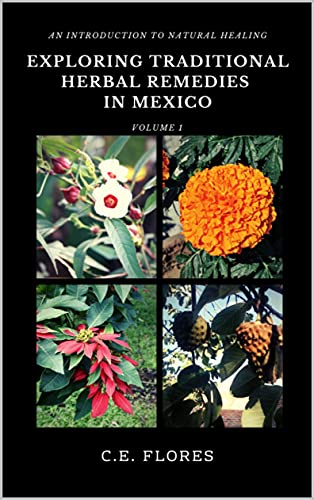
Want to learn a new way to look at plants? Discover common traditional medicine practiced in Mexico today in the Exploring Traditional Herbal Remedies in Mexico series.

2 Comments

Filed under Health, Mexican Food and Drink, Native fauna and flora, Natural Healing