There is still no electricity in La Yacata

There is still no electricity in La Yacata
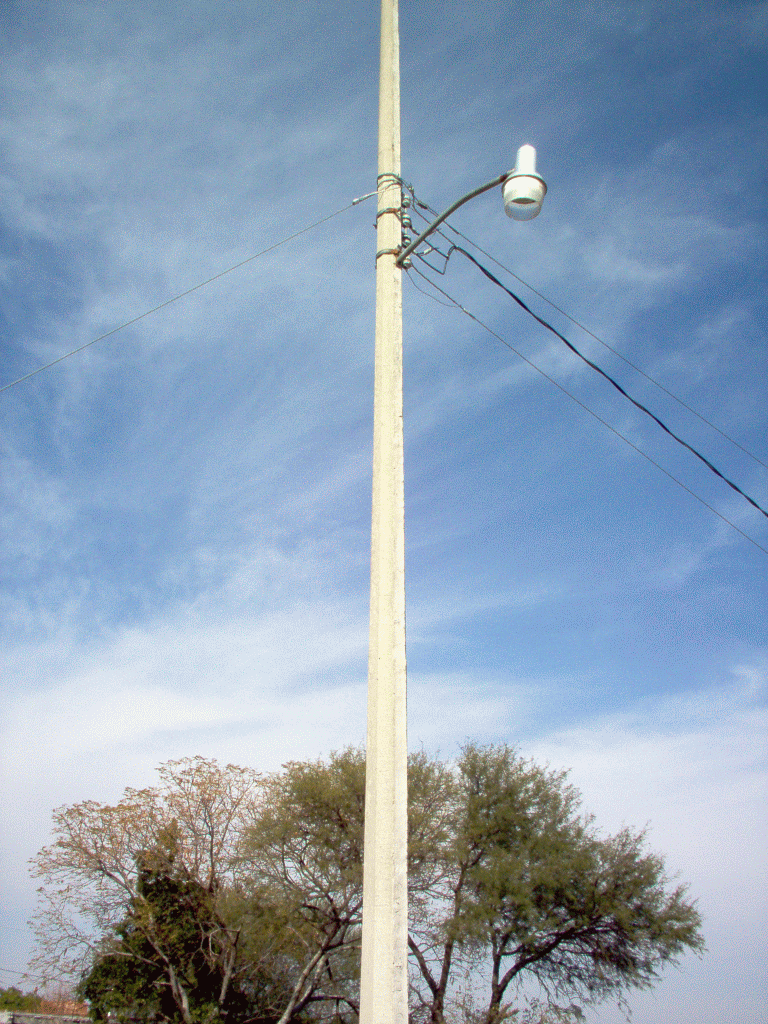
The electric post

This is the electric post that convinced us to buy in La Yacata instead of someplace else. It stands smack dab in front of the house and has provided not one bit of electricity to our house in the 10 years we have lived here.

I have been down and out lately about the distance we still must cross for electricity in La Yacata. I’ve pretty much given up hope of Moroleon completing the 2 kilometers of posts and wires that would illuminate our streets and our home. Yes, you read that correctly. TWO kilometers separates us from the last viable electric post. It’s just not profitable enough for Moroleon to care that residents in La Yacata have no electricity. (See The Birth of the Revolution)

With the advent of adolescence and the plethora of electronic devices available, my son has also expressed his frustration with the lack of connectivity and recharging options. It goes without saying that no electricity means no home internet either.

My husband seems the only one untroubled by our lack. He uses the truck radio when he wants music and that’s pretty much all he wants. As a result, he’s been less than enthusiastic about my ideas.

the boy who harnessed the wind

My brother sent me The Boy Who Harnessed the Wind: Creating Currents of Electricity and Hope (P.S.)some time ago, as inspiration I expect. In it, a 14-year-old boy designed and built a windmill that positively changed the quality of life for his entire village. My husband and the plomero (plumber) up the hill have been promising me a windmill for nearly 10 years now. Every time I bring up other options, my husband counters with the statement that he’s going to make that windmill any day now.

Until that windmill gets built, I’ve been trying to do alternative research on my own. Every prepper website has directions for a DIY solar generator set-up. Well, I’ve come to the sad conclusion that I just can’t do it myself. One issue is my lack of electrical know-how. Of course, there is the plomero (plumber) up the hill who was also a US licensed electrician before deportation. However, he’s not all that reliable these days. His wife left him a few months ago and he’s been on a drinking binge ever since.

Solar water heaters are readily available in our area, but just won't work for us.

Solar water heaters are readily available in our area but just won’t work for us.

Even if we could catch the plomero between binges, there is the lack of materials available in our area. Solar water heaters are readily available–but nothing in the way of solar generators. We do not want a solar water heater because it’s just not feasible for our home setup. In order to have a solar water heater, we would need to elevate the tinacos (water storage containers) at least a floor. However, the local water truck refuses to fill tinacos (water storage containers) that are above the second floor. They say it’s “policy” although I suspect more laziness since the trucks are new and the water shoots out super powered and the pipes would reach…but I’m not in charge of policy. So our tinacos are on the roof of the first floor, which is technically the second floor. And even if we put the tinacos on the roof of the second floor, I would still count it as being on the second floor and not on the non-existing third floor but the water truck dudes disagree. So until such time as policy changes, we use a gas boiler to heat our shower water. Our stove is also gas, so we can cook just dandy without electricity as well.
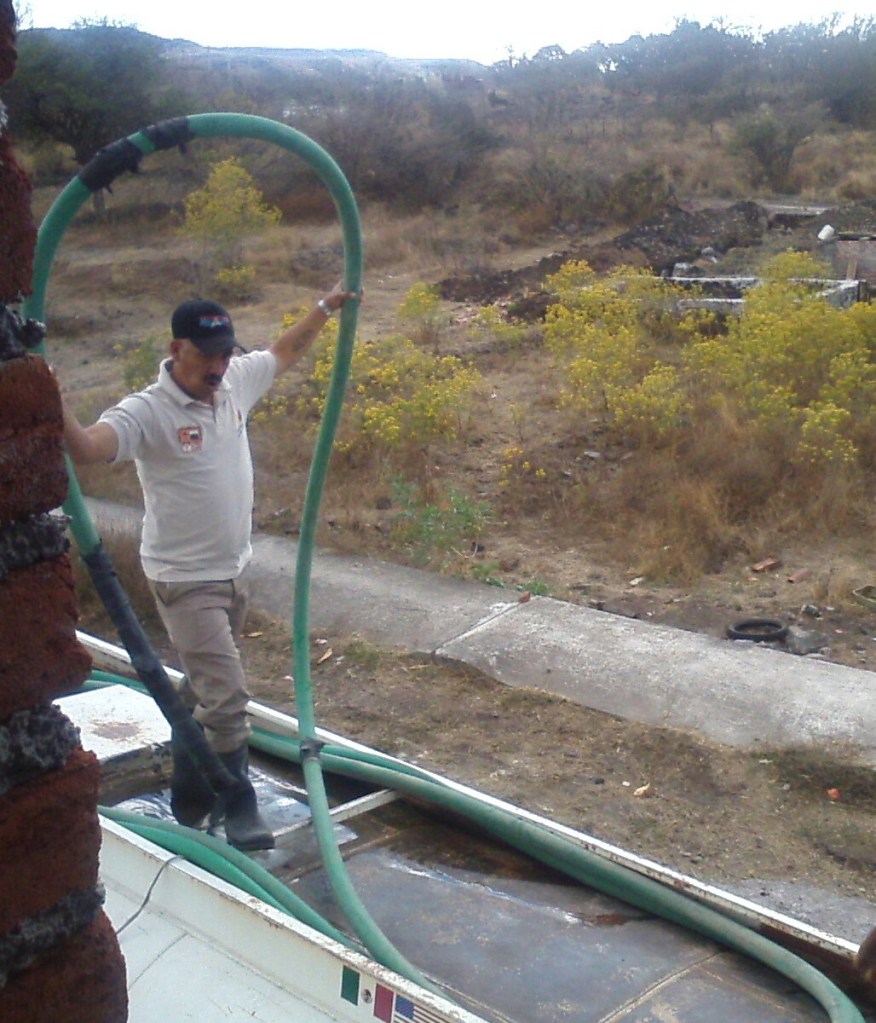
water delivery

The truck pulls in front of our house and we run a house from the truck to the aljibe and tinacos.

Lacking local solar generator parts options, I tried my hand online. Amazon and Ebay offer kits that we could possibly afford if we sold Myrtle (the vocho) and saved another 6 months, not including shipping. Yet again, there are issues. I will not order from Ebay again and Amazon does not accept Paypal payments.

I even tried contacting a few people that might be “in the know” about such things, but I have yet to hear back from any of them.
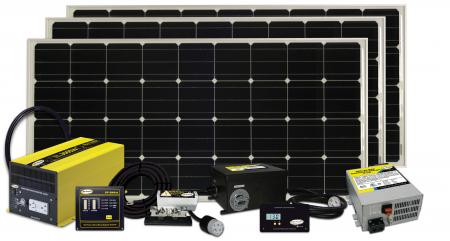
This is what I think we need.

This is what I think we need.

What I think we’d be good with is this setup, Go Power! Solar Extreme Complete Solar and Inverter System with 480 Watts of Solar. However, being a newbie means–well that I don’t know if this would be adequate or not.

So for the present, the dream of electricity is just that, a dream. We’ve lived nearly 10 years without it, and realistically in the grand scheme of human history, electricity has only been available to the masses for the blink of an eye, so do we really need it?

Well, yes and no I suppose.

If we had electricity we could recharge our phones, Kindle, portable DVD players and laptops at home. Right now we haul the rechargeables to the school where I work and charge there. We also have the option of plugging the devices into the lighter in the truck or Myrtle, but we have found that overuse of this option is hard on the vehicle batteries.

If we had electricity we could use the blender–but we use the blender now with the AC/DC inverter and the truck battery.

We could turn the lights on and cook now since it gets dark at such an indecent hour with daylight savings time and all. Now we use candles.

The Kindle is an older version that doesn’t have a backlight like this one Kindle–it’d be nice to not read by candlelight and just flick on the bedside lamp.

drumiI

Drumil, the foot-powered clothes washer by

If we had electricity we could use a washer for our dirty clothes. Right now we head to the arroyo (stream) and wash there. Although we may not need electricity for a washer. Yirego is advertising pre-sale for their foot-powered washing machine. Of course, at $239 USD it’s still out of our financial grasp, but perhaps the price will come down in time.

It’s doubtful that even if we had electricity we would use it for a fridge. We’ve become so accustomed to buying fresh meat and produce, in daily portion sizes, that we have very little left over at the end of the day. Anything that won’t be good for the next day, we share out with our chickens, cats, and dog.

We also aren’t much bothered by not having a television. There’s never anything good on anyway. We do like to watch movies but are just fine with our little portable (and rechargeable) DVD player. Unfortunately, our DVD player battery will not charge anymore. Finding parts (in this case a replacement battery) is a nightmare here and buying online with shipping is iffy at best. We recently purchased another DVD player and it’s fine for now, but eventually, the battery will wear out as well. The same issue crops up with my laptop. My battery doesn’t hold a charge. I use it only at my place of work. My son’s laptop is new, so charging and taking it home works just fine, although there is no internet at home. Of course, transporting it might not be an option during the rainy season.

So I suppose I should be more lackadaisical like my husband. Living without electricity is entirely possible, we’ve been doing it for quite some time now. And why should I expect the luxury of electricity and all that it entails when 1 in 7 worldwide lives without access to electricity? For now, it remains a wish, hope, a goal or something along those lines.

***********************************************

disclosure

20 Comments

Filed under Construction, Electricity issues, Homesteading, La Yacata Revolution, Water issues

El Dia de Los Muertos–Visible Mourning

que halloween ni que

I’ve had it up to here hearing about Mexican Halloween. It isn’t. It isn’t about dressing up, spooky stories, demons, or blood. Not Freddy Kruger, not poltergeists, not witches, warlocks or ghosts. It’s not about haunted houses, trick or treating, carved pumpkins or parades. It isn’t even about death.

It’s about life.

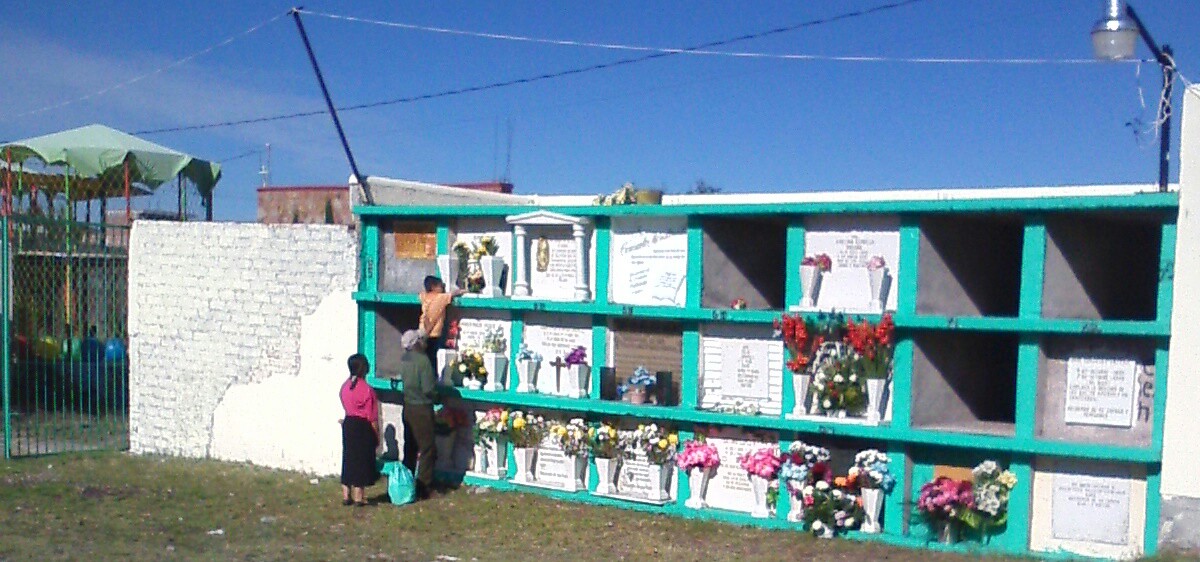
The celebration El Dia de Los Muertos in Mexico is the commemoration of the lives of our dearly departed and the acknowledgment of the loss the living experience with each death. Although I’ve lived in Mexico for almost 10 years, this is only the third year that I have participated in El Dia de Los Muertos events. And why is that? Because up until then, there was no one to visit at the cemetery. Three years ago, my mother-in-law was killed in an accident with a police vehicle. Two years ago, my husband’s grandmother in Cerano died at the age of 89. Now we have family to visit at the cemetery. And we do.

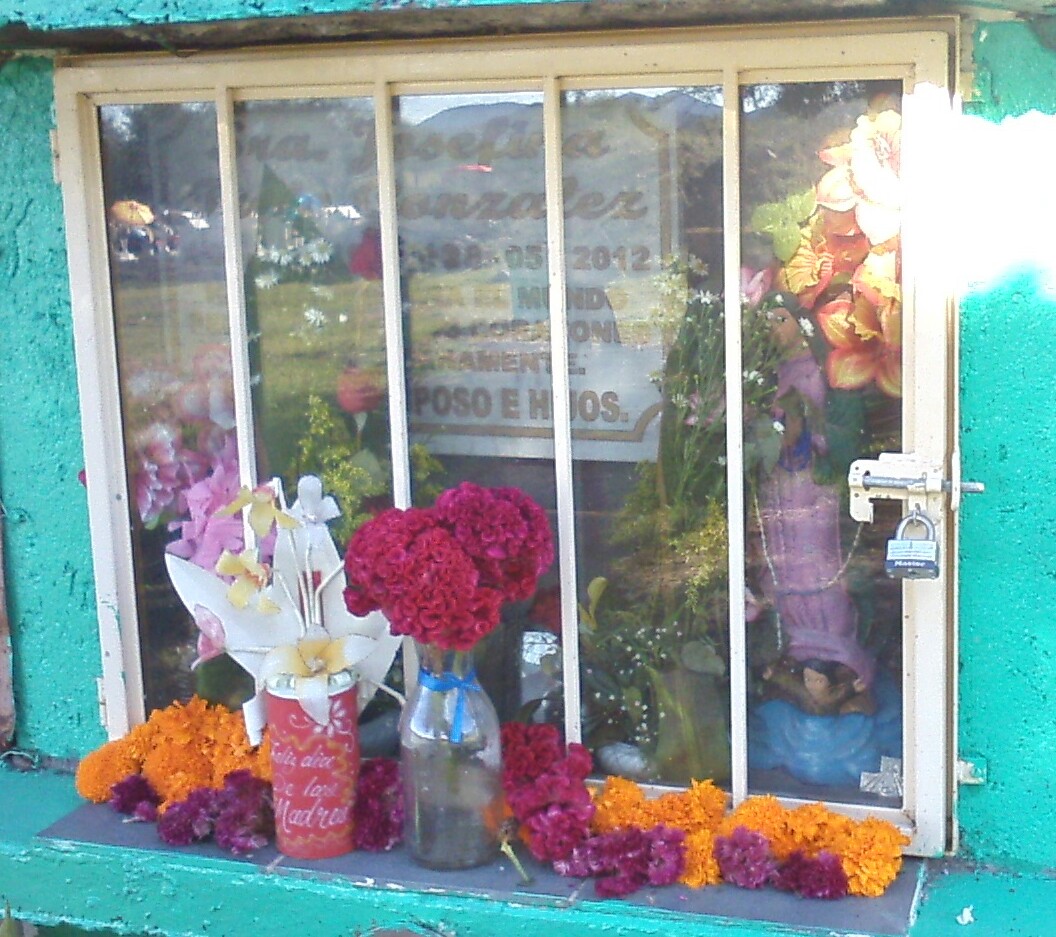
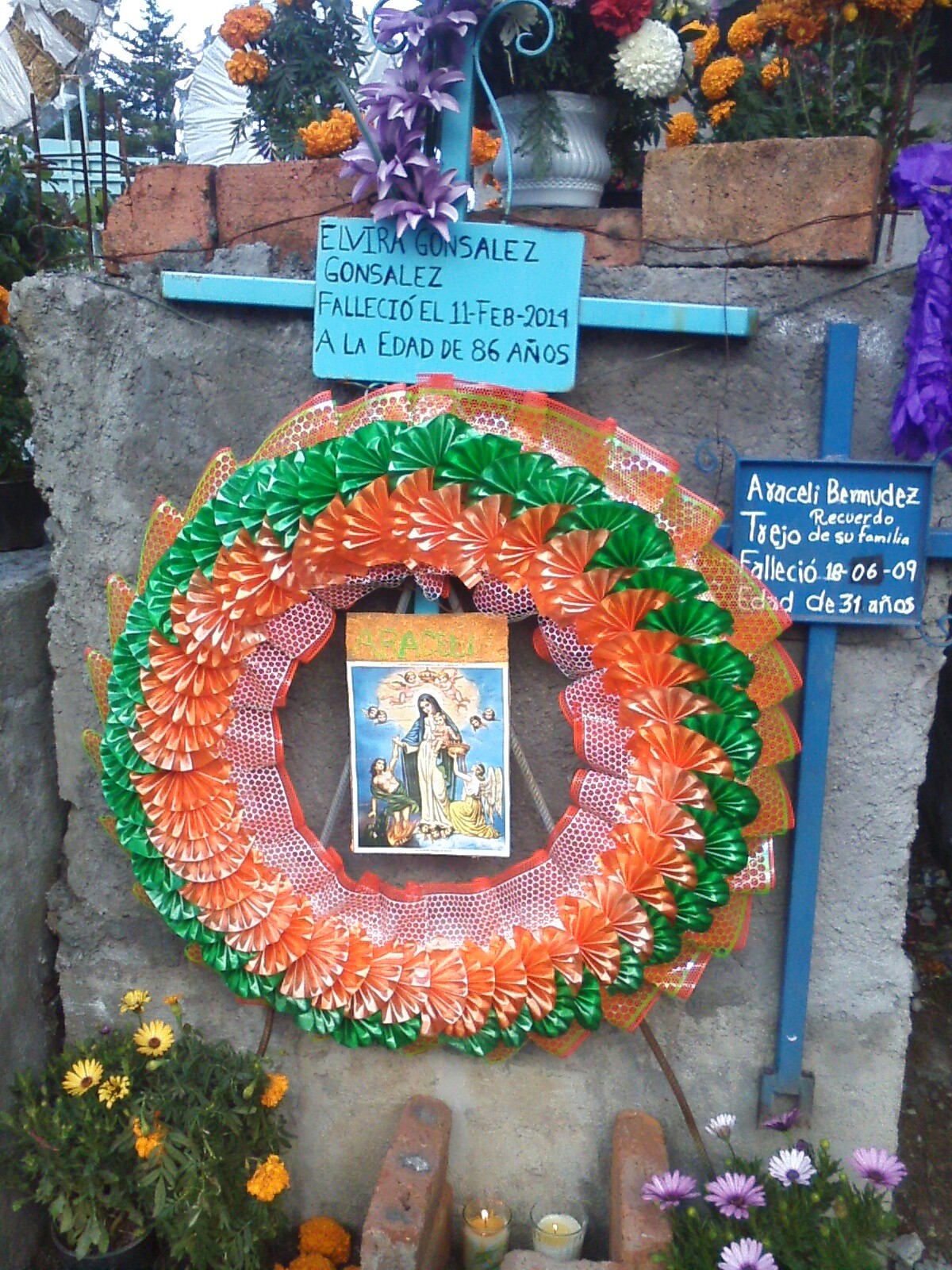
wpid-cam03971-1.jpg

We clean and place flowers. We sit and remember. We laugh, and we cry. It’s more like Memorial Day in the United States. Or maybe Veteran’s day. So it’s hard for me to understand the touristy aspect that has sprung up in larger areas.

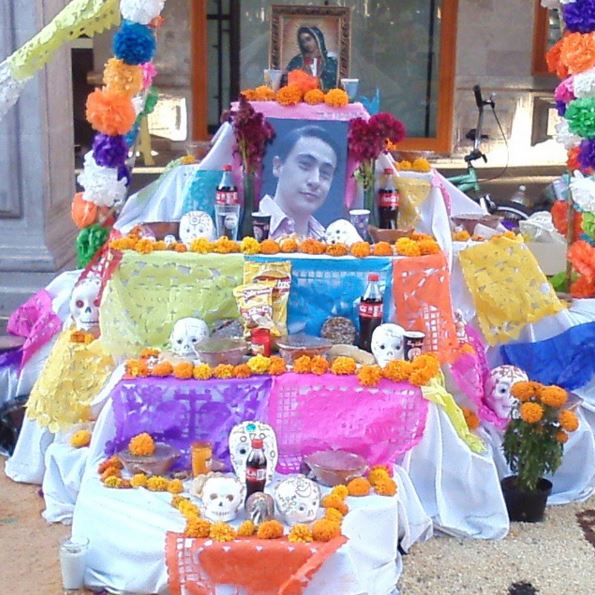
student altar

The altars that are constructed in the town center in Moroleon are typically in honor of recently deceased community members. It’s a community mourning ritual. There are altars for recently deceased students, teachers, bakers, metalworkers, shopkeepers and more. The platforms constructed outside homes in Cerano are even more personal. So what would motivate someone to go to some community of which they are not a member to gawk at this mourning ritual?

A child's crypt. Notice the toy cars and pacifier behind the glass.

A child’s crypt. Notice the toy cars and pacifier behind the glass.

El Dia de Los Angelitos, November 1, is even more personal. Altars constructed in the town center or outside homes are created in memory of children who have died–some recently, some not so recently. It’s a personal homage. It’s not for me to intrude on this public manifestation of grief. After all, it is no more or less than a visible reminder that the dead are gone but not forgotten. Families visit the graves of their “little angels” and leave flowers and toys. Brothers and sisters are made aware that there was another that remains a part of the family although no longer physically present.

wpid-cam03975-1.jpg

The sugar skulls are personal–you don’t buy a bag. You buy one and have a name written on its forehead. The figurines are personal–the catrinas are frolicking about in death much as the deceased did in life–drinking, dancing, singing, making music, even making love. The offerings left at the grave or incorporated into the alters are personal–favorite sweets, favorite toys, favorite drinks. The home altars are personal. Each one is constructed with the deceased in mind.

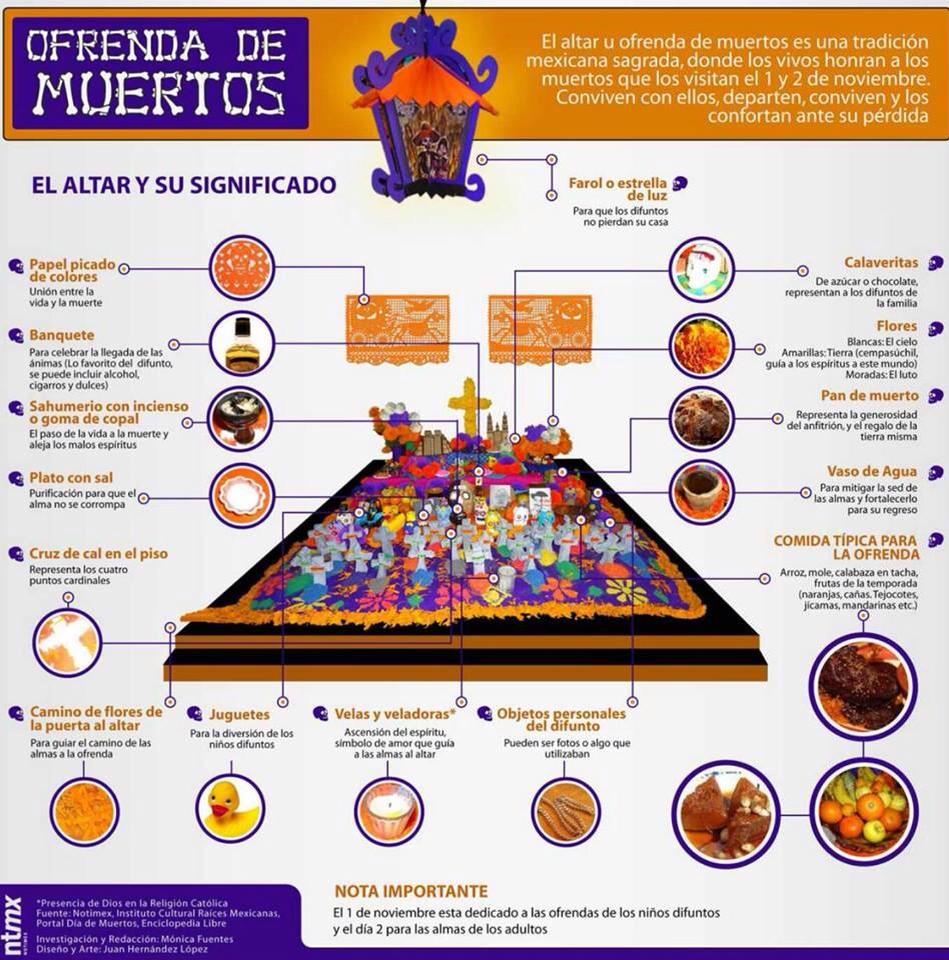
ofrenda

Perhaps it is the fact that these personal traditions are done publically that gives the impression that it is something to gape at–like one would at the zoo or a museum. Death and loss are not hidden away here. They are accepted as a part of life, not detached from it. Is this idea such a curiosity in modern times that guided tours are needed?

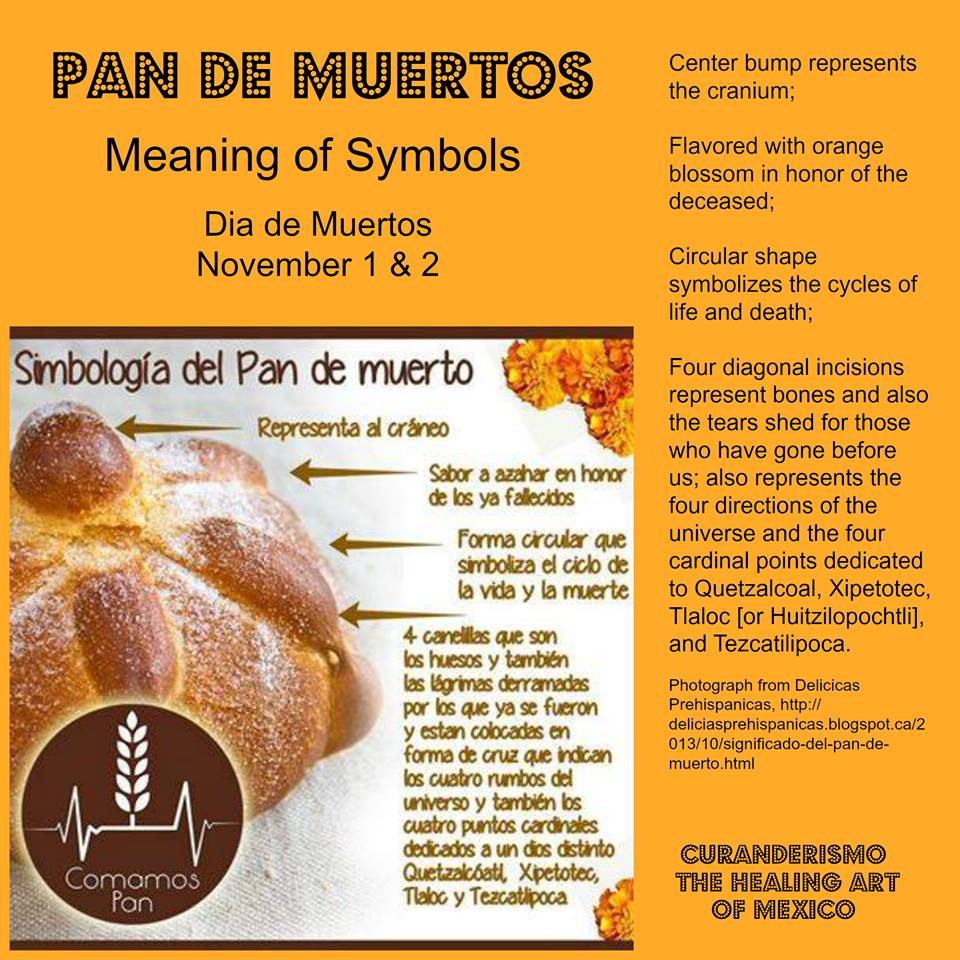
pan de muerto

The rituals of El Dia de Los Muertos bring comfort to the living. The altar or ofrenda is constructed just so. The days of remembrance are sacred. But times are changing….

The school board waited until the last possible moment to authorize the day free from classes. The official calendar has November 2 listed as a school day, while November 16 is a non-school day for El Buen Fin, in some effort to compete with the US’s Black Friday. What does that teach the children about the value of tradition?

This year at the panteon (cemetery) in Moroleon there was a sign telling visitors to denunciar (report) people stealing from the graves. What do they steal? Flowers? Children’s toys? A bottle of coke? Who would take these things? For what purpose? Has it really come down to a culture that steals from the dead rather than honors their memories?

Some larger towns and cities now provide parades, contests, theatrical presentations, mass-produced foodstuff, and trinkets. Wal-mart even offers a Halloween/Day of the Dead mixed selection for your buying pleasure. This tradition that in 2003 was named as an Intangible Cultural Heritage of Humanity is now up for sale.

wpid-cam03982-1.jpg

But for us, the ritual that is El Dia de Los Muertos remains personal. It reminds us that those that have preceded us in death remain part of our present lives. They helped shaped who we are today.  It isn’t a fascination with death.  It isn’t an obsession with death.  It’s an acknowledgment of death and a celebration of life.

SOTBS Blog Hop Op1Sq

    Have a Day of the Dead themed blog post? Link it up here!  

An InLinkz Link-up 

disclosure

17 Comments

Filed under Carnival posts, Cultural Challenges, Death and all its trappings, Mexican Holidays, Religion

Playing Tourist–Valle de Santiago, Guanajuato

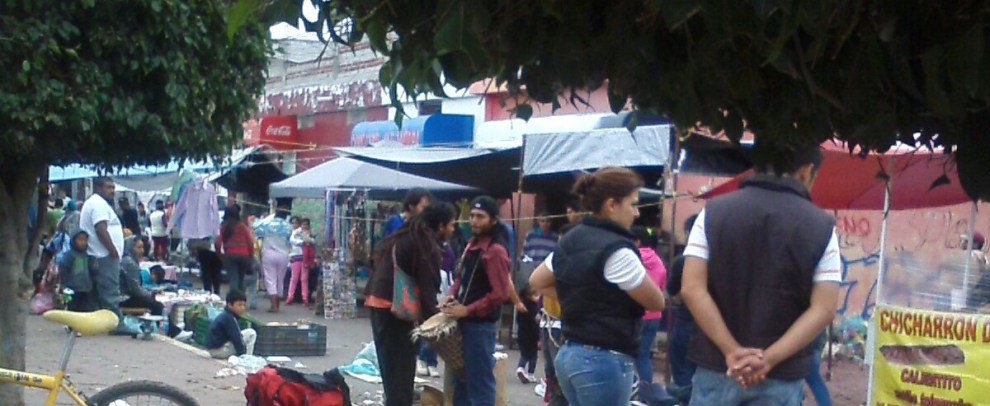
craterThe other week we headed to the town on the other side of the Lake Yuriria, Valle de Santiago. The town itself doesn’t have any of the magic that Yuriria or Cuitzeo have, but what it does have is a kick-ass tianguis (flea market) on Sunday. We were able to buy two pairs of Levi’s jeans for my son, a pair of Dockers Corduroy Pants and Caterpillar Work Boots for my husband and a Spider Plant
for me, all at totally reasonable prices. AND since we had to go through Yuriria to get to Valle de Santiago, we stopped for a fabulous lunch in el mercado (market). Since the weather had turned chilly, I had an excuse to purchase my first ever rebozo. Wearing a rebozo is like wearing a blanket–and totally acceptable in public. My husband and son called me granny the rest of the day, but I was a warm granny!

So a little history here…

estafiate

Valle de Santiago and the surrounding area was first settled about 2,000 years ago by the Purepechas and most likely conquered or otherwise absorbed by the Tarascos. Back then it was called Kamenbarhu (or Camembaro) which translates as roughly “lugar del estafiate” which then translates as “place of the estafiate plant.” Estafiate is also known as Western Mugwort, Western Wormwood, Louisiana Sagewort, Prairie Sagewort, Mountain Sage, Simonillo, and Itzauhyatl in Nahuatl and is used for digestive issues, as an analgesic, a decongestant, a sedative, a diuretic, an expectorant and an antioxidant, among other uses.

Kamenbarhu (or Camembaro) was renamed Valle de Santiago (Saint James’ Valley) and officially “founded” in 1607 by a bunch of Spaniards. In 1997, the state of Guanajuato declared the area a natural preserve.

tianguis

Valle de Santiago

While the town of Valle de Santiago isn’t much to brag about–the drive there and back is spectacular. We already knew that Lake Yuriria is formed from an extinct volcano crater, so it was not much of a stretch of the imagination to see that the surrounding landscape also had a volcanic look to it. When we got home, I did some internet research–because asking the locals never gets us anywhere–and lo and behold, the area all around Valle de Santiago is known as the Siete Luminarias (7 lights) which refer to 7 distinct craters, although there are more than 30 craters formed by now extinct volcanoes in the immediate area.

Astroarchaeology (the study of how people have understood the phenomena in the sky and the role that understanding played in their culture) suggests that the Siete Luminarias align with the constellation La Osa Mayor (the Big Dipper) every 1040 or 40,000 years (there seemed to be a bit of a discrepancy on when that event actually happens) hence the name Siete Luminarias. It does appear to make the rough outline of the Big Dipper if you look at the map below.

forming the big dipper

The 7 craters are named as follows:

La Alberca, formerly known as Tallacua

Hoya del Rincon de Parangueo, formerly known as Liricua

Hoya de Flores, formerly known as Membereca

Hoya de Cintora, formerly known as Andaracua

Hoya de San Nicolas

Hoya de Alvarez

Several of these craters have been the site of strange phenomenon. The lake in the Hoya de San Nicolas turns red, much like Lake Yuririra does, and probably for the same reason.

chan bw

La Alberca is reportedly home to Chac (or Chan), the Loch Ness monster’s cousin. This creature is said to live in the underground tunnels that connect the craters. It supposedly resembles a sauropod dinosaur.The only picture of the creature was taken in 1956 from a plane, and it seems far from conclusive to me. But maybe you want to believe????

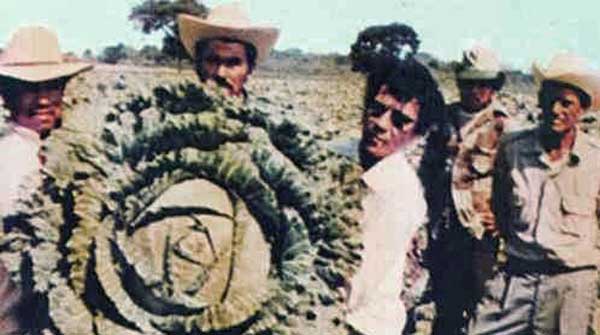
giant cabbage

There have even been various reports of extraterrestrial contact and UFO sitings in the area of the Hoya de Flores. A local resident riding his donkey saw strange lights in 1987. Crop circles were later discovered in the area (although I haven’t been able to find any pictures of them online.) Some UFO-ologists reported contact with a glowing silvery-blue man there. The most famous contact was with a local farmer, Jose Carmen Garcia Martinez, who grew enormous vegetables in La Hoya de Flores in the 1970s. He claimed that his astronomical success in creating his astronomical sized vegetables was based on agricultural methods he received from astral messages.

Well, I wouldn’t have expected aliens and monsters from our pleasant day in Valle…but then I have learned that Mexico is often not what it appears to be.

wpid-cam03936-1.jpg

******************************************

disclosure

4 Comments

Filed under Mexican Cultural Stories, Tourist Sites in Mexico