
Rural Mexico Prepper’s Pantry

Although Mexico hasn’t initiated a lock down to combat the spread of COVID-19, several states have been vocal about voluntary quarantine. The state of Jalisco, for example is encouraging #5diasencasa (5 days at home) from March 20 to March 25, the period when analysts have predicted is the peak contagion window in Mexico. 
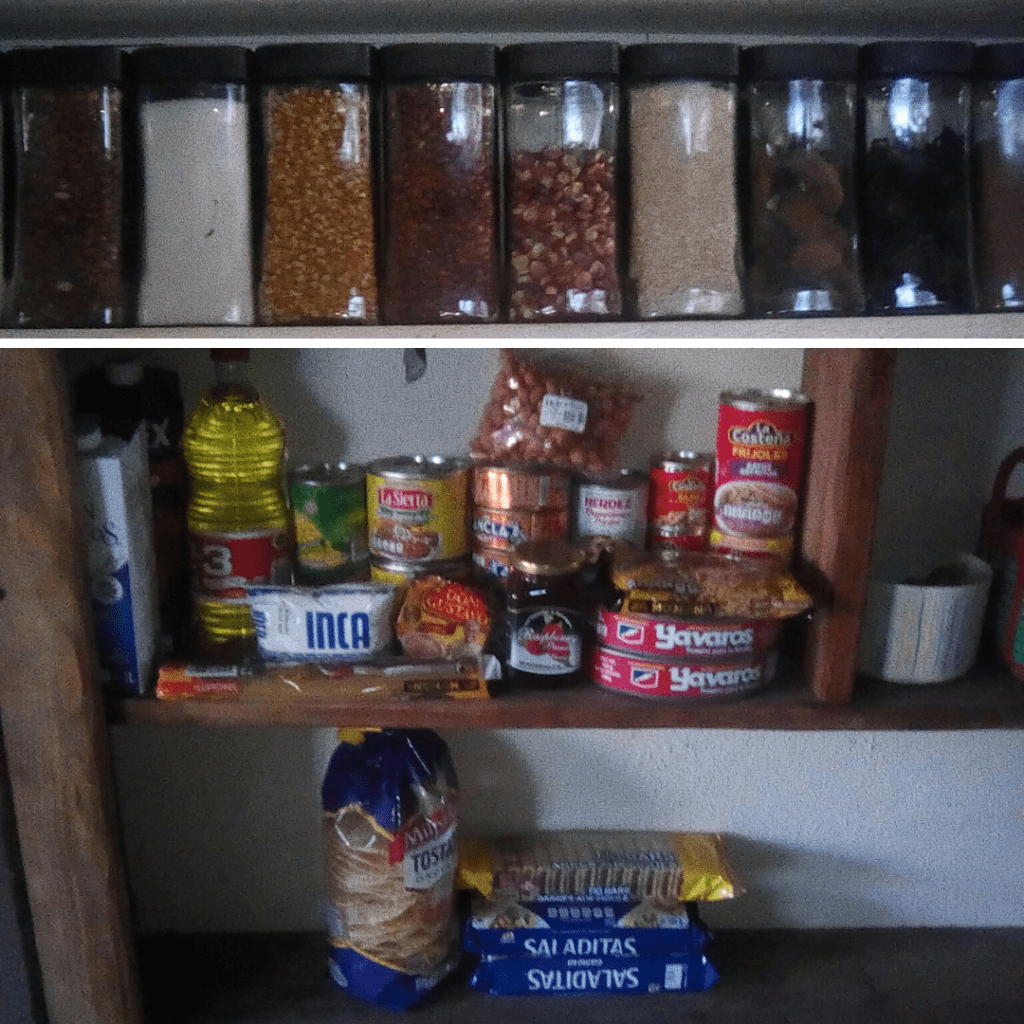
I’ve seen several posts recently on what to stock up on in the event of quarantine. Although I’m sure they meant well, none of them has taken the limited selection available in rural Mexican stores into account. I don’t mean fruit and vegetables, but non-perishable goods. If you’ve gone into a corner store lately to do your own stocking up, you’ll have seen what I mean.

So what can you do in rural Mexico to have a store of provisions that will keep for the foreseeable future, especially if you don’t have a fridge or freezer? It may call for thinking outside the box, but you can get a pantry full of goods that will last you for a while. 

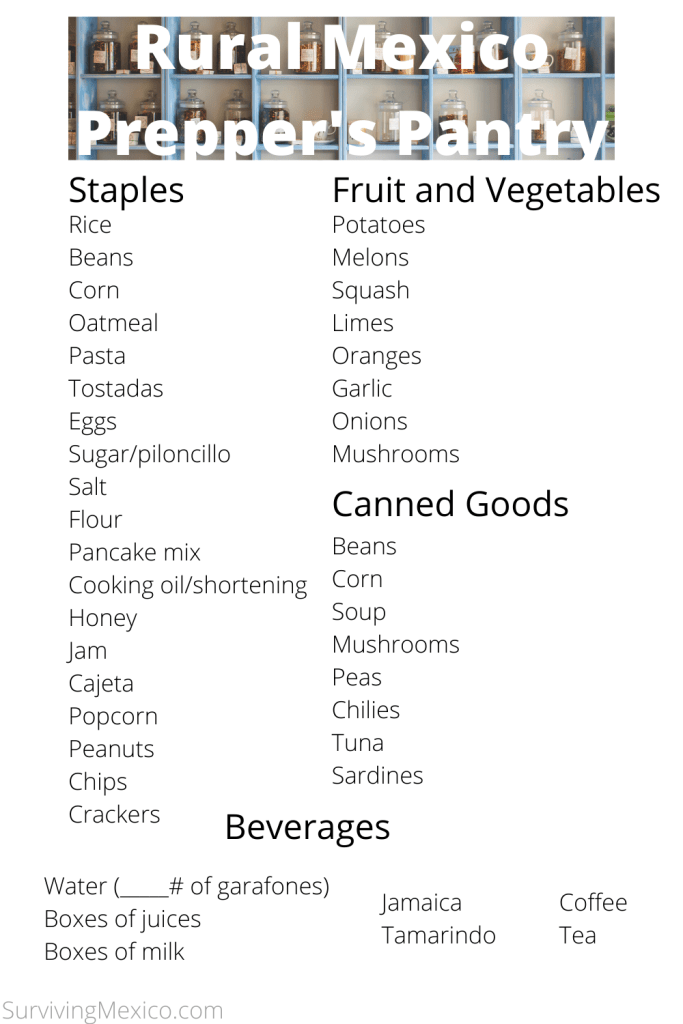
You can get boxed milk that lasts several weeks. Eggs are also stored at room temperature, so there’s no problem with those. However, some fruit and vegetables won’t last long at all. So steer clear of cucumbers, tomatoes, guavas, and strawberries. Instead focus on onions, garlic, potatoes as root vegetables last longer without refrigeration. Oranges, limes, squash, and melons are also good long-term choices.

Your staples should include rice, corn, oatmeal, beans, and pasta. Beans come in all sorts of colors for variety. Pasta comes in a whole slew of different shapes to change things up. If you know how to make your own tortillas, make sure you have some cal (lime) to complete the nixtamal process. Otherwise, tostadas are a good alternative.

If you have an oven and like to bake, be sure to get enough flour and yeast for bread. Salt and sugar are other things to have in surplus. Cooking oil will eventually go rancid, so try to get some solid shortening as well. Honey, jam and cajeta make good toppings for pancakes, which are a great snack. Other snacks include peanuts, chips, popcorn, and crackers. 

Soda does last forever, but isn’t perhaps the healthiest option. Make sure to have enough garafones of water on hand for at least two weeks, based on your regular consumption. Tamarindo and jamaica are nice to make flavored water. Containers of juice, coffee and tea are other beverages to consider. 

As I mentioned, the canned goods selection at the local supermarket is really quite limited. However, I was able to pick up canned beans, mushrooms, corn, peas, soup, tuna and sardines. 
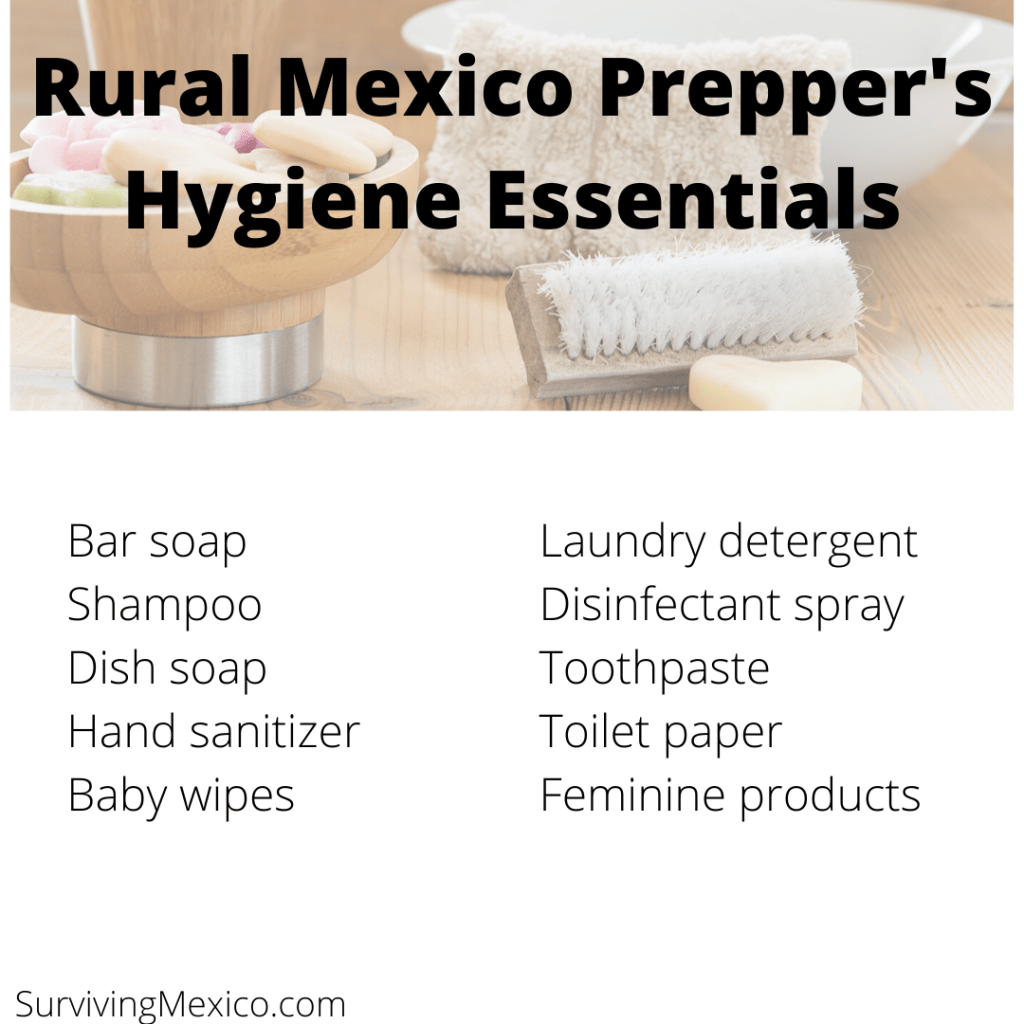
Since we are in the midst of a global pandemic, hygiene is of paramount importance. Therefore, make sure to have enough bar soap, shampoo, toothpaste, and hand sanitizer. For regular cleansing, have an extra container of dish soap and laundry detergent. Consider picking up a pack of baby wipes and some disinfectant spray as well. As for toilet paper, one roll per family member per week should be fine if you ration it like they do at the public bathrooms in Mexico. Ladies, don’t forget to stock up on your monthly supplies too!

As for the quantity of each, well it really depends on your family’s needs and food preferences. The pandemic period won’t last for decades, but it could last several weeks. 

What would you add to a Prepper’s Pantry for rural Mexico?
Leave a comment

Filed under Health, Homesteading, Safety and Security

Herbal Classes Online

If you’ve been quarantined, you may find it a blessing in disguise. Perhaps you have more family time or can sit quietly with your cat for a while. Maybe, however, someone in your house is sick or in the high-risk category for contracting an airborne illness like COVID-19. What better time to enroll in an herbal class and learn about boosting your immunity naturally! 

Herbs are not a “cure” for COVID-19, however, utilizing herbal infusions may be useful in reducing the severity of the most troubling symptoms like cough, aches, pains, and difficulty breathing. Incorporating more herbs and plants into your diet can strengthen your body’s immunity over time. And you can do that by adding some as seasonings to your regular meals, making teas and tinctures or just eating them raw. 

Herbal Academy is committed to educating the world about herbs and their benefits. Last week, I shared the newest online offering, The Mushroom Course. Right now you can enroll with a discount of $50 until April 6 and start learning about the beneficial properties of fungi. 

This week I wanted to let you know that several of Herbal Academy’s programs are 50% off.

The Introductory Herbal Course is designed for those with little or no herbal knowledge. You can preview a lesson from this course here.

The Intermediate Herbal Course is meant for those that have some understanding about the practical use of herbs for wellness. Both courses are 50% off for the next three weeks.

Even at this reduced rate, you might find the budget too tight and the future just too uncertain to justify these classes right now. That doesn’t mean you need to give up on your herbal education entirely, however. Huckleberry Mountain Botanicals offers free herbal content for you to enjoy. 

I know I’m using this time to reflect on my health, make determined decisions to improve my wellness levels, and take the time to appreciate what I have. What about you?

***

Leave a comment

Filed under Health, Natural Healing

The Additional Cost of a Catholic Death in Rural Mexico

More than 83% of Mexicans are Catholic. Catholic mourning customs will add to the expense of the funeral whether you have a casket or an urn as your final resting place. If el difunto (dead person) isn’t Catholic, but the family is, expect a Catholic funeral. 

As the host or hostess, you’ll need to provide refreshment for the attending mourners as the familiar representative of the deceased, both during el velorio and the subsequent novena. The most common food is pan (sweetbread) served with cafe de olla (coffee made in a large pot) or tequila for the male attendees. Usually, mourners that have come to pay their respects bring sugar or styrofoam cups or even alcohol along with their condolences and floral arrangements to help offset the cost. Nonetheless, there is a cost and depending on what you serve and the number of attendees, it could be a nice chunk of cash.

La novena (9-day prayer session) is usually not as well attended. The family often divides up the host responsibilities to provide some sort of nourishment for those that attend. The woman who is in charge of the prayers during the novena, and it is always a woman, must also be taken care of. She may refuse money but a gift of some sort is appropriate.

After el velorio, the body is often taken to church for the misa (mass). Although Pope Francis exhorted the Catholic priests to not charge for the requiem for the dead, it isn’t a free service here in Mexico. The la misa de difuntos for my brother-in-law costs $300 pesos and then whatever was collected when the collection baskets were passed among the funeral attendees. 

If the body will be on display during the mass, it is announced as la misa con cuerpo presente (mass with body present). This is the most common situation. If the person died en el norte (in the United States) then the body may not have arrived yet. Or if there were some unforeseen delays, the body may have already been buried before the mass. 

For instance, if the church was unavailable for the funeral because of a prior booking, then other arrangements may need to be made. The misa for my brother-in-law couldn’t be held in a timely manner because the festivities of Revolution Day were taking place. His misa and burial were able to take place just before the mandatory 48 hours. Mama Vira’s funeral service was moved from the church in front of her house to the church in the center of town for similar reasons, overbooking and all. 

There are different levels of service provided by the church, but I don’t have a price list since it often varies from church to church. My mother-in-law was provided the basic service, which was, well basic. However, when my teacher friend Rene died, being a pillar of the community and all, his many relatives and friends paid for a more lavish funeral service. The entire church was redecorated just for the funeral, like they do for weddings. There was music. The service was about 40 minutes long, praising his virtues. Of course, the service was standing room only in the church and the crowd spilled out and filled la plaza, so there’s no surprise that the extra effort was taken.

The church isn’t done with you or your wallet yet. At the one month anniversary there is the misa del mes (one-month mass) which includes another service with a minimum “voluntary” donation of $300 pesos. 

Then at the one year anniversary there is the el primero luctuoso (first year of mourning) with another yet mass. In our area, it’s common to take out a half-page newspaper spread to announce the time and place of the celebration. After the mass, attendees receive a recuerdo (souvenir) which of course you pay for. Each subsequent year has another mass, el segundo luctuoso, el tercer luctuosos and so on, for perpetuity, or as long as someone is paying for it. 

If you happen to belong to a religion that makes up the other 17% of Mexico, there are still services to pay for, but it might not stretch out for years to come.

Leave a comment

Filed under Death and all its trappings