Training Terry

If you remember, a few months ago we were given Terry, a Belgium Shepherd dog whose owner could no longer care for him. He came with some behavioral issues that we are still working on. 

He and George still periodically growl at each other through the hole that Jolina made in the door. He’s totally jealous of any attention Fred and George get from my son and carries on something awful. Walks are difficult because we can’t take all three dogs at once–Terry and George can’t behave.  

Terry’s neurosis and fear of being left alone have lowered but not gone away completely these past few months. He is not a big fan of being tied either. His high pitched whimpering is grating on the nerves, but sometimes he needs to be tied if only for a few minutes so we can move between the animal area and the backyard without a brawl ensuing between the two would-be Alpha dogs. 

Since he is a shepherd dog, we thought maybe he should get some training in his breed’s profession to help him overcome all this neediness he has. The first trip out off-leash wasn’t a success. He certainly tried to round up the kids, but mama goat wasn’t having any of that and hit him with her horns. Terry panicked and ran off. He must have gotten lost because he didn’t turn up for three hours, traumatized and shaking.

Several weeks passed and we gave it another go. Terry decided wide circles were the best option for herding and the mama goats approved. So for several weeks, he’s been going out in the morning with the horses and goats and my husband. He likes to chase Red around and I think Red likes the game too. terry

He’s been behaved and returns to the house when everybody is ready to be put in. He then is as happy as can be the rest of the day, snoozing in the shade. 

But we can’t take Fred and George for a walk while Terry’s out minding the goats. He has a sixth sense and comes from nowhere to take down George and since George is leashed, Terry has the advantage.

For the most part, the morning romps have been going well until recently. The chicken feather guy’s female boxer dog is in heat AGAIN! If you’ll remember, the hormones that saturated the air led to Puppy’s demise. Well, apparently, she’s pretty potent and her heat cycle has attracted the biggest and the baddest canines around. Gangs of huge dogs have taken up residence in La Yacata in hopes of paying court. 

So a few days ago, Terry was out with the goats and one of these humongous interlopers was slinking along eyeing up the kids in the herd. Terry became defensive and attacked, which is exactly what he should have done. The interloper ran up the hill and Terry gave chase. The two ended up near the chicken feather guy’s compound. Terry whipped the other dog’s behind and came back to the herd.

Then the chicken feather guy came down following Terry saying that he has been biting his cows and horses. Several weeks ago he stopped my son when he was with Fred and George and said the same thing. Perhaps if he fixed his dog, there wouldn’t be packs of dogs around every few months. Perhaps if he didn’t let his animals out at night to eat other people’s crops because he doesn’t want to buy food for them, they wouldn’t get bit. Whatever! You can’t reason with stupidity. 

The hormones in the air have also been affecting Fred and George. Two days ago, my son was walking them and a strange dog arrived. George just went berserk–letme at ‘im, letme at ‘in. In the melee that ensued, he bit my son’s hand accidentally. When everybody was back in the Flores compound, George was extremely contrite. He moped around the rest of the day. Every time my son came out, he tried to make it up to him by wagging his tail, licking his face and climbing on his lap.

So, because of the high level of hormones in La Yacata, the dogs are in quarantine for the time being under stay at home orders. It doesn’t mean that one of the neighbors won’t get it into their heads to poison our dogs again, though. We can only hope that social distancing will prevail.

2 Comments

Filed under Animal Husbandry

Death in Rural Mexico — el Acta de Defunción

When someone dies, the surviving relatives must have the all-important acta de defunción (death certificate). Without it, you won’t be able to change the name on properties, sell vehicles, or access bank accounts. 

You’ll also want to check to see if any places have life insurance policies. For example, Elecktra has an optional insurance policy through Banco Azteca you can get when you buy something on credit. It stipulates that in the event of death of the credit holder, all outstanding transactions are paid in full. But you won’t be able to clear up any of these without the death certificate.

The funeraria can help you obtain some of these documents, although some you’ll need to go in person to retrieve or make the application. 

To get this vitally important document you’ll need to go to the local Registro Civil and present:

  • Certificado de defunción expedido por el médico certificante en original (the original death certificate signed by medical personnel)
  • Identificación oficial vigente con fotografía, de un declarante, que en todo caso será un familiar del difunto, quien deberá comparecer al levantamiento del acta de defunción (Photo ID of the family member who has come to make the request for the death certificate. You may need to provide proof of family relationship with a marriage certificate in case of a spouse or birth certificate if you are the child of the deceased.) 
  • Acta de Nacimiento del finado (Birth certificate of the deceased) 

If the body is of a fetus, you obviously won’t have a birth certificate. Therefore you’ll need to only present the medical examiner’s certificate. Without the death certificate, the baby’s body can not be released for burial.

If the deceased is not Mexican by birth you may be asked to present Carta de naturalización mexicana (Naturalized citizen letter) or proof of permanent residency. Be prepared to also present the original birth certificate of the deceased along with the apostille and the translations done by el perito traductor (official translator). Since there is such a short window of time from death to burial, it’s better to have these documents in order before they are needed in the event of a death.

For bodies that are to be cremated: 

  • Permiso para cremación del Sector Salud, sólo en caso de que el cadáver vaya a ser cremado, original (If the body is to be cremated, you’ll need the cremation permit from the Health Department.)

If the person died under suspicious or criminal circumstances, you must provide:

  • Oficio original del Ministerio Público que autorice la inhumación o cremación del cadáver en caso de muerte violenta u ocurrida en la vía pública. (In the event of a violent death, or death in a public area, you’ll need the authorization for burial from the Public Ministry. This is to ensure that the body is no longer needed for any criminal investigation.)

If the person died in a municipality or state other than where he/she is to be buried you’ll also need: 

  • Permiso de traslado del sector salud y el del municipio que autoriza el traslado del finado, cuando vaya a ser inhumado o cremado en Municipio o Estado distinto de donde ocurrió el deceso, original. (If the deceased is to be buried in a municipality or state that is not the same as where he/she died, then you’ll need a permit to transport the body.)
  • Certificación del acta de defunción levantada por el Registro civil del lugar donde ocurrió la muerte o bien el tanto de interesado del acta de defunción, cuando el finado proceda de otro Municipio o Estado al de donde se va inhumar o cremar, original y copia. (If the person died in another state or municipality, you’ll need the death certificate issued by the corresponding municipality or state.)

If the person died in a country other than Mexico you’ll also need: 

  • Acta de Defunción apostillada o legalizada del país donde ocurrió el deceso, por el traslado del cadáver, con traducción al español si esta en otro idioma, por perito autorizado por Registro Civil o por Cónsul mexicano, original y copia. (The original death certificate from the issuing country with an apostille seal, translated by an authorized translator)
  • Permiso de traslado validado por el consulado mexicano, en su caso, cuando se trate de cadáveres procedentes del extranjero, original y copia. (Original and a copy of the permit to transport the body from the Mexican consulate in the country of death.)

Delays in burial might occur if the deceased is an organ donor. If the body is rapidly deteriorating, it may need to be buried before the 12-hour minimum. If the body is cremated or buried fewer than 12 hours or more than 48 hours after death, you must provide:

  • una autorización del Sector Salud o del Ministerio Público (Authorization from the Health Department or Public Ministry)

There is no cost for el acta de defunción. However, certified copies of the document do have a fee. It’s better to get a copy or two in case something happens to the original. This document can even be requested online in some states. For example, you can go to this site for documents issued by the state of Guanajuato. 

If the deceased is a citizen of another country, you will need to contact the appropriate consulate and report the death. They can help you complete the necessary paperwork. You’ll need to provide proof of citizenship such as a birth certificate or passport and the original Mexican death certificate. 

For U.S. citizens, you can find more information here.

For Candadian citizens, you can find more information here.

If you wish to have the body sent back to your home country for burial, the funeraria can help you get the appropriate permits. Some funerarias even provide body transport as part of their service at no additional cost. 

If the deceased worked at least 10 years with a valid social security number in the United States, the family may be entitled to some benefits after his/her death including a lump sum payment of $255 USD. You can find out more information about reporting a death to Social Security here. 

If you are a permanent or temporary resident in Mexico and you become a widow or widower, you need to report that change in status to immigration. You’ll need to take a letter detailing the change in status, your ID and the death certificate to the immigration office to register the change. 

4 Comments

Filed under Death and all its trappings

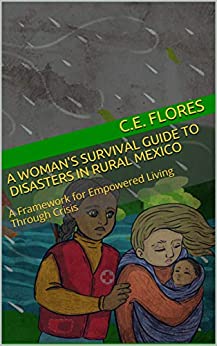
A Woman’s Survival Guide to Disasters in Rural Mexico

I don’t know about you, but the constant death count being broadcasted by every single social media outlet has been stressing me out. Seeing exhausted doctors and nurses, watching politicians squabble, and still not being sure whether we are or are not under quarantine where I live makes me feel helpless. 

Because of this, during this unforgettable month of March, I stepped up my efforts on my “disaster” book, the latest in the Women’s Survival Guide series. It reduced my endless scrolling on Facebook and kept me focused on what I could do to prepare, rather than all the things I couldn’t. With all that attention, I was able to finish the book several months ahead of schedule.

Today I’m pleased to announce that A Woman’s Survival Guide to Disasters in Rural Mexico: A Framework for Empowered Living Through Crisis is available on Amazon. 

Since my main goal is to help other women create fulfilling lives in Mexico, the eBook version of A Woman’s Survival Guide to Disasters in Rural Mexico: A Framework for Empowered Living Through Crisis will be free for the next few days, so that everyone who wishes to, can get a copy. 

As we continue our daily activities even in the face of uncertainty, my hope is that going forward, we won’t feel as helpless about our situation when we have a plan of action to work with.

1 Comment

Filed under Safety and Security, Uncategorized