Tag Archives: mexican remedies

Natural Healing — Pasiflora

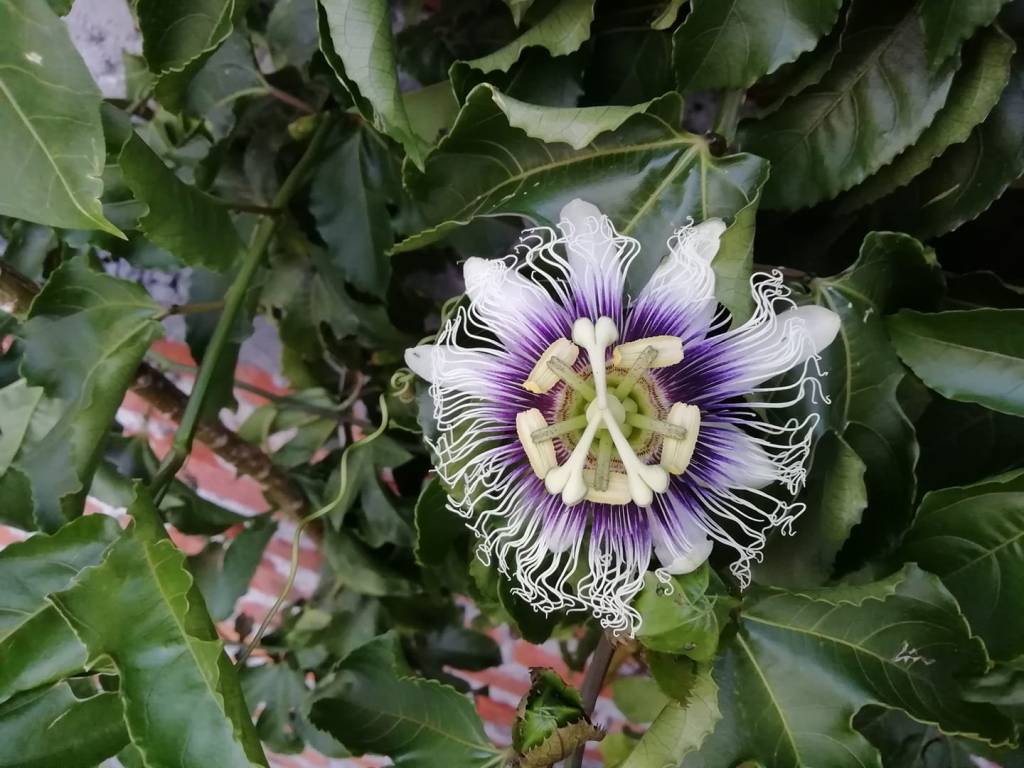
Passiflora edulis

I’ve mentioned before the amazing relaxing tea blend I stumbled across that contained:

  • Jamaica (Hibiscus sabdariffa)
  • Flor de Azahar (citrus Aurantium)
  • Flor de Tila (Ternstroemia lineata)
  • Flor de Manita (Chiranthodendron pentadactylon)
  • Hojas de Naranjo (Citrus aurantium)
  • Melisa (Cedronella Mexicana)
  • Manzanilla (Matricaria chamomilla)
  • Pasiflora (Passiflora Ciliata) 
  • Hojas de Limón (citrus medica)
  • Yoloxochitl (Talauma Mexicana)
  • Rosa de Castilla (Rosa centifolia) 
  • Alhucema (Lavandula angustifolia) 

I’ve done some research on many of the ingredients and today I’d like to add to your knowledge about Pasiflora.

Pasiflora (Passionflower) was called coanenepilli (snake tongue) in Nahuatl because of the curvy membranous outgrowths’ resemblance. In Maya, this plant is known as Pochil or Kansel-ak. It was a traditional remedy for snakebites and fevers. When the Spanish missionaries arrived, they named this unique flower passionaria after the passion of Christ. In their eyes, the circle of membranes was representative of Christ’s crown of thorns. Dr. Nicholas Monardes called the plant granadilla in his book Joyfull Newes Out of the Newe Founde Worlde because the small fruit resembled granadas (pomegranates) in his view. He recorded a remedy that used the juice from these fruits to relieve stomach pains. 

There are more than 600 species of passiflora, most of which are found in Mexico, Central and South America. Believe it or not, there is even a stinking passion flower (Passiflora foetida) that catches insects in the hairs on its bracts to eat, making it a protocarnivorous plant. This plant has been shown to be useful in treating inflammatory disease

passiflora incarnata

The fringed passion flower (Passiflora ciliata) is the variety most often used in teas as a sedative. The purple passion fruit (Passiflora edulis) is often grown for its fruit called maracuyá which has proven health benefits including the prevention of diabetic related complications

In herbal remedies still used in Mexico, pasiflora is often included in treatments of insomnia, anxiety, and nervousness including opiate withdrawal. Studies have shown that Maypop (Passiflora incarnata) extracts are effective sleep inducers as well useful in the treatment of anxiety and depression. And researchers have confired that at least one variety, the giant granadilla (Passiflora quadrangularis), contains serotonin.

There have been reports of negative reactions to pasiflora such as nausea, tachycardia, and drowsiness, therefore care should be taken when using this plant, especially since so few varieties have been studied

****

Interested in natural remedies? Uncover herbal remedies from traditional Mexican sources for healing and wellness in the Exploring Traditional Herbal Remedies in Mexico series.
Leave a comment

Filed under Native fauna and flora, Natural Healing

Natural Healing — Canela

Although there are several types of cinnamon available commercially, Mexican recipes and remedies call for cinnamomum zeylanicum otherwise known as Ceylon cinnamon. These light brown sticks are made up of many thin layers and are easily ground with a metate (grinding stone). 

This spice was brought to Mexico in 1690 by Juan de Esteyneffer, a Jesuit physician from Germany. He combined remedies and treatments he learned in New Spain (Mexico) with the European knowledge he had as a pharmacist in his work Florilegio Medicinal, published in 1712. Juan de Esteyneffer had a powerful belief in the healing properties of cinnamon or rather canela from the Latin word cannella meaning “little tube” referring to the way the bark curls as it dries. He prescribed it as a cure for sudden blindness and deafness indicating that the physician should chew on a stick and then blow the pieces into the eyes or ears of the afflicted. 

While that particular remedy didn’t catch on, canela is used to treat stomach issues, fever, cough, colds, rheumatism, regulate menstruation, teething issues, motion sickness, and hangovers in Mexico. It also is considered an aphrodisiac. 

Canela essential oil is used as a rub for rheumatism. Cinnamomum zeylanicum has wound healing properties, being both anti-inflammatory and anti-nociceptive (reducing the sensation of pain). 

For cough, 1 section of canela, gordolobo (mullein), ajo (garlic), is boiled in ¼ liter of water and drunk as needed, sweetened with honey and flavored with limón (lime). Cinnamomum zeylanicum is an effective fungicide and can be used to treat a variety of fungi that cause respiratory infections. 

It has antimicrobial, antibacterial, and antiparasitic properties as well as anti-gastric ulcer and anti-secretagogue effects, supporting its use as a stomach ailment remedy. It has also shown to be effective against Porphyromonas gingivalis, a bacteria found in the upper gastrointestinal tract, the respiratory tract and the colon. Both rheumatoid arthritis and Alzheimer’s disease have been associated with this periodontal infection. 

Motion sickness calls for canela tea. Teething issues are treated with a decoction of canela, mejorana (marjoram), butterfly bush (Buddleia davidii), menta (peppermint) and cempasuchil (marigold) is administered. 

Cinnamomum zeylanicum has hepato-protective effects, making it a beneficial addition to those that drink just a bit too much alcohol by reducing the effects on the liver. It also lowers the serum cholesterol levels. 

Studies have shown that canela is useful in the treatment of PCOS (Polycystic ovary syndrome) and helps regulate menstrual cycles among women with this condition. It has also shown to be effective in reducing menopausal symptoms. For cramps, a decoction made with the flowers from la barra de San Jose (Joseph’s staff) and cinnamon is the recommended remedy. A postpartum treatment calls for ajo (garlic), ruda (rue), laurel, romero (rosemary), orange peel, clavo (clove), canela, and alum is added to a small brazier of coals and burned. The new mother stands over the brazier as it smokes. This treatment is done every other day until the 40-day postpartum period is over. 

Canela has anti-cancer properties and has been useful in treating leukemia. It has been shown to have antioxidant properties and be useful in reducing damage to the pancreas often experienced by those with diabetes as well as being antidiabetic in nature. Studies suggest that regular ingestion may halt or delay Alzheimer’s disease. It has also been shown to be effective in reducing the progression of multiple sclerosis. The combination of cinnamon bark extract and honey has potential activity against acne-causing bacteria.

Although tea is the typical method of preparation as an herbal remedy, canela is also a staple in many other traditional beverages. Mexican chocolate, horchata (rice milk) and cafe de olla (coffee) are always made with a dash of canela. Mole, the thick chocolate sauce served with meat and rice, also uses canela, both when it is in broth form and then added again when ground. Tepache, an alcoholic beverage made from pineapple is seasoned with cinnamon. One of the most common atole (a thick corn drink) flavors is canela. And finally Ponche Navideño (Christmas punch) would not taste the same without this little twig. 

***

Interested in natural remedies? Uncover herbal remedies from traditional Mexican sources for healing and wellness in the Exploring Traditional Herbal Remedies in Mexico series.

1 Comment

Filed under Health, Mexican Food and Drink, Natural Healing

Natural Healing — Yerba de Sapo

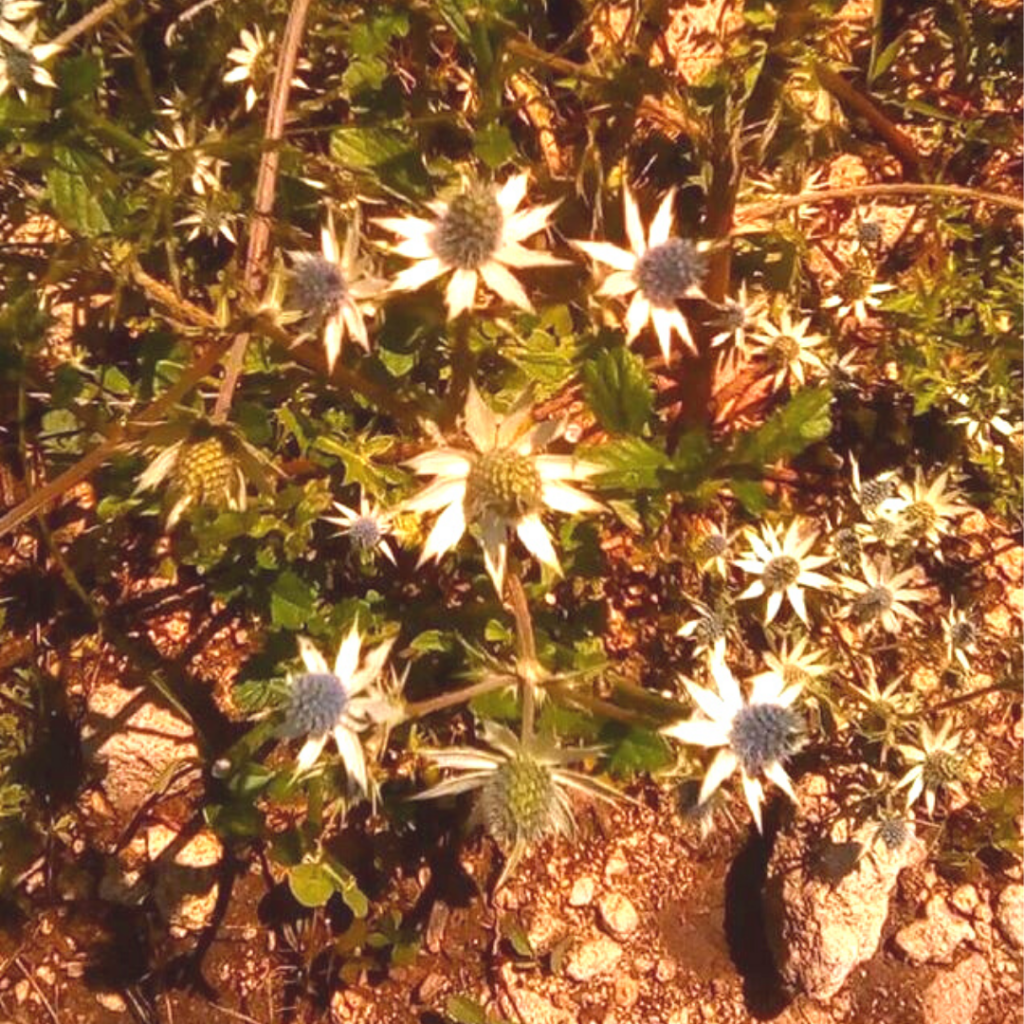
Yerba de Sapo / Eryngium carlinae

One day, I was out foraging for wildflowers and came across the unique blue-tinged beauty above. I took a picture of it, but for the longest time couldn’t find anyone who could identify it. Several weeks later, the indigenous herb seller at the local tianguis (flea market) had a basket of these flowers dried. Delighted, I asked what the name of it was and what it was used for. He gave me the name “yerba de sapo” and with that, I was off on my investigations. 

Yerba de sapo translates as toad’s herb in English. The particular variety I encountered is Eryngium carlinae but there are more than 200 varieties in this species around the world. Some sources say this plant is blue thistle, others record it as button snakeroot or sea holly, and yet another source lists it name as Eryngo

The name in Spanish isn’t any less confusing. Yerba de sapo can also be spelled hierba de sapo, however, this is also the term used for Eryngium heterophyllum, another variety of the Eryngium genus with similar health uses. Other names include cabezona and cardón. 

It has been used since the time of the Aztecs as a restorative tonic, remedy for kidney problems, and weight loss aid. The mashed leaves were used to make a poultice for sore eyes. It was also used to regulate menstruation. 

For kidney ailments, a handful of yerba de sapo is boiled in a quart of water. Then one small glass is taken before breakfast. The herb guy recommended a handful of the herb should be boiled along with a bit of palo de brasil (Haematoxylum brasiletto) and palo azul (Eysenhardtia texana) in a tea drunk daily, to lower cholesterol levels and reduce weight.

A tea made from just the leaves is used to treat cough and whooping cough. The roots are edible and sometimes eaten toasted for urinary tract infections. The juiced roots are prescribed as an aphrodisiac, to improve urinary function or induce contractions. Combined with other herbs, it is used in a gonorrhea treatment. It is also used to treat kidney stones and as a cancer remedy. Yerba de sapo is often prescribed to allieviate angina pain and reduce arteriosclerosis.

Few scientific studies have been done on eryngium carlinae. However, those that have been conducted show promising results for its medicinal use. It has been shown to be effective in the treatment of diabetes. It has a hypocholesterolemic effect, meaning that yes indeed, it will lower your cholesterol. It reduces lipid peroxidation in the brain, kidney, and liver while increasing the catalase activity having antioxidant properties. It is antibacterial and has been approved as a beverage with renoprotective effects, thus good for the kidneys. 

Eryngium carlinae grows in chalky or limestone soil and higher elevations. In fact, the specimen I came across during my foraging trip was in the mountains near El Cerro de Los Amoles in what had been a limestone evacuation area. The plant does not like to be moved, but it can be propagated with root cuttings. 

Precautions:

Because it can stimulate uterine contractions, yerba de sapo should never be taken during pregnancy. It should not be ingested for more than eight weeks so as not to cause kidney damage. Those that are allergic to fennel, dill, or celery may experience an allergic reaction. 

***

Interested in natural remedies? Uncover herbal remedies from traditional Mexican sources for healing and wellness in the Exploring Traditional Herbal Remedies in Mexico series.

Leave a comment

Filed under Health, Native fauna and flora, Natural Healing