Tag Archives: mexican herbal remedies

Introducing the Practical Mexican Herbalism for Wellness Academy

I’m pleased to announce my first school on Teachable–the Practical Mexican Herbalism for Wellness Academy. Eventually, there will be a whole slew of courses to take, but for right now, my first course is Traditional Mexican Cold and Flu Remedies.

It’s particularly apropos right now. With the extremely high contagious factor of the Omicron variant circulating, odds are that even if you are double-vaxxed and boosted, you’ll come down with it, unfortunately. However, according to all reports, this is a milder variant and most individuals will be able to recuperate at home. 

Although quite a bit of research has gone into creating vaccines as a preventative measure, there’s not a lot being done on how to manage symptoms once you’ve got it. That means you’ll need to fall back on tried and true old-fashioned cold and flu remedies. That’s where this course will help you out. 

As a case in point, my son contracted COVID at the very beginning of the pandemic and has been struggling with long COVID symptoms ever since. I’ve searched high and low for recommended treatments, but haven’t found any. Again, the focus continues to be on vaccine production rather than alieving lingering effects, so we’ve turned to herbal remedies to help him get back to a semblance of normality. It’s hard to see an otherwise healthy young adult struggle with breathlessness, brain fog, and fatigue. Romero (rosemary) seems to work the best for his situation either as an inhalent with sea salt or in a tea and provides some relief.

In addition to romero mentioned above, you’ll also learn about immunity-strengthening herbs and plants, remedies for headache, nausea, and sore throat, and even explore a cleansing after illness ritual common in the area of Mexico where I live. 

So if you’ve a hankering for more herbal knowledge, then check out Practical Mexican Herbalism for Wellness on Teachable!


And as a bonus just for reading this far, you can download the Traditional Mexican Bugambilia Cough Remedy ebook for FREE!

1 Comment

Filed under Health

Natural Healing — Cola de Caballo

Photo credit: Allen Gathman Equisetum hyemale subsp. affine

The other day in the market, I noticed several bound herb packets including te de limon and manzanilla. The third mound was unfamiliar to me, so I asked about it. The woman selling them said it was cola de caballo and was for kidney disease. All righty then, time for another plant study!

Cola de caballo (Equisetum spp) is also known as equiseto, limpiaplata, cien nudillos, cola de rata, caña carricillo, and candalillo in Mexico. This plant is believed to have been part of the staple diet of herbivorous dinosaurs. There are about 30 species and subspecies in the Equisetaceae family, which reproduce by spores rather than seeds. At least three varieties, Equisetum hyemale subsp. affine, Equisetum laevigatum and Equisetum myriochaetum, are native to Mexico. 

Traditionally in Mexico, it’s used as a diuretic, for kidney stones, and bladder or urinary tract infections. It’s also used in treatments for gout, wounds, hair loss, conjunctivitis, cough, diabetes type 2, and to increase energy. The young shoots are eaten as a vegetable. It has a grassy flavor, as to be expected.

A tea made from romerillo (Viguiera linearis) and cola de caballo (Equisetum laevigatum) is prescribed in Chiapas, Durango, and Sonora to treat urinary disorders. In Oaxaca, a tea prepared with 4 teaspoons dried or 8 teaspoons fresh of leaves, flowers, stems, and roots (Equisetum hyemale subsp. affine) in 1 cup of boiling water is given for kidney stones. Allow the infusion to steep from 5-20 minutes. Strain and drink daily before meals. In Chiapas, Guerrero, and Oaxaca, cola de caballo (Equisetum myriochaetum) is combined with barba de maíz (Zea mays), corn silk, for treatment of kidney ailments. Seven to 12 grams of each ingredient is added to ½ liter of water and boiled for 15 minutes. Two cups are prescribed daily. Yet another kidney stone treatment calls for a decoction made from cola de caballo (Equisetum myriochaetum), nopal paddle (Opuntia ficus-indica), and gobernadora leaves (Larrea tridentata) prepared every morning and cooled by the morning dew for 40 days.

A wash for wounds consists of 200 grams (Equisetum myriochaetum) boiled for 30 minutes in 2 liters of water. Because cola de caballo has a high silicone content, it is believed that drinking a daily infusion will promote shiny hair and strong nails.

Research on Equisetum arvense, the most commonly studied variety, has been shown it to be anti-inflammatory, antibacterial, antioxidant, antidiabetic, anticancer, cardioprotective, and antimicrobial. This variety has also demonstrated the ability to increase bone mineral density supporting its use in treating wounds including its application to bone healing.

Equisetum myriochaetum also shows promising health applications. It has anti-tumor, anti-diabetic, antioxidative, and diuretic activity. Equisetum hyemale is antimicrobial, antifungal, and antiparasitic. It also lowers cholesterol. Most other species and subspecies have not been examined thoroughly, but undoubtedly will have similar properties.

Note: Individuals with low potassium levels should not use remedies with cola de caballo.

***

Interested in health? Learn traditional Mexican plant remedies used today for wellness with

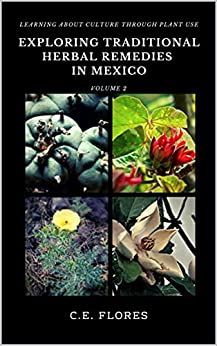
Exploring Traditional Herbal Remedies Volume 1 & 2.

1 Comment

Filed under Health, Native fauna and flora, Natural Healing

Natural Healing — Pirúl

Photo credit: Georges Jansoone

Pirúl (Schinus molle) is also known as pirú, perú, Falso Pimentero, gualeguay, Árbol Del Perú, Peruvian Peppertree, and in Nahuatl, it is Pelonquáhuitl. As you may have guessed, it is native to the Peruvian Andes. The botanical name molle comes from mulli, which is the Quechua word for tree. The indigenous put a high value on the pirúl because of its many uses. Textiles were dyed using Pirúl leaves. Oil extracted from the leaves was used by the Incas to embalm their dead. The high sugar content of its fruit meant that it was a common ingredient in atole, pulque, and chicha, a fermented corn beverage. The fruit was also used as a pepper substitute.

Credit for the first pirúl cultivation in Mexico is given to Virrey Antonio de Mendoza in the mid-1500s. Francisco Hernández de Toledo recorded that indigenous healers used parts of the pirúl to close wounds, stop bleeding, heal hemorrhoids, treat cataracts, and ease arthritis pain. The sap was dissolved in water as a purgative. Full branches from this leafy tree were used in limpias (cleansings).

In traditional remedies used by curanderas today, this plant treats wounds, infections, toothache, rheumatism, and menstrual disorders among other ailments. It is also prescribed as an antidepressant and diuretic as well as an effective insecticide.

To help with constipation, make an infusion from 1 tablespoon of pirúl leaves in one liter of water. Drink one cup three times a day after meals. Crushed leaves can be used in a wash for conjunctivitis. A foot bath with fresh pirúl leaves, which have analgesic and anti-inflammatory effects, can reduce foot swelling. 

A bark decoction for bronchitis or respiratory issues is prepared by boiling one tablespoon of bark in one liter of water for ten minutes. Sun-dried or comal-toasted leaves can be applied as a poultice to relieve rheumatism pain and sciatica. Fresh fruit in an infusion serves as a diuretic. The resin can be chewed like gum to heal mouth ulcers. A water extract made from the leaves is used to treat amenorrhea and dysmenorrhea. For sores and skin inflammations, the resin can be used topically, the ground leaves used as plasters, and a leaf infusion is made to wash the affected area. Pirúl has proven antimicrobial, anti-inflammatory, anti-fungal, and antibacterial effects.

The leaves have antimicrobial, antibacterial, antinociceptive, antimalarial, antidiabetic, and anti-inflammatory properties. Pirúl shows signs of immunomodulatory properties as it activates the immune system. The fruit is antioxidant and antimicrobial. It also demonstrates preventative potential against oxidative and inflammatory stress.  Additionally, Pirúl has an antidepressant-like effect as effective as commonly prescribed medications. 

Note: The fruit and leaves are potentially poisonous to pigs, poultry, fish, and calves. There have also been reports of children experiencing vomiting and diarrhea after eating the fruit. Individuals with low blood pressure should not use any remedies that contain pirúl. 

***

Learn more traditional herbal remedies in Mexico!

Leave a comment

Filed under Health, Natural Healing