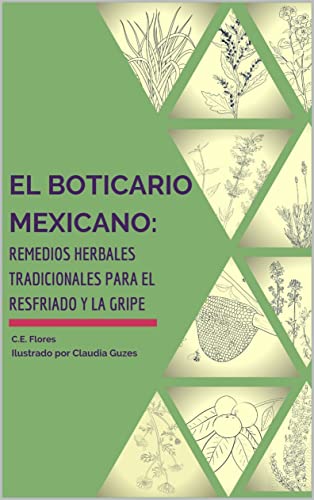
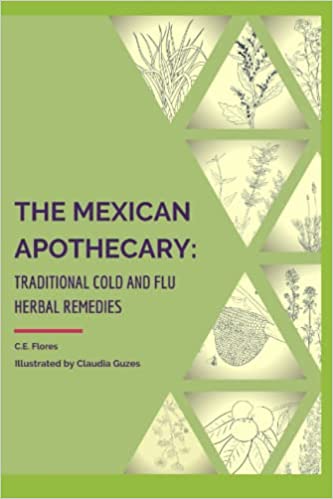
February has another COMPLETE writing project! I’m tickled pink, well maybe green, that El boticario mexicano: Remedios herbales tradicionales para el resfriado y la gripe has been released!
It took some time between the English and Spanish versions because, of course, it had to be translated! My son was the lead on that! He even signed up for a Spanish spelling course online of his own volition during the months he spent hammering away at the translation.
Then the formatting took a bit of time because the program I previously used went to a monthly plan rather than a one-time fee per book, and as I have, well, I don’t know exactly how many books I have out now, but a lot of books, and paying for that would break the bank. So I had to learn how to format using another program.
Anyway, it’s ready now, and in celebration, both the English and Spanish ebook versions are FREE for the next few days.
I recently discovered that Mexico has its own sea salt production in Colima. These salt flats have been in use since pre-Hispanic times. Hueytlatoani Colimotl, the king, paid his tributes to the Aztec emperor with salt. In fact, the salt flats were the cause of the 30-year La Guerra del Salitre (Saltpeter War) between Colimotl and the leader of the Purépechas Cazonci Tangáxoan II, both factions vying for control of this valuable mineral.
After the Spanish conquest, salt increased even more in value because it was used in the extraction of silver. At one point, the salt flats were producing 3,600 tons each year. In the 1890s, cyanide replaced salt in the mining process and production dropped off.
Mexican sea salt is from the La Laguna de Cuyutlán. It is still harvested using the traditional processes. Microplastics are filtered out through the black volcanic sand that surrounds the estuary. The salinated water is dehydrated in the sun and the salt crystals are collected by hand. Because the process is organic, it is only done 16 weeks per year.
According to experts, you can distinguish sal de mar from Colima from other sea salt varieties by its color, bright white, size, smaller than most sea salt, and humidity. When you crush a grain between your fingers, your fingers will be damp.
Sal de mar is high in trace minerals not found in processed table salt. It has medicinal properties that you shouldn’t miss out on. Bathing in sal de mar helps reduce pain associated with rheumatoid arthritis and psoriasis outbreaks.
The other day at the plant place, I came across a lovely thyme plant that I just had to have for my garden. As part of my introduction process, I had to do an intensive research session on medicinal properties. As my devoted reader, you too get to enjoy my obsession with plants in today’s post.
Tomillo (Thymus vulgaris) is native to Europe and therefore a plant brought to Mexico by the Spanish after the conquest. In Mexico, this is a culinary and medicinal herb. It’s used to flavor beans, calm a cough, and as a digestive aid.
It can also be used as a bioinsecticide. Studies have shown that it is toxic to larvae of insects that carry the dengue virus. It is an effective food preservative as it inhibits microbial growth.
Tomillo and Ajo Infusion for Hacking Cough
1 tablespoon of tomillo leaves (Thymus vulgaris)
1 ajo clove (Allium sativum)
Pour one cup of boiling water over the tomillo leaves and ajo. Allow it to steep for 15 minutes before straining. Add miel (honey) and limón (Citrus aurantifolia Swingle) to taste.
Tomillo Cough Expectorant
2 parts gordolobo (Verbascum thapsiforme sdahere)
1 part bugambilia morada (Bougainvillea glabra)
1 part manzanilla (Matricaria chamomilla)
1 part jamaica (Hibiscus sabdariffa)
1 part tomillo (Thymus vulgaris)
Pinch of ground canela (Cinnamomum zeylanicum)
Pour a cup of boiling water over 2 spoonfuls of the mixture. Allow it to steep for 10 minutes. Strain and add a pinch of canela. Drink as needed to reduce excess phlegm.
***
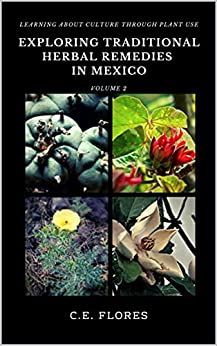
Want to learn a new way to look at plants?
Discover common traditional medicine practiced in Mexico today





 Surviving Mexico