Category Archives: Water issues

Questionaire for La Yacata revolution

Mountains of paperwork and no appreciation makes being a member of the mesa directiva in La Yacata, pesada (cumbersome).

Mountains of paperwork and no appreciation makes being a member of the mesa directiva in La Yacata, pesada (cumbersome).

As I wrote in the last Revolution update, I was fed up with the general attitude expressed by the Yacata colonos (community members) and had decided to work on my serenity and my plans for a solar powered system instead of all this horse poop. So I wrote my letter of resignation and sent it to Super Prez. However, before I could comfortably throw in the towel, there were a few things that I wanted to finish up.

With the light at the end of the tunnel in mind, I organized the padron (property owner list) into colonias (neighborhoods) and sent out avisos (announcements) to every single one with the date and time of their appointment in SuperPrez’s office to fill out their encuesta (survey). With approximately 450 property owners, scheduling appointments every 15 minutes from 10 am to 2 pm Monday thru Saturday, it took 3 weeks. Each Saturday, my husband delivered the avisos for the upcoming week and SuperPrez had his secretary come into the office instead of where he had her working on a job site, to receive the people. Quite a bit of effort to say the least.

However, after 3 weeks, there was a grand total of 60 surveys completed. Those 60 surveys actually totaled 93 lots, with the addition of SuperPrez’s lots, made a grand total of 33% of all property owners. Disgruntled but determined to finish up, I then compiled the results and sent them on to SuperPrez for consideration.

The survey had 6 questions. Each question had a yes or no box to check and a space for open comments. Here is an English version of the questions and the overall response of the 60 community members who took the time to complete the survey.

Are you aware that since the formation of the current mesa directiva (which is SuperPrez, me, the secretary G. and the 3 vocales (underlings)) the main objective has been to regularize our community and complete the urbanization projects that are necessary? Yes 56 No 4  Why? I go to the meetings.

Are you aware that the only way to get escrituras (property titles) for the lots in La Yacata is by completion of all the urbanization projects in the community? (i.e. water, electric, sewer, pavement, sidewalks)?Yes 55 No 5 Why? It’s the law.

Are you aware that the costs of all of the urbanization projects in the community are the responsibility of each of the property owners in the community? Yes 55 No 5 Why? It’s a private community.

Are you aware that the urbanization already in place in La Yacata must be done again because they do not meet current code requirements and must be done as defined by law in order to get property certificates?Yes 48 No 12 Why? They were done wrong.

Are you in an economic position to begin making monthly installments in order to begin the urbanization of the community? Yes 19 No 41 Why? No work.

Do you have any suggestions about the monthly installments needed in order to complete the urbanization of the community?Yes 24 No 36 Why? Longer period to pay.

Two of the 60 survey participants marched into SuperPrez’s office and carried on a bit saying that SuperPrez is making illicit deals with the Presidencia (town hall) and this is all just a ploy to take their money. Whatever.

It seemed with these results, there would be no advancement with our plans for development. SuperPrez came to chat the evening before the junta (community meeting) and basically said the same. He was also annoyed that after all the time, money and effort we had put into this during the last 2 years, we had such little support from the community members. (Rateros–Really?) We speculated that perhaps the majority of those who had bought lots in La Yacata never had the intention of habitation. (See Good Fences Make Good Neighbors, No Honor among thieves) Perhaps they thought of it as a get rich quick scheme, buy low, sell high. We decided to give them the option of electing other representatives in our place. Seems like what the majority wanted after all.  Until tomorrow morning then…

**************************

disclosure


1 Comment

Filed under Electricity issues, La Yacata Revolution, Water issues

Forcibly Green–Obligatory Organic

Welcome to the April edition of the Simply Living Blog CarnivalGoing Green cohosted by Mandy at Living Peacefully with Children, Laura at Authentic Parenting, Jennifer at True Confessions of a Real Mommy, and Joella at Fine and Fair. This month, we write about going green and environmentally friendly living. Please check out the links to posts by our other participants at the end of this post.

***

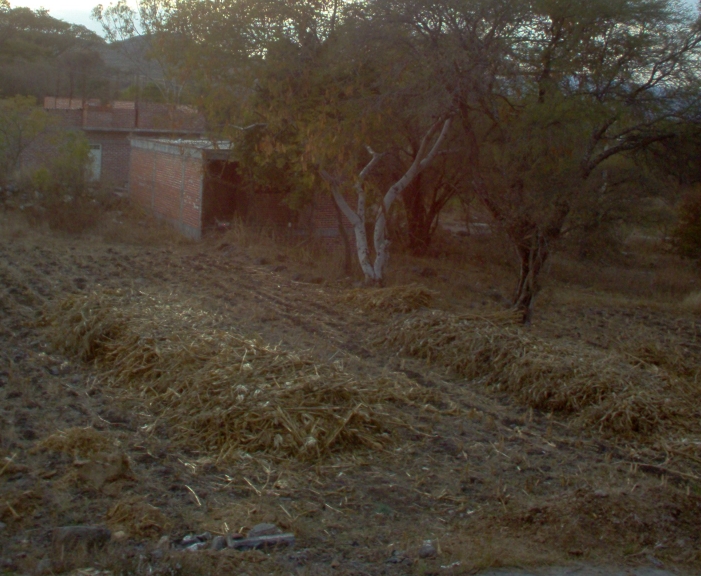
rastrojo

After the corn is harvested, it is laid out to dry completely then milled to make feed for our animals.

It’s easy in a modern world, to discount the effect one person has on the environment. The trash truck comes and hauls away the trash. The sewer flushes away excrement. The wind blows away car exhaust. The immediate surroundings remain clean. Now suppose all those conveniences are taken away. There is no trash truck, no sewer, no filter to clean the water, no running water for that matter. Would a person reexamine how he or she lives and make an effort to be more mindful in green living? Well, it depends on the person I guess.

Once upon a time, in a previous life, I thought I was more or less living “green.” I would go to the grocery store, pick up organic produce, buy organic canned and packaged food, use a filter for my water tap, use organic clothing when it was on sale, separate recycling and drop it off at the local bins, piddle with plants, use cloth bags and pat myself on the back for being concerned with the environment. Silly girl!

Now I live in an alternative life, where there is no choice but to be green.

When I go to the fruteria (fruit and vegetable store), I have only one option–local in-season produce or nothing at all. While not necessarily by choice, I am reducing greenhouse gasses since the food travels a relatively short distance to reach the market. I also do not contribute to pollution and waste caused by packaging and processing. All the fruits and vegetables are in their natural, ripened state, ready for purchase by the kilo, not can. I use a canvas bag for shopping whenever possible, not because it reduces the plastic bag waste residue (although I’m all for that) but because I am charged 50 centavos more for the bag, and these days every peso counts.

Corn and beans are a staple in the diet here, both for animals and people. Corn tortillas are a part of every meal. The Mexican government controls the corn prices. Of course, that means that inflation is unchecked. Since we arrived, the price of a kilo of tortillas has gone from 6 pesos to 13. Bodega Aurrera (a branch of Wal-mart) is mysteriously allowed to sell tortillas at a price below the federal mandate and offers a kilo for 8 to 10 pesos, but their tortillas have the consistency of cardboard.

With the prices of seed corn rising every season, it is now cheaper for the tortillerias (tortilla makers) to buy corn flour imported from the U.S. where Monsanto rules. As of 2005, Monsanto has garnered permission to sell their GMO seeds in México, overriding farmers’ protests. It really is only a matter of time before economics destroy the legacy of corn in the land where it was first cultivated.

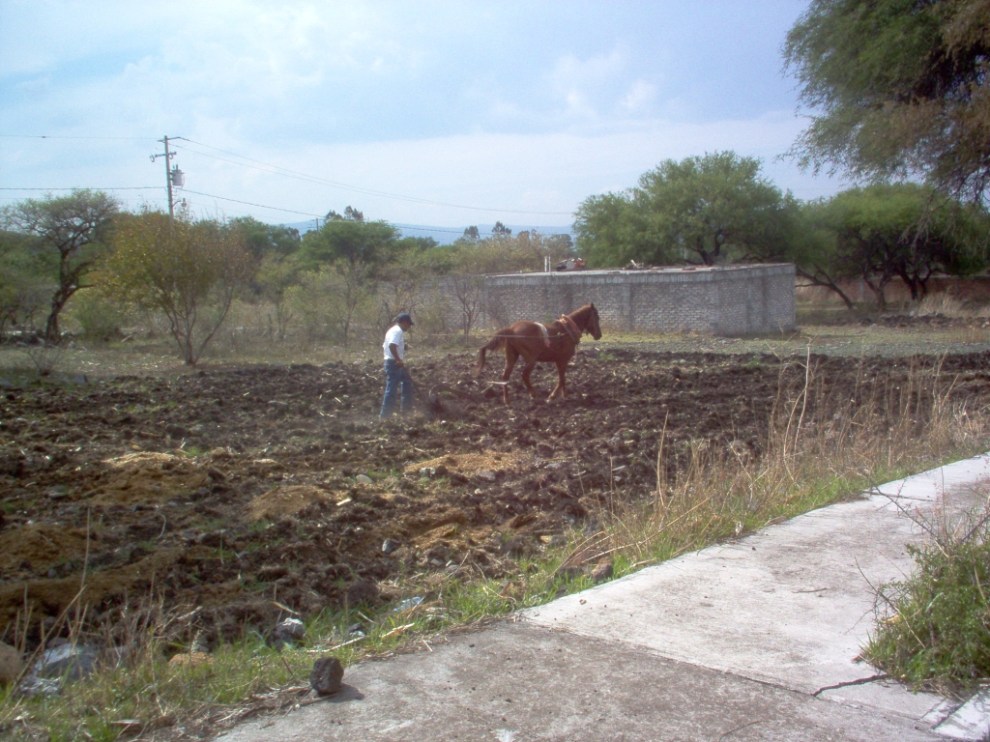
farming

My husband with Red preparing the field for planting.

So in order to maintain ourselves, we’ve had to expand our own cultivation. The growing season for this part of México is from June until November when the rainy season starts. So in June, we plant corn, beans, and squash on lotes prestados (borrowed lots) with a sort of sharecropping deal in the traditional way. The beans grow up and are supported by the corn stalks, and the squash plants fill in the ground between the stalks. We grow organically because every bit of the plant is used as food for ourselves (squash flower tacos are super awesome) or our animals (rastrojo is ground dried corn stalk and feeds our goats and horses through the dry season).

A liter of milk now costs 11 pesos, and a kilo of eggs (about 8 or 9 eggs) costs 30 pesos. There was a recent outbreak of avian flu among the commercially raised Mexican chicken population. Beef and pork products are “eat at your own risk.”  It’s only common sense that for our own health and pocketbook, we look for alternatives. We drink raw organic goat’s milk and are provided with organic eggs and meat from our own mini-ranch.

The Mexican government has a full-scale advertising campaign aimed at the conservation of water. Mexicans are advised to turn off the shower while they soap up. Bathtubs are a luxury nearly unheard of. Washing cars or watering lawns are simply not done. Millions of Mexicans still live without running water. Our own community of La Yacata is one of those areas. So water conservation is not merely of a matter of turning off the faucet while brushing your teeth. We take it seriously.

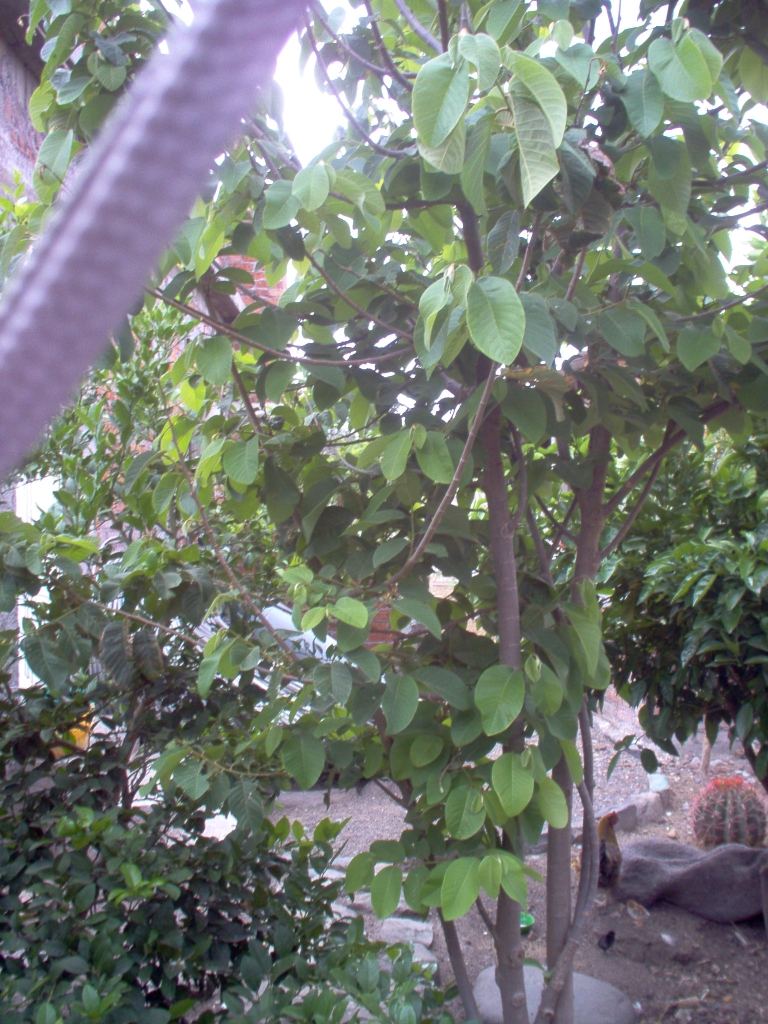
backyard

Our cherimoya tree in the back yard is watered by a pipe that brings wash water from the second floor to the tree roots.

El agua es bendito. (Water is Holy). We reuse nearly all of our gray water to water the fruit trees and plants in the backyard. We have orange, lime, lemon, cherimoya, mora (blackberry), peach, and granada (pomegranate), chayote and guayaba. Our animals do not have standing troughs but are given portioned servings of water. We do these things, not necessarily because they are good for the planet, although that is a great reason, but because the cost and effort of replenishing our water supply are extreme.

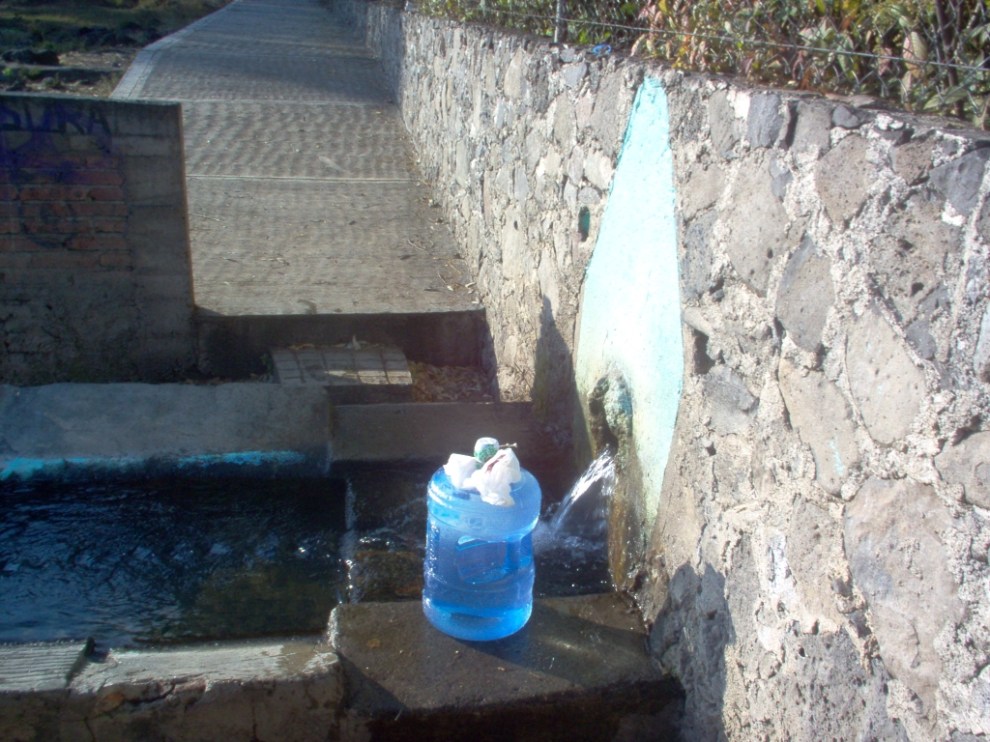
garafon

Filling our drinking water container from the natural springs in a nearby community.

At the same time, the government is encouraging water conservation, it reiterates that the water from the tap is not drinkable and everyone has to use bottled watered (sold by the Pepsi and Coke companies). A garafon (container) of water costs between 17 and 21 pesos. Sometimes, that’s out of our budget. So we go to presas (springs) in nearby communities and fill our garafon (container) from there. Until you have survived your first bout of churro (diarrhea) from drinking dirty water, you will never understand the importance of keeping the water supply clean.

How clean is your water? 

bottle recycle

Plastic can be sold to recycling centers here in Mexico however it pays so little per kilo that you have to gather a lot to make it worthwhile.

The trash tractor does not come to La Yacata for daily pickup. So what do we do with the garbage? Organic trash is given to our animals, no waste there. Anything metal can be resold for a few pesos as fierro viejo (old metal) to places that reuse and resell it. We have even gone hunting for scrap metal to resell when times are tough. Plastic trash is a problem, though. Although there are now places that will buy plastic to recycle, it pays so very little that only the most desperate junta botellas (collect bottles). We try not buy plastic in the first place, to reuse bottles when we can, or we are forced to burn them. Yes, this causes air pollution, but we haven’t come up with a viable solution to this yet.

Our neighbor, who has only lived there about a year, has contaminated his immediate environment (and ours) with his plastic trash. This is a problem for us, for it is always possible that one of our curious goats may ingest a plastic bag which will kill it. The trash heaps also attract coyotes and wild dogs and rats. I guess he’s just not too concerned with green living.

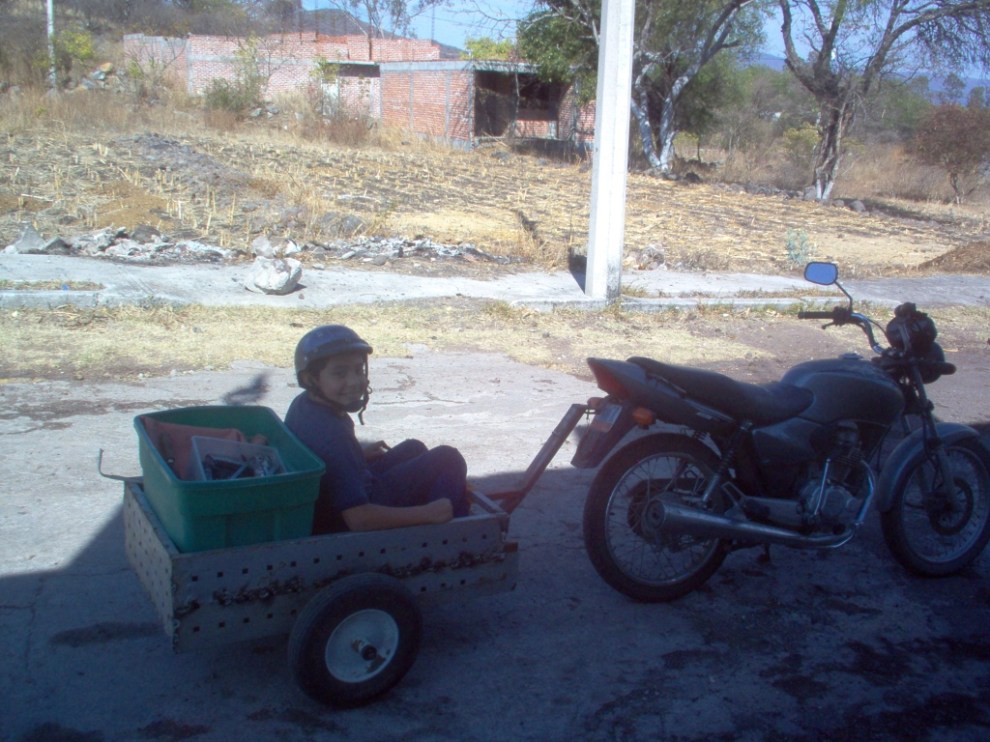
side car

Moto-cart. Just the thing for transporting!

The Mexican government also regulates the prices for petroleum and gas prices have steadily been increasing. We have a truck, however, more often than not, we do not have enough pesos on hand to fill the tank, so it just sits there. Our everyday transportation consists of motos (motorcycles), my husband and I each have one. Using a moto cuts down on emissions, which is great, and provides other benefits like more money in the pocket and easy parking. I love my moto.

It seems to me that in general, people do not get excited until a dump is opened in their neighborhood or a factory that contaminates the water supply is built down the road. Then the “not in my backyard” motto unites the community into looking for different options with active protests. I admit to having been one of those people in my previous life. I did the least bothersome and let someone else worry about the rest. However, it’s been made clear to me that my “backyard” is larger than I imagined. In La Yacata, living green is an economic necessity. The price for contaminating the environment is too steep for us to pay. How about you?

***************************************

disclosure
**********************************************************

Thank you for visiting the Simply Living Blog Carnival cohosted by Mandy at Living Peacefully with Children, Laura at Authentic Parenting, Jennifer at True Confessions of a Real Mommy, and Joella at Fine and Fair. Read about how others are incorporating eco-friendly living solutions into their everyday lives. We hope you will join us next month, as the Simply Living Blog Carnival focuses on Daily Lives!

  • Green Renovating: A Lot, A Little, Not So Much Laura at Authentic Parenting ponders about the many things that have an impact on eco-friendly renovating
  • Growing Native in My Flower Beds – Destany at They Are All of Me takes the guilt out of her flower habit by switching from high maintenance flowers to native plants which not only lessens her gardening load, but also benefits the local wild life.
  • Baby Steps – Kellie at Our Mindful Life shares how her family became more sustainable, one step at a time.
  • A Greener Holiday – Sara from Family Organic discusses the overwhelming amount of “stuff” that comes with every holiday and talks about how to simplify instead.
  • Forcibly Green–Obligatory Organic – Survivor at Surviving Mexico talks about her family’s evolution from passive to active green and sustainable living.
  • Giving It Away – Juliet Kemp of Twisting Vines writes about the role of Freecycle, the giant karmic lending library, in her simple and green living.
  • Simply Sustainable – Mandy at Living Peacefully with Children discusses her family’s attempts to live in harmony with the earth by living simply and more sustainably.
  • How Does Your Yarden Grow – Alisha at Cinnamon&Sassafras writes about an ongoing permaculture project, converting her grass lawn into a mower-free paradise.
  • Green? – Is it about ticking the boxes? sustainablemum shares her thoughts on what being green means in her life.
  • Using Cloth Products To Reduce Household Waste – Angela from Earth Mama’s World shares how her family replaced many disposable household products with cloth to reduce their household waste.
  • Going Green in Baby Steps – Joella of Fine and Fair shares some small, easy steps to gradually reduce your environmental impact.
  • Are You Ready To Play Outside?! – Alex from AN Portraits writes about gardening, and playing in the dirt, and how it’s O.K. to get dirty, play in the dirt, play with worms, for both adults and kids.
  • Lavender and Tea Tree Oil Laundry Booster – At Natural Parents Network, Megan from The Boho Mama shares an all-natural way to freshen laundry.

21 Comments

Filed under Animal Husbandry, Carnival posts, Economics, Homesteading, Water issues

The second demanda Phase 9

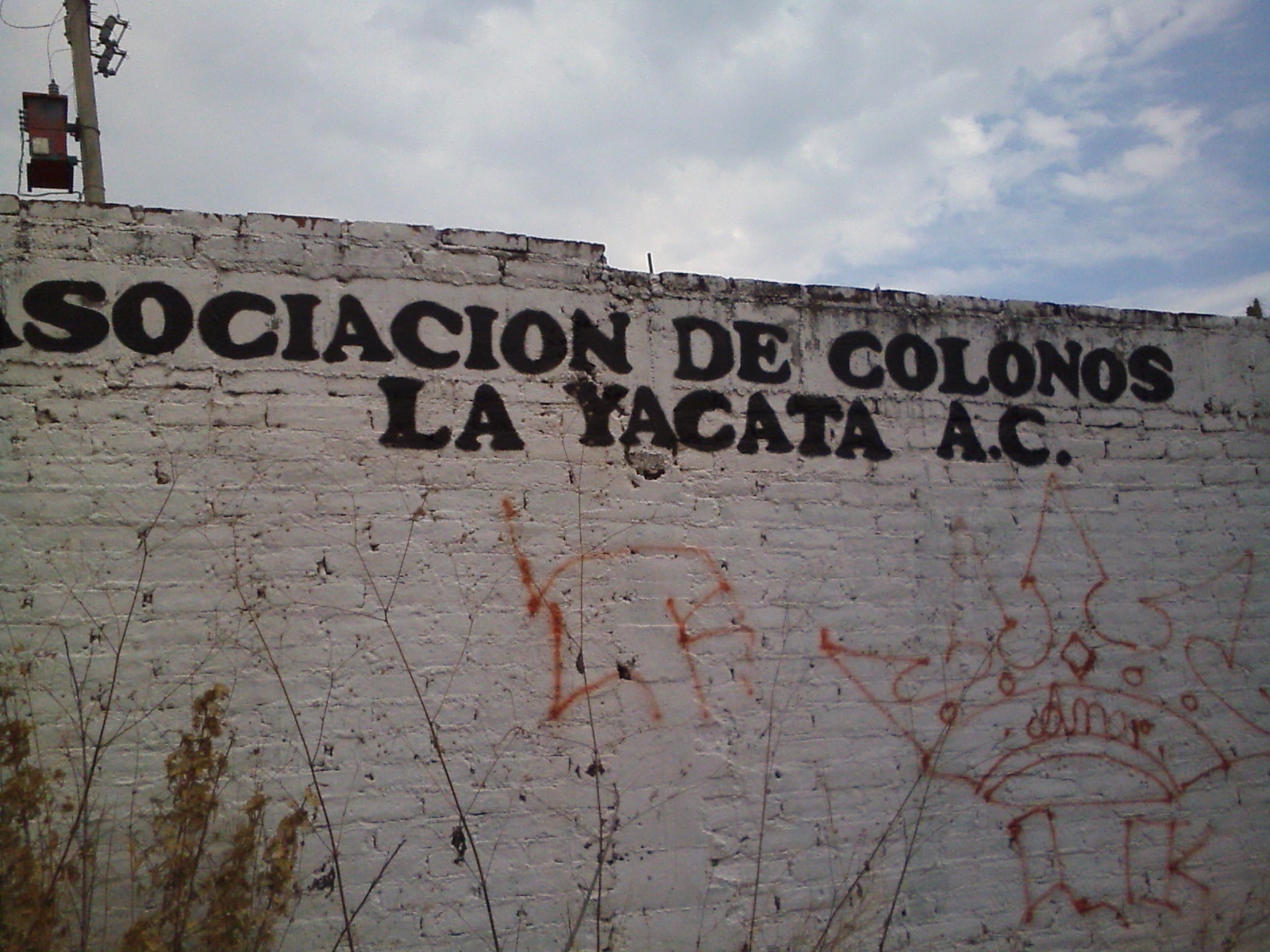
Entrance sign to La Yacata

Not to be outdone, Chuchi sent his own demanda (lawsuit) in early May. He attempted to have it delivered to our house in La Yacata, however as there is no legal address, I refused to accept it. So it made it’s way to Super Prez’s office and then to R’s office.

In May, my mother-in-law’s accident drove the thought of this second demanda (lawsuit) from my mind. I was busy with hospital visits and trying to help with all the animals at our house and at my in-law’s house in order to allow my father-in-law and husband to be at the hospital as much as possible.

But then I received a summons. I was to stay at my house and await the demanda (lawsuit) on Friday. So I waited, but the delivery person didn’t come. So my husband, myself and el profe went to the courthouse. I told the secretaries there that no one had come and furthermore, my mother-in-law was in the hospital due to an accident caused by a police officer and not expected to live so I didn’t have time for this crap (or words to that effect).

By then I was in a state of hysterics and went to see Super Prez. I did not want any lawsuit that named me specifically because I would be responsible for payment if we lost. Also, I was in the midst of applying for citizenship, so didn’t want anything to effect that. Super Prez said he wasn’t sure why I was summoned as I was merely the treasurer, not the president of the association, but that he was confident that it would all work out.

I wasn’t satisfied with that, so I went elsewhere. I knew important people too, or rather I taught their kids. I had been teaching English to 3 children whose father was a lawyer and whose mother was a judge. It was la juez (the judge) I was interested in seeing. I went to the house and asked to speak with her. I explained I didn’t know what the summons was for and that no one would give me any information in the office and that my mother-in-law was dying and so I was a bit hysterical. She called the person who was supposed to deliver the summons and asked that it be explained to her, then she explained it to me.

The demanda (lawsuit) was from Chuchi, as I had thought, for a cantidad de agua (water permit) that he had supposedly obtained for the colonia (neighborhood). My name was on the demanda (lawsuit) because I was the treasurer, therefore, the current legal financial officer of the association. La juez (the judge) asked that the demanda (lawsuit) be delivered to her and she would then send it on to me. She also said that it would in no way affect my application for citizenship.

Feeling somewhat reassured, I continued doing what I could for my mother-in-law, although in the end, it was little enough. She died at the end of May.

The day after her death, R called me and asked if I would be available to sign some papers. I told him I would be at my brother-in-law’s place as we prepared for the wake. R arrived before I did and handed me some things to sign. I said that I would read them before I signed, which he seemed to think unnecessary, but read them I did, standing outside in the blazing sun.

These papers were the response to the demanda (lawsuit) maintaining that the people of La Yacata were not receiving benefits from the water permit obtained by Chuchi (we didn’t have water), that there was no well (only a hole in the ground) and that this hole was outside of La Yacata (it was dug in an area that didn’t have escritoras (undeeded land). I read everything again, signed, and went inside to set up chairs for the wake.

We buried my mother-in-law and I didn’t hear anything more about the lawsuit for a few days. Super Prez, R, and R2 came to the wake, as did all candidates for Moroleón presidency. After the burial, we prepared for the novena (9 days of prayer for the soul of the deceased to be released from purgatory).

The day of the first novena (prayers for the soul of the recently departed), la juez (the judge) called and asked me to come to her house about the demanda (lawsuit), so I did. She asked if we had responded to the charge. Remember there is only a 9-day period to respond or the accuser wins automatically. I said that I was pretty sure that we had, but she insisted that I call R and ask. She isn’t the sort of person you argue with, so I did. I then went to see Super Prez in his office and asked him as well. He gave me a copy of the response, so I felt reassured. Then I went back to the novena (prayer session).

In June, I was called to los juzgados (court) to give a confesión (confession). It’s an odd term, but basically, I was to go and answer some questions the judge would ask me that had been sent by the opposing lawyer. I was very nervous about this. Suppose my F2 identification wasn’t acceptable. Suppose I didn’t understand the question. Suppose I answered incorrectly.

I met with R2 before the confesión. He suggested I ask for the judge to repeat anything I didn’t understand and answer with yes or no whenever possible. He said that R and Super Prez had already gone through the questioning and gave me a general idea of what sort of questions would be asked. And then it was my turn.

The judge asked me if I knew Chuchi. I said yes. He asked if I was the treasurer of La Yacata. I said yes. He asked if I knew Super Prez and R. I said yes. He asked if La Yacata was receiving benefits from the water permit obtained by Chuchi. I said no. He asked if I knew that I was responsible for paying for contracts made by the association. I had to ask that be repeated. My answer was yes, those contracts that were approved by the association. This point was crucial because Chuchi never got approval for any of the projects he began and without approval, we weren’t legally responsible for contracts he signed. And then it was over.

I met briefly with R2 to tell him the questions and my answers and he seemed well satisfied.

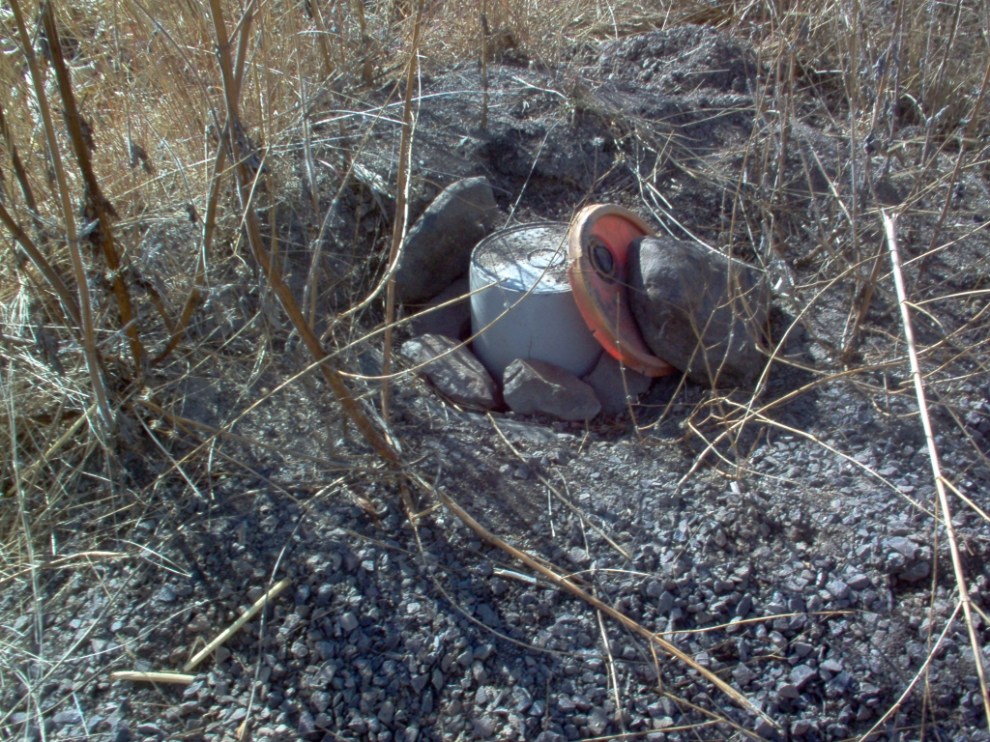
In July, the judge made a visit to La Yacata to inspect the site of the pozo (well). A few days previous, Super Prez had my husband put up a barb wire and post fence marking the end of the area that had escritoras (deeds) so that the judge could see that the alleged pozo (the hole that supposedly is a well) was outside of those limits. So we met in La Yacata, Chuchi, his lawyer and perito (surveyor), the judge, his secretary, Super Prez, R, R2 and me. We had to leave the cars below and hike up a bit, which didn’t please the judge too well.
pozo bucket

This is what the pozo (well) looks like in La Yacata.

We walked about, took pictures and the lawyers made statements. R2 said that the pozo (well hole) was outside the area with escritoras (deed). Chuchi’s surveyor pulled out the plan to disprove that, only he had the plan turned the wrong way. I didn’t win his thanks by pointing that out. Then Chuchi’s lawyer said that we (the colonos) were receiving water benefits from the pozo (well) and the judge asked what well that was. There were no pipes or pump or water storage tower to get water from the hole to the houses. But he did admit that there was water in the hole, tested by dropping pebbles and waiting for a splash. I pointed out that since we were in the rainy season, there was water everywhere. The judge noted in his report that he couldn’t say if there would be water in the hole during the dry season, but that in July there was water.

Then we all trooped back to the cars for paper signing. I didn’t have my identification on me and was anxiously asking if I needed to go and get it, but Super Prez told me to wait a minute. I didn’t need it after all as he had R2 take my name off the demanda (lawsuit) and therefore, I didn’t have to sign anything. More importantly, if things were to go against us, I wouldn’t be personally responsible for the money owed. What a relief!

We presented this information at the next junta (community meeting). I had hoped this would help unite us once again, and open wallets for the $250 peso cuota (charge). But it seems that R2 (who had been the president of Moroleón before the current president) had made some enemies. And some of those enemies were property owners in La Yacata. When they found out that R2 was representing us legally, they complained.

I had mentioned this same concern to Super Prez earlier. I said that R2 had left office none too clean and that it’s possible that we would be unwise to trust in him. He agreed but hoped that since R was his brother and mentioned in the lawsuit as well, that R2 would have to do the right thing in this case.

Be that as it may, several colonos (associates) wanted to look for another lawyer. They thought it suspicious that R’s brother was our legal representative. I spoke up then. I said that we hadn’t called a junta (meeting) at the time we received the demanda (lawsuit) because my mother-in-law had died. As my husband and I are the ones that deliver the flyers and make the radio announcements for the community meetings, we were unable to do so within the 9 days we had to answer the charge because of the funeral. I admitted that R and R2 may have taken undue advantage of the situation and apologized to the community (neither R or R2 happened to be present at the meeting.) however what was done, was done and the only thing we could do at present was meet our financial obligations as best we could.

As of March 2013, we are still waiting on an end to this demanda (lawsuit). It looks good for us. We have successfully proved that the people of La Yacata are not receiving benefits from this water permit, as we don’t have any water. We have also proved that there is no pozo (well) at the site indicated by Chuchi. But it’s the third point that we are awaiting resolution on, whether the hole is inside or outside the legally deeded area. Our perito (surveyor) said no. Chuchi’s perito (surveyor) said yes. So the judge appointed a neutral surveyor to make an inspection in October. Well, as far as we know, he didn’t do an inspection in October or November and as in December and January the court is recessed for Christmas vacation and then Moroleón Days, we are in February still waiting for a verdict.

*********************

disclosure

15 Comments

Filed under La Yacata Revolution, Water issues