Category Archives: Natural Healing

Herbs and Essential Oils Super Bundle

You’ve probably already realized that included in my goals of self-sufficiency is promoting health through organic and natural sources. (See Natural Healing)

Although my mother was always interested in plant and herb lore, applying what I learned from her has required a significant learning curve since many of the same herbs do not grow and are not available in Mexico.  That’s why I really enjoyed Herbal Academy‘s Herbal Materia Medica Course.  I could concentrate my investigations on plants found locally and their relevant medical benefits.

So I’m delighted to share The Herbs and Essential Oils Super Bundle which includes, you guessed it, the same Herbal Materia Medica Course, that I found so helpful. Scroll down and you’ll see it in the list!

Here’s how it works:

  1. Visit their website, take a quick look at all the goodness that comes in this package, then click the “Get my copy now!” button to go through their simple and secure 3-step checkout process.
  2. You’ll receive an email with a login to their online access portal, where you’ll begin downloading your eBooks and signing up for your eCourses.
  3. Use their Getting Started Guide to pick the topic you want to tackle first and start using natural remedies!

Learn more or get your bundle HERE.

It’s even backed by a 100% happiness guarantee so you can make sure it’s right for you. Here’s what’s included:


*************************

disclosure

3 Comments

Filed under Health, Natural Healing

Natural Healing–Coriander Cilantro tea

Continuing with my free Herbal Academy Materia Medica Course, I decided to try teas made from the other local herbs I was investigating.  (See Hibiscus Tea, Feverfew Tea) Coriander, known as cilantro in Mexico, is used in an endless variety of local cuisine.  I love cilantro!  It has such a fresh flavor! I was amazed to discover that not everyone has the same reaction when eating cilantro.  Some people taste soap, metal or dirt instead of freshness.  Apparently, it’s a genetic thing. (See A genetic variant near olfactory receptor genes influences cilantro preference) How unfortunate! Coriander has quite a number of health benefits. cilantro-tea Coriander seeds contain zinc, which helps with digestion, copper, which is used to produce red blood cells, potassium, which helps control blood pressure and heart rate. They contain bioactives that have antimicrobial, antiepileptic, antidepressant, antimutagenic, anti-inflammatory and anxiety inhibitors. Coriander seeds have been shown to lower blood sugar, ease Irritable Bowel Syndrome, decrease blood pressure, contain an antibacterial compound that fights Salmonella choleraesuis, thus useful in cases of food poisoning,  lower cholesterol, be useful in treating urinary tract infections, and been shown to prevent neurodegenerative disease when included in diets high in turmeric, pepper, clove, ginger, garlic, cinnamon. Coriander Seed Tea is recommended for cystitis relief. Simply steep one teaspoon of whole coriander seeds for 5 minutes for each cup. Strain and add honey or sugar. Cilantro (coriander) leaves are also jammed packed with good stuff.  It’s rich in antioxidants and dietary fiber and is a good source of vitamin K, which helps in building bone mass, vitamin C, and vitamin A.  Cilantro has been shown to bind the heavy metals arsenic, cadmium, aluminum, lead, and mercury together which helps the body eliminate them altogether.  Cilantro has also been proven to regulate the body’s oxidative defense systems which in turn protects us from oxidative stress. Cilantro has been shown to be as effective as valium in lowering anxiety and improving the quality of the sleep cycle.  Like the seeds, the leaves also lower blood sugar levels and help protect against cardiovascular disease because of its high potassium level.  Cilantro lowers total cholesterol and triglycerides. It can prevent oxidative damage associated with cardiac damage and prevent myocardial infarctions. Cilantro can help prevent colon cancer. And that’s just the tip of the benefits iceberg! cilantro-tea-cup-elixir So in line with my herbal classes, I decided to make cilantro tea. The recipe calls for 2 teaspoons of fresh leaves per cup.  Steep up to 10 minutes.  Remove leaves.  Add sugar or honey.  I also added a bit of orange peel to the concoction.   I’ll be honest and say that the taste was ho-hum.  It tasted, well, like cilantro tea.  I think I’ll get all the goodness in solid form like maybe salsa, pico de gallo, on tacos with onion, and so on.  In any form, it’s a tasty part of our Mexican diet and not too difficult to grow.  I’ll post more information once I harvest my first batch this year!

************************

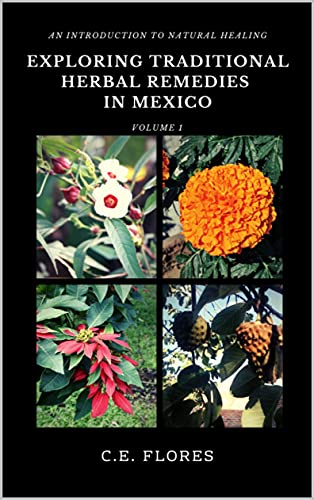
Interested in natural remedies? Uncover herbal remedies from traditional Mexican sources for healing and wellness in the Exploring Traditional Herbal Remedies in Mexico series.

3 Comments

Filed under Mexican Food and Drink, Native fauna and flora, Natural Healing

Natural healing–Hibiscus tea or agua de jamaica

jamaica image

As if I didn’t have enough on my plate already, I decided to enroll in a 6-week online herbal course through Herbal Academy.  As the program’s aims included sustainability, stewardship, and affordability, I knew this was the place for me!

So I jumped right into the Herbal Materia Medica course. The lessons and a number of print-outs were free.  The herbs I would be studying were left up to my discretion.  I decided to learn more about plants that I had readily available here in Mexico.  So I chose cilantro (coriander), jamaica (hibiscus), sabila (aloe vera), feverfew and wandering jew.  It was more than I bargained for, probably because once I started researching herbs, I couldn’t stop.  I kept adding more and more herbs to my list of useful local and medicinal plants.  

herbal-academy-logo
Find more herbal courses here!

I’d like to share some of what I learned about the hibiscus flower today.  

Agua de flor de jamaica is one of my favorite aguas frescas here in Mexico. When this is an option, who would every choose a coke? Its deep red color reminds me of Kool-aid, although the flavor is a bit on the tart side. Making it is nearly as easy as Kool-aid as well.

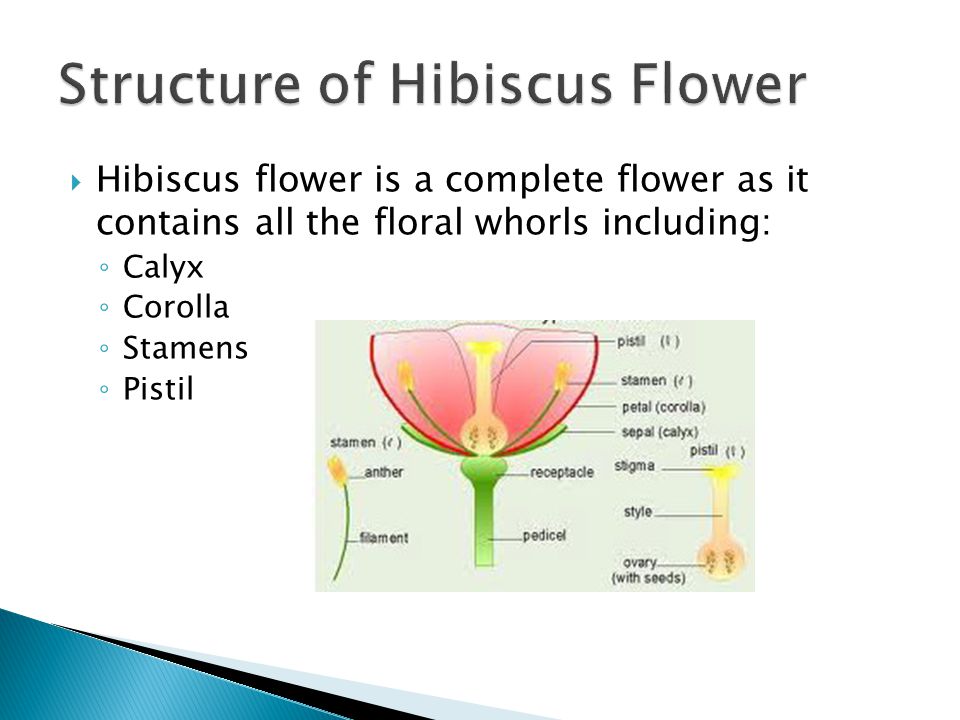
calyx

The calyx (the sepals of a flower, typically forming a whorl that encloses the petals and forms a protective layer around a flower in bud) are added to boiling water until thoroughly wet. Strain the mixture, getting all the juice out, add sugar to taste and stir.

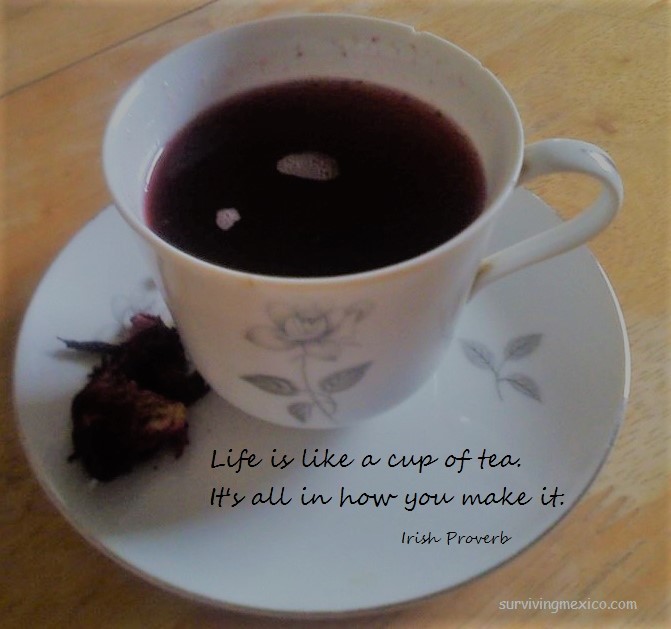
Dried jamaica (hibiscus) calyx are easily obtainable at the market, so I went out and obtained some “for my class project.” I opted to add piloncillo (Mexican brown sugar) and canela (cinnamon) to my tea. My son said it tasted more like ponche (fruit punch) but drank an enormous quantity of it. I only used a handful of flower petals, so I have plenty left to perfect my own agua de jamaica.

Not only is it delicious, but it is good for you too.  Agua de jamaica has citric acid, malic acid (giving it its tart flavoring) used in treating fibromyalgia and chronic fatigue syndrome because of its energy increasing properties, tartaric acid which is an antioxidant and anti-inflammatory compound useful in treating inflamed joints, pancreatitis and liver inflammation. Tartaric acid has also been shown to improve glucose tolerance and intestinal absorption of nutrients. The flower also contains polysaccharides which aid in reducing fatigue, regulating healthy blood pressure and blood sugar, encourage a positive mood, soothe irritation, support the immune system, and increase libido.  No wonder this is a drink recommended to reduce menopause symptoms! (See also  A Beautiful Transition In Life: Dealing With Menopause Naturally Without HRT and Health Benefits Of Hibiscus)  It’s been used to reduce pain from menstrual cramps, restore hormonal balance which reduces mood swings and depression.

Furthermore, jamaica has cyanidin and delphinidin, antioxidants found to have anti-carcinogenic properties found to be effective in skin, breast and colon cancer prevention.  

Studies have shown that the extract of hibiscus (jamaica) is toxic to cancer cells. Why isn’t everybody drinking this?

As if that isn’t enough, flor de jamaica contains anthocyanins which have long been used to treat high blood pressure, colds and urinary tract infections.  As the drink is a natural diuretic, it’s easy to see how it could be just the thing for these all-too-common ailments.

Jamaica has been used to successfully treat obesity and head lice. Drinking agua de jamaica can reduce anxiety and depression.  This tea is low in calories and caffeine-free and can be enjoyed hot or cold. What more could anyone ask for?

hibicus-tea-life

So how much should you drink?  Superfoods Scientific Research recommends a typical adult should drink one cup of hibiscus tea twice daily.  Take 2 tsp of dried calyxes or 1 tsp of crumbled calyxes with 1 cup of boiling water, steep for ten minutes.

There you have it, folks!  I would be lax if I failed to mention that there have been reported side effects from drinking this tea.  As mentioned above, it lowers hormone levels which is great for menopausal women but might not be what someone trying to get pregnant would want. So avoid this drink if you are undergoing fertility treatments or are in the first trimester of pregnancy.  As it lowers blood pressure, if your blood pressure is already low, don’t drink it.  As it reduces anxiety, you may feel utterly relaxed or drowsy after drinking it.  In fact, some people have reported hallucinations, although I have yet to experience that particular side effect myself.

Did you know you can make taquitos out of flor de jamaica too?  Check out this recipe!
Well, I have my packet of organic hibiscus seeds and am going to give it another go this year.  I made an attempt before, but the seeds didn’t sprout (See Failing at Container Gardening.)  Once I get my first batch, I’ll walk you through the drying process.  If you can’t wait until then check out the steps at HIBISCUS: A TASTY ADDITION TO YOUR EDIBLE LANDSCAPE OR GARDEN.

So, as you can see, I learned quite a bit as a result of my free course at Herbal Academy. Totally worth it!  Stay tuned for more informative herbal posts in the future!

********************************

22 Comments

Filed under Native fauna and flora, Natural Healing