Category Archives: Natural Healing

Back to Basics Bundle Flash Sale

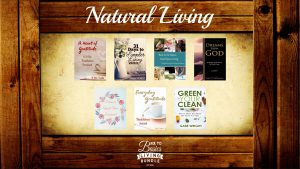
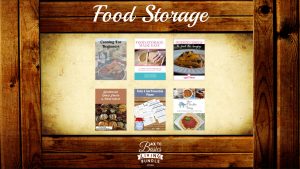
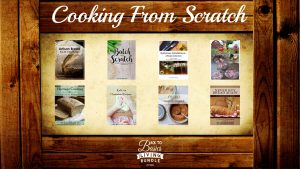
I can’t say how much I love these ebook bundles!  This is one of my favorites by far. Just look at what you get!

This year’s bundle includes over 59 resources to help you get back to basics and will help you:

  • Cook from scratch using nourishing real food
  • Plant and harvest your own vegetables
  • Learn what it means to live a simpler life without stress
  • Create a wholesome, healthy food storage
  • Learn how to create and use natural remedies
  • Plus learn how to live a more frugal life, do more things yourself, manage a small homestead, and much much more!

If you were to buy each of these resources separately you’d pay over $500, but for this short sale it’s 92% off!

The bundle is only available for a few days: August 25 – 27

Click here to find out more! I know you won’t be disappointed! I sure wasn’t!

***********************

disclosure

Leave a comment

Filed under Alternative Farming, Homesteading, Natural Healing

Herbal Academy’s Botany and Wildcrafting Course

Botany & Wildcrafting Course by Herbal Academy

I love wildcrafting. I’ve shared some of the local medicinal plant information here before. (See Natural Healing) However, I’m extremely limited in what I wildcraft.  So as not to poison anyone (especially myself) I have only made concoctions from plants that I can positively identify. Then I go further and double check my identification with locals. And I triple check any possible uses and side effects via med pub. Then, and only then, do I make something from these wild plants.

So when Herbal Academy said they had a new class specifically about wildcrafting, I was so excited!  I signed up a full month ahead of time so that I would be able to start the very first day the course was available.  Let me tell you, Botany and Wildcrafting was an amazing course!  I learned so much!

I was a little concerned before the course that there wouldn’t be much information I could use since Herbal Academy is found in the northeastern US and well, I’m not.  Delightfully, that wasn’t the case at all. The course was divided into 3 units and each unit was jam-packed with useful tidbits.

butterfly and yellow flower

The first section focused on plants as living beings, highlighting the many ways plants reproduce and examining how each plant is an essential part of the larger ecological system. While I was already familiar with the basics, there was so much I didn’t know.

wildflower1

Since I’m in a completely foreign ecosystem, not at all like the quiet river valley I grew up in, plant identification here is frustrating to me. The second section of the course walked me through plant identification methods, plant morphology, taxonomy and using a dichotomous key.  Since I obviously won’t be at my computer doing any identifying, the printouts were a wonderful tool to use on my explorations! I don’t have a field guide specifically for Mexico, mostly because there isn’t one, but I have ordered a book about Mexican-American herbal remedies that I hope will aid in my local plant wildcrafting. Herbal Academy offers an illustrated botanical workbook to complement the course, but as the majority of the plants included aren’t found in my area, I opted not to purchase it. It is lovely though.
plants

The final section covered ethical and sustainable wildcrafting, drying herbs, and making tinctures, decoctions, and poultices. I had to think about the sustainable wildcrafting section and my role as wildcrafter for a bit. Up until now, I was the live and let live wildcrafting variety. My collections weren’t pressed flowers but pictures (which you can see on Instagram). But now, as the steward of the earth that I envision myself becoming, I believe it’s time to become more proactive in my defense of the wild plants in La Yacata. As a case in point, when we first moved here, the upper area was covered in rainy season wildflowers. Then came the chicken feather guy and the entire section has been utterly devastated ecologically. I could just kick myself for not gathering at least a few of the bulbs and transplanting them in a more protected area (like my backyard). No more! If that makes me the crazy plant lady wandering around La Yacata, floppy garden hat on my head and trowel in my hand, well, so be it!  I am on a mission!

field

Hopefully, with these plant identification skills I’ve learned in the course, I’ll have some new natural remedies to share in the very near future.  Botany & Wildcrafting Course by Herbal Academy

*****************

disclosure

4 Comments

Filed under Natural Healing

Natural Healing–Nispero leaf tea — Loquat leaf tea

Interested in natural remedies? Uncover herbal remedies from traditional Mexican sources for healing and wellness in the Exploring Traditional Herbal Remedies in Mexico series.

I have long enjoyed the nispero fruit which is known as míspero locally.  Mama Sofia had several full-grown trees and when in season would always give us a bucketful to take home.  My husband has been trying for years to grow our own nispero tree. One time Miss Piggy broke loose and ate it.  Another time, a hoard of ants stripped the sapling bare overnight and it dried out. A third planting was destroyed by the chickens.  However we currently have not one, but two, healthy nisperos out back. They aren’t mature enough to produce fruit yet, but I have made nispero leaf tea.  It’s delicious! It has a fruity flavor all its own.

IMG_20171030_111336

The nispero (Eriobotrya japonica) otherwise known as loquat is not native to Mexico or Japan, but China.  I wasn’t able to trace its migration to Mexico, although I imagine it came with the Spanish.  Regardless how it arrived, it is a healthy addition to your Mexican diet whether eaten as a fruit or enjoyed as a tea.  It’s long been used to treat skin inflammation and respiratory problems in China. Here are some other health benefits:

Loquat has been found to be Anti-acne, Anti-aging, Anti-allergy, Antioxidant, Anti-inflammatory  and provide beneficial immunomodulatory effects (Read more here and here and here.) It reduces body weight through control of lipid metabolism and reduces fat deposits in the liver. The loquat flower has a protective effect on acute alcohol-induced liver injury. Loquat also reduces total cholesterol and triglycerides (Read more here.) and prevent skeletal muscle atrophy. (Read more here.) It is useful in treating diabetes (Read more here.), useful in treating cancer (Read more here and here and here and here.), useful in fighting bacterial infections, and useful in the treatment of respiratory disorders. Loquat leaf tea is known to relieve cough and reduce phlegm. as well as aiding in the treatment of chronic bronchitis.  Finally, Loquat suppresses ovariectomy-induced bone mineral density deterioration.  

Here’s how to make nispero leaf tea:

Pick a handful of leaves, preferably young leaves.  Scrape off the furry underside. Wash and let dry.

IMG_20171030_103055

Cut the leaves lengthwise in long stripes to reduce oxidation.  

IMG_20171030_103236

Bring to a boil, then simmer for 15 minutes. Let the leaves steep for 10 minutes. Strain and serve. Flavor with honey if desired.  It really doesn’t need it. The flavor is lightly fruity.

IMG_20171030_103436.jpg

I found one recipe that suggested the tea can be served as a hot toddy, with a splash of whiskey or bourbon and lemon on the side.  I suppose it could. Maybe I’ll try it this way during the rainy season on one of my days off.

******************************

6 Comments

Filed under Mexican Food and Drink, Natural Healing