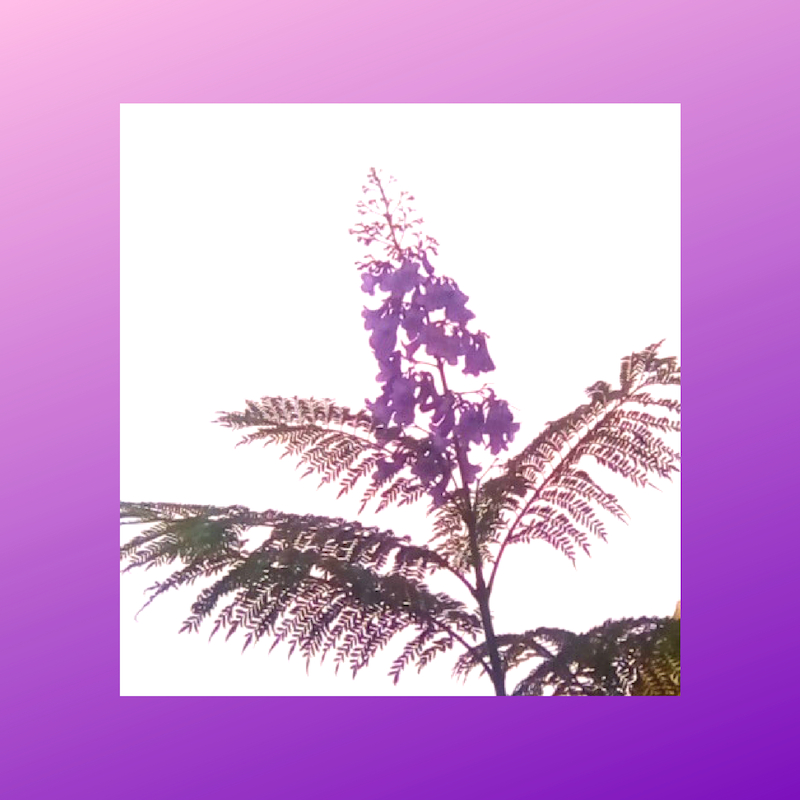
 In April, the jacaranda blooms in Mexico announcing spring’s arrival. Originating in Bolivia and Argentina, the jacaranda can be found as an ornamental plant in most of the world these days. In fact, in some areas, it has been elevated to an invasive species.
The purple flowers cluster in bunches which later are replaced by woody seed pods that resembles a crab shell that has flat seeds inside. The leaves are fern-like and resemble the mimosa which is where the jacaranda mimosifolia gets its second name.
The tree is exceptionally hardy. It with drought-resistant (a must for La Yacata), has very few pests or disease issues and even flourish in areas of extremely high pollution, like Mexico City where the jacaranda is iconic. These lovely trees can live up to 200 years.
Surprisingly, the leaves, bark, and root are the components used medicinally most often rather than the flowers. The bark has a higher antioxidant composition than the leaves and may be useful in the prevention of oxidative stress induced and neurodegenerative diseases.
Extracts from these sections of the jacaranda have a high antimicrobial effect against Bacillus cereus and Escherichia coli and Staphylococcus aureus. Extracts from the jacaranda mimosifolia have also shown to lower blood pressure.
The flowers from the jacaranda have the potential for use in the fight against cancer.
In Mexico, not only are extracts from different parts of the jacaranda used to treat wounds but in traditional medicine, the jacaranda mimosifolia is used for dysentery and diarrhea as well as throat infections.
For sore throats or sores in the mouth, an infusion made from the roots is gargled. For the treatment of venereal diseases, a root infusion is drunk for 4 days in 4-ounce dosages. To make the infusion, soak a section of the bark for 10 hours, discard the bark and dilute the essential oil with water.
Infected wounds, acne, and skin sores can be washed with a jacaranda leaf infusion. Treatment for arthritis and rheumatism uses the same infusion as a muscle rub. To make the leaf infusion, use 30 grams of leaves per liter. Wounds can also be treated with a poultice of crushed leaves placed directly on the infected area.
Parasitic infections can be treated by combining spearmint and jacaranda leaves for a medicinal tea drunk for 7 days. Another tea concoction can be made with spearmint, epazote and jacaranda bark.
Although I found several forums where gardeners claimed that the jacaranda mimosifolia was toxic, I wasn’t able to verify that information with any botanical sources. The worst issue with this plant is the mess that the falling flowers create which when wet might cause treacherous road conditions.
Now, next time you are admiring your blooming jacaranda with your neighbor, you’ll be able to talk about its medicinal value too!
In April, the jacaranda blooms in Mexico announcing spring’s arrival. Originating in Bolivia and Argentina, the jacaranda can be found as an ornamental plant in most of the world these days. In fact, in some areas, it has been elevated to an invasive species.
The purple flowers cluster in bunches which later are replaced by woody seed pods that resembles a crab shell that has flat seeds inside. The leaves are fern-like and resemble the mimosa which is where the jacaranda mimosifolia gets its second name.
The tree is exceptionally hardy. It with drought-resistant (a must for La Yacata), has very few pests or disease issues and even flourish in areas of extremely high pollution, like Mexico City where the jacaranda is iconic. These lovely trees can live up to 200 years.
Surprisingly, the leaves, bark, and root are the components used medicinally most often rather than the flowers. The bark has a higher antioxidant composition than the leaves and may be useful in the prevention of oxidative stress induced and neurodegenerative diseases.
Extracts from these sections of the jacaranda have a high antimicrobial effect against Bacillus cereus and Escherichia coli and Staphylococcus aureus. Extracts from the jacaranda mimosifolia have also shown to lower blood pressure.
The flowers from the jacaranda have the potential for use in the fight against cancer.
In Mexico, not only are extracts from different parts of the jacaranda used to treat wounds but in traditional medicine, the jacaranda mimosifolia is used for dysentery and diarrhea as well as throat infections.
For sore throats or sores in the mouth, an infusion made from the roots is gargled. For the treatment of venereal diseases, a root infusion is drunk for 4 days in 4-ounce dosages. To make the infusion, soak a section of the bark for 10 hours, discard the bark and dilute the essential oil with water.
Infected wounds, acne, and skin sores can be washed with a jacaranda leaf infusion. Treatment for arthritis and rheumatism uses the same infusion as a muscle rub. To make the leaf infusion, use 30 grams of leaves per liter. Wounds can also be treated with a poultice of crushed leaves placed directly on the infected area.
Parasitic infections can be treated by combining spearmint and jacaranda leaves for a medicinal tea drunk for 7 days. Another tea concoction can be made with spearmint, epazote and jacaranda bark.
Although I found several forums where gardeners claimed that the jacaranda mimosifolia was toxic, I wasn’t able to verify that information with any botanical sources. The worst issue with this plant is the mess that the falling flowers create which when wet might cause treacherous road conditions.
Now, next time you are admiring your blooming jacaranda with your neighbor, you’ll be able to talk about its medicinal value too!
***
Interested in natural remedies? Uncover herbal remedies from traditional Mexican sources for healing and wellness in the Exploring Traditional Herbal Remedies in Mexico series.




 Surviving Mexico