
Category Archives: Native fauna and flora

Natural Healing — Albahaca

When basil was first used in Mexico, medicinally is a little unclear. The plant ocimum basilicum is most often referred to as albahaca or alhábega in Mexico. The origin of those words implies that basil was yet another herb that came with the Spaniards since herbs with the prefix al- were Moorish derivatives. So in Mexico, you’ll find albahaca blanca (white basil), albahaca corriente (wild basil), albahaca de castilla (Castile basil), albahaca de la tierra (ground-growing basil), albahaca morada (purple basil), and albahaca arribeño varieties among others. 

However, some believe that at least one variety, Ocimum campechianum (Cinnamon basil), known as albahaca de monte (mountain basil), is native to Mexico. The fact that there are terms in Nahua (talachía) and Maya (Kha-kal-tun) for Ocimum basilicum seem to support that theory, as do some of the traditional medicinal uses. 

Albahaca is used to treat bilis, a Mexican infirmity that is believed to be caused by sudden rage (coraje). Bilis is the Spanish word for bile. The Aztecs believed that the liver was one of the three centers of energy. Strong emotions were centered in the liver, which would then become enlarged when there was an excess of emotion. It was thought that after this extreme emotional outburst, the person would show symptoms of bilis, including intestinal inflammation, gas, constipation, vomiting. 

One remedy for bilis included leaves from albahaca, tomato, estafiate (white sagebrush), yerba buena (spearmint), orégano de monte, and a piece of nopal root from the Opuntia cactus. The herbs and root are simmered for 10 minutes, then strained. One cup is drunk daily for 9 days before breakfast.

Albahaca is generally used for digestive issues, which may or may not be caused by bilis. Twenty grams of basil and 200 grams of water are drunk three times daily to stimulate digestion.  Ocimum basilicum is an effective remedy for preventing colitis, gastric ulcers, and diarrhea.

If your upset stomach or attack of coraje is caused by parasites, albahaca has you covered there too. Intestinal parasites are treated with 10 grams of albahaca and 100 grams of water drunk on an empty stomach. Another remedy for expelling parasites calls for fresh basil simmered for 15 minutes and strained. One or two drops of anise oil are added to the tea and drunk as needed. 

Caída de mollera (sunken fontanel) is another Mexican ailment that is often treated with albahaca. This condition occurs when the soft spot on a baby’s head seems to be concave. Newborn babies are not held upright in the belief that this will cause caída de mollera. 

In addition to a sunken soft spot, other symptoms include vomiting or diarrhea. A sunken fontanel is often a sign of dehydration. Traditional treatment for caída de mollera includes giving the baby weak infusions of albahaca or manzanilla (chamomile), which soothe the digestive system and provide some of the needed liquids as the baby recovers.

Isihuayo is a term used to describe the displacement of a woman’s uterus after she has given birth. Talachía (AKA albahaca) is used to help settle her organs back into place. The woman squats over a steaming infusion of Ocimum basilicum as part of after-birth cleansing rituals. As albahaca has antiseptic, antibacterial, and antidepressant properties, this may be an excellent way to get a new mother back on her feet. 

In many areas, it is believed that brujas (witches) can not tolerate the smell of basil. So you’ll sometimes find a basil plant along with an aloe vera plant (which witches reportedly fear) at the entrance of a business as a ward against evil. Although I can’t attest to the anti-bruja effectiveness of albahaca, it is a reasonably efficient insect repellant

Albahaca is also used in Mexico to help with breathing issues. One remedy calls for boiling 6 leaves in ¼ liter of water for five minutes and then allowed to cool. This is drunk morning and night without added sugar for five days. Studies have shown that the anti-inflammatory properties found in basil are indeed useful in the treatment of asthma and lung inflammation

If you have canker sores, try gargling with 40 grams of albahaca and 200 grams of water. Remember, basil is anti-bacterial, and it just might bring you some relief. If you have an earache or are experiencing ringing in the ears, ground leaves on a cotton ball placed in the ear might help.

For rheumatism, a rub can be made with one liter of alcohol and equal parts of albahaca, ruda (rue), and romero (rosemary). Use this linament on affected areas for 8 days. Basil has is an analgesic which would explain why this treatment is so effective. Migraines are also reduced in frequency and severity after basil essential oil is applied to the temples every eight hours. 

Regulation of menstruation is another condition that albahaca is called upon to remedy. One method is to drink 4 cups of 100 grams of basil per liter of water. Another technique consists of a spoonful each of dried ruda (rue) albahaca, and yerba buena (spearmint) steeped in a cup of boiled water. 

Ocimum basilicum has other known health benefits. It helps kidney function. It also aids memory and is classified as an anti-amnesic substance. It has anti-fungal properties and is effective in treating the Zika virus

There’s certainly more to this herb than a tasty culinary additive!

***

1 Comment

Filed under Health, Native fauna and flora, Natural Healing

Natural Healing — Toloache

The beginning of the rainy season in our normally dry area brings with it all sorts of flowering plants that not having grown up here I struggle to identify. Every year, directly in front of our house, a deep green plant with the most glorious white blossoms appears. And every year, some part of me screams “POISON STAY AWAY” at the most primitive level. This year, I decided to positively identify this plant to determine whether my inner plant scream was accurate. It’s not like I’m doing anything else lately.

Anyway, after trekking over to its location to get a few pictures, I leafed through my favorite herbal book Infusions of Healing by Joie Davidow and came across a picture of a similar plant with the botanical name Datura. Armed with this bit of knowledge, I took my search to google to positively identify the plant.

This plant that raises my danger hackles is either a Datura leichhardtii or Datura wrightii, which is also known as Datura meteloides, tolguacha, or Sacred Datura. The internet can get you only so far. Both are native to Mexico and fond of heat. They can grow into a bush that can get up to three feet tall. All parts of these plants are poisonous. 

In English, varieties of the Datura species are known as thornapples, jimsonweed, Devil’s trumpets, moonflower, Devil’s weed and Hell’s Bells.

In Nahuatl, plants in this species were called Toloache, Tolova xihuitl, or Tolohuaxihuitl. Datura innoxia was Toloatzin (bended head) and Datura stramonium was Tlapatli (the plant with the nodding head). In Maya, plants of this species are known as Tohkú and Mehen-x-toh-ku.

Datura ceratocaula is a swamp dwelling plant known as Torna Loca (it makes you crazy). Datura arenicola is another variety native to desert areas in Baja California. Datura discolor is found in the Sonoran desert.  Datura quercifolia is called Toloache hoja de encino (oak leaf plant) because of the shape of its leaves. 

Interestingly, Datura metel is believed to be a result of pre-Colombian cultivation in the Carribbean that somehow traveled to India in the second century C.E. This makes it the oldest plant introduction from the New World to the Old World. 

These deadly plants were used ritually and medicinally by the Aztecs. Priests ingested the plant to induce hallucinations they believed were from the gods. These altered states allowed the holy men to visit ancestors or foretell the future. Not surprisingly, ingesting the seeds and flowers causes respiratory depression, hallucinations, psychosis and arrhythmias.

Datura innoxia is still used as a visionary drug by the Mixtec and added to chicha (corn beer) or pulque (made from the maguey) to induce prophecies. Jugo de toloache is made from D. innoxia and sold as a love potion. Maya Shamans smoke chamal (cigars made from tobacco and dried D. innoxia leaves) to induce a trance.

Datura ferox is believed to be an incarnation of a deity to the Tarahumara and the Huichol. The Tarahumara add the seeds to tesgüino (corn beer). 

The Tepehuanes believe toloache is the husband of the corn woman and son-in-law of the sun. Several indigenous groups once used this plant in rites of passage ceremonies and it is sometimes still used in brujería (witchcraft). 

The Little Book of the Medicinal Herbs of the Indians records several medicinal uses. The leaves of the Tolova xihuitl variety were used to treat earaches and scrofulous tumors. Tolohua leaves crushed in egg yolk was a remedy for glandular swellings. Pain in the side was treated with Tolohua-xihuitl. Genital inflammations were treated with a heated poultice of a variety of herbs including tolohua-xihuitl. A salve was made for cracked feet from herbs, resin, the blood of a rooster, and tolohua-xihuitl. Lesions were also treated in a three part cure that ended with the application of ground up tolohua-xihuitl. Skin afflictions warranted an herbal wash that included tolohua-xihuitl. 

Bernardino de Sahagún recorded that this plant was used to treat fever. The leaves were applied topically in an ointment to alleviate arthritis and sciatica pain and ground up seeds were used for gout. Flowers placed under the pillow were used to treat insomnia or induce a trance. On the other hand, he also wrote of it being used as a poison designed to harm enemies. 

One remedy from Coahuila, calls for the toasted leaves of the Datura wrightii to be placed on sores. In other areas of Mexico, toloache tea is given to laboring mothers to help with the pain. Manteca (lard) and D. innoxia are used to treat joint pain. The Maya traditionally use the plant to treat rheumatism. Smoking the dried leaves is used to treat respiratory ailments.  

Crushed leaves give out a bad smell. The morning blooming flowers are sweetly scented and are found in white, yellow, pink and pale purple. The plant adapts to its environment, making it sometimes difficult to identify. For example, in a perfect setting with adequate sun, shade and water, a plant can reach up to three feet high. However, in a dry area, the same variety might only reach ankle height with small flowers and leaves. 

Although all Datura varieties are toxic, the level of toxicity of a given plant is dependent on the age and growing conditions. This variation makes it hard to determine ahead of time how much of the plant can be used safely for medicinal purposes. In fact, sometimes poisoning may result from eating honey that was made from Datura nectar. 

Datura innoxia has the highest antioxidant levels of the species. Datura stramonium contains alkaloids, tannins, carbohydrates and proteins. Both varieties have antibacterial properties. All parts of the plant are anti-inflammatory and many also have antifungal properties. Extracts can be used to counter cypermethrin pesticide toxicity and organophosphate exposure because it contains atropine. It has also been shown to be effective in the treatment of gastrointestinal ailments and cholera.

Even though the Datura has been used medicinally for centuries, I don’t believe myself qualified to make any sort of concoction from any part of the plant in front of my house. However, I had a marvelous time running down all these interesting bits of information. 

Do you have  Datura in your area?

***

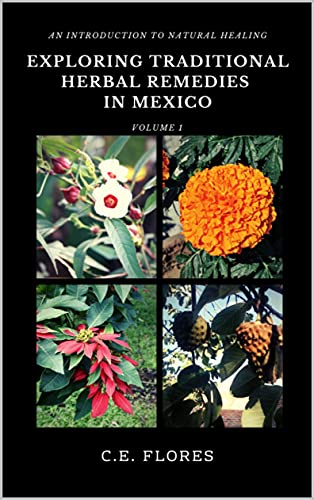
Interested in natural remedies? Uncover herbal remedies from traditional Mexican sources for healing and wellness in the Exploring Traditional Herbal Remedies in Mexico series.
Leave a comment

Filed under Native fauna and flora, Natural Healing

Natural Healing — Pitahayas

Pitahaya AKA Dragon Fruit

With things being what they are these days, we have to take our joys where we find them. This week our big highlight was our cactus produced pitahayas, one for each of us. We planted it two years ago from a cutting from the neighbor. I’m hoping that this is just the beginning of a long productive spell. 

Hylocereus polyrhizus cactus

The Hylocereus cactus that produced our pitahayas (as opposed to pitayas which come from the cactus stenocereus) is the Hylocereus polyrhizus. It produces fruit that has a pink covering with a reddish, seedy (and delicious) interior known as pitahaya roja. It’s native to Mexico but found in many tropical regions nowadays. In our region, this fruit is also called tuna tasajo. Tuna is the generic term for cactus fruit while I assume tasajo is from an indigenous source, possibly Purépecha, but I couldn’t find an English or Spanish translation for the word. Another term used generally for the fruit from the Hylocereus cactus is pitahaya orejona.

Hylocereus polyrhizus is a viney cactus. Ours has snaked its way up the wall, but I’ve also seen it locally wind itself around mesquite trees. It has a night-blooming flower, so it is dependent on night pollinators like moths or bats. The gorgeous white flower usually wilts within a day or two.  

The betalain that gives this yummy fruit its red color is also found in beets, Swiss chard, and amaranth. Betalain not only makes a natural food coloring but also is rich in antioxidants. The seeds contain linoleic acid which is a functional fatty acid.

This seedy fruit helps the digestive process through prebiotics. It has a preventative effect against breast and colon cancer. It has been shown to aid in reducing cholesterol levels. The lycopene content that gives the fruit its red color is effective in neutralizing heavy metals and toxins including MSG and herbicide ATZ. Furthermore, the antioxidant and fiber content of this fruit may be useful in the prevention and treatment of diabetes.

Traditional Mexican remedies include a diet rich in pitahaya to stimulate appetite and improve digestion. The fruit can be eaten raw, juiced, or made into ice cream or syrup.

Two or three fruits eaten an hour before breakfast for two or three days are prescribed to help with constipation. To treat intestinal parasites, the seeds of several fruits can be separated out and chewed thoroughly before swallowing.  

The flowers can be cooked and eaten like vegetables. Dried flowers can be used to make tea which is used to treat nervous disorders and insomnia. An infusion made from the flowers is also used to treat gum pain and tooth infection. 

Dysentery was treated with a section of root boiled in a covered cup over a slow fire. The concoction was allowed to cool with the top still on and sweetened with honey, then left overnight to be drunk in the morning before breakfast. This process was repeated every day for seven days for maximum results.  

Pitahaya blanca from the Hylocereus undatus cactus.

There are several other varieties of sweet pitahaya available in Mexico. Hylocereus undatus has white fruit and pink skin. This is the type most grown commercially and known as pitahaya blanca. It originated in the southern part of Mexico. Pitahaya blanca is sweeter and has a higher sugar content than either the red or yellow varieties. 

The name reina de la noche (Night Queen) refers to the bloom of this variety. H. undatus has been shown to have wound healing properties when used topically and useful in treating oxidative stress and aortic stiffness in streptozotocin-induced diabetes. The peel has antibacterial properties effective against Staphylococcus aureus, Escherichia coli, and Salmonella typhimurium among others.

Hylocereus megalanthus has a yellow fruit and white exterior which is called pitahaya amarilla. The seeds from H. megalanthus fruit have the largest amount of polyunsaturated fatty acids when compared to the other varieties. Hylocereus Purpusii produces fruit with purple skin and pulp. 

Hylocereus ocamponis is native to the states of Jalisco and Nayarit. It’s pinkish on the outside and a darker red inside.

Have you tasted pitahayas? Which color?

***

Interested in natural remedies? Uncover herbal remedies from traditional Mexican sources for healing and wellness in the Exploring Traditional Herbal Remedies in Mexico series.

3 Comments

Filed under Mexican Food and Drink, Native fauna and flora, Natural Healing, Uncategorized