Category Archives: Native fauna and flora

Natural Healing — Laurel Silvestre

 Photo credit: Ernestolapeña 

I discovered another herbal treasure nugget that brought me pure bliss the other day. I picked up a packaged tea that contained laurel, canela (Cinnamomum zeylanicum), and limón (Citrus aurantifolia) but it didn’t have any information on what it could be used for. Since I’ve already done research on limón and canela, there was nothing to it but take a look at laurel. 

I started off wrong-footed in my research. I mistakenly assumed that laurel was Laurus nobilis, bay laurel, and had come with the Spanish conquerors to Mexico. Nope. While the term “laurel” did come from Europe, the leaves most often used in culinary delights and remedies are from a native Mexican tree Litsea glaucescens. Those Spanish priests that were interested in herbology superimposed the name “laurel” on this plant because it resembled the laurel that they were familiar with. 

I wasn’t done with my discovery quite yet. I had noticed previously that the laurel I purchased from different sources tended to be just a little bit different from place to place. That made more sense when I found out there were seven, yes 7, different varieties of Litsea glaucescens in Mexico. 

My next trail of investigation was on discovering the proper name for “laurel.” Bay laurel (Laurus nobilis) is properly known as lauro or laurel de castilla. Litsea glaucescens is Mexican Bay or False Laurel in English. In Nahuatl, it’s ecapatli or expatli de Chietla. It was used in remedies for wounds on the feet, as a digestive aid, to treat respiratory issues, and nervous disorders. Loosely translated, the term ecapatli means “wind or air medicine.”  Laurel continues to be used as a medicine and in religious festivals in Mexico particularly in the Doming de Ramos (Palm Sunday) ceremonies. Unfortunately, over-collection has pushed the species to the endangered classification. 

Different native language speakers refer to to the Mexican bay with different names. Among the Raramuri, it is known as aureli. Other groups use the names canelillo, sufricalla or sufracago, izitzuch in Tseltal, laurelillo, laurel chico, laurel de la sierra or laurel silvestre. Yet other names include cu-ju-e or lipa-cujue-e in Chontal and arrayán. In Mixteco, this tree is known as wixi tika´a,  tu Káa, or yucú ñesachoetiaá and in Mazahua, sanshiño.

It’s often used to treat cold and flu symptoms including congestion, cough, and sore throat. It’s also a digestive aid and prescribed for irregular periods. As a food flavoring, it is often combined with tomillo (Thymus vulgaris), mejorana (Origanum majorana), and oregano. The leaves are almost always used dried. Fresh leaves tend to be somewhat bitter. When burnt, it makes an aromatic smoke. It’s used in several rituals for postpartum cleansing along with other herbs. Manteca de laurel, the essential oil, is harvested by simmering crushed leaves and fruit for 30 minutes. Allow it to cool and skim the oil off the top. It is used as a rub for sore muscles or to relieve rheumatism.  

For digestive issues, laurel silvestre leaves are brewed for a tea in Chiapas and added to a licor de caña in Oaxaca. Laurel (Litsea glaucescens) has antidepressant properties supporting its use for nervous disorders. It has proven antioxidant, antiproliferative, and antimicrobial activities. It also has antihypertensive potential.

***

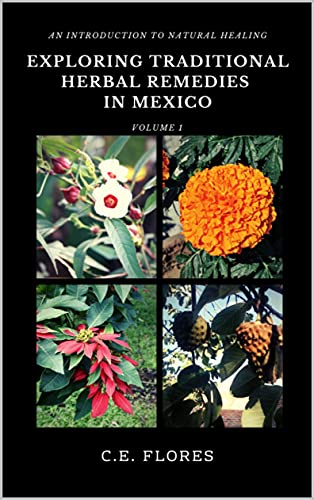
Interested in discovering a path to wellness through traditional medicine? Discover Mexican herbalism with common remedies used today in the Exploring Traditional Herbal Remedies in Mexico series.

Leave a comment

Filed under Health, Native fauna and flora, Natural Healing

Natural Healing — Muicle

Photo credit: Jim Evans

Muicle (Justicia spicigera) has a whole host of names throughout Mexico. Mexican honeysuckle, as it is known in English, is also called añil de piedra, hierba azul, hierba púrpura, trompetilla, and muitle. In the indigenous languages and regions in Mexico, it is called me tzi ña in Oaxaca, mouait in Tepehua, muu in Tenek, cruz k’aax in Yucatán, limanin in Totonaco, xoicpoxihuitl in Nahuatl, and ych-kaan in Maya.

This native Mexican bush grows to about 3 feet high and attracts hummingbirds and other pollinators with its trumpet-like orange or red flowers. I was first introduced to this plant by my sister-in-law who boiled a batch of the leaves for my husband to drink as a detoxification concoction. The juice is purple and has long been used to make a blue dye. Interestingly, this dye has been used for centuries for ceremonial tortillas. More recently, scientists have proposed its use to increase the nutritional value and reduce the starchiness of commercially produced tortillas. 

In addition to detoxification, muicle is prescribed for diarrhea, menstrual cramps or delayed menstruation, cancer, diabetes, as a postpartum cleansing, susto (anxiety or nervous disorders), cough, and as a disinfectant. Most remedies consist of boiling the branches, leaves, and flowers. For a headache accompanied by fever, the leaves are crushed and made into a poultice placed on the forehead. For cough, the crushed leaves are steeped in water overnight and the resulting infusion is drunk instead of water.

For skin treatments, crushed leaves are boiled with leaves from the capulín (Prunus salicifolia), aguacate (Persea americana), guayaba (Psidium guajava) and ajo (garlic) cloves.

Studies show that muicle is analgesic, antibacterial, antitumor, antimicrobial, antiparasitic, and antifungal. It also has shown promise in controlling epilepsy. It reduces the sensation of pain without a sedation effect. It has glucose lowering effects supporting its use as a diabetic treatment. Muicle is also as effective as valium when it comes to anxiety reduction, reduction of seizures, restless leg syndrome, and alcohol/narcotics withdrawal. It has been shown to have immunomodulatory properties. It’s chemopreventative and inhibits edema. Although muicle is often prescribed for hypertension in Mexico, there hasn’t been any scientific support for this use.

***

Interested in natural remedies? Uncover herbal remedies from traditional Mexican sources for healing and wellness in the Exploring Traditional Herbal Remedies in Mexico series.
Leave a comment

Filed under Health, Native fauna and flora, Natural Healing

The Mexican Apothecary in Hardback!!!

Lest you think I was laying about during my work hiatus in the spring, it’s finally time to announce that The Mexican Apothecary: Traditional Cold and Flu Herbal Remedies got a whole content makeover and is now available in hardback too! Claudia Guzes’ drawings are featured throughout the book, adding so much beauty that you’ll be hard-pressed to resist picking up a copy! 

ebook
paperback
hardback

For those that missed the original launch in November, in The Mexican Apothecary: Traditional Cold and Flu Herbal Remedies you’ll discover information about more than 140 cold and flu remedies commonly used in Mexico including traditional treatments for:

  • 32 cough treatments
  • 15 remedies for stuffy noses and congestion
  • 15 herbal headache remedies
  • 11 blends for sore eyes and earaches
  • 32 nausea and diarrhea treatments
  • 11 sore throat and cold sores herbal applications
  • 17 cold buster blends
  • 11 immune-strengthening concoctions
  • And a guide for an herbal cleansing of the sickroom

The Mexican Apothecary: Traditional Cold and Flu Herbal Remedies contains 67 plant studies with well-researched scientific support for or against each herb’s specific use as traditional alternative medicine, some dating prior to the Spanish conquest.

To celebrate the relaunch, you can get the ebook version for 99 cents for the next few days! That’s right! From August 8 – 15, The Mexican Apothecary: Traditional Cold and Flu Herbal Remedies is reduced in price. Using the information in this book, you’ll have time to stock up your winter wellness cabinet before cold and flu season.

So pick up your copy and learn more about science-based natural remedies found in traditional Mexican herbalism.

Leave a comment

Filed under Health, Native fauna and flora, Natural Healing