Category Archives: Economics

Failing at your own business–Freelance Test Writing

So the second online writing employment that I managed to snag was nothing like the disaster of Freelance Writing Essays. This job although based in China, just like the Essay Writing job, was run by an Irishman and I think that made all the difference. My assignment was to write articles for a TOEFL preparation course. Again, since I have quite a bit of experience working with English as a Second Language learners, I felt fully confident that I could handle this job.

The first requirement was to send a list of possible article topics for approval. I remembered the admonition, “write what you know”, so choose Mexican-related topics. My list was:

Monarch Butterfly Migration

Women in the Mexican Revolution

Environmental law in Mexico

NAFTA

Mesoamerican Barrier Reef System

Volcanism of Mexico

Merida Initiative

Yo Soy 132 social movement

The Irishman, my primary contact, approved the first 6 topics and asked for more information on the last two. I explained a little further but admitted that perhaps the Merida Initiative and Yo Soy 132 were too recent of topics to be included in a  collection of articles. And sure enough, The Irishman replied with “I’d be fascinated to read about contemporary Mexico; sadly we can’t allow contemporary social issues at all. For history and related topics, anything that might be controversial or too anachronistic, I’ve decided the most recent that we can go is the fifties, maybe sixties. The historical material tends to focus on subjects well out of the range of the majority of living persons, both to provide a challenge from unfamiliar information and to avoid controversy.”

The monarch butterfly migrates annually to central Mexico.

The monarch butterfly migrates annually to central Mexico.

Well, that’s ok, I had plenty to work with here. I wrote up an article on the Monarch Butterfly Migration and sent it out. The Irishman made some minor revisions and explained how the article should be formatted and named. I revised a little more and sent it back. On Tuesday morning, $30 was deposited into my Paypal account. I was a happy camper and immediately started in on the second topic.
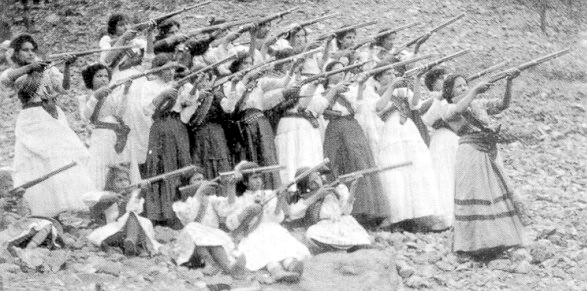
Women were cooks, laundresses, nurses, soldiers, spies, and smugglers during the Mexican Revolution.

Women were cooks, laundresses, nurses, soldiers, spies, and smugglers during the Mexican Revolution.

I’ve done research before on Women in the Mexican Revolution (See Stories of the Revolution–Marcelina) and so was gung-ho about writing this one. I tried to be a little too creative and set it up as if it were an excerpt from a longer text. I also tried to rush the article and forgot to include my sources at the end. So the Irishman, out of concern that I had plagiarized the article, asked for some revisions and clarifications. I wrote back assuring him that the article was my own and that I had purposely written it in that manner and apologized for leaving off the sources. I made some adjustments, rewrote the beginning and ending paragraphs, added my sources and sent it again. On Tuesday morning, $30 was deposited into my Paypal account.
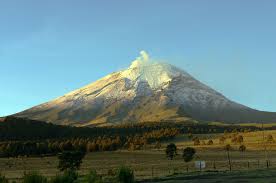
popo

I skipped down the topics list and spent the next week working on Volcanoes in Mexico. I sent the Irishman an email mid-week. “I have been working on the volcano topic and was wondering if I should include images, if not in the text then for the questions. The volcano topic would lend itself nicely to that sort of question.” To which he replied “Your suggestion is well meant but it makes me a bit worried; before you go on with this writing work you need to be aware that we are trying to emulate the tests that we’re targeting with as much authenticity as possible. We’re trying to get everyone to write in accordance with really precise criteria and alas, things that I might like or you might wish to include have to be discarded if they don’t resemble the tests. It’s not always an interesting process… though one does get to research and read about a nice and wide eclectic set of topics. So, no, no images.”

Okie dokie. No images. I wrote it up and sent it along. On Tuesday morning, $30 was deposited into my Paypal account. No revisions were necessary. The Irishman even sent me a rhyme that he remembered when he acted in the university as a mouth-warming exercise “Popocatepetl, Copper Plated Kettle.” I believe he was pleased with the article.
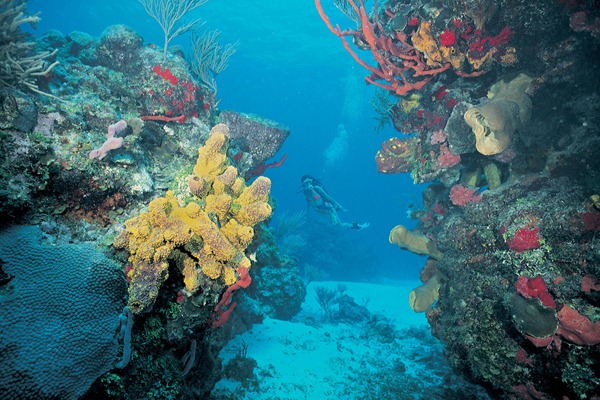
The reef system is home to more than 65 species of stony coral, 350 species of mollusk and more than 500 species of fish.

The reef system is home to more than 65 species of stony coral, 350 species of mollusk and more than 500 species of fish.

I decided to finish off the natural topics before I moved on to politics and researched and wrote an article on the Mesoamerican Barrier Reef System. While doing the research on this topic, I ran into article after article about the preservation problems in Mexico. I bookmarked these articles for future use in Environmental Law in Mexico. I sent my article in. On Tuesday morning, $30 was deposited into my Paypal account.
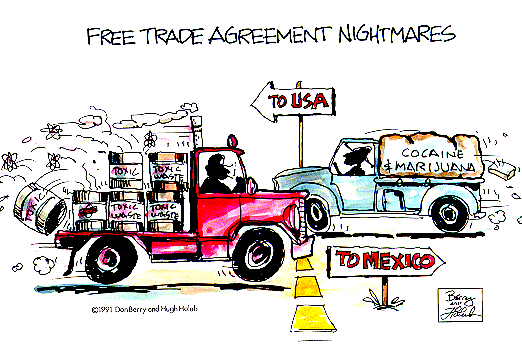
The North American Free Trade Agreement has proven to be detrimental to Mexico.

The North American Free Trade Agreement has proven to be detrimental to Mexico.

I set to work on NAFTA. The Irishman seemed especially keen that I focus this one on the trade in South and Central America with North America with “plenty of detail on development over time and effect on Central American society.” Well, this one was a doozy. I had some vague ideas, mostly from seeing how the movement of factory jobs from the U.S. to Mexico affected U.S. small towns but hadn’t ever really examined the effect of those factories on Mexico. Again, I discovered issues with contamination and other environmental catastrophes that I bookmarked for the Environmental Law in Mexico article. This article took me more than a week to complete but complete it I did. I thought perhaps I was dancing on thin ice with the inclusion of the Zapatista movement since that might be considered “anachronistic” but on Tuesday morning, $30 was deposited into my Paypal account.

Activists of the environmental organization Greenpeace paddle their KAYAKS in front of Juanacatlan Falls in Mexico, one of the most polluted bodies of water in the country.

Activists of the environmental organization Greenpeace paddle their KAYAKS in front of Juanacatlan Falls in Mexico, one of the most polluted bodies of water in the country.

By far, the most complex piece was the article on Environmental Law in Mexico. I found, much to my surprise, that Mexico does indeed have excellent laws specifically geared for environmental preservation. The problem is the enforcement of those laws. Let me tell you, I was way over my head with this one. I wrote and rewrote and wrote again. I thought that perhaps again I was on the line about the time frame since I included situations that continued up to the 1990s in the article, but on Tuesday morning, $30 was deposited into my Paypal account.

However, now I had exhausted my topics list. So I sent a new one. And the Irishman responded “Amazing work. I’m totally humbled by how much-condensed reading you put into that last one. It’s clear that you want to pursue things related to Mexico. The interest and dedication that you have is a credit to us. That said, the highly contemporary nature of the trade agreement pieces puts them just a little bit at odds with the precedent given by the available body of previous pieces. Therefore, I’d love it if you could direct your energy at exploring older portions of the country’s history; I hope that’s okay. Therefore, of the topics below I think the architecture and the handicrafts might be the best direction to take, assuming you can bring the same expertise as you did with these latter economic/political ones.”

pyramid

The Pyramid of the Sun is the largest building in Teotihuacan and one of the largest in Mesoamerica.

Well, I guess those last two were a little too recent after all, but he liked them. I assured him that I would be more than happy to work on more historical pieces. I decided to go as far back as I could with Mexican history and researched Mayan hieroglyphics. On Tuesday morning, $30 was deposited into my Paypal account. Then I wrote about Mesoamerican Architecture, focusing on the ancient pyramids of Mexico. And on Tuesday morning, $30 was deposited into my Paypal account. And my final article was about The Florentine Codex written in the 16th century. On Tuesday morning, $30 was deposited into my Paypal account.

Sadly, the company that the Irishman worked for decided it had received enough submissions and my job ended the first week of February. It was fun while it lasted, though!

*************************************************************

disclosure

3 Comments

Filed under Economics, Employment

Shopping El Buen Fin–Mexican Black Friday

El Buen Fin is the third week in November in México.

El Buen Fin is the third week in November in México.

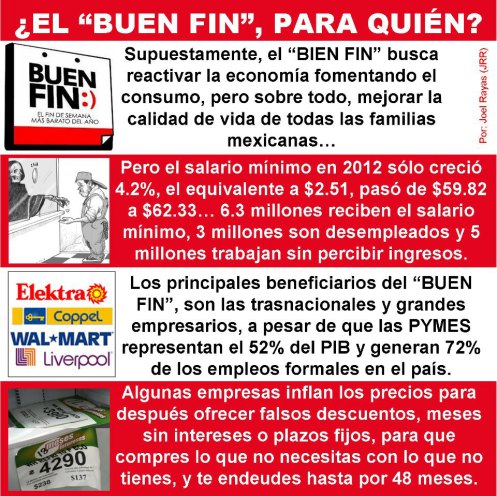
With commercial conglomerates like Wal-mart invading Mexican soil, it was only a matter of time until Black Friday arrived which it did with the invention of El Buen Fin in 2011. This was started by merchants in an attempt to stimulate the Mexican economy, but the true benefactors are the merchants themselves.

Banks and loan agencies offer advances on the aguinaldo (end of year bonus) to shoppers during the marketing period.

Banks and loan agencies offer advances on the aguinaldo (end of year bonus) to shoppers during the marketing period.

The advertising propaganda was intense last year. I even started to feel anxious as the big weekend approached. And the fact that it fell on a payday didn’t help that hole my money was burning in my pocket.

Well, I reasoned, we did need a few things. So with that weak rationale, we headed out to the commercial shopping center complex in Uriangato. It’s the first shopping center with a movie theater in the area and was built only about 2 years ago. Not that our income allows for much movie going, but it’s nice to know that it’s there.

The first stop was to look for a cell phone for my husband. His last phone died several months ago when it fell out of his pocket into the ajibe (dry well). We went to Coppel, but couldn’t get close enough to the display cases to see if there was anything he liked. He’s pretty particular. It must be a folding phone so he can carry it in his pocket when he is out with the goats and it won’t turn on and discharge because you know charging is a bit of a challenge without electricity. Then it needed to have buttons, not a touch screen and large buttons at that. His hands are coarse and unwieldy from daily manual labor. But like I said, we couldn’t get close enough for a good look, so we went to the TelCel store. We were able to see most of the phones, however, there were only two options, cheapy phones and touch-screen options.

We wandered up the corridor to the Iusacell store, but there were only 3 models. Then we headed to Soriana, but again, there were so many nalgas (backsides) blocking the glass display cases that we gave up. Instead, we headed to the bedding section. We needed some sheets as our last fitted sheet tore down the middle some week ago and we were sleeping on the bare mattress. $350 pesos or 7 English classes for those! Then we headed to the choni (underwear) section since everybody needed chonis (underwear) and socks. $150 for a pack of 4. Yikes! We picked up a stick of butter and a bag of sugar and headed out the door. In all, with the Buen Fin sales, we saved a whopping 50 centavos on the stick of butter.

Retailers sometimes raise prices right before the shopping weekend and then lower them to create an artificial savings for consumers.

Retailers sometimes raise prices right before the shopping weekend and then lower them to create artificial savings for consumers.

So, when I got home, I checked those enticing ads out again. Those deals were really too good to be true. The phones that were on sale did not include the calling plan, which tripled the original non-discounted price. The motos on sale were only available through payment plans, with hidden interest rates that negated any savings you might have by buying this weekend. Other big ticket items advertised such as computers, entertainment centers, and bedroom suites had the same credit promotion. Thus, the fact that we used cash insured no great “discount” for us. I was disappointed but wiser as a result and next year will swear off any store that advertises a Buen Fin discount.

Buying on credit is never a good idea.

Buying on credit is never a good idea.

disclosure

2 Comments

Filed under Economics, Employment

Forcibly Green–Obligatory Organic

Welcome to the April edition of the Simply Living Blog CarnivalGoing Green cohosted by Mandy at Living Peacefully with Children, Laura at Authentic Parenting, Jennifer at True Confessions of a Real Mommy, and Joella at Fine and Fair. This month, we write about going green and environmentally friendly living. Please check out the links to posts by our other participants at the end of this post.

***

rastrojo

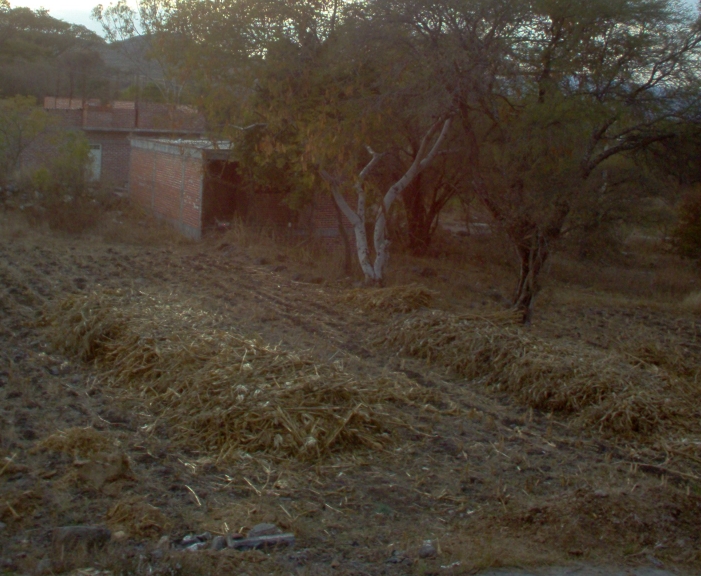
After the corn is harvested, it is laid out to dry completely then milled to make feed for our animals.

It’s easy in a modern world, to discount the effect one person has on the environment. The trash truck comes and hauls away the trash. The sewer flushes away excrement. The wind blows away car exhaust. The immediate surroundings remain clean. Now suppose all those conveniences are taken away. There is no trash truck, no sewer, no filter to clean the water, no running water for that matter. Would a person reexamine how he or she lives and make an effort to be more mindful in green living? Well, it depends on the person I guess.

Once upon a time, in a previous life, I thought I was more or less living “green.” I would go to the grocery store, pick up organic produce, buy organic canned and packaged food, use a filter for my water tap, use organic clothing when it was on sale, separate recycling and drop it off at the local bins, piddle with plants, use cloth bags and pat myself on the back for being concerned with the environment. Silly girl!

Now I live in an alternative life, where there is no choice but to be green.

When I go to the fruteria (fruit and vegetable store), I have only one option–local in-season produce or nothing at all. While not necessarily by choice, I am reducing greenhouse gasses since the food travels a relatively short distance to reach the market. I also do not contribute to pollution and waste caused by packaging and processing. All the fruits and vegetables are in their natural, ripened state, ready for purchase by the kilo, not can. I use a canvas bag for shopping whenever possible, not because it reduces the plastic bag waste residue (although I’m all for that) but because I am charged 50 centavos more for the bag, and these days every peso counts.

Corn and beans are a staple in the diet here, both for animals and people. Corn tortillas are a part of every meal. The Mexican government controls the corn prices. Of course, that means that inflation is unchecked. Since we arrived, the price of a kilo of tortillas has gone from 6 pesos to 13. Bodega Aurrera (a branch of Wal-mart) is mysteriously allowed to sell tortillas at a price below the federal mandate and offers a kilo for 8 to 10 pesos, but their tortillas have the consistency of cardboard.

With the prices of seed corn rising every season, it is now cheaper for the tortillerias (tortilla makers) to buy corn flour imported from the U.S. where Monsanto rules. As of 2005, Monsanto has garnered permission to sell their GMO seeds in México, overriding farmers’ protests. It really is only a matter of time before economics destroy the legacy of corn in the land where it was first cultivated.

farming

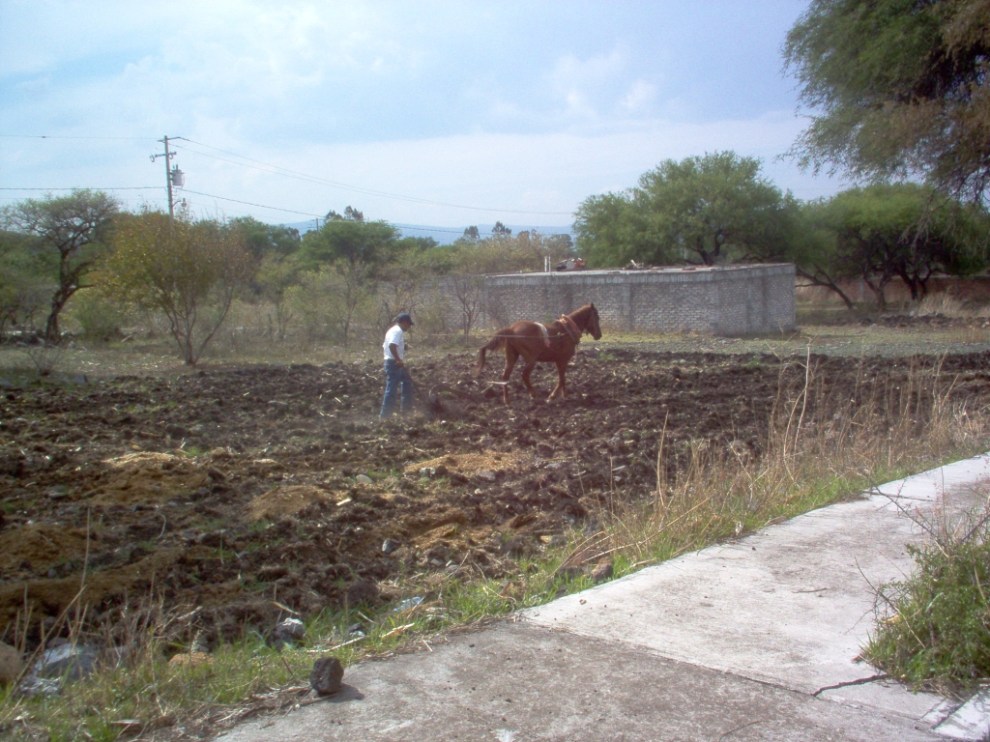
My husband with Red preparing the field for planting.

So in order to maintain ourselves, we’ve had to expand our own cultivation. The growing season for this part of México is from June until November when the rainy season starts. So in June, we plant corn, beans, and squash on lotes prestados (borrowed lots) with a sort of sharecropping deal in the traditional way. The beans grow up and are supported by the corn stalks, and the squash plants fill in the ground between the stalks. We grow organically because every bit of the plant is used as food for ourselves (squash flower tacos are super awesome) or our animals (rastrojo is ground dried corn stalk and feeds our goats and horses through the dry season).

A liter of milk now costs 11 pesos, and a kilo of eggs (about 8 or 9 eggs) costs 30 pesos. There was a recent outbreak of avian flu among the commercially raised Mexican chicken population. Beef and pork products are “eat at your own risk.”  It’s only common sense that for our own health and pocketbook, we look for alternatives. We drink raw organic goat’s milk and are provided with organic eggs and meat from our own mini-ranch.

The Mexican government has a full-scale advertising campaign aimed at the conservation of water. Mexicans are advised to turn off the shower while they soap up. Bathtubs are a luxury nearly unheard of. Washing cars or watering lawns are simply not done. Millions of Mexicans still live without running water. Our own community of La Yacata is one of those areas. So water conservation is not merely of a matter of turning off the faucet while brushing your teeth. We take it seriously.

backyard

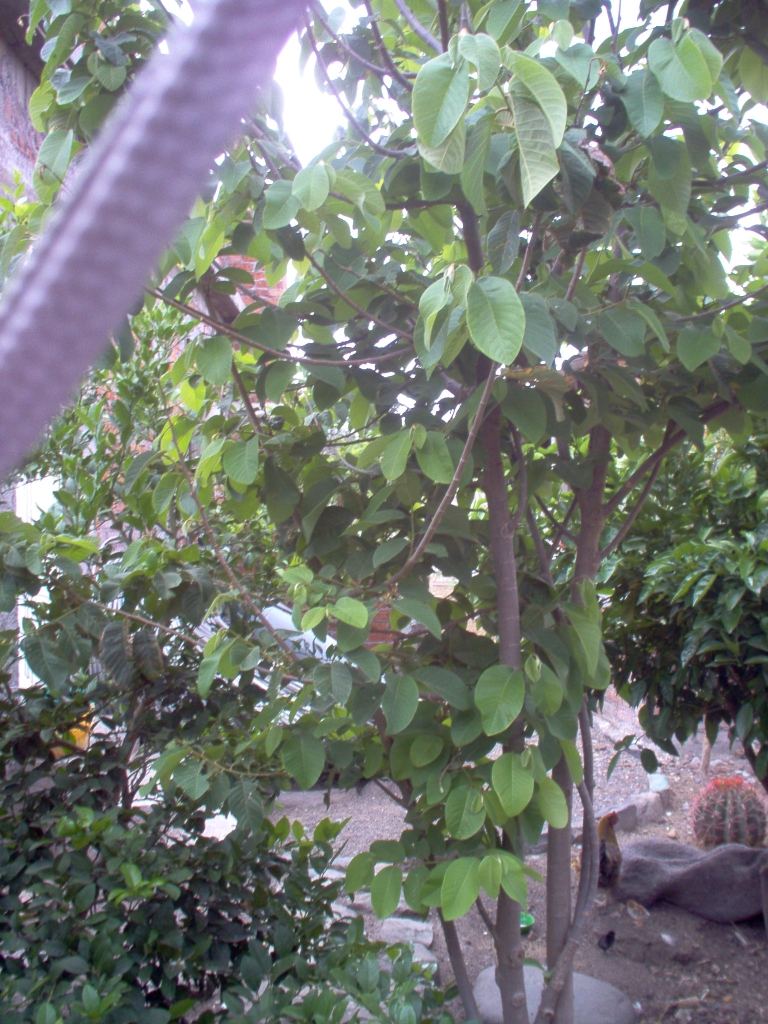
Our cherimoya tree in the back yard is watered by a pipe that brings wash water from the second floor to the tree roots.

El agua es bendito. (Water is Holy). We reuse nearly all of our gray water to water the fruit trees and plants in the backyard. We have orange, lime, lemon, cherimoya, mora (blackberry), peach, and granada (pomegranate), chayote and guayaba. Our animals do not have standing troughs but are given portioned servings of water. We do these things, not necessarily because they are good for the planet, although that is a great reason, but because the cost and effort of replenishing our water supply are extreme.

garafon

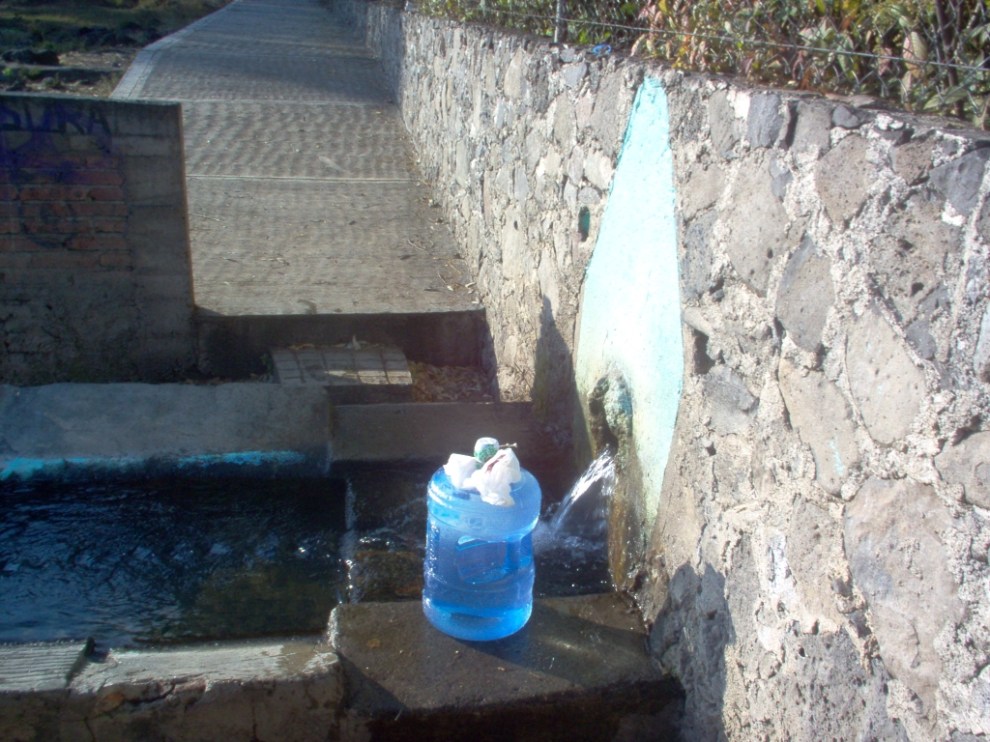
Filling our drinking water container from the natural springs in a nearby community.

At the same time, the government is encouraging water conservation, it reiterates that the water from the tap is not drinkable and everyone has to use bottled watered (sold by the Pepsi and Coke companies). A garafon (container) of water costs between 17 and 21 pesos. Sometimes, that’s out of our budget. So we go to presas (springs) in nearby communities and fill our garafon (container) from there. Until you have survived your first bout of churro (diarrhea) from drinking dirty water, you will never understand the importance of keeping the water supply clean.

How clean is your water? 

bottle recycle

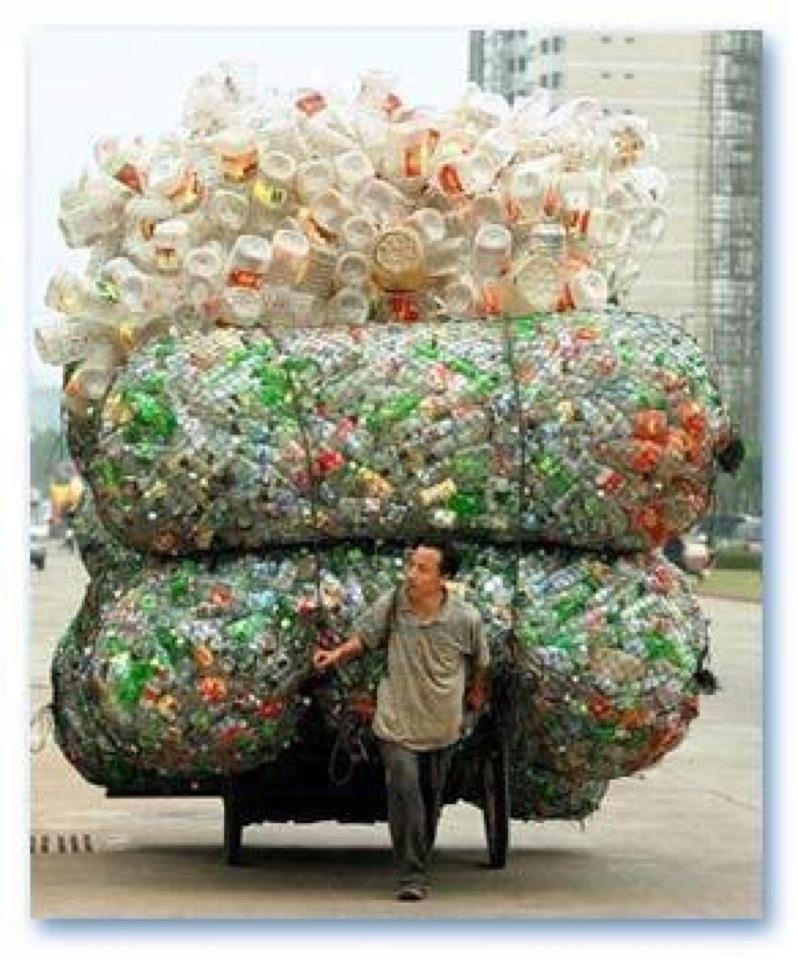
Plastic can be sold to recycling centers here in Mexico however it pays so little per kilo that you have to gather a lot to make it worthwhile.

The trash tractor does not come to La Yacata for daily pickup. So what do we do with the garbage? Organic trash is given to our animals, no waste there. Anything metal can be resold for a few pesos as fierro viejo (old metal) to places that reuse and resell it. We have even gone hunting for scrap metal to resell when times are tough. Plastic trash is a problem, though. Although there are now places that will buy plastic to recycle, it pays so very little that only the most desperate junta botellas (collect bottles). We try not buy plastic in the first place, to reuse bottles when we can, or we are forced to burn them. Yes, this causes air pollution, but we haven’t come up with a viable solution to this yet.

Our neighbor, who has only lived there about a year, has contaminated his immediate environment (and ours) with his plastic trash. This is a problem for us, for it is always possible that one of our curious goats may ingest a plastic bag which will kill it. The trash heaps also attract coyotes and wild dogs and rats. I guess he’s just not too concerned with green living.

side car

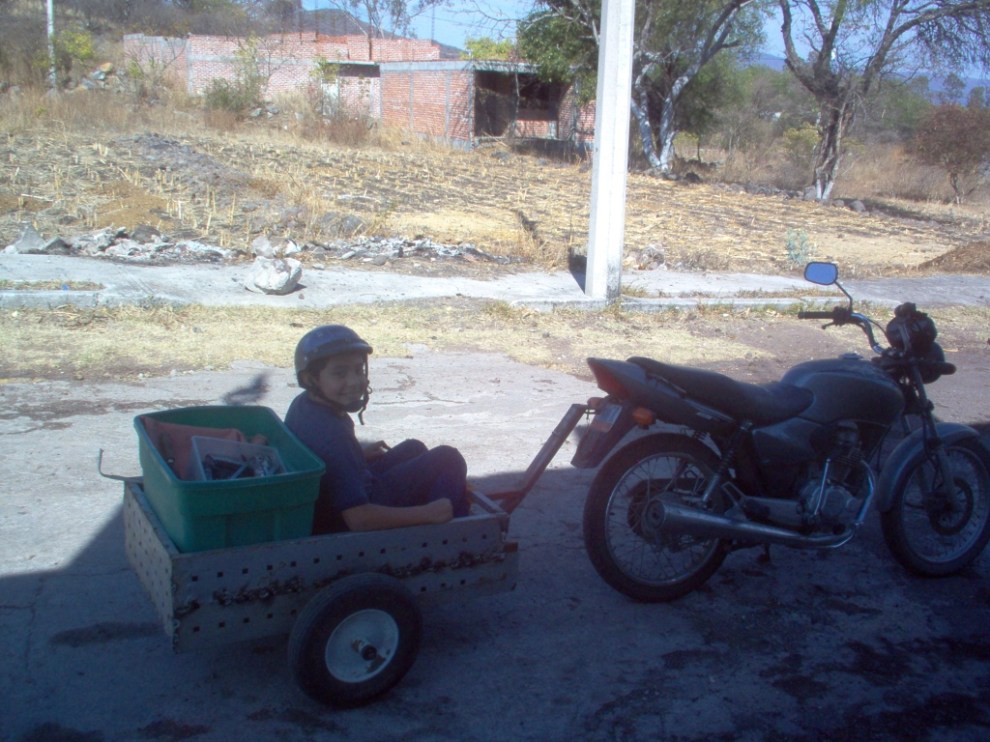
Moto-cart. Just the thing for transporting!

The Mexican government also regulates the prices for petroleum and gas prices have steadily been increasing. We have a truck, however, more often than not, we do not have enough pesos on hand to fill the tank, so it just sits there. Our everyday transportation consists of motos (motorcycles), my husband and I each have one. Using a moto cuts down on emissions, which is great, and provides other benefits like more money in the pocket and easy parking. I love my moto.

It seems to me that in general, people do not get excited until a dump is opened in their neighborhood or a factory that contaminates the water supply is built down the road. Then the “not in my backyard” motto unites the community into looking for different options with active protests. I admit to having been one of those people in my previous life. I did the least bothersome and let someone else worry about the rest. However, it’s been made clear to me that my “backyard” is larger than I imagined. In La Yacata, living green is an economic necessity. The price for contaminating the environment is too steep for us to pay. How about you?

***************************************

disclosure
**********************************************************
Thank you for visiting the Simply Living Blog Carnival cohosted by Mandy at Living Peacefully with Children, Laura at Authentic Parenting, Jennifer at True Confessions of a Real Mommy, and Joella at Fine and Fair. Read about how others are incorporating eco-friendly living solutions into their everyday lives. We hope you will join us next month, as the Simply Living Blog Carnival focuses on Daily Lives!

  • Green Renovating: A Lot, A Little, Not So Much Laura at Authentic Parenting ponders about the many things that have an impact on eco-friendly renovating
  • Growing Native in My Flower Beds – Destany at They Are All of Me takes the guilt out of her flower habit by switching from high maintenance flowers to native plants which not only lessens her gardening load, but also benefits the local wild life.
  • Baby Steps – Kellie at Our Mindful Life shares how her family became more sustainable, one step at a time.
  • A Greener Holiday – Sara from Family Organic discusses the overwhelming amount of “stuff” that comes with every holiday and talks about how to simplify instead.
  • Forcibly Green–Obligatory Organic – Survivor at Surviving Mexico talks about her family’s evolution from passive to active green and sustainable living.
  • Giving It Away – Juliet Kemp of Twisting Vines writes about the role of Freecycle, the giant karmic lending library, in her simple and green living.
  • Simply Sustainable – Mandy at Living Peacefully with Children discusses her family’s attempts to live in harmony with the earth by living simply and more sustainably.
  • How Does Your Yarden Grow – Alisha at Cinnamon&Sassafras writes about an ongoing permaculture project, converting her grass lawn into a mower-free paradise.
  • Green? – Is it about ticking the boxes? sustainablemum shares her thoughts on what being green means in her life.
  • Using Cloth Products To Reduce Household Waste – Angela from Earth Mama’s World shares how her family replaced many disposable household products with cloth to reduce their household waste.
  • Going Green in Baby Steps – Joella of Fine and Fair shares some small, easy steps to gradually reduce your environmental impact.
  • Are You Ready To Play Outside?! – Alex from AN Portraits writes about gardening, and playing in the dirt, and how it’s O.K. to get dirty, play in the dirt, play with worms, for both adults and kids.
  • Lavender and Tea Tree Oil Laundry Booster – At Natural Parents Network, Megan from The Boho Mama shares an all-natural way to freshen laundry.

21 Comments

Filed under Animal Husbandry, Carnival posts, Economics, Homesteading, Water issues