Category Archives: Death and all its trappings

Tio Felipe

tiofelipe

So two weeks ago, Tio Felipe died.  He just missed reaching a century.  He went peacefully in his sleep.

I’d like to take a few minutes to talk about his life. He married Mama Sofia shortly after her husband Porfirio died from a burro kick. He too was a recent widower with 10 children at home. So she took her youngest daughter, just two years old, and moved in to care for his children. She left her 3 teenagers in the house that her husband had left her at his death. Her oldest daughter married soon after, although that marriage didn’t stick. Her oldest son also married and in short order, started the Flores clan of which I now belong. Her second son went off and nobody is quite sure where is lives at the moment.

However this post isn’t about Mama Sofia, but Tio Felipe. From all accounts, he was a bit of a scoundrel. Of course, I didn’t meet him until he was in his late 80s and his tomcatting ways were long gone, but there was still a bit of a rascal in him.

Although he was married to Mama Sofia more than 45 years, the Flores clan always differentiated their relationship with him. He was never Papa Felipe (grandpa) but Tio Felipe (Uncle) and when asked by someone outside the family if he was their grandfather, it was always vehemently denied with a look of fuchila (bad odor) on their faces.

There was reason for their disdain.  On several occasions when we went to visit, we found Mama Sofia in tears. Once it was over some of her flowers Tio Felipe had cut in spite after an argument. Other times she wouldn’t tell us why she was crying. There was a history of abuse. Mama Sofia’s children said that he would often beat her about the head and they blamed her loss of hearing on those beatings. Once he pushed her down the front steps which broke her nose and cracked her skull. When her children asked her to leave and live with them, she replied that Felipe was her cross to bear. For what sin, I never asked. Abandoning her children, marrying again, some other sin? Despite it all, she managed to outlive him, although I don’t expect it will be by much.

This past year Tio Felipe’s cataracts got the best of him. He stayed closer to home for the most part. We stopped to visit last Dia de Los Muertos to find out that he had asked someone to take him to the cemetery in Purandiro to visit his parents’ graves. I wondered who would lay flowers at his grave and asked about his children. In total, he had had 13 children with his first wife, not all of whom reached adulthood. He mentioned that one of his sons was currently in Cerano getting divorced, and there might be a daughter or two nearby, but as for the other 6 that he still believed to be alive, he didn’t know where they might be. They never visited.

Even though Mama Sofia and Felipe were married more than 45 years, he gave the title of the little bitty house and land they lived on to his son. Felipe wasn’t even cold in his grave, the novena had yet to finish, when that son came and padlocked the door, ousting Mama Sofia from her home. She stayed at a distant relative’s home until the novena ended and went with her daughter to Zamora to live out the few months or years remaining.

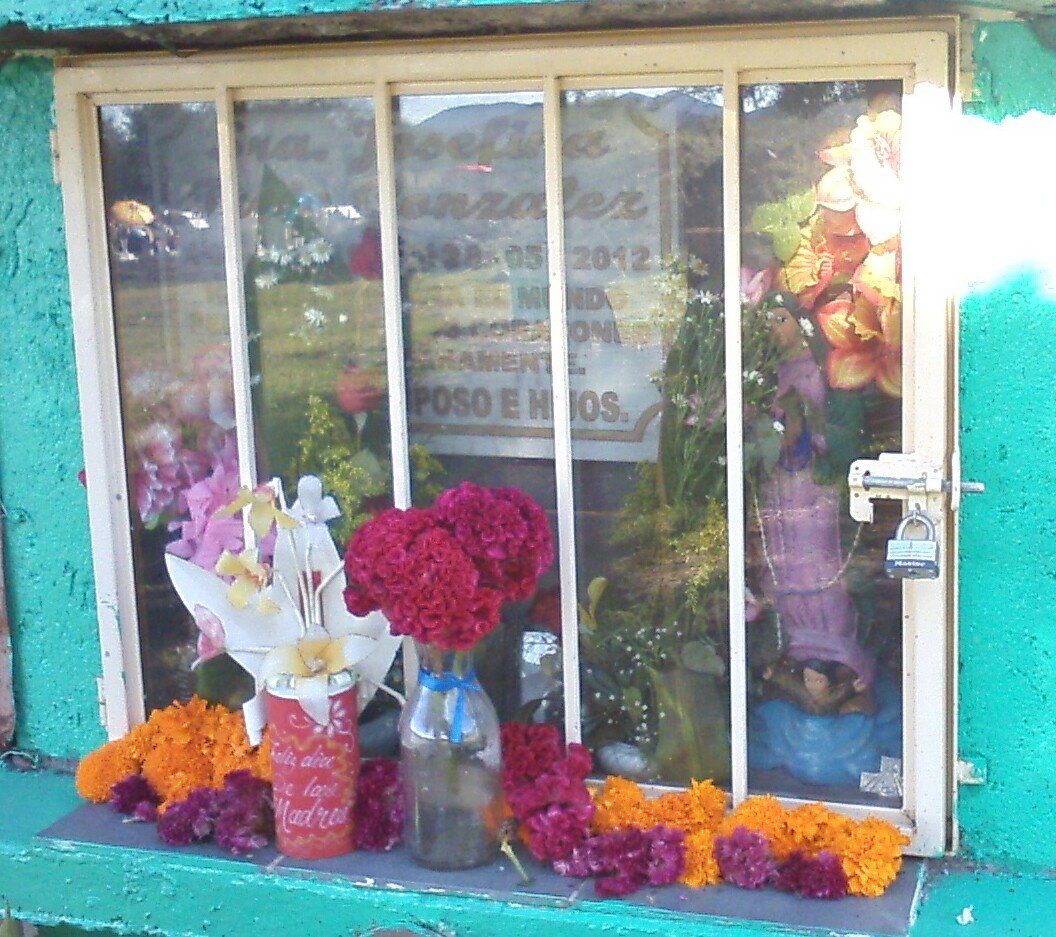
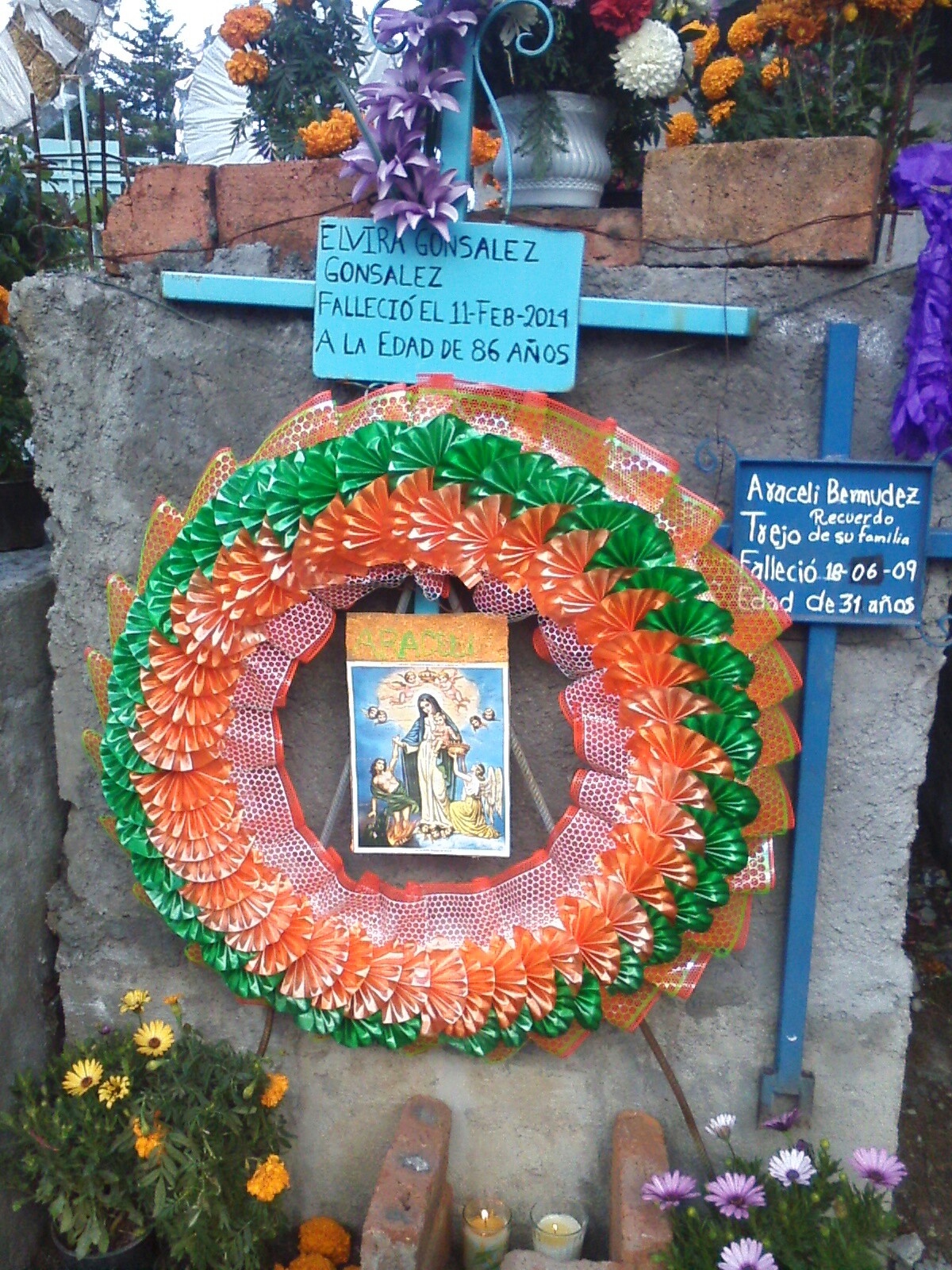
And so, we add yet another tomb to visit on El Dia de los Muertos. (See Visible Mourning, El Dia de Los Muertos)

cam05099

**********************

disclosure

4 Comments

Filed under Death and all its trappings

Ni Una Mas (Not One More) Femicide in Mexico

I’ve written how mothers are venerated here in Mexico. I’ve written about how the Virgen Maria de Guadalupe, the ultimate mother, has played a key part in the independence of Mexico. However I’ve also written about the hissing and booing of Malinche in Mexican history, and here is where the juxtaposition of femicide in Mexico begins. Femicide is defined as the killing of women by males because they are female. As opposed to homicide, femicide is linked closely with sexual violence enacted to punish, blame and control the actions, emotions and behavior of women. It is the most common crime in the world and has the highest level of impunity for perpetrators. It’s hard to even find reliable statistics for Mexico since murders are covered up, bodies are never identified, disappearances remain unreported, and justice is sorely lacking. It is estimated that an average of 6-7 women per day is murdered in Mexico. Perhaps that doesn’t sound like very many, but 6 per day is 42 per week, 180 per month, 2190 per year. That’s two thousand one hundred and ninety daughters, mothers, and sisters every year. In some Mexican states, femicide rates are 15 times higher than the global average. With the death rate so high, it comes as no surprise that 63 percent of Mexican women over the age of 15 have experienced some form of gender violence, although 95 percent of the aggressors have never been held accountable in the court of law.
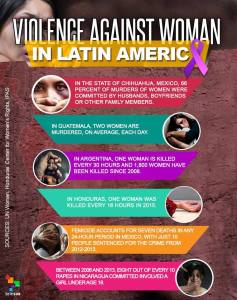
femicide-pic

To understand these staggering figures, it’s necessary to look at the nature of femicide itself and the underlying cultural of machismo in Mexico. I’m not going to write a dissertation about it, but suffice it to say that femicide is considered acceptable in many segments of Mexican society. Women are considered expendable as demonstrated by the low number of murders actually brought to justice. During 2012-2013, 3,892 women were classified as victims of femicide. Of that number, only 24 percent of the crimes were investigated and only 1.6 percent led to sentencing.

This idea of expendability was further reinforced culturally with the implementation of NAFTA. The factories that have sprung up at the border (maquiladoras) hire mostly lower wage earning young women. These working women have left the relative safety of their hometowns and family circles in order to work at the border town sweat shops and have become easy prey for unprovoked violence by strangers. Men who have been denied work because of their higher-wage earning gender seek out to harm these women to prove their macho-ness.

Not only strangers but husbands and boyfriends have also been unmanned with the economic shift. This shift directly challenges the cultural idea of Marianismo (relating to the Virgin Maria) found in Mexico.  It comes as no surprise that domestic violence is on the rise when these traditional gender roles are challenged.

In one such border town, Ciudad Juarez, over it is estimated that 700 women have disappeared and more than 360 more killed. The majority of these victims are young women, many workers in the maquiladoras, and have been sexually assaulted before their death. The Inter-American Court of Human Rights found the state complicity guilty of these deaths in 2009 because so few were ever even investigated much less documented adequately. Ciudad Juarez was previously sanctioned by the National Human Rights Commission for gross irregularities and general negligence including the misidentification of corpses, lack of expert forensic evidence, failure to conduct autopsies or obtain semen samples, failure to file reports and incompetent record keeping when it came to female victims.

One important differentiation between femicide and homicide is that the murder is committed by someone who takes advantage of his elevated social of physical power over a woman. There are countless known examples of the authorities in Mexico abusing their social position and power. Some femicides are believed to be related to the powerful drug cartels, found in Ciudad Juarez and other areas of Mexico. Prostitution rings and human trafficking are real dangers for women in Mexico.

In the State of Mexico, while now President Peña Nieto was governor of the state, at least 1,997 women were murdered. One particularly horrifying incident of abuses done to women by those in power occurred in 2006 when Mexican troops were called in, by Governor Peña Nieto, to end the protestations of local flower sellers in a community near the capital. In San Salvador Atenco, at least 11 women were detained by police and transported to a holding facility. They were raped and beaten and denied medical treatment for days. The Inter-American Commission on Human Rights (IACHR) investigation of the matter found that the state government (under Peña Nieto) attempted to minimize the crimes. Instead of prosecuting the officers involved, the state arrested 5 of the women, having them serve more than a year in prison for blocking traffic during the initial flower seller protest. Within a culture where those in power can do as they wish to women with consequence, it is no wonder femicide is rampant in Mexico.

The Inter-American Commission on Human Rights (IACHR) investigation of the matter found that the state government (under Peña Nieto) attempted to minimize the crimes. Instead of prosecuting the officers involved, the state arrested 5 of the women, having them serve more than a year in prison for blocking traffic during the initial flower seller protest. Within a culture where those in power can do as they wish to women with consequence, it is no wonder femicide is rampant in Mexico.

Quintana Roo has one of the highest human trafficking rates in Mexico. In 2005, reporter Lydia Cacho pointed fingers and named names of high-profile businessmen in Cancun and their involvement in child pornography and prostitution rings. In yet another power play by authorities, she was subsequently arrested for defamation of character, tortured and threatened with rape in an attempt to silence her.

5 Latin American Feminist Groups You Should Know About

The Ni Una Mas (not one more) social movement in Mexico was originally organized to raise awareness for the violence against women in Ciudad Juarez. Since its initial formation, it has grown to include a variety of domestic and international organizations, all with the idea that not one more woman will disappear, not one more woman will be abused, not one more woman will be murdered.
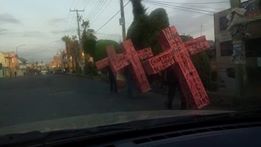
Ni Una Mas protest September 3, 2016 Moroleon, Guanajuato

Ni Una Mas protest September 3, 2016, Moroleon, Guanajuato

On September 3, 2016, a representative group passed through Moroleon on their way to the state capital in order to ask the governor to better address the local situation. While violence against women is not as staggering in the state of Guanajuato in comparison to those areas previously mentioned, in 2015 there were 45 murders classified as femicide in the state with 13 of these occurring in the city of Leon. Only 13 arrests have been made in the 45 wrongful deaths and to date, not one conviction.

A study conducted in 2011 by ENDIREH reported that over 38% of women 15 years old or more have been victims of some sort of emotional, economic, physical or sexual violence in the state. In 2012, and 2013, there were 1034 reported rapes in Guanajuato. In 2012, there were 65-68 murders classified as femicide. Thus, this international issue is also a local issue. (See also En cuatro años, aumenta 974% desaparición de mujeres adolescentes: Redim)

Mothers, sisters, brothers, husbands, fathers, sons and daughters have taken up the pink cross in their march for justice in Moroleon, in Guanajuato, in Mexico, and in Latin America.

Ni Una Mas!

*************************


disclosure

7 Comments

Filed under Cultural Challenges, Death and all its trappings, Safety and Security

El Dia de Los Muertos–Visible Mourning

que halloween ni que

I’ve had it up to here hearing about Mexican Halloween. It isn’t. It isn’t about dressing up, spooky stories, demons, or blood. Not Freddy Kruger, not poltergeists, not witches, warlocks or ghosts. It’s not about haunted houses, trick or treating, carved pumpkins or parades. It isn’t even about death.

It’s about life.

The celebration El Dia de Los Muertos in Mexico is the commemoration of the lives of our dearly departed and the acknowledgment of the loss the living experience with each death. Although I’ve lived in Mexico for almost 10 years, this is only the third year that I have participated in El Dia de Los Muertos events. And why is that? Because up until then, there was no one to visit at the cemetery. Three years ago, my mother-in-law was killed in an accident with a police vehicle. Two years ago, my husband’s grandmother in Cerano died at the age of 89. Now we have family to visit at the cemetery. And we do.

wpid-cam03971-1.jpg

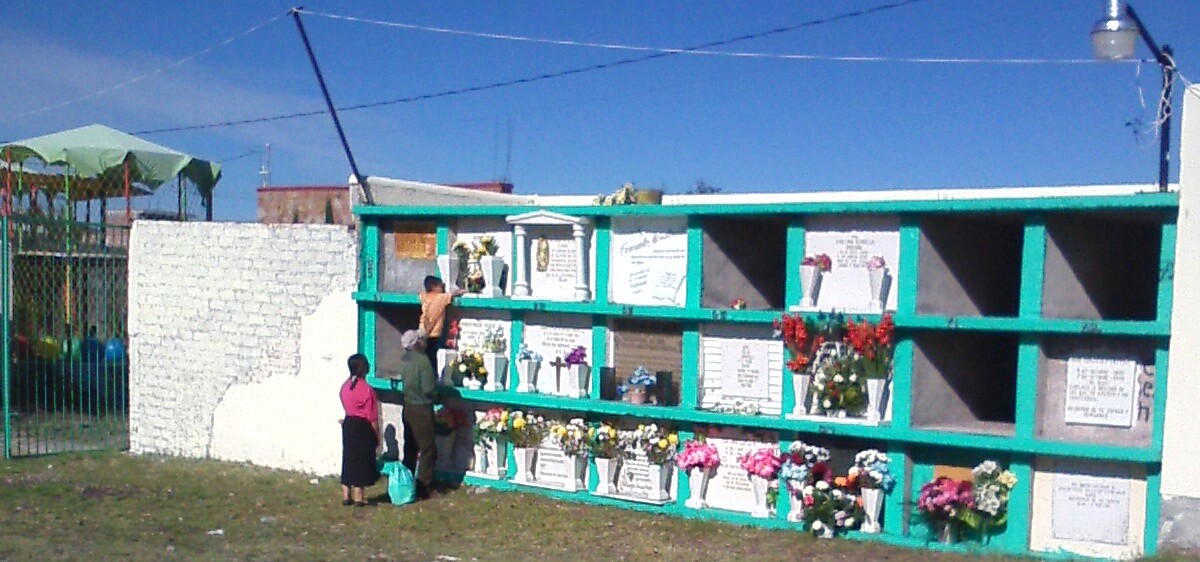
We clean and place flowers. We sit and remember. We laugh, and we cry. It’s more like Memorial Day in the United States. Or maybe Veteran’s day. So it’s hard for me to understand the touristy aspect that has sprung up in larger areas.

student altar

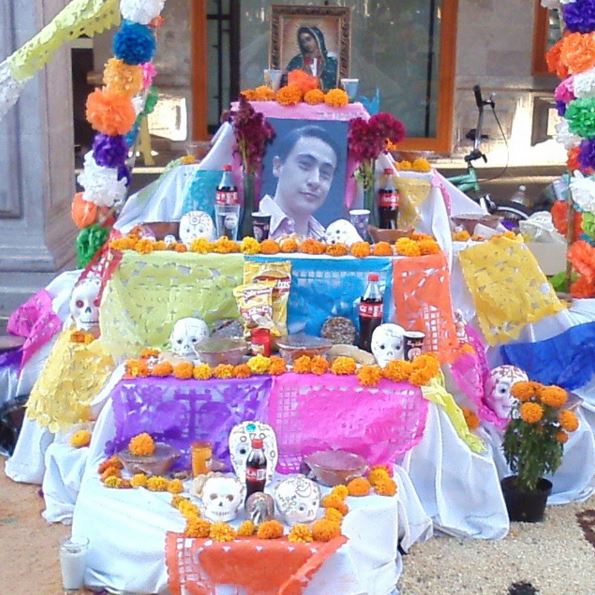
The altars that are constructed in the town center in Moroleon are typically in honor of recently deceased community members. It’s a community mourning ritual. There are altars for recently deceased students, teachers, bakers, metalworkers, shopkeepers and more. The platforms constructed outside homes in Cerano are even more personal. So what would motivate someone to go to some community of which they are not a member to gawk at this mourning ritual?

A child's crypt. Notice the toy cars and pacifier behind the glass.

A child’s crypt. Notice the toy cars and pacifier behind the glass.

El Dia de Los Angelitos, November 1, is even more personal. Altars constructed in the town center or outside homes are created in memory of children who have died–some recently, some not so recently. It’s a personal homage. It’s not for me to intrude on this public manifestation of grief. After all, it is no more or less than a visible reminder that the dead are gone but not forgotten. Families visit the graves of their “little angels” and leave flowers and toys. Brothers and sisters are made aware that there was another that remains a part of the family although no longer physically present.

wpid-cam03975-1.jpg

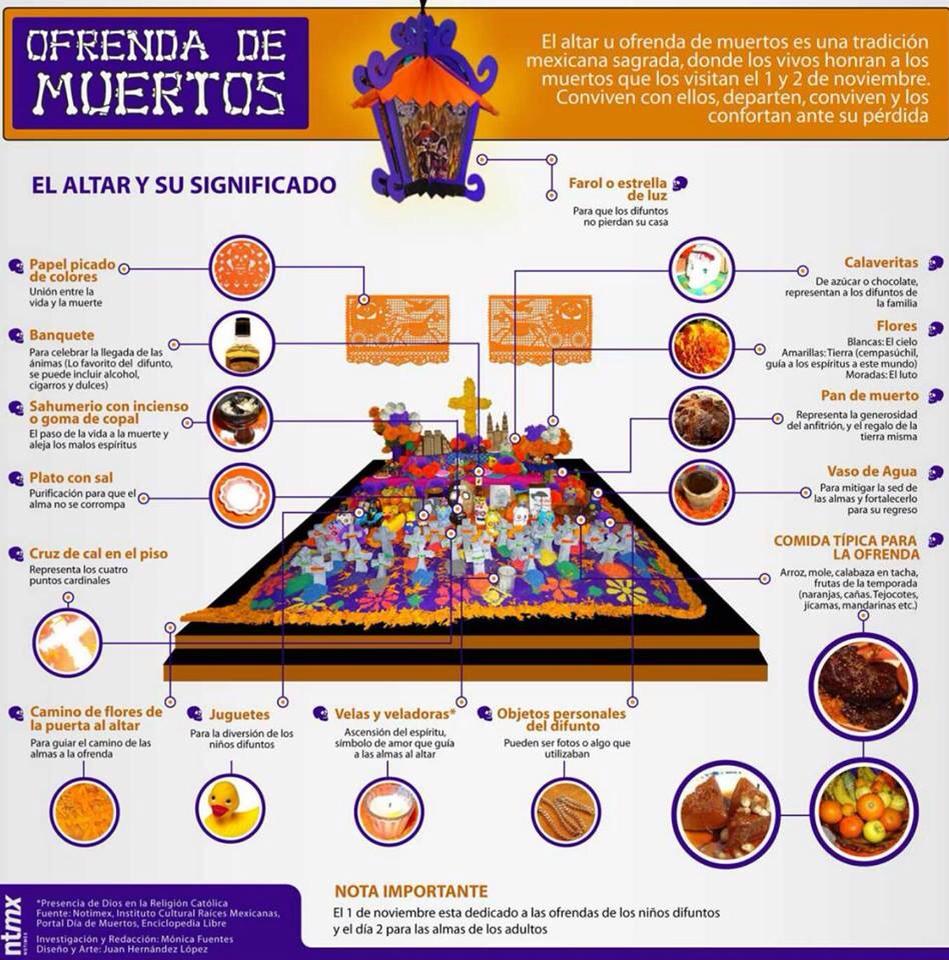
The sugar skulls are personal–you don’t buy a bag. You buy one and have a name written on its forehead. The figurines are personal–the catrinas are frolicking about in death much as the deceased did in life–drinking, dancing, singing, making music, even making love. The offerings left at the grave or incorporated into the alters are personal–favorite sweets, favorite toys, favorite drinks. The home altars are personal. Each one is constructed with the deceased in mind.

ofrenda

Perhaps it is the fact that these personal traditions are done publically that gives the impression that it is something to gape at–like one would at the zoo or a museum. Death and loss are not hidden away here. They are accepted as a part of life, not detached from it. Is this idea such a curiosity in modern times that guided tours are needed?

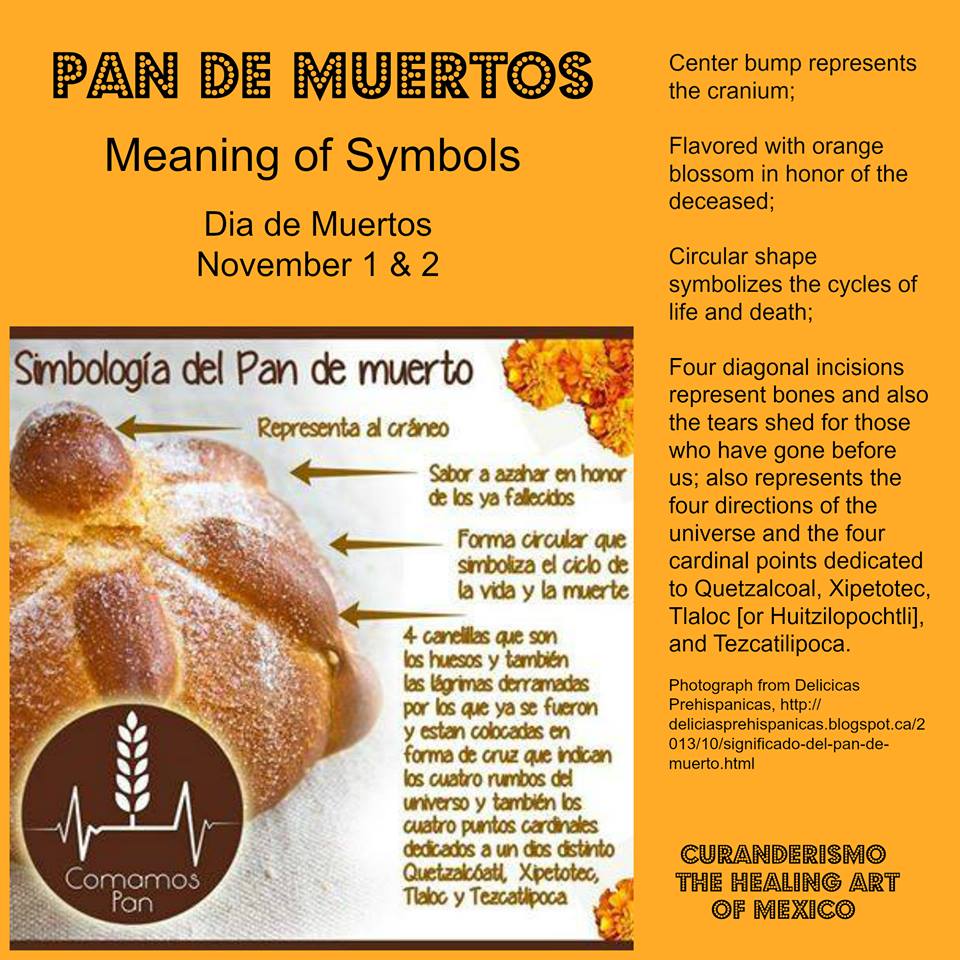
pan de muerto

The rituals of El Dia de Los Muertos bring comfort to the living. The altar or ofrenda is constructed just so. The days of remembrance are sacred. But times are changing….

The school board waited until the last possible moment to authorize the day free from classes. The official calendar has November 2 listed as a school day, while November 16 is a non-school day for El Buen Fin, in some effort to compete with the US’s Black Friday. What does that teach the children about the value of tradition?

This year at the panteon (cemetery) in Moroleon there was a sign telling visitors to denunciar (report) people stealing from the graves. What do they steal? Flowers? Children’s toys? A bottle of coke? Who would take these things? For what purpose? Has it really come down to a culture that steals from the dead rather than honors their memories?

Some larger towns and cities now provide parades, contests, theatrical presentations, mass-produced foodstuff, and trinkets. Wal-mart even offers a Halloween/Day of the Dead mixed selection for your buying pleasure. This tradition that in 2003 was named as an Intangible Cultural Heritage of Humanity is now up for sale.

wpid-cam03982-1.jpg

But for us, the ritual that is El Dia de Los Muertos remains personal. It reminds us that those that have preceded us in death remain part of our present lives. They helped shaped who we are today.  It isn’t a fascination with death.  It isn’t an obsession with death.  It’s an acknowledgment of death and a celebration of life.

SOTBS Blog Hop Op1Sq

    Have a Day of the Dead themed blog post? Link it up here!  

An InLinkz Link-up 

disclosure

17 Comments

Filed under Carnival posts, Cultural Challenges, Death and all its trappings, Mexican Holidays, Religion