Category Archives: Alternative Farming

Back to Basics Bundle Flash Sale

I can’t say how much I love these ebook bundles!  This is one of my favorites by far. Just look at what you get!

This year’s bundle includes over 59 resources to help you get back to basics and will help you:

  • Cook from scratch using nourishing real food
  • Plant and harvest your own vegetables
  • Learn what it means to live a simpler life without stress
  • Create a wholesome, healthy food storage
  • Learn how to create and use natural remedies
  • Plus learn how to live a more frugal life, do more things yourself, manage a small homestead, and much much more!

If you were to buy each of these resources separately you’d pay over $500, but for this short sale it’s 92% off!

The bundle is only available for a few days: August 25 – 27

Click here to find out more! I know you won’t be disappointed! I sure wasn’t!

***********************

disclosure

Leave a comment

Filed under Alternative Farming, Homesteading, Natural Healing

Blackberry Leaf Tea

IMG_20170904_101605

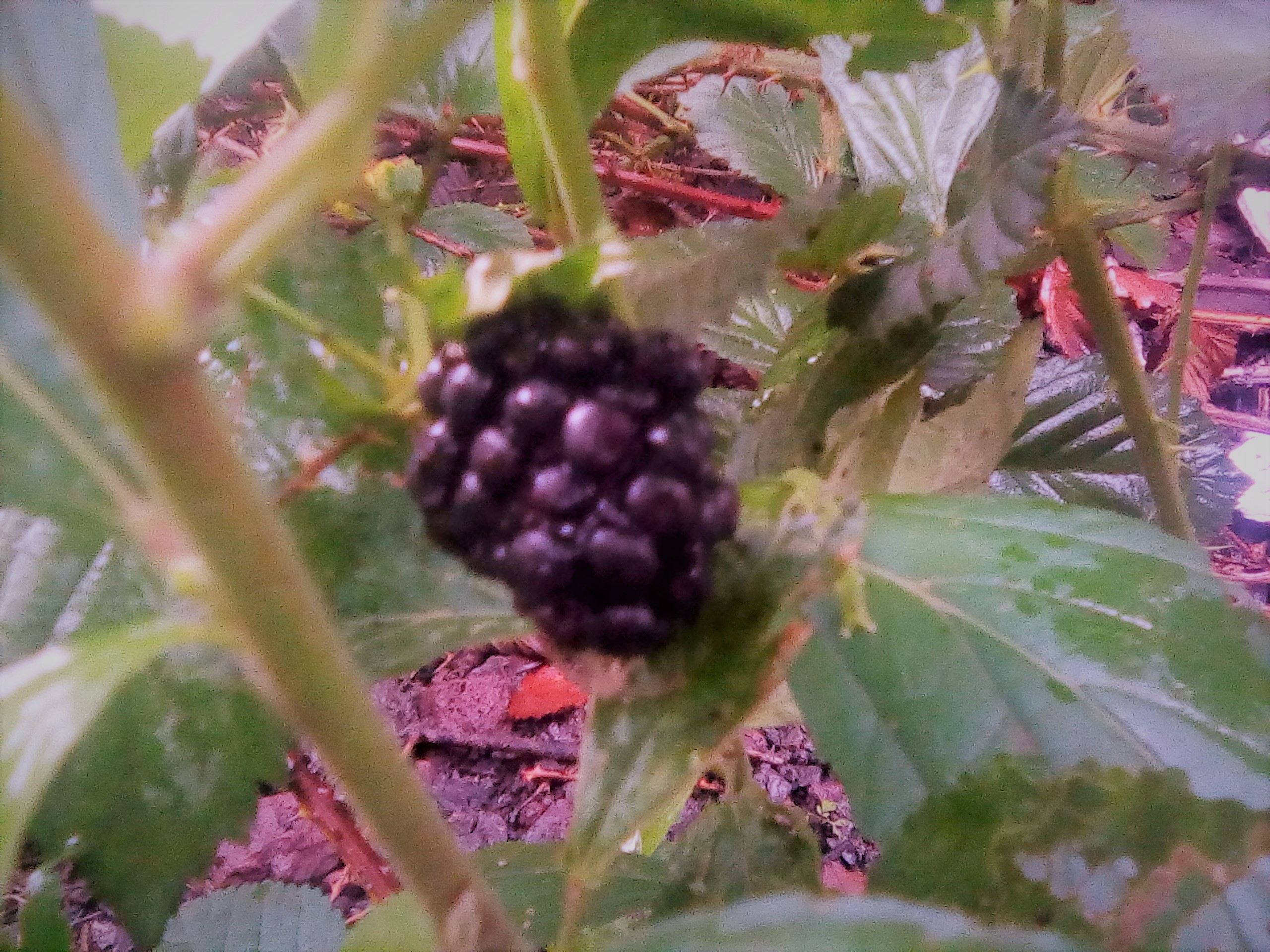
The blackberry bush in the backyard is trying to take over!  Shoots are popping up left and right, and it continues to wrap its spiny clutches around the lemon tree despite being cut back several times.  Since I will not be one of those ill-prepared preppers that lament the loss of coffee and tea after TSHTF (See Into AutumnInto Autumn) if you’ve got it, use it right?

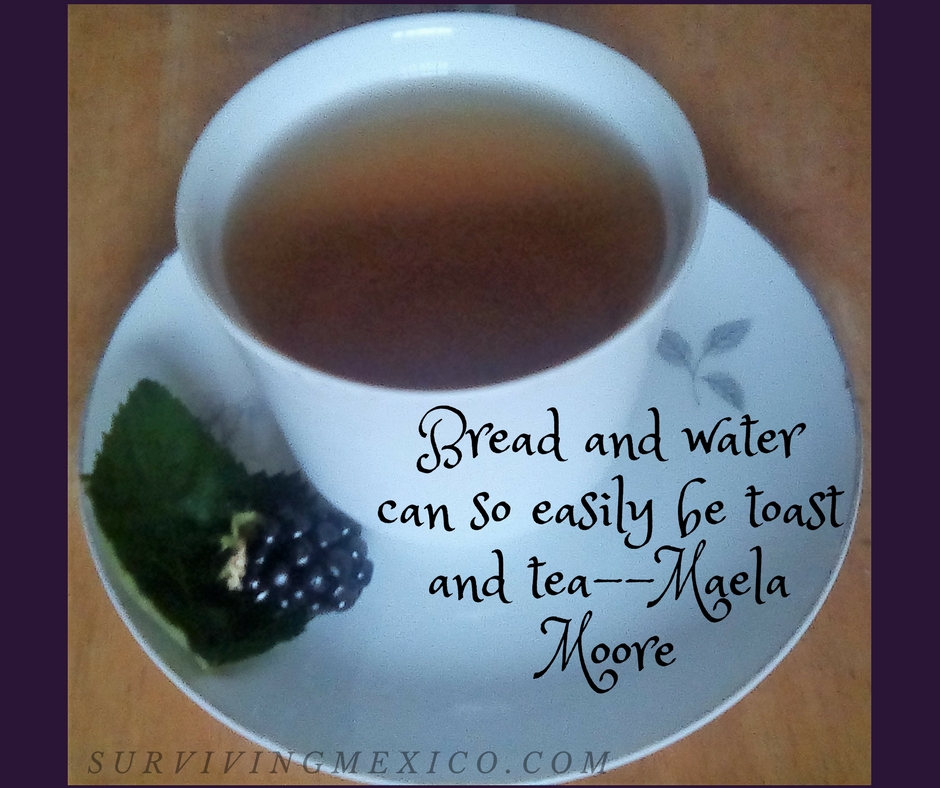
Blackberry tea leaf is easy to prepare.  Just pour boiling water over dried leaves and let steep. It’s a darker color than some of the other teas I’ve prepared.  It has a rich, deep taste, just right with a drop of honey as a sweetener.

IMG_20170824_080322

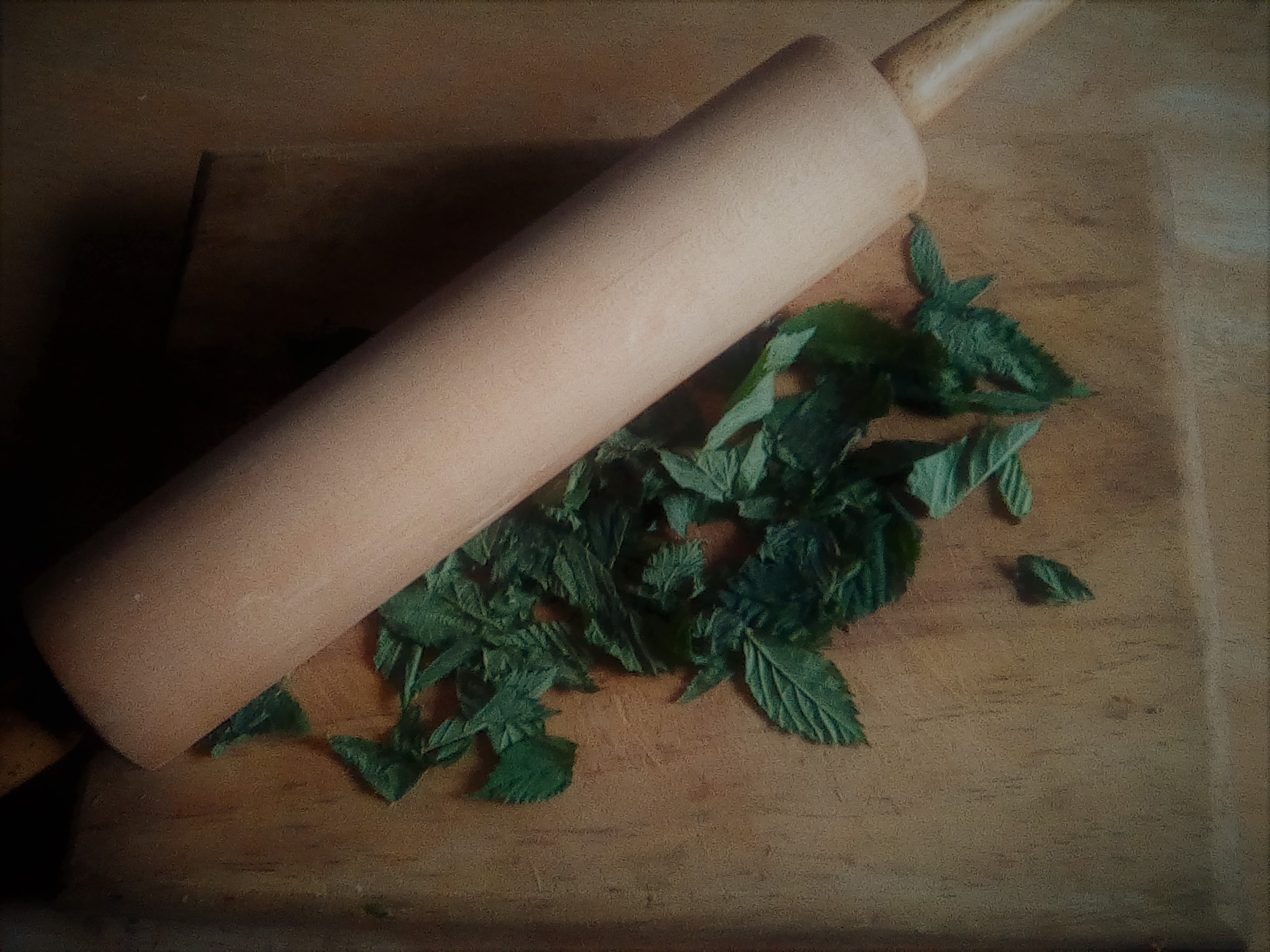
Fermenting the leaves increases the tea’s flavor.  To ferment, crush wilted blackberry leaves with a wooden rolling pin.  Wrap them in a damp cloth and hang in a dark, warm area.  In 2 or 3 days, the leaves will smell like roses which I thought odd until I realized that blackberries (Rubus allegheniensis) are part of the rose family after all.  Remove the leaves from the cloth and allow them to dry completely before storing.

Not only is blackberry leaf tea delicious but it’s good for you as well.  Used medicinally since the ice age, leaves were chewed to strengthen gums and made into plasters to treat shingles and hemorrhoids. During the Medieval and Renaissance periods, blackberry leaf infusions were used as a gargle for a sore mouth, throat cankers and wound washing. Now in more enlightened times, blackberry leaves have been shown to fight cancerous cells and are a good source of antioxidants.  Blackberry leaf has also been effective in diabetes treatment, as a wrinkle preventative, and as a protection against cardiovascular disease.

There’s been some evidence that the tannins found in blackberry leaves, bark and roots may cause nausea in some people.  However, adding milk to the tea neutralizes the tannins quite nicely.  Thus the German regulatory agency for herbs has approved blackberry leaf tea for relieving non-specific acute diarrhea.  In addition, just like our medieval ancestors, the Germans have determined that blackberry leaf tea, mouthwash or gargle is appropriate for mouth sores and gum inflammation.  

(after use, please put it backin its proper place)

With all these reasons to drink blackberry leaf tea, perhaps this spring you should harvest your own.  Pluck the tender light green new leaves before the plant flowers, being mindful of those tiny pickers.  Ferment as described above or hang to dry and you’ll be all set.

******************************

Exploring Traditional Herbal Remedies in Mexico https://amzn.to/2MI4EBZ

2 Comments

Filed under Alternative Farming, Health, Homesteading, Natural Healing

Rainy Season Foraging

I’ve already written about how foraging is part of our lifestyle. (See Gleaning) Our animals are taken out of their corrals and allowed free foraging daily.  Recently this mass exodus has not just been limited to the goats, sheep, and horse, but also the chickens, ducks, and rabbits delightedly head out to the tall grass for vittles.

When the Earth provides such abundance, it really is a sin against nature not to harvest its bounty (See Tunas, Pitayas, and Cactus) both man and beast.  Of course, each season brings its own flavors.  This past month, we did some rainy season foraging.
Not edible!

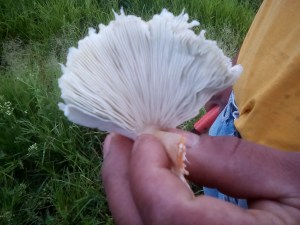
Lots of rain mean lots of mushrooms.  This year was hardly a bumper crop, but we did get a meal or two out of the mushrooms.  I always let my husband harvest these as I’m still a little unsure of choosing the right ones.  Both types of mushrooms that grow in droves during the rainy season look like partially opened umbrellas.  The edible mushrooms are pink underneath.  The poisonous ones are brown or white underneath.

Then there is this plant that my husband called toritos (little bulls).  I’m pretty sure that’s not its name.  The interior of the seed pods before it hardens up is edible. It tastes, well, beany.  Once the pods harden, they darken to an almost black color and two pointy prongs pop out at the end.  My husband and his brothers used these mature seed pods as bulls in their play way back when.

Another edible plant is what my husband calls quesitos (little cheeses) because once peeled it resembles a cheese wheel.  These are bitter in taste.  I’ll pass.

This pretty flower turns into tiny metallic colored berries.  They sort of taste like blueberries.  Apparently, there are several varieties of this plant differentiated by the flower color but all giving the same sort of berry.  Anyone know the name of this plant?
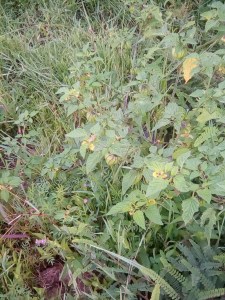
Stopping on our nature hike to take a picture in Los Amoles, I found tomatillo growing wild at my feet.  Tomatillo is used in all sorts of savory Mexican dishes.  It has a tart or tangy flavor to it.

Not edible!

The fruit developing on this plant is not to be eaten, according to my husband, although it bears an uncanny resemblance to a squash.

Verdolaga (purslane) is found year-round.  Cooked up it has the consistency of spinach with a sort of tangy taste.  It’s often used in green salsa.  

This plant is called Chichi de burra (Donkey boobs).  The pods are edible and taste like figs.
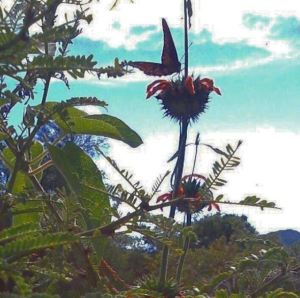
The tubular petals from this flower (Klip Dagga) have nectar that can be sucked out making it a favorite of chuparosas (rose suckers otherwise known as hummingbirds) and mariposas (butterflies).  They grow in large bunches under the mesquite tree near our house.  It’s my favorite place to be at the tail end of the rainy season.

This is not an all inclusive list of wild edibles by any means.  Every year, I learn a little bit more about the flora and fauna that surround me.  Where else can I get a glimpse of a mountain lion, a roadrunner, and fox in one day?  Where else do butterflies of every imaginable color and size flutter in clouds?  Where else are daily humdrum activities stopped with the glimpse of a hummingbird? La Yacata remains the place to be for me!

**********************Enroll now in the Herbal Academy Introductory Course!


Leave a comment

Filed under Alternative Farming, Mexican Food and Drink, Native fauna and flora