
It just happened that both my son’s minor U.S. passport and my own U.S. passport were up for renewal within a month of each other. (See Applying for a U.S. passport from outside the United States) Checking online, I discovered that my husband and I would need to go personally to renew my son’s passport and that the office in Morelia no longer processed passports for minors. (See Renewing Passports for minors) Therefore, we would have to go to either Mexico City or San Miguel de Allende. Having been to the U.S. consulate in San Miguel before, we decided to head there.
I printed out passport pictures that I believed met the appropriate qualifications, even using the handy dandy online assistant. (See Passport photos) The size is different from Mexican passport photos. I printed out the appropriate forms and filled out the appropriate parts. I asked for a small advance on my salary to cover the passport and trip expenses. My husband didn’t want to take Myrtle as we are still discovering her quirks and therefore, we gassed up Butch the truck for our trip. (See Getting Legal–License plates). We bought some fruit, packed some sandwiches and filled our water bottles. We even managed to get a verificación (inspection) sticker since we always get stopped in Celaya. (See Getting Legal–Trip 1).
I emailed the consulate in San Miguel de Allende and was told I could have an appointment at 10:30, which would give us plenty of time to get there. Having thought of everything (or so I believed), we were ready to go.
The trip to SMA was completely uneventful. No emergency repairs by the side of the road, no attempts by the policía for mordidas (bribes), we weren’t even stopped in Celaya for a sticker check. Unprecedented! We arrived in SMA and parked in a pensión (enclosed parking lot) and asked direction to the U.S. embassy. We were about 2 blocks away.
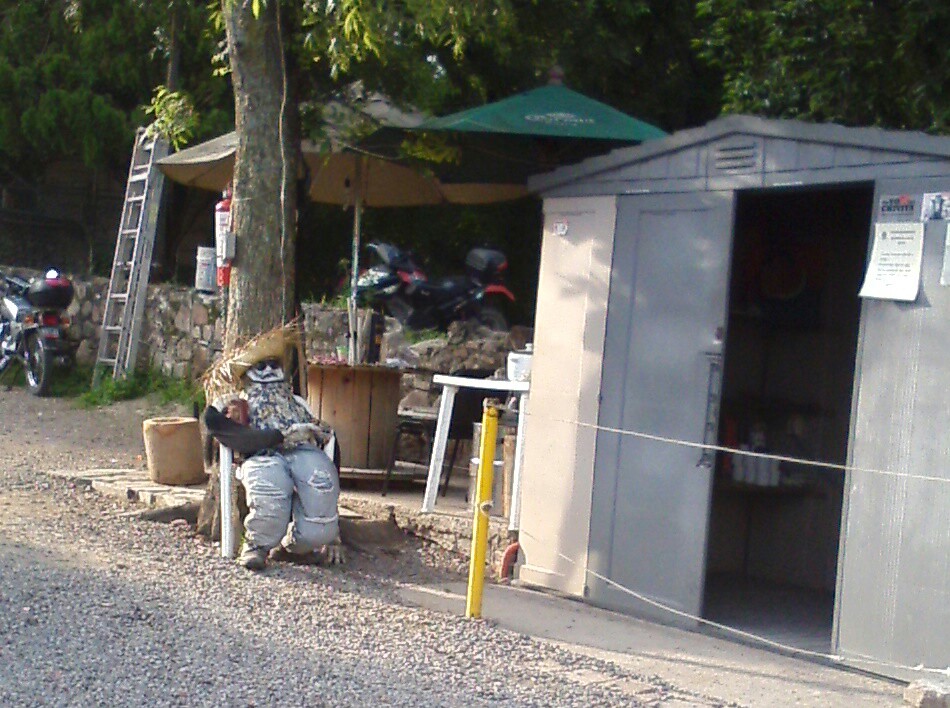
The official guard at the parking lot.
So we strolled along, it being well before 9 a.m. We arrived at the building and sat by the pigeons in front of the church. We sat there a few minutes, then doubt began to creep in. What if the office wasn’t where it used to be? What if it was closed for vacation or some other reason? It would be better to go in and see, we reasoned. And well reasoned we were. The office was no longer there. We asked the sales clerk in the store by the front door where the office was. She told us that after having been in that building for years, the office had been moved to the strip mall next to Liverpool.
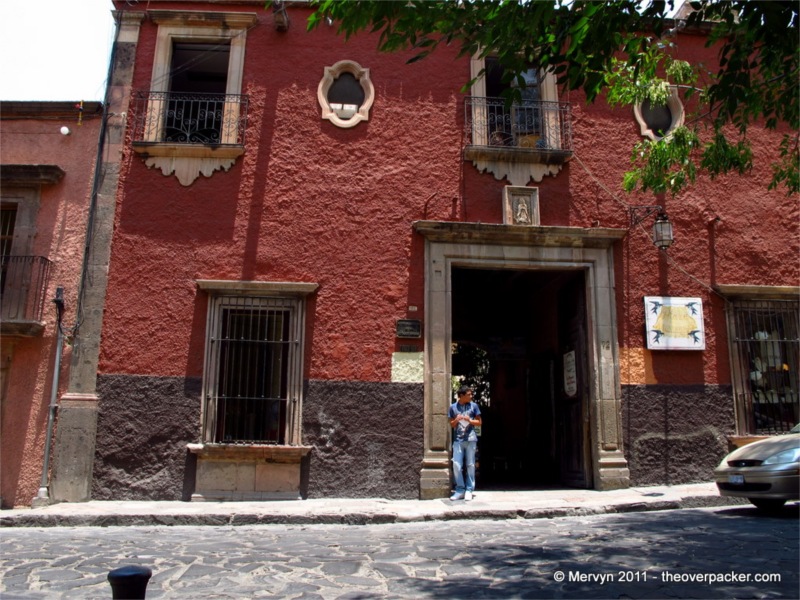
This is where the U.S. consulate used to be in San Miguel de Allende
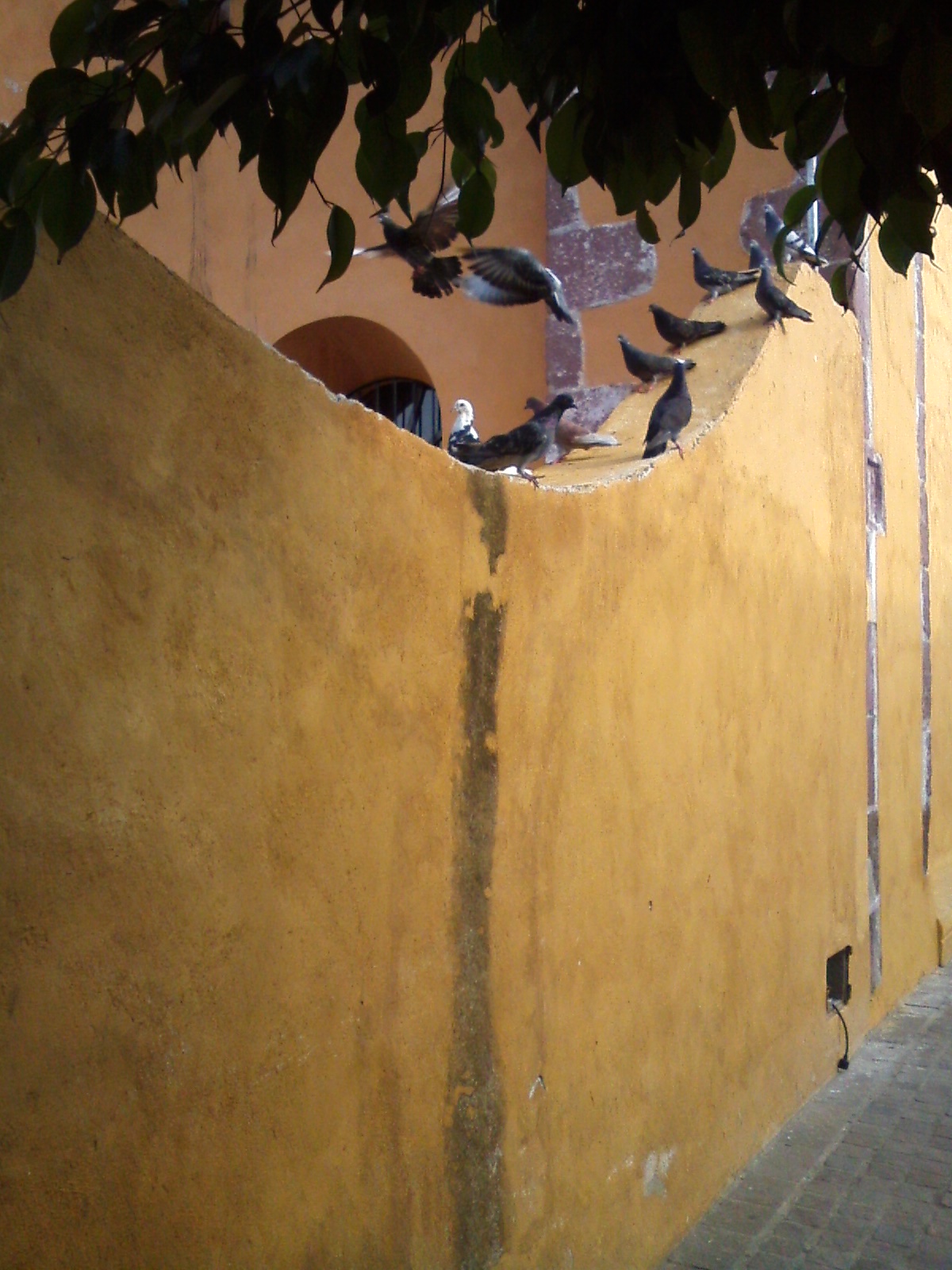
Sitting with the pigeons in front of where the passport office used to be.
Umm, ok? No reason for panic. We walked back to the truck and talked to the security guy at the parking lot. He tried to be very helpful (even though he regretfully had to charge us for the full hour of parking) and drew a little map on his hand to help us on our way. The key points in his map were the statue of Pípila where we would go around the glorieta (traffic circle) and the statue of a caballo (horse) which meant we had gone too far.

The statue of Pipila at the glorieta (traffic circle). Turn right here for the U.S. consulate. The immigration office SEGOB is left here.
And we were off. It was pretty straight forward. My husband remembered that our first year doing transactions in SMA we had to go to the Bancomer bank at this strip mall to make the immigration payment and he was right. Of course, now there was a Bancomer closer to the immigration office and the strip mall had tripled in size, but it was all good.

Strip mall where the passport office has been moved to.
Best of all, parking was free. So we got out and asked a security guard where the U.S. Consulate was and we were directed to the food court. I was flabbergasted at the luxuriousness of the area and wanted to stop at Starbucks for a cappuccino just because but my husband said he certainly wasn’t about to pay $30 pesos for a cup of coffee. I had to admit he was right, so we walked on.

Kiosk in front of the U.S. consulate in San Miguel de Allende.
We passed an enterprising kiosk that offered to get your U.S. visa for you. After reading the sign on the consulate wall that said visas could not be applied for there, I had to admit the kiosk was extremely well-situated.
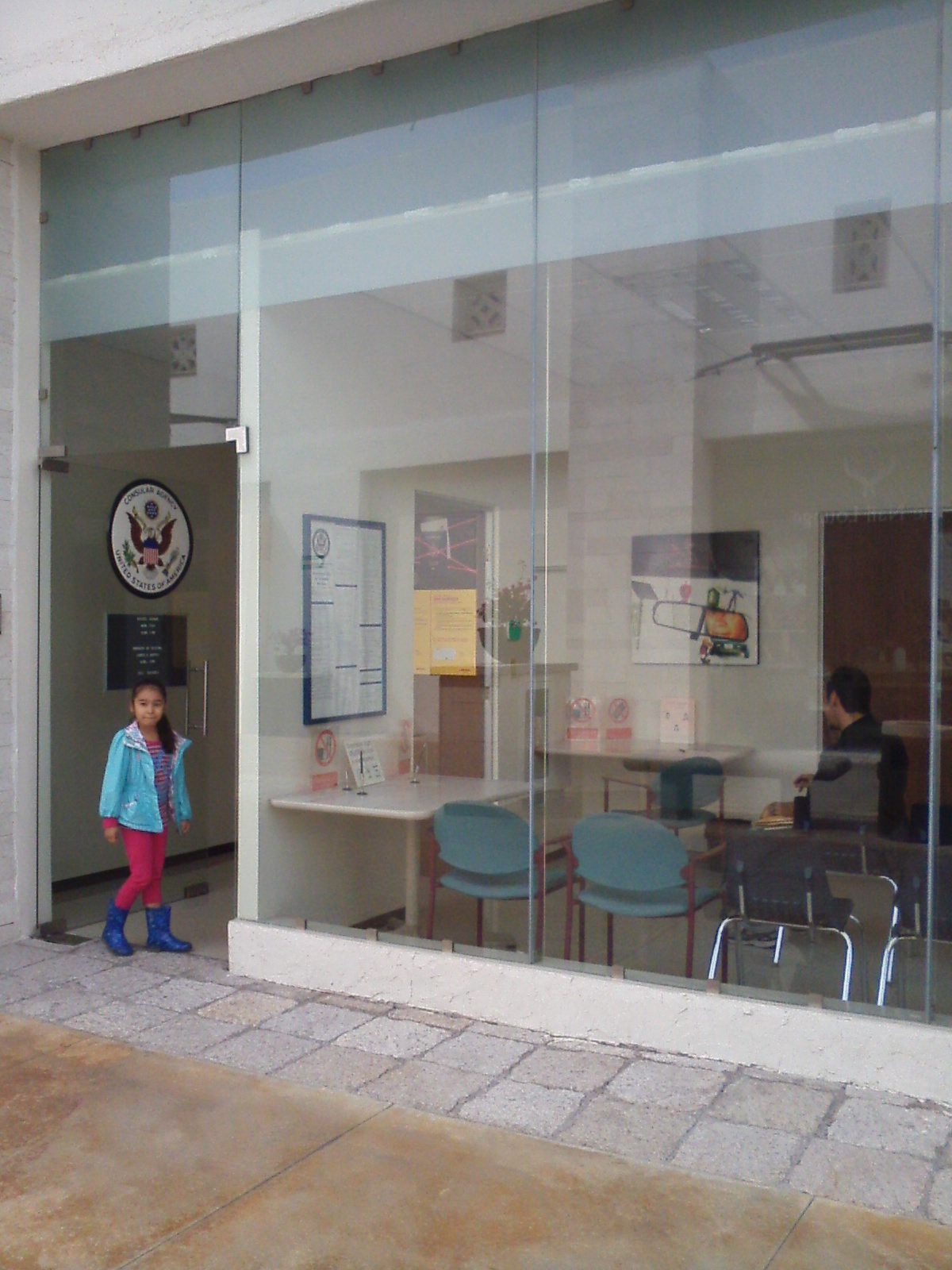
The “new” U.S. consulate in San Miguel de Allende
We walked into an area that reminded me of DMV and I jumped in the line. I figured at least I would have to check in, but felt sure that having an appointment would take care of everything. Even though the person at the counter in front of me was speaking in Spanish, when it was my turn, I spoke to the receptionist/secretary in English. I was in the U.S. consulate and by golly, I was gonna use English. I also remembered that the secretary was perfectly fluent in English from our last visit.
She seemed surprised that I had an appointment. Hmm. Well, I explained why I was there and gave her my documentation and then my son’s documentation. She asked whether I would be paying in dollars or pesos. When I told her pesos, she did the currency exchange and gave me a figure I could live with. I paid her and she gave me a number and we sat down to wait.
The ambassador or notary or U.S. representative or whatever he was, arrived at 10. He looked like he was ready for a day at the beach in his guayabera shirt and khakis. It might have casual Tuesday at the office but the secretary was dressed (from what I would see through the window) in formal business wear.
He spared not a greeting for the now crowded waiting room, but passed through in a flash, leaving us to cool our feet. We spent some time looking at an awful painting of a Mexican taxista (taxi driver) looking in a rear view mirror and wondered if the U.S. ambassador painted it himself because surely no one would spend good money on it.
Then he was back and flashed a number at the window. This was the sign that the group with #1 should enter into the side door where he presided much like a bank teller. The door between the waiting room and the teller office did provide some privacy, or so I thought until we saw that the back wall was glass and everyone and their brother could observe the proceedings from the food court.
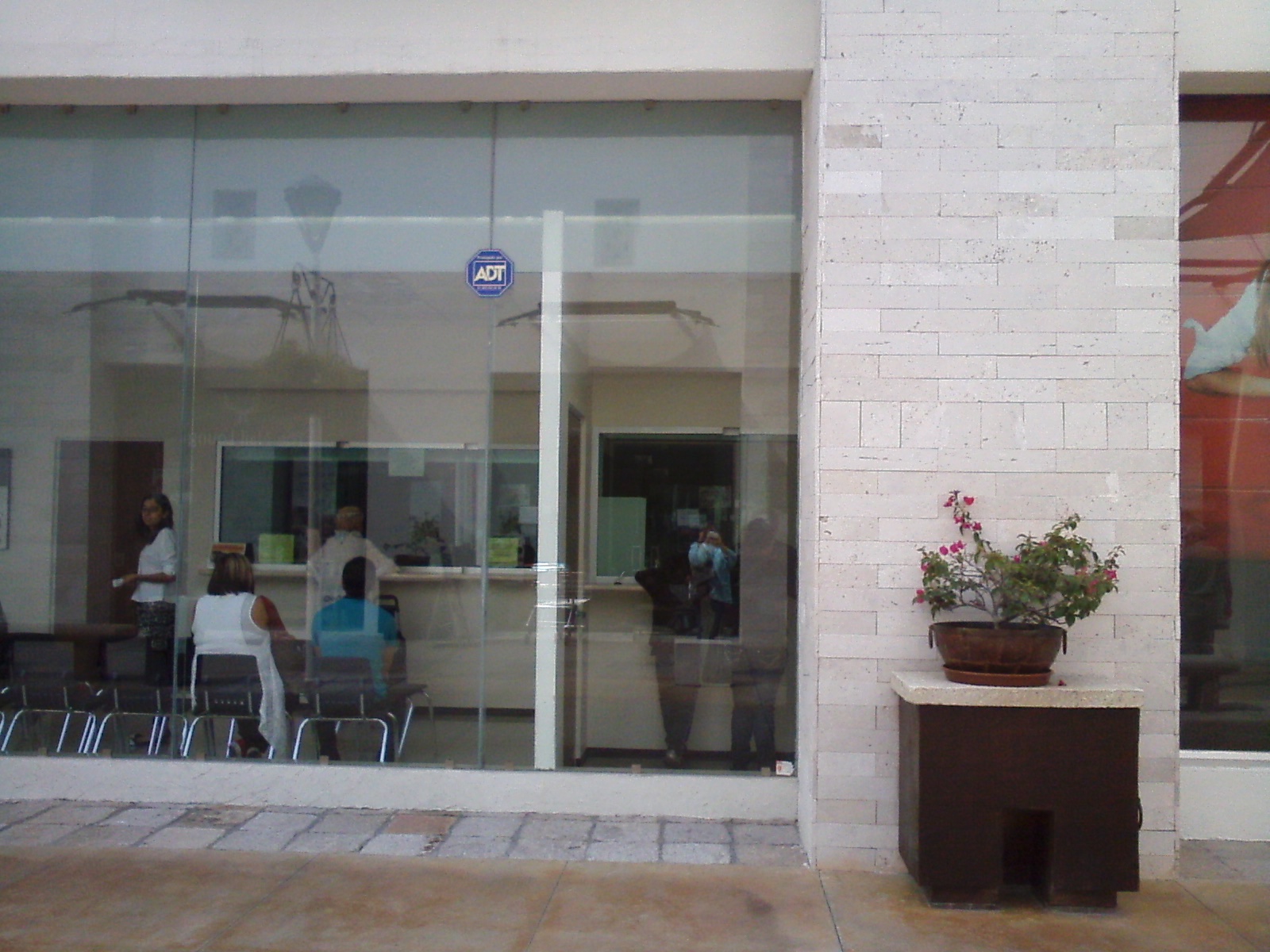
U.S. consulate privacy wall in San Miguel de Allende.
We were number 9 (so much for making an appointment) and waited about an hour. During that period, we were surprised to see Stifler’s mother and the world’s oldest fairy princess, complete with flowered crown, in the waiting room. But I suppose, everyone needs a passport these days.
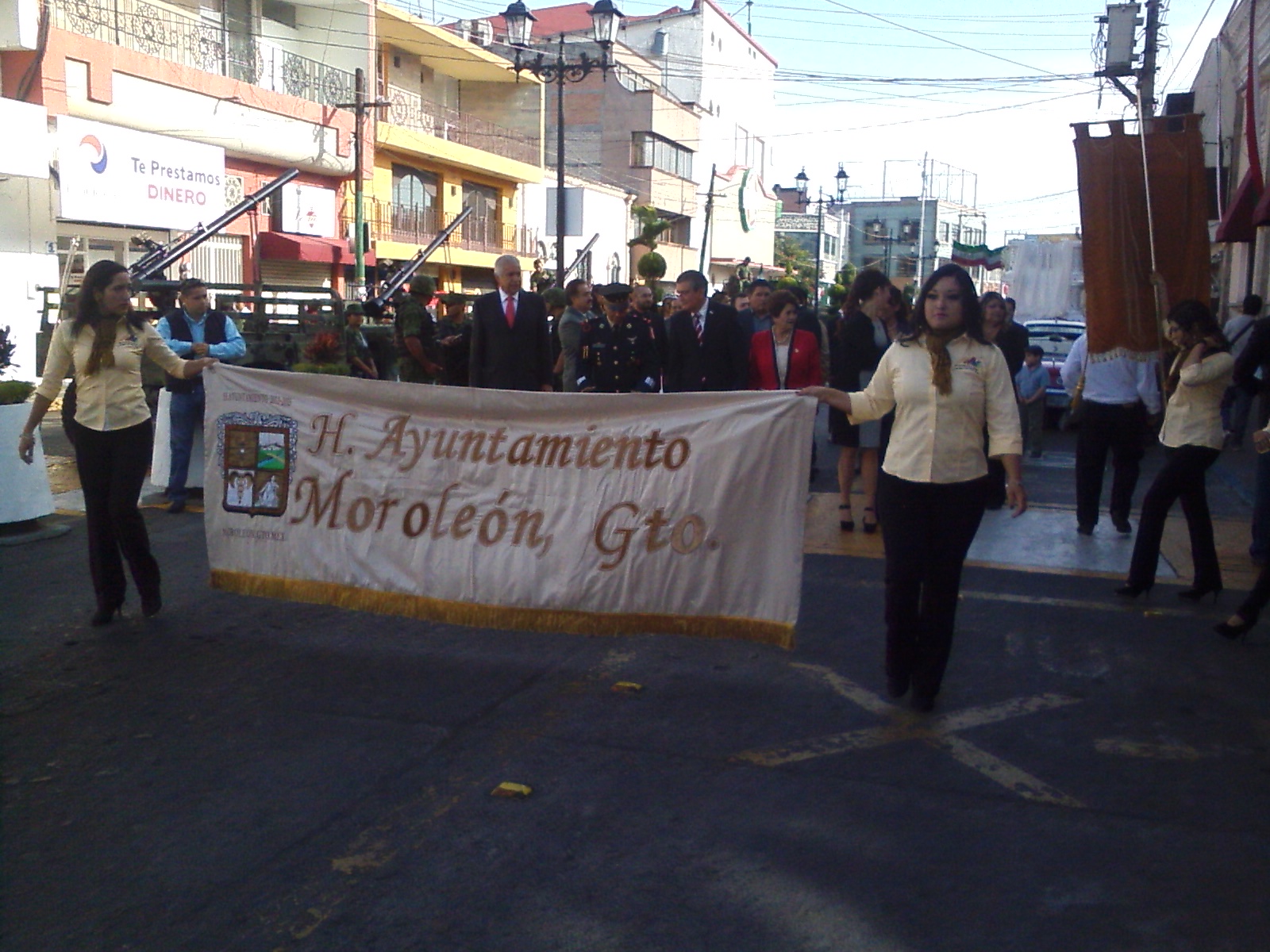
Then it was our turn. We entered and swore that the information on the application for my son’s passport was correct. I swore in English and my husband swore in Spanish. We were told that our passports would be sent to us through DHL but that we could pay at the office in Moroleón. If there were any problems, the embassy in Mexico City would call me.
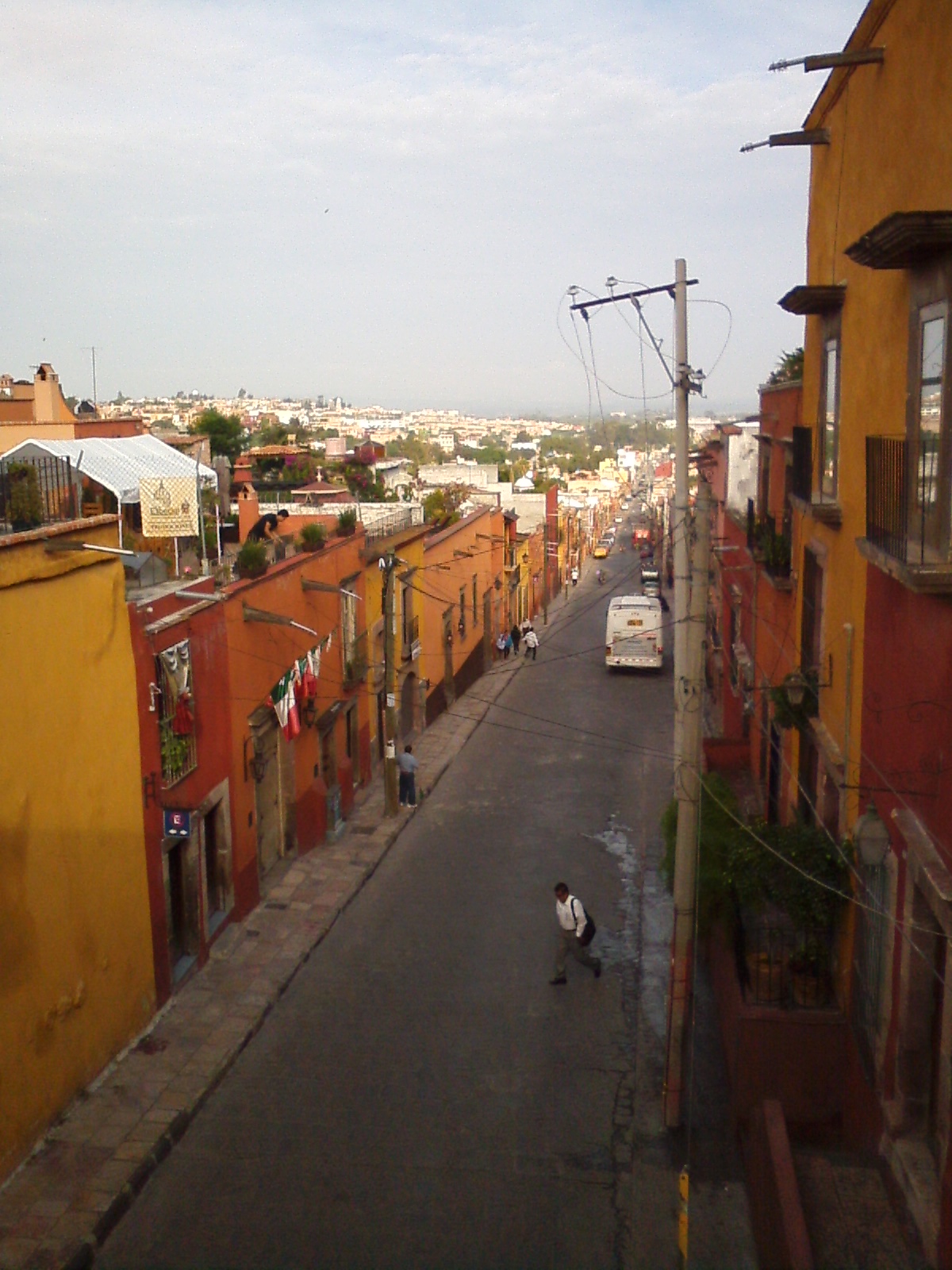
Taking the scenic route through San Miguel de Allende
And that was that. We left the food court and the parking lot, but leaving SMA was a bit more difficult. We must have missed the road we came in on when we went around the caballo statue because we ended up taking the historic tour of SMA. Then we went one further and got lost yet again in Celaya, adding an additional hour to our travel time.
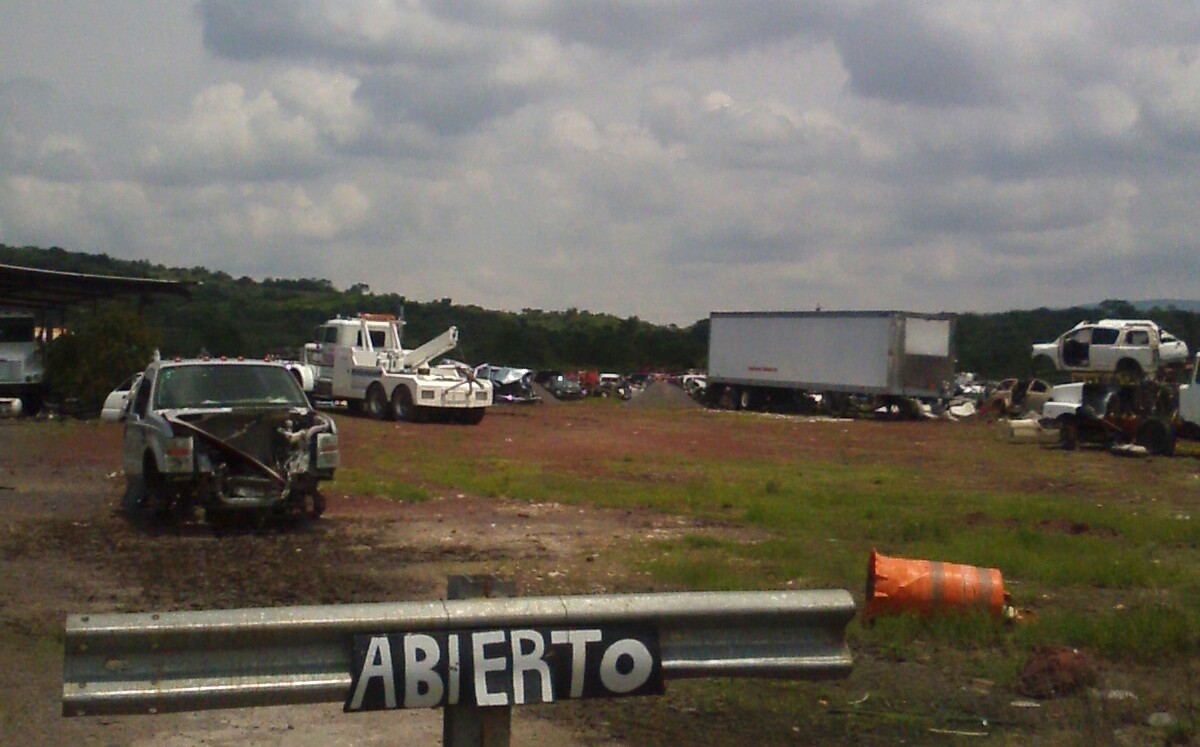
A typical yonke (junk yard)
We stopped a a yonke (junk yard) or two in search of parts for Myrtle and even had a little cash left to eat at our favorite roadside buffet in San Pedro. Chiliquiles, nopales, frijolitos y arroz! YUM!

One of the delights in traveling is eating at little roadside stands like this one.
We went to the DHL office in Moroleón and paid the special discount rate of $200 per package a few days later. To our relief, we could pick up the documents at the DHL office since we have no address out in La Yacata. In order to pick up my son’s passport, we would need to bring his birth certificate and photo identification of the parent. I panicked a moment since I would not have my passport but then read further that I could use my driver’s license as id. Whew! Now nothing to do but sit back and wait.
But of course, things are never so easy here in Mexico.
***************8