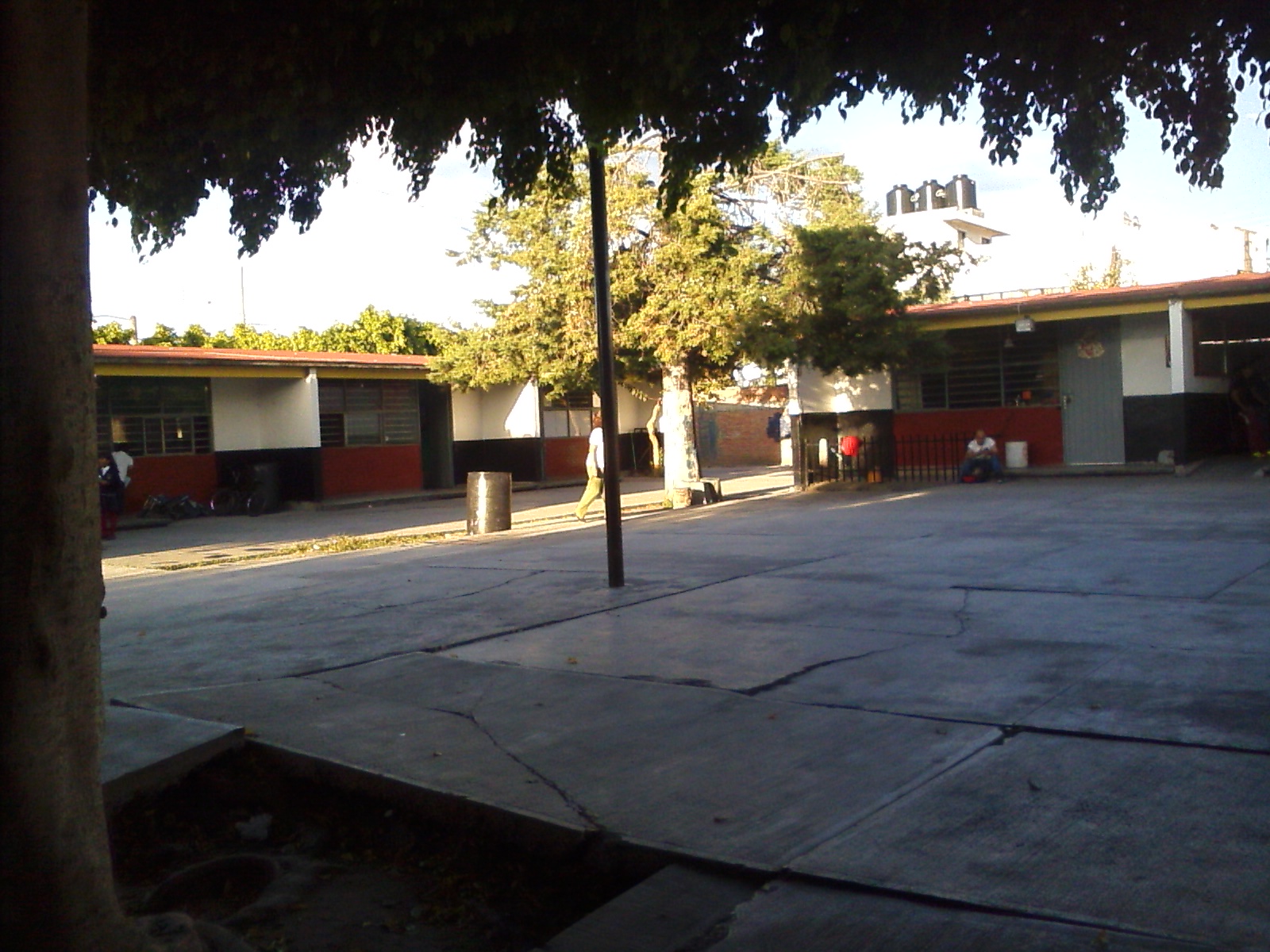
Then there was the decision to send our son to elementary school. We live in an isolated rural area so small that it doesn’t even qualify as a village. Although there are inhabitants in La Yacata despite the difficult living conditions, there were not any children our son’s age. He is also an only child, so socialization was one reason we opted to travel the 20 minutes to town every day.
A secondary reason, although somewhat related to the first, was the fact that we felt that schooling would help him learn what was necessary for successful interactions in the community. Although my husband is Mexican, he is not from this area, and his difference in speech and custom is often remarked negatively upon. I am not Mexican and would therefore not have been the best teacher in this regard for my son.
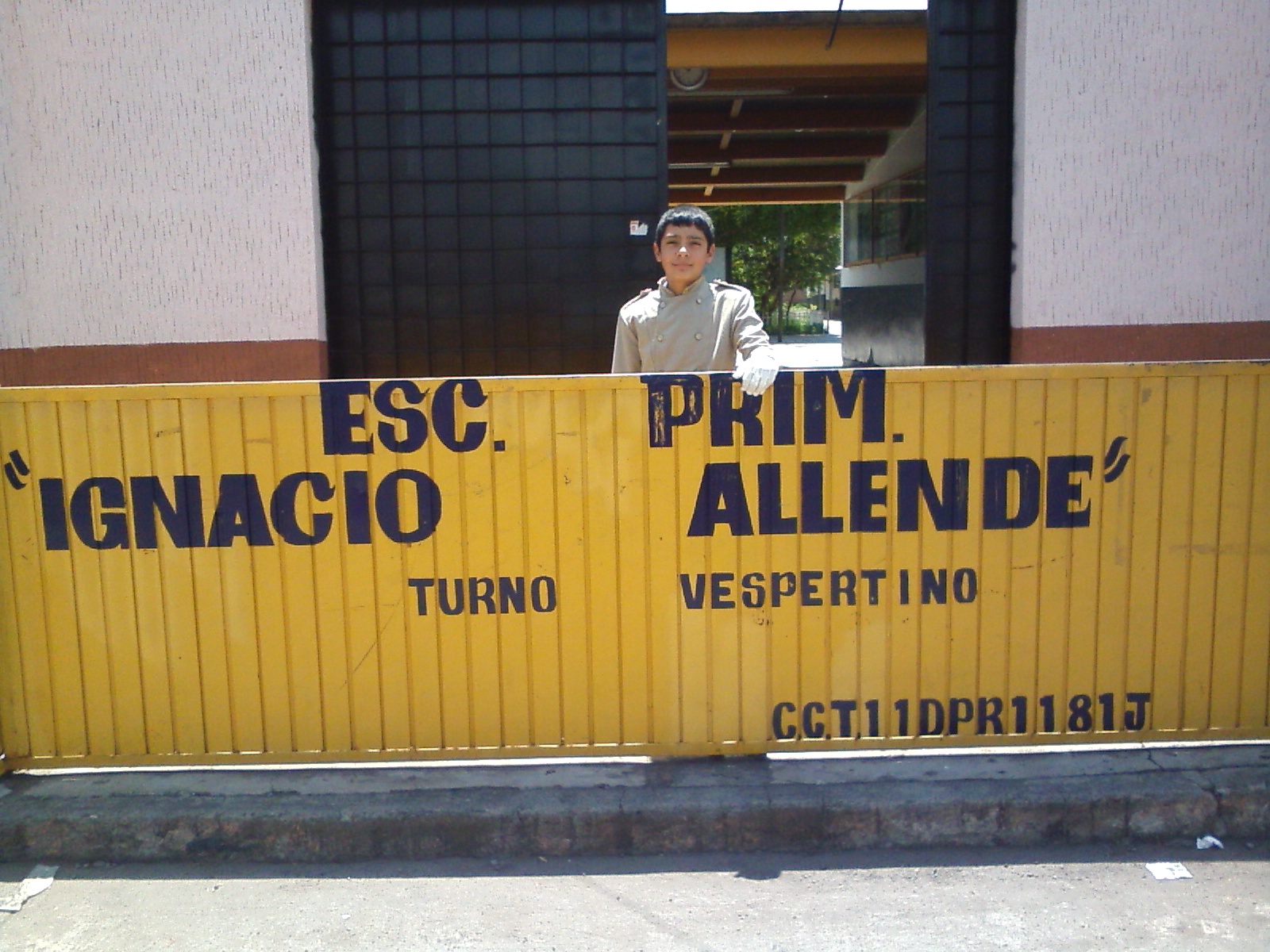
Registration for Primaria (Elementary school) takes place in February before students finish preschool. There are often long lines of parents waiting to register since there are always more students than cupo (available seats). In most public schools, there are two turnos (sessions), matutino (in the morning) and vespertino (in the afternoon.) Everyone seems to want the morning classes insisting the students learn better and the teachers are more qualified than the afternoon classes. However, the morning teachers are just as likely to be the same as the afternoon teachers since many teachers teach 2 turnos (sessions), teacher pay being what it is in Mexico. Furthermore, studies have shown that students actually perform better and retain more in the early afternoon than in the morning. The morning class typically begins between 7:50 and 8:10 am and ends at 12:30 pm. The afternoon session begins between 2 pm and 2:10 pm and may end at 6:30 pm or as late as 7:30 pm depending on the school. Private schools have somewhat extended hours and only one turno (session) which runs typically from 7:50 am to 2:30 pm.
We opted to send our son to the afternoon session. Why waste the best part of the day cooped up in a stuffy classroom? Therefore, while I went to work at a private elementary school teaching English, in the mornings, for 6 years, my son stayed with his dad, taking care of the animals, working on the house, or just riding his bike. Then when the day became too hot for outdoor activities, (this is Mexico after all), he went to school. He spent 4 1/2 hours in the classroom with perhaps 15 minutes of homework each day.
Primaria (Elementary) begins when about half of the students are just 5 years old since the same age requirements apply as preschool. Half enter reading Spanish, and half are still learning their letters. The pressure for reading and general learning eases off in primaria (elementary) since teachers are not allowed to fail students unless they make a personal appeal to the school board in Guanajuato. This educational reform has only been in practice 3 or 4 years. It is now just fine for students to finish second grade without being able to read, write their names or do simple mathematics. It seems that the shame in failing a grade outweighs any educational rationale although the debate still wages as to whether failing a grade does more harm than good. Perhaps if there were more resources and support available for teachers in Mexico, more children would be better educated. But then again, maybe the government isn’t interested in having well-educated citizens.
Schools are required to teach Spanish, Mathematics, History, Exploración de la Naturaleza (Earth Science), Formación Cívica y Etica (moral values), art, music, physical education, English, and Computer Literacy. Yes, English is now a required course even in the public schools. However, there is a decided lack of qualified teachers. Many teachers have been certificated as English teachers on the basis of being able to pass the TOEFL exam. (See Getting Legal–Working Papers) Unfortunately, there is a world of difference in knowing a language and being able to teach it effectively. But fortunately for my son, I am a licensed English teacher, so no problem there!

Grading is done on a scale of 10, 10 being the highest grade and 6 being the lowest passing grade. A 5 indicates the student has not passed, although, with the ban on failing students, it is rare that any student receives a 5 anymore. Each classroom has anywhere from 24 to 40 students, making it a challenge to meet every child’s learning needs.
Up until 2014, students were required to take a standardized end-of-year exam called ENLACE. The current president, Peña Nieto, has disbanded the ENLACE exam. However, his educational reforms have been clearly modeled on the current U.S. standards, and now teachers can be dismissed on the basis of their students’ grades. I think that there will be another exam issued nationally to take the place of the ENLACE in the very near future despite fervent protests and marches by the teachers’ union.
The extended school year is interspersed with random vacation days. Every month, teachers are required to attend a meeting, and school is canceled. 2014 marked the first year that these required work days were tacked onto the student calendar, which meant summer vacation didn’t start until July 15, well into the rainy season in our area. As the 2014-2015 school year began on August 18, that left less than 5 weeks of summer break. The academic year currently runs 200 days.

There is an extensive Christmas vacation in December, that begins December 19 or 20, but since Las Posadas begins on the 16th, the vacation isn’t nearly long enough. School starts back up typically on January 7th, just one day after Los Reyes Magos deliver gifts. Seems a bit unfair that the kiddies only get one day to enjoy their gifts after having waited the entire vacation period, but, hey I didn’t make the rules. Semana Santa is also a long vacation and actually lasts 2 weeks in March or April. May is the most tiresome month to get through as a teacher, but fantastic for the students. Not only is it the hottest month in our area, but there are a number of special days commemorated. Beginning with April 30 there is El Día de Los Niños. (See Cultural Apathy) Then May 1 is El Día del Trabajo (Labour Day), May 5 is the commemoration of La Batalla de Puebla (The Battle in Puebla day), May 10 is El Día de la Madre (Mother’s Day), and May 15 is El Día del Maestro (Teacher’s Day).
Exams are administered bi-monthly and are usually taken over the period of a week. Early on in this segment of schooling, we discovered some issues. My son’s lowest grades and highest frustration levels were in Formación Cívica y Etica, which is something along the lines of Mexican Moral values. Even the kids that weren’t passing any other subject were getting 8s and 9s in this subject, so why not my son? Upon examining the exams, I discovered that many questions had to do with Mexican dichos (sayings). For instance:
Lo que empieza con gran coraje termina
1) con gran orgullo
2) con gran vergüenza
3) con gran ventaja
The answer is 2, but I wouldn’t have known it, not being a Mexican and all. My husband had no formal schooling to speak of, so wasn’t much help in exam preparation either.
How about this one?
In Mexico la muerte nos…..
The answer is …pela los dientes.
Come again?
So it stands to reason that Formacion civica etica was a trial for my son throughout his elementary years.
Since this sort of schooling was not enough for a well-rounded education, we augmented part-time unschooling. (See Homeschool variation) There were and continue to be so many opportunities for learning in our area, or perhaps we just look for the possibilities. My son also often accompanied me to my private English classes, sometimes as an additional student to the class, other times with his own activity book. After all, he may decide that this place we call home is not for him and set off on his own adventures one day, English might be beneficial when that time comes.

My son did well in the traditional classroom and besides being in the honor roll all 6 years was part of the escolta (honor guard) in sixth grade. As only the best and brightest are chosen, (See Independence day) it was quite an honor. He was also selected by his teachers to read a despidida (farewell) poem during the graduation ceremony. His high achievement led to his being recommended into the better of two secondary schools in the area, and a shot at the matutino (in the morning) session.
*************************************************************