New kids on the block

Our last chiva (goat) finally gave birth this week, and it is with pride that I announce our new kids’ arrivals. We have all sorts of genetic diversity this year. Jason Boer is the daddy to all, but the mommies are rather distinct, giving us a good mix. As a result, we have kids with little bitty ears, some with long ears and others with long, floppy ears. We have kids with campanitas (skin tags under the chin that look like bells) and kids without. We have white, brown, black and a variety of color combinations of the three. We have twins and singletons.
cam04172-1.jpg

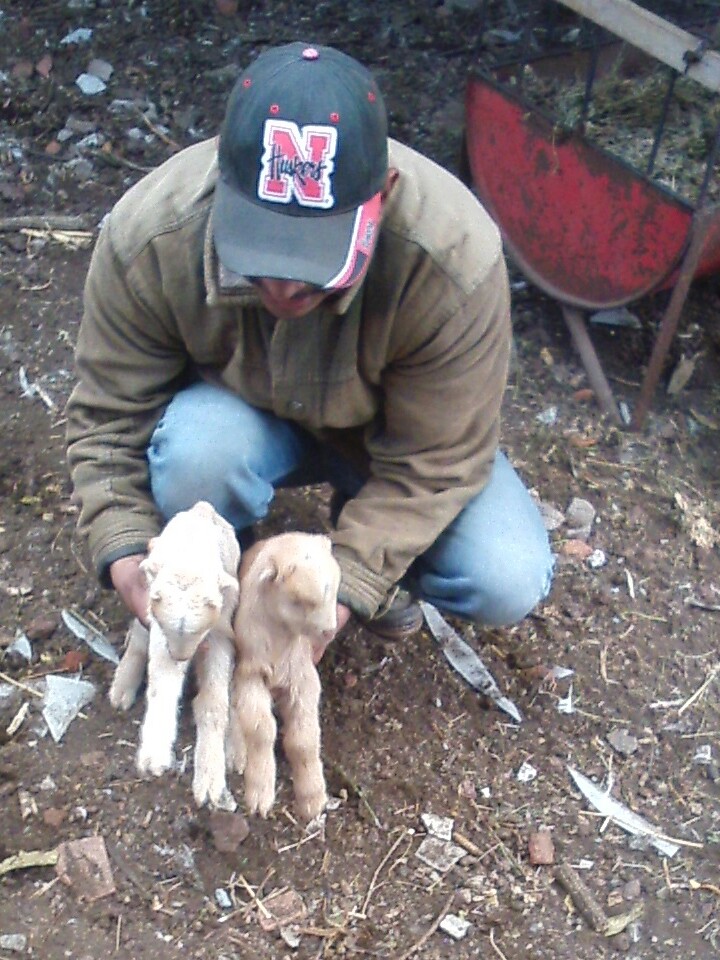
Los bandidos short ears, Carl and Mel.

In all, 14 kids were born during a month-long birthing extravaganza. The first chiva, Caramela, had twins. She was nearly a week ahead of the other goats because Joey had knocked her over when he was misbehaving, and the fall brought on an early labor. Both male kids, Carl and Mel, were fine, just a little small. We call them los bandidos (the bandits) collectively since we can’t tell the two apart.
cam04206-1.jpg

Junior

cam04257-1.jpg

Jason Boer

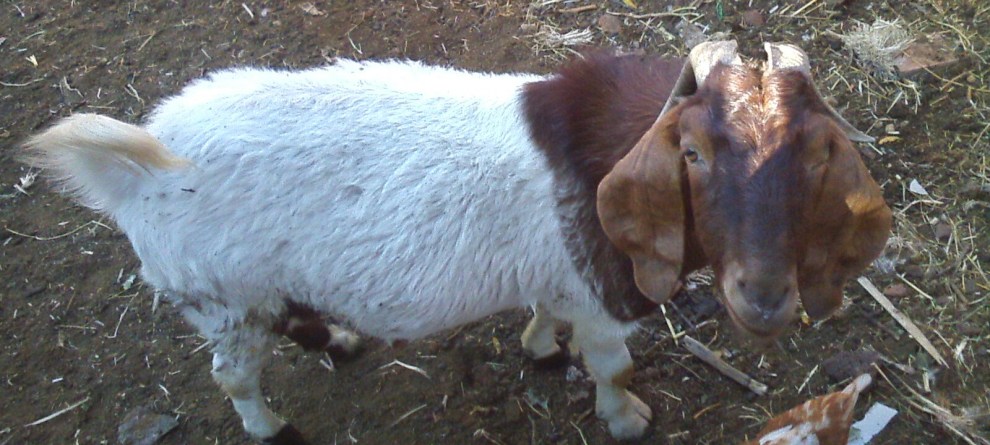
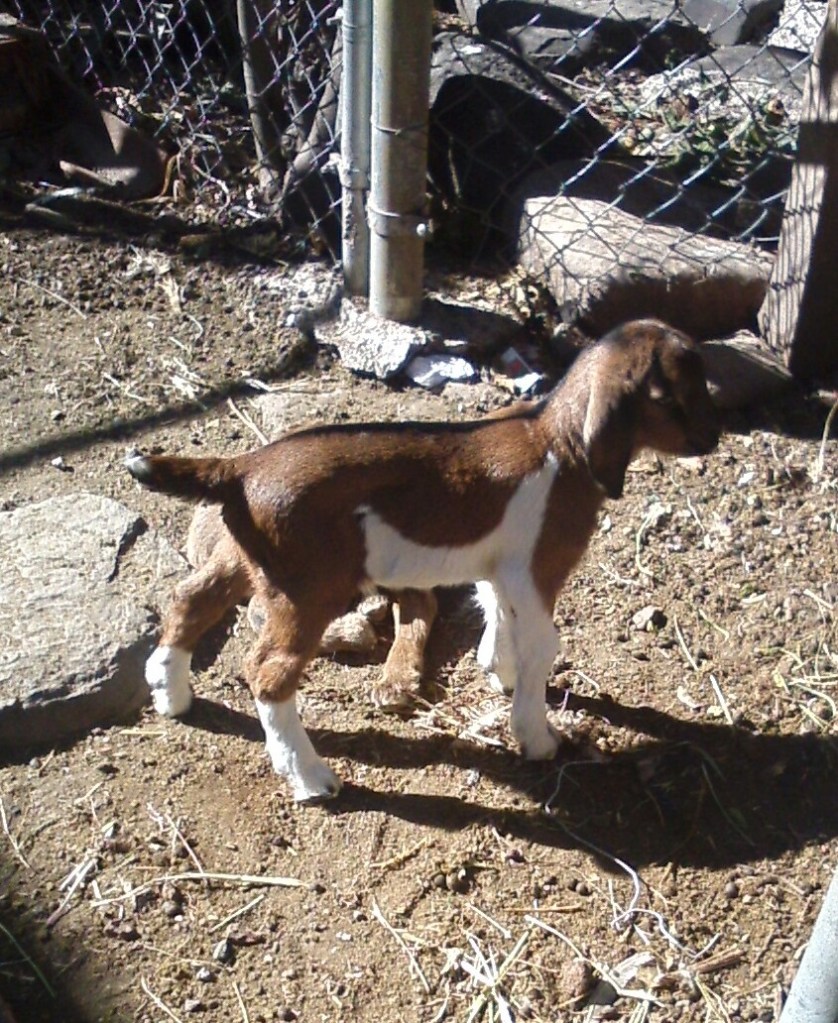
Shortie had an enormous male kid that is the spitting image of dear old dad, only with more brown. We’ve named him Junior. Moya (Blackie) had a huge female kid that is just like Jason Boer but in black and white, like a cow. We’ve named her Bessie.
cam04267-1.jpg

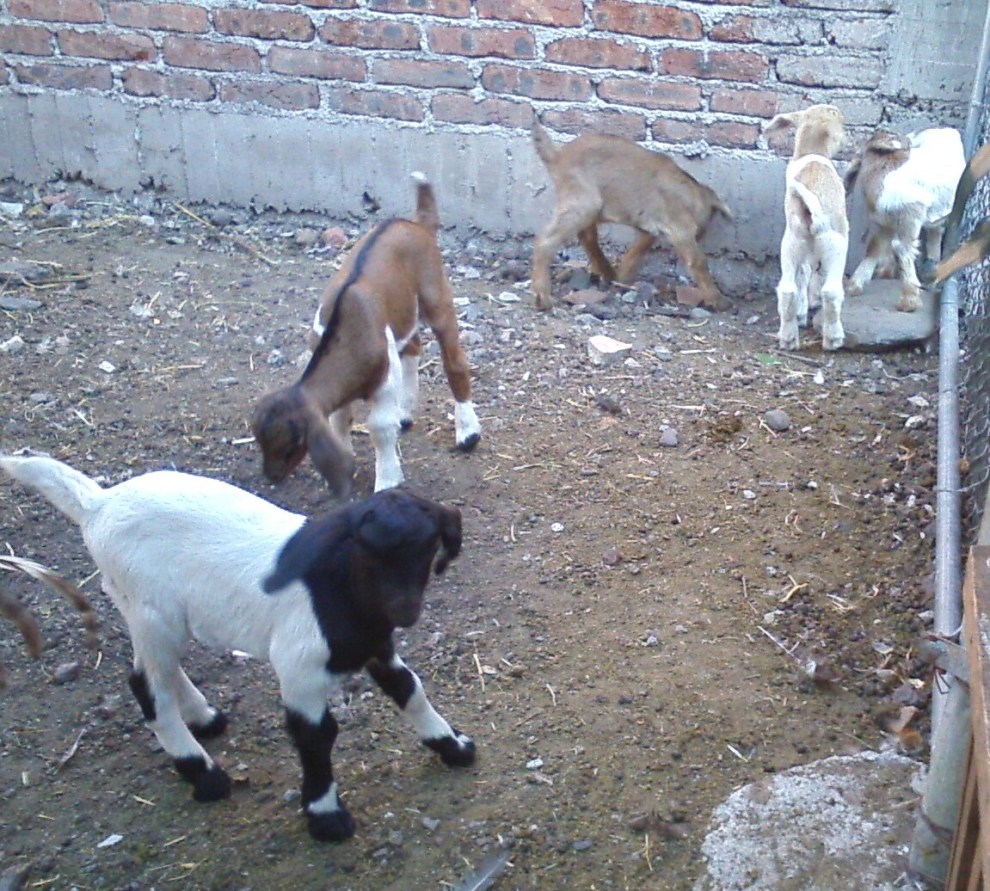
Front to back–Bessie, Junior, Clyde, No name royalty, Spot

Queenie presented us with twins, a boy with campanitas and a girl without. No surprise there. Queenie is pretty predictable with her twin births. The boy seems to have something wrong with his front leg. It appears to be slightly longer than the other one, so he walks and jumps and runs with a limp. It hasn’t had much effect on his mobility though and certainly not his sunny disposition. We have yet to come up with fitting royal names for these two. We’ve already used Duke/Duchess, Lord/Lady, Prince/Princess, King/Queen combinations. Any suggestions?
cam04194-1.jpg

Coon

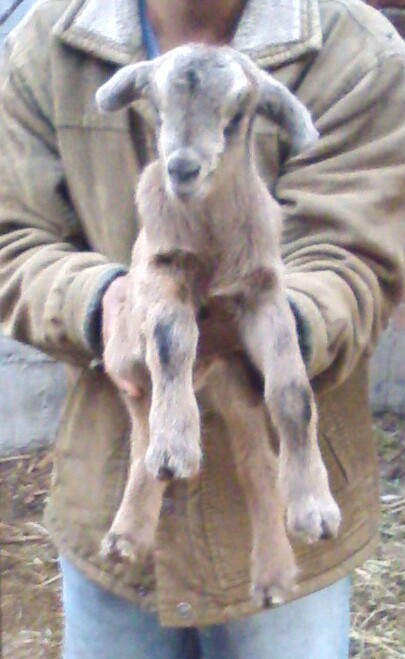
Princess had some difficulty. This is her second baby, so we thought she would have less problems however, her baby boy’s head was too large to exit the birth canal unassisted. He’s got a striped tail like a raccoon, so he’s called Coon. He really is monstrous in size.

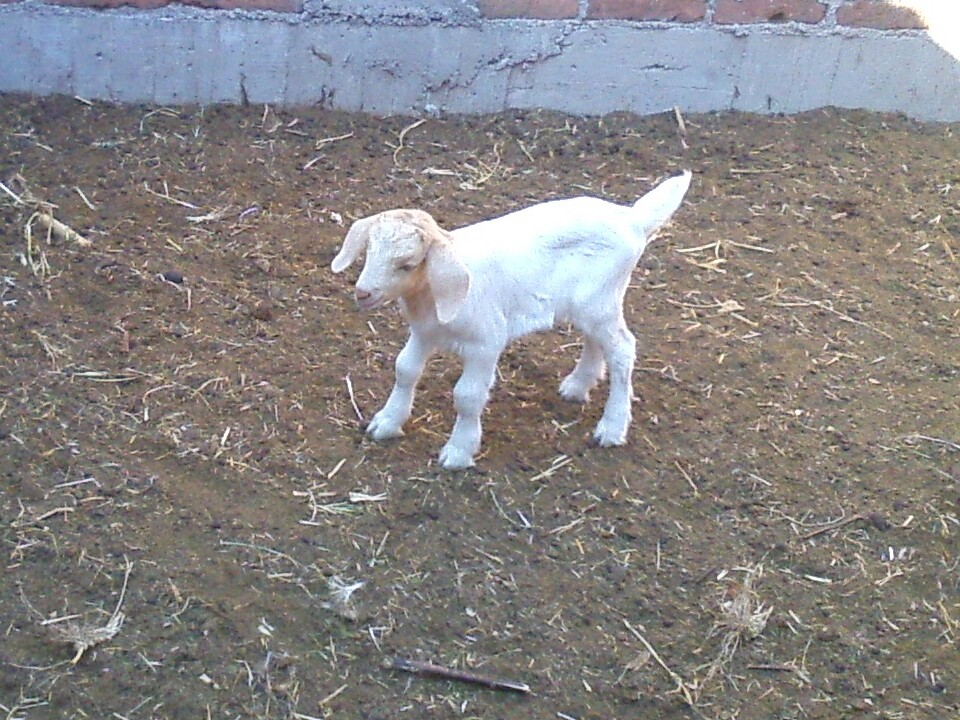
Princess’s daughter, Princesita surprised us by being pregnant as well. Well, like mother like daughter I suppose. Princess had Princesita when she was less than a year old, so Princesita started in early too. Her little guy, Whitey, is on the small side and tires easily, but otherwise healthy. Junior has taken the role of trainer upon himself and hustles Whitey around the corral to build up his strength and endurance.
cam04265-1.jpg

Bunny

cam04213-1.jpg

Brownie

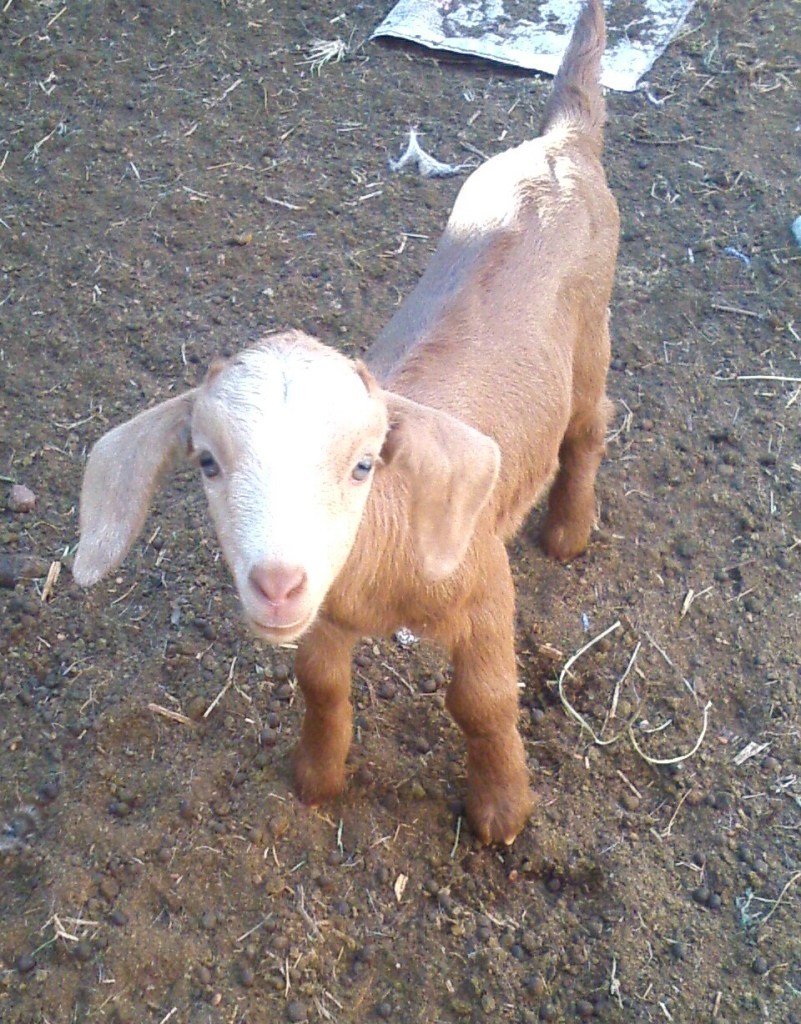
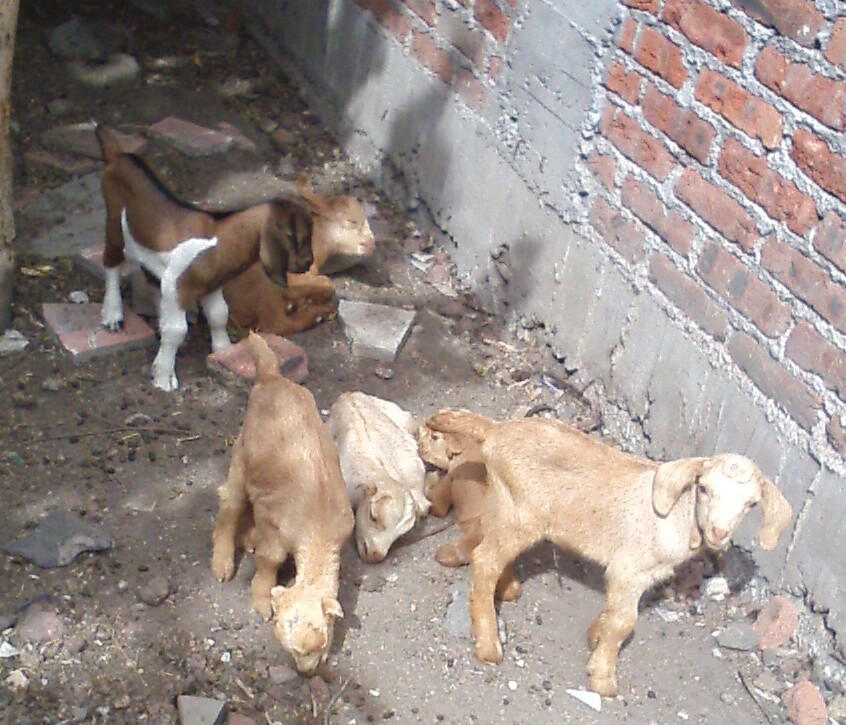
La hija de Queenie (Queenie’s Daughter, she never did get a proper name) had a fluffy little girl Bunny. Brownie cloned herself and birthed Brownie 2. She’s become best buddies with Bunny.
cam04186-1.jpg

Venada had twins, a boy and a girl. The boy has campanitas and girl doesn’t. These are the second set of los bandidos, Bonnie and Clyde. They are darker brown with floppy ears and like to play Olé with Bunny’s mom. She doesn’t want her daughter playing with the roughnecks and chases them away. Los bandidos think it’s great fun!

Nanny goat was the last to have her babies. She also had twins, a boy and a girl, Spot and Mancha. Mancha was positioned foot first, so delivery was assisted. Good thing my husband was home to lend a hand. They are bigger than all the other kids, but seem a little slow on the uptake, being so much younger.

Right now, when the parents are taken to pasture, the babies stay in the corral. It gives the moms a well-deserved break and allows them to eat without trying to keep track of offspring. The kids love “recess” time and play tag, hide and seek, butt heads, Ring around the Rosie and even tap-dance on an old chest lid. Of course, they all start to holler when the milk trucks come home.

With so many new residents, my husband had to make a new feeding trough. The new trough has become quite the place for our new kids to show their WWF Wrestling skills!

We did get way more machos (boys) than hembras (girls) in this batch. All 5 girls will be kept without question. The 9 boys will be traded or sold as they get bigger. My husband wants to hang on to Junior, Coon, and Spot–but I don’t see how that will be possible. One macho per herd is plenty. Guess we’ll just see what happens.

********************

 A complete Herbal Starter Kit by Herbal Academy

disclosure

1 Comment

Filed under Animal Husbandry, Homesteading

Playing Tourist–Patzcuaro, Michoacan

cam04111-1.jpg

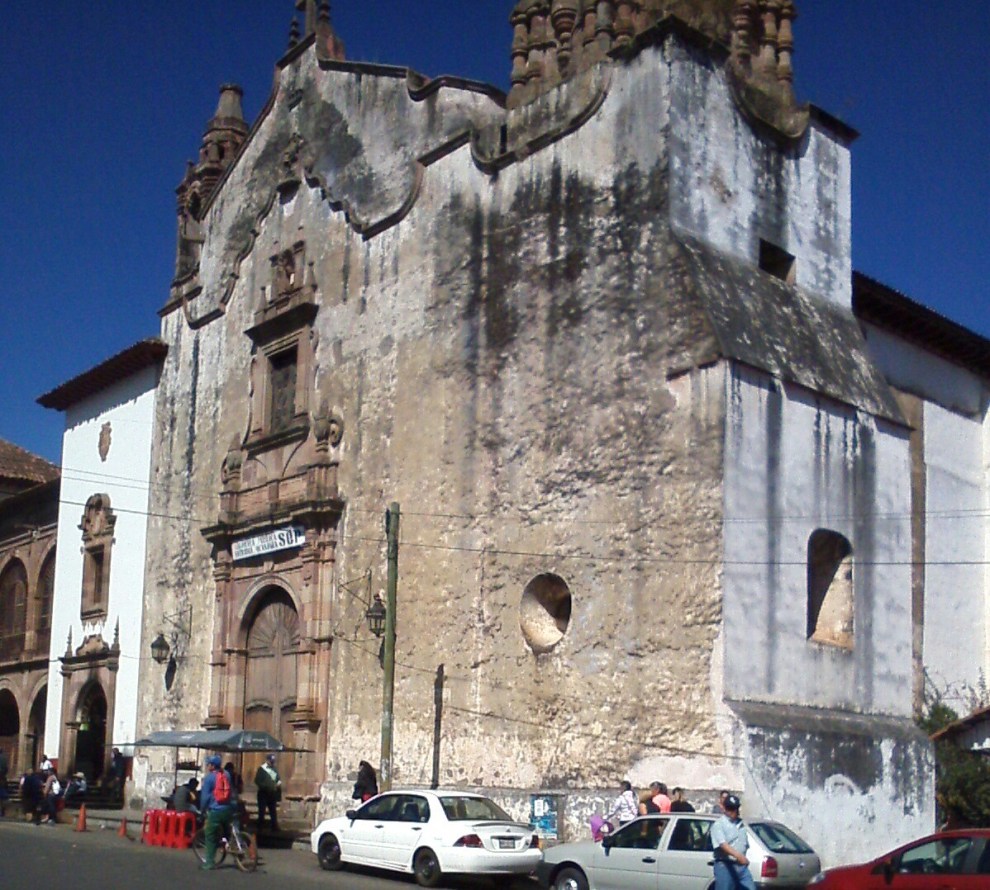
Ex-monastery of San Agustin in Pátzcuaro, Michoacán, Mexico

Patzcuaro, Michoacan is yet another Pueblo Mágico within easy driving distance from La Yacata, so there was nothing to be done but go. Its original name was Tzacapu-Hamúcutin-Pásquaro which roughly translates as Donde están las piedras (los dioses) a la entrada de donde se hace la negrura (where the stones of the gods are at the entrance to where they make the blackness) which sounds ominous. A better English translation would be ‘The entrance to the gates/entrance of Paradise’ or some such idea. The indigenous of the area held the belief that lakes were portals to the otherworld, so it comes as no surprise that there is a lake just outside of Patzcuaro proper.

cam04103-1.jpg

Fountain in the center of Patzcuaro, Michoacan in honor of Bishop Vasco de Quiroga.

The Purépechas founded the town sometime before 1300 mostly as a religious center. The Spanish arrived in 1522, and the town remained a religious center with a very small population until about 1539 when the bishop Vasco de Quiroga dedicated himself to the repopulation and revitalization of the area. He was well received by the native people, even earning the nickname Tata Vasco.

In 1776, the indigenous of the area staged a revolution which was put down in 1777. In 1886, the railroad Morelia-Pátzcuaro was finished, and in 1899, Patzcuaro had its first electric lights. That amazes me since La Yacata is still waiting for electricity in 2016!

cam04109-1.jpg

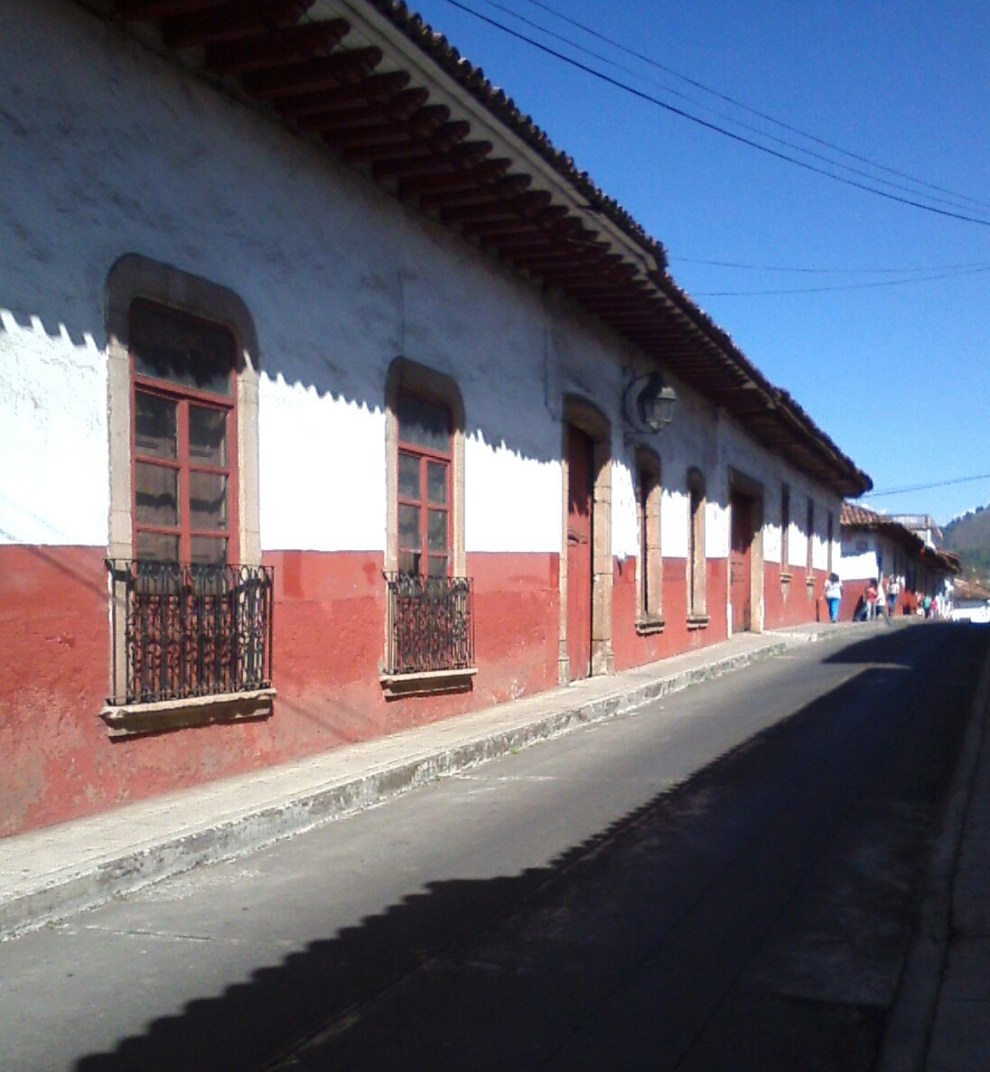
Since then, it has been a popular tourist area, known for its pottery and basketry. It really is a beautiful little town, done up in the red and white style, with cobblestone streets, much like Cuitzeo.

Our underlying reason for visiting Patzcuaro was my quest for a foot-pedaled sewing machine. Someone told me that these could be found there. So there we went. The road was clearly marked, unlike our trip to the Monarch Butterfly Sanctuary and we were able to take the libre (free) road the entire way.

There happened to be a tianguis (flea market) in the centro (downtown), but there wasn’t much of interest for us. Most vendors were hawking new toys and boxes of cookies for Los Santos Reyes. We did enjoy some gorditas de nata and fresas con crema (strawberries with whip cream).

Around la plaza, we noticed that there were a number of American-styled coffee houses instead of the more typical taco stands. It really smelled heavenly but was pricey, so we opted not to buy any. In line with the town’s tourist popularity, there were quite a number of gringos (white English speaking people) enjoying their cups of joe, playing chess or reading. The stores were chocked full of delightful artesenia (arts and crafts) but at prices that were not accessible to the average Mexican or to us, for that matter.

cam04112.jpgWandering around town, we came across the Basílica de Nuestra Señora de la Salud, built on a Purépecha/Tarasco pyramid platform. Notice the sign by the fence warns against tieing up your horses or leaning against it. I didn’t see much in the way of horses for that to be a current problem. There, outside the Basilica, vendors were selling prayer cards, rosaries, statues and peyote/marijuana cream for arthritis. Nuestra Señora de la Salud seems to be the same virgin found in Soledad, so I expect pilgrimages are made here as well to petition her curative powers. Tata Vasco’s remains are also housed within the Basilica.

We finally found the Singer Sewing store, and they had a foot-pedaled machine on display. However, the elderly owner would not sell it to me because she said it was a piece of crap, China made rather than hecho in Mexico (made in Mexico). My son pointed out that was just as well since if we did buy the machine, how would we get it in Myrtle (the VW bug) and back home? Good point.

cam04115-1.jpg

We stopped at a yonke (junk yard) and picked up some pieces for the revitalization of Myrtle and had a late lunch at Las Jacarandas just outside of Cuitzeo. An excellent day trip if rather uneventful.

****************************************


disclosure

1 Comment

Filed under Mexican Cultural Stories, Religion, Tourist Sites in Mexico

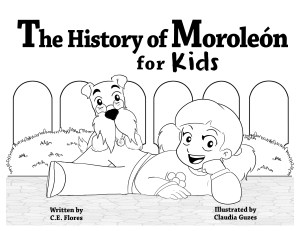
The History of Moroleon for Kids ebook

Today is the last day to download FREE The History of Moroleon for Kids by yours truly and the fabulous illustrator Claudia Guzes!

portada 2


How much do you really know about Moroleon?

***Why is there a celebration every January 15 in Moroleon?

***Did Moroleon support or resist the Cristeros?

***Which indigenous groups peopled the area?

***When did the first European settlers arrive?

***Why is the main Catholic church called El Templo del Señor de Esquipulitas?

***How did Moroleon get its name?

***Who attacked Moroleon in the early 1900s?

***Why are businesses closed on Thursday afternoons?

Find out the answers to these and more about the history of Moroleon in this book artfully designed with children in mind.

********************

disclosure


3 Comments

Filed under Book Reviews, Mexican Cultural Stories, Tourist Sites in Mexico