Las Fiestas en Enero–Jaripeo

feria 2016.jpg

January has come around again, and it’s time for the annual festival in Moroleon. Although the events seldom vary, our own experience with the festival has.

This year, our now 13-year old young man begged and pleaded to go to the fair with his friends rather than with us. Our schedule remains complicated, so he had to wear his school uniform, rather than ‘cool’ clothes, but he said he had fun. The first week was 2 x 1 admission which included unlimited rides and the circus, now with no wild animals performances. They did add the log flume to the ride repertoire, although getting drenched in frigid January temperatures isn’t ideal.
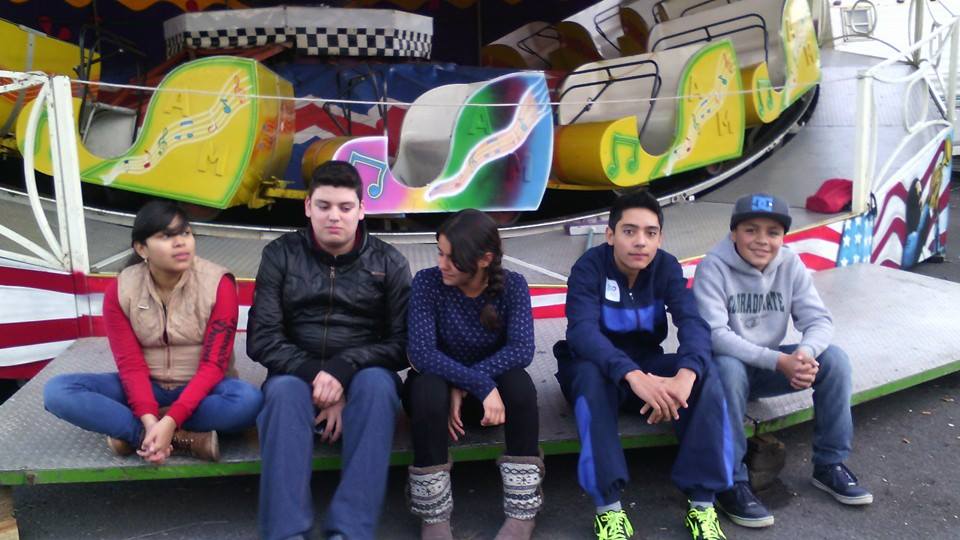
william at the fair

At the fair

I’ve decided that I’m too old for amusement park rides–my equilibrium isn’t what it used to be. My husband has an extremely weak stomach and never was a big fan of rides. So he and I decided we’d enjoy the festivities by going to a jaripeo (rodeo) instead.

When we found out that the jaripeo would be in the Lienzo Charro Nuevo, which was specifically dedicated to el Sr. de Escapulitas, and had free admission–there was nothing more to do but march our little fannies across the road from La Yacata and attend.

Our son decided that he wasn’t interested in attending, so just my husband and I set out.

Even though the rodeo was less than a five-minute walk from our house, my husband insisted we take the truck. Apparently, walking to such events is just not done. Sure enough, we saw several of our neighbors with their trucks there.

My husband clarified that this was not a jaripeo, even though that’s how it was announced, but a charreada–a skills presentation rather than real rodeo, but I didn’t care. The nearest I can figure is a true jaripeo is fairly dangerous to bull, horse, rider, and audience and may result in the death of any of the aforementioned participants. Whereas a charreada seldom results in death, although injuries, sometimes severe, do occur.

The charreada became popular when there were haciendas in Mexico, adapted from traditions brought from Spain in the 16th century. Originally, the charreada was a competition between the families of neighboring haciendas. The charreada is made up of 9 events for men and one event for women, all involving horses and cattle.

I had some mixed feelings watching the charreada. I enjoyed watching the horsemanship and rope tricks. However, I felt sorry for the undernourished yeguas (mares) that were roped and tripped and harassed. Most seemed to be about the same age as our Joey, but so thin and small, with large patches of hair missing from their hindquarters. I asked my husband what happens if one of the horses is injured in the fall. Sadly, they are fed to the lions. Yes, Moroleon has lions at the local zoo. Unmanageable, sick, unwanted, injured horses and donkeys are bought and served up fresh to the small lion pack at Los Areas Verdes.

Partying in honor of Las Fiestas de Enero continued on until the wee hours of the morning on Thursday, Friday, and Saturday nights. We opted to steer clear of that again this year. It’s cold, noisy, smelly and just not a whole lot of fun for us old fogies. The fair is here 2 full weeks and events such as the jaripeos are randomly interspersed in between. The “trastes”(dishes) stand also comes to town but no longer sets up with the circus. It rents an open area near Soriana for their tents now, probably cheaper. Dishes, glasses, pots, pans, cooking utensils, dish towels and the like can be found there. They aren’t less expensive than the regular stores, but there is more of a selection.

I have a special treat for those of you from Moroleon. My friend Claudia and I worked up a little book for children that highlights some of the more interesting historical tidbits about Moroleon.

portada 2The History of Moroleon for Kids (Kindle)

*************************************************

SOTBS Blog Hop Op1Sq

Have a Christmas or New Year in Mexico themed blog post?

Link it up here! An InLinkz Link-up

disclosure

4 Comments

Filed under Carnival posts, Cultural Challenges, Mexican Holidays

Driving Hazards–Vehicles without brakes

red line on road

On our way home from visiting the Monarch Butterfly Sanctuary in Michoacan, we were intrigued to see a painted red line in the middle of the toll road. Just a little bit down the road, there was a sign that instructed vehicles without brakes to follow said red line. It went on quite a ways before crossing the lanes to the right into a truck stop ramp.

About the time we reached the rampa de frenado (truck stop ramp), we hit major traffic and began moving along at a crawl. Thus, we were able to watch a riveting drama unfold. A small pick-up truck appeared from apparently nowhere at the top of the truck stop ramp. It approached oncoming traffic in the wrong the direction. The driver decided to turn around and turned onto the ramp, which seemed to be made of asphalt. Much to our surprise, and most assuredly the surprise of the driver, the truck sank up to the wheel wells into the “asphalt.” When the driver climbed out to see what was going on, he sunk up to his knees. The “asphalt” was really black sand set up so smoothly that it looked to be a solid surface. The driver got back in his vehicle and attempted to back up. That wasn’t happening. By that time, 3 of his tires were stuck and the fourth looked as if it would pull off the axle at any moment. He tried going forward and no sir, nothing doing. His wife began gesturing furiously. We could just imagine what she was saying about the current predicament. Well, I have to say that the truck stop ramp worked quite well. It stopped that truck dead in its tracks. As traffic advanced, we slowly crept passed, leaving the truck hopelessly mired in the pit of despair.

sand pitRampa de frenado after being used.  Notice how deep the sand is!

Just a little way further down the road, we noticed the red line continued. This time, the line curved to the left. I suppose that the second ramp would be in case the vehicle without brakes was unable to enter the first truck ramp on the right. There, on the left, instead of a ramp, we saw a gravel lane at least 1/2 mile long with large gravel speed bumps. In case the speed bumps weren’t enough, there were at least 20 barricas (barrels) full of water (or maybe stones) to slow the vehicle down before a stone wall right loomed up which was in front of a 20-foot steep drop-off. That ought to do the trick.

I think the traffic sign indicated it was a franja, which literally translates as fringe, but if anyone out there has the correct name, I’d be interested in learning it!

toll lane

As we inched along toward the toll booths we saw the red line reappear. If the vehicle without brakes was still running wild, the center lane had been set aside for its passage, right through the toll booths. In order to keep the center lane traffic free, a brave, brave man stood there with a red cloth, waving the cars and trucks to the side.

All these precautions seemed to be adequate in case of brake failure except for the fact that the toll booths backed up traffic to some point BEFORE the first truck stop ramp, pretty much making it inaccessible. Only in Mexico would toll booths be built at the bottom of a steep hill that required two emergency stops. Maybe the toll road isn’t such a feasible option after all.

*********************


disclosure

1 Comment

Filed under Driving Hazards

Playing Tourist–Monarch Butterfly Sanctuary

cam04080-1.jpg

One Sunday morning during the long Christmas vacation, we up and decided that today was the day we would go see the mariposas (butterflies). We had high hopes of seeing active butterflies since the numbers were reportedly up this year (2015) as compared to previous years.

Why the low numbers?

Well….Illegal logging of the oyamel tree has caused over-wintering habitat loss. Pesticide use and the excessive planting of corn and soybean GMOs (genetically modified organisms) in the United States have threatened the milkweed plant, a prime source of food for the migrating monarchs. Even global climate changes have impacted the life-cycle of the monarch. In 2002, a severe winter storm killed millions of monarchs. The total area occupied by monarchs in their overwintering habitats in Mexico dropped to an all-time low in 2012-2013.

I had heard that the hike was not an easy one, so in addition to the “better go and see the butterflies before there aren’t any to be seen” reason, I figured it would be better to make the hike while I was still youngest and ablish–and not wait until I had trouble getting around. As you will see, that ended up being a pretty good idea.

Adult monarch butterflies (Danaus plexippus) found east of the Rocky Mountains migrate to the central, volcanic region of Mexico, specifically in the area bordering the states of Michoacan and Mexico. And that’s where we aimed to go to see them.

There are only two sanctuaries open to the public in Michoacan, El Rosario, and Sierra Chincua. We set out with El Rosario as our destination. Outside of Morelia, we got on the toll road, (133 pesos) but inadvertently headed in the wrong direction. After an anxious 10 minutes, we were able to get turned around.

The directions and maps I had printed out seemed pretty straight forward. However, Mexico road sign makers had other ideas. We were to take the Michoacan highway #765 outside of Maravatio. There was a big road once we exited the town, however not one of the road signs had a number on it for verification purposes. We ended up asking and asking which way to the butterflies? Of course, everybody had a different answer to that, but we were able to head in the right general direction.

blank road sign

Every single sign we passed looked like this–NO road numbers!

At the end of the road Michoacan highway #34, we came across an official-looking dude and a big sign that said THIS WAY TO THE BUTTERFLIES. We stopped to talk to the chaleco (vest) wearing man, and he gave us directions to El Rosario and a map. I’m sure the Michoacan state tourism board gives these maps out for free but well, he had one, and we didn’t so we donated 10 pesos para el refresco (for a soda).

We continued along, asking questions in the little towns we entered. Again, everybody had a different answer. One said to turn right at the high school. A right turn there took us to the parking lot. Then another said turn right at the Telecable–again, there was no right turn available. Up ahead, we saw a big old tour bus, like from the 70s. A tour bus must be heading towards the butterfly sanctuary, so we hitched our wagon to the bus and headed up the mountain.

It was an incredibly steep drive, but spectacular! Good old Myrtle (our Volkswagon bug) did her best, and soon we were driving through Angangueo, another one of Michoacan’s Pueblo Magicos. The tour bus did take us to the butterfly sanctuary, but not to El Rosario. We ended up in Sierra Chincua. Well, butterflies were butterflies and since we were here, might as well go to this reserve.

We pulled in and paid for parking (30 pesos), then drove another 2 km or so to the lot. We headed to the ticket booth and bought tickets (45 pesos each). In line, I overheard some Mexicans trying to negotiate the price with the ticket seller. Was there a student discount? Was there a discount for the tercer edad (senior citizen)? Nope.

cam04077-1.jpg

The price of the ticket included a guide. As we were a piddly group of 3, we were assigned Fernando, who looked to be about 10 years old. Well, that was all right. It took us longer than we had figured and we were ready for lunch, though. Fernando took us to the next to last Cocina Economica (Economy kitchen) where his sister worked. We invited Fernando to eat with us as well. We had blue corn tortillas quesadillas con champiñones (mushrooms) and atole de zarzamora (a blackberry flavored corn-based hot beverage). It was delicious!

cam04058.jpg

We also were right under the Tirolesa c (zip cable) and enjoyed the screams of several high-flying riders as we ate.

cam04056-1.jpg

Then we were off. This particular reserve offers a horse ferry for part of the hike. We opted to not ride the sturdy fellows and walk. Twice, before we arrived at the base of the hill, I was offered a ride up at a discounted price. Apparently, I looked like I might need it. But I declined. Well, it was a hike and a half. I’m sure about half way up, my face was tomato red. One of the horse leader guys, at least 20 years my senior, called out “Anima Jefa” (You can do it lady) as he passed at a high-speed sprint up the hill. Well, if there’s one thing I am, that’s determined (or pig-headed), and I made it up the hill. But for future reference, it isn’t a hike for senior citizens or for children under the age of 6.

cam04072-1.jpg

At the top, there was a scenic view, which was quite scenic, before the actual trail. Horses are not allowed on this section of the trail, so it’s on foot or not at all. The trail was about 8 inches wide and was both the coming and going trail, which meant frequent stops to allow other hikers to pass. It was not nearly as steep as the first section, but it was muddy, especially the closer we got to the actual nesting site. Both my son and I slid part way down the mountain while gawking at the trees. Wear hiking boots.

cam04076-1.jpg

Here’s another future reference tip. The butterflies are most active between 9 and 10 am. After that, the temperature drops (it is definitely winter jacket weather) and the butterflies settle down for the day in a sort of suspended animation. It’s still amazing!  However, the butterfly’s underwing is white, not orange and black, so it’s not what you might be expecting. Several of the hikers were quite disappointed. Not me, by golly! The reserves in Michoacan are one of the 13 Natural Wonders of Mexico, and I got to see it.

cam04065-1.jpg

We headed back–the hike in took about 30 minutes, then another 30 minutes to get back to the scenic overlook. The steep hill trail was much easier going down than up. We gave our tour guide Fernando 20 pesos as a tip and went to the souvenir shops. There were lovely hand knit sweaters, hats, mittens and ponchos for sale. Quite handy if you happened to not have dressed appropriately. There were also some commercially produced monarch memorabilia. Unfortunately, every store had the same merchandise for sale, so that was disappointing. The bathrooms had stone floors, and although you had to bring in your own bucket of water to flush with, they were nice and clean. Toilet paper is 3 pesos like most other public restrooms.

cam04053-1.jpg

And that was that. Our adventures for the day were not over yet, however.

*****************************


disclosure

5 Comments

Filed under Native fauna and flora, Tourist Sites in Mexico