Natural Healing — Ortiga

Ortiga is the general term for nettles in Mexico. The varieties tend to be used interchangeably in remedies. Nettles were used medicinally pre-conquest by Aztec healers to treat joint pain and rheumatism and continue to be a staple in traditional healing remedies throughout Mexico. The Nahuatl term ihtitzonhuītequi refers to the process of beating the stomach of a person with a branch of nettles as a treatment to break up stomach pain before a sobada (massage). While beating the stomach generally has gone out of favor in most treatments, rubbing stinging nettles on the body is still quite common. 

Note: Ortiga may cause uterine contractions and has shown to be genotoxic (damaging to DNA resulting in birth defects); therefore, it should be avoided during pregnancy. Fresh leaves will cause itching, stinging, and rashes. 

Ortiga Mayor

Photo credit: Pedro Tenorio Lezama

Ortiga mayor or verde (Urtica dioica L. var. angustifolia) is also known as dominguilla in Jalisco, solimán in Puebla, and in the Zapotec language, guiechi-bidoo with spelling variants guichi-bidu and ghuchibdu. This native Mexican nettle variety is the slender or tall nettle, also known as the California nettle. 

Ortiga’s tender leaves, harvested before the plant flowers, are edible and are high in calcium. Wash, boil for ten to fifteen minutes, and they are ready to go. Enjoy in salads, soup, or pureed in juice. Although the boiling process reduces the potency of the nettle’s sting, be aware that eating undercooked leaves can result in tongue edema.  

Ortiga is most often employed in the treatment of arthritis in Mexican traditional medicine. To make a poultice, crush the leaves and boil them. For a liniment, steep the leaves for two days in alcohol and rub on painful joints before bed. Urtica dioica is anti-inflammatory, supporting traditional use. 

Ortiga is prescribed for diarrhea, bladder infections, rheumatism, bronchitis, bloody phlegm, and uterine hemorrhaging. The infusion is made with 15 to 30 grams of leaves and root for a half liter of water. Patients should drink three or four cups a day for twenty days. An infusion for edema is made from three branches in three-quarters liter of water. 

Ortiga is a diuretic and is prescribed for PMS bloating. Pour a cup of boiling water over two teaspoons of dried herbs and steep for 10 minutes before straining. Drink up to three cups per day. One remedy for excessive menstrual flow, enfrío de señoras, calls for the purple variety of sin verguenza (Tradescantía Zebrina Purpusii), ortiga stems, the hairs of the outer shell of coco (Cocos nucifera) and crushed pecan shells. 

Ortiga tea for prostrate issues is made with either fresh or dried leaves. Pour warm, but not boiling, water over two teaspoons and allow to steep for five to ten minutes. Drink two cups daily. Studies have shown that Urtica dioica suppresses malignant cell growth in individuals with prostate cancer. Urtica root also has been shown to be beneficial in the treatment of urinary tract infections and benign prostatic hyperplasia. Additionally, leaves and root extracts block sperm transport, making it a fairly effective male contraceptive aid. 

Urtica dioica has anti-dengue, antihyperglycemic, hypotensive, vasorelaxant, and antidiabetic activity. It has also shown promise in the treatment of allergic rhinitis.

Ortiga menor 

Photo credit: Valentin Hamon

Ortiga menor (small or dwarf nettle) is sometimes called ortiga negra (Urtica urens). Several studies have noted that several weeks of ortiga menor tea drunk by nursing mothers resulted in galactorrhea, which explains why nettles have traditionally been prescribed for increased milk flow. 

Ortiga menor is anti-inflammatory, antioxidant, antimicrobial, and anti-parasitic. It has shown potential in treating hyperuricemia, elevated uric acid levels, and relieving rheumatic pain. It is antinociceptive. Urtica urens has anxiolytic activity comparable to diazepam. 

Ortiga Brava

Photo credit: Dick Culbert

Ortiga brava (Urera baccifera) is also known as, purichi, nigua, espanta diablo, pyno guasu, guaritoto, ortiga de caballo, pica-pica, pringamoz, laal tsiimim (Maya), chak lalil k’aax, and pringa leche. In English, this variety of nettle is called scratchbush. 

Infusions are made with either the leaves or roots. The sap is applied to infected molars, boils, bruises, and skin infections. An infusion from the roots is given as a diuretic, to relieve urinary tract infections, and to bring on menstruation. A wash from the roots is applied to burns and ringworm infections. Ortiga brava has antioxidant, anti-inflammatory, and analgesic properties. 

It also demonstrates gastroprotective properties, supporting its use in treating gastric disorders. 

Ortiguilla

Photo credit: Mason Brock

Ortiguilla (Urtica chamaedryoides) is also known as buba, chichicasate (with variant spellings chichicastle/chichicaztle), tsitsikaxtli, buba, and meloncillo. In English, this variety of nettle is the heartleaf nettle or slim stinging nettle. The leaves are used topically for muscle pain and cramps in the states of Morelos, Veracruz, and Mexico. Less frequently, ortiguilla is used as a wash for escarlatina (measles), hives, and sores. The root is boiled and the infusion drunk for a bloody nose. 

A steam decoction is made from the leaves to treat asthma, tuberculosis, and bronchitis. An infusion is prescribed for digestive issues, including diarrhea, dysentery, and parasites. Other uses call for ortiguilla to combat mal de aire (evil winds), to bring on menstruation, and as a liver tonic. 

Ortiguilla (Urtica chamaedryoides) and ortiga menor (Urtica urens) are very similar in appearance and often used interchangeably in traditional remedies. Ortiga menor has smaller and thinner leaves than ortiguilla with more triangular edges. 

Ortiga blanca

Photo credit: Robert Flogaus-Faust

Ortiga blanca (white-dead nettle), also known as ortiga muerta, (Lamium album), arrived with the Spanish priests and is now easily found throughout Mexico. It is often mistaken for ortiga mayor (Urtica dioica). However, the flowers are different. Also the leaves of ortiga blanca are lacking in the “sting” that ortiga mayor has. Additionally, ortiga blanca leaves emit a strong, unpleasant smell when bruised. 

It is used in traditional remedies for fever reduction, as a blood purifier, and for prostrate issues. An infusion is made using five grams of leaves for each half liter of water. Half is drunk in the morning, and the other half at night. 

For flujo blanco (vaginitis), a wash is made from ortiga blanca and four leaves of manrubio (Marrubium vulgare). Studies have shown that Lamium album leaves provide relief in the event of vaginal and cervical inflammation. 

Ortiga blanca is recommended as an infusion during menstruation to reduce heavy bleeding and combat anemia. 

It is considered a fertility-enhancing plant in many areas of Mexico. Both partners should drink ortiga blanca as an infusion to improve fertility. However, there is no evidence supporting this traditional use. 

Drunk during pregnancy, ortiga blanca is believed to help in fetal development and reduce bleeding after delivery. After birth, regular infusions are thought to help strengthen the mother’s body and increase milk production. Ortiga blanca demonstrates hemostatic activity, making it useful in wound healing.

During menopause, regular novena (9-day) doses of ortiga blanca tea are recommended to reduce bone loss and regulate hormones. 

To make a tincture, add 100 grams of dry ortiga blanca leaves or 250 grams of fresh leaves to one liter of alcohol. Allow it to marinate in the sun for six weeks before filtering. Take no more than five ml three times a day. Lamium album has been shown to be beneficial in the treatment of arthritis pain.
Lamium album is anti-inflammatory, anti-bacterial, anti-fungal, astringent, antiseptic, antibiotic, anti-viral, antispasmodic, antioxidant, and anti-proliferative. It has shown promise in treating respiratory ailments. It also decreases glucose levels.

***

Interested in natural remedies? Uncover herbal remedies from traditional Mexican sources for healing and wellness in the Exploring Traditional Herbal Remedies in Mexico series.

Leave a comment

Filed under Health, Native fauna and flora, Natural Healing

Did it Happen in 2024?

Last year, I had some writing, Yacata, and self-care intentions that went, welp, not as well as I would have hoped. 

Writing

I had the ambitious plan to finish and publish 6 WIPs (works in progress). I managed to publish two (Exploring Traditional Herbal Remedies in Mexico Volume 5: Botanical Treasures from Acuya to Zarzaparrilla and Exploring Traditional Herbal Remedies in México Special Edition: Volumes 1-5).

This year, my goal is hopefully more realistic. I’d like to do a new book in the Lupita series (the first draft is already done), then a book for the Apothecary series (although I haven’t decided which one yet.) The third book may be from the La Yacata series or the Women’s Survival Series; I’m still up in the air on that. So, in all, I’d like to move 3 WIPs along the draft, editing, and publishing treadmill. This seems like a more manageable accomplishment. 

La Yacata

The pozo (community well) did not get legalized. However, the water quality and quantity studies were done, as was the video of the interior. All of those were turned in to SMAPAM (the local water commission), and we are waiting on a project plan they promised us. 

This year, I hope that this project moves along toward completion. There is still much more to be done (erecting a parameter fence to protect our water source, installing the pump and water lines, having a new water tower put up, dismantling the obsolete one, etc.). 

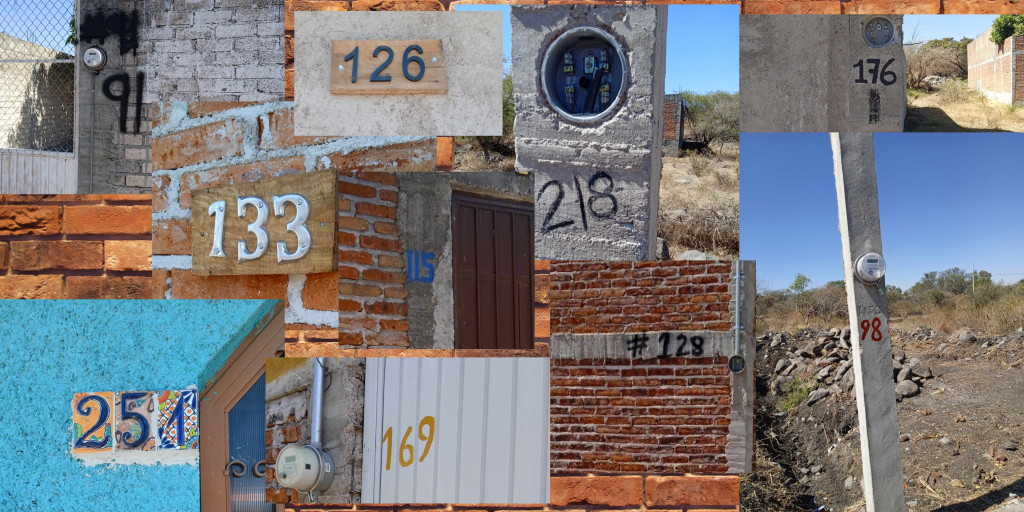
What did happen was the electricity, which was something of a miracle. There are more things we need to do to have 100% coverage, and CFE is fighting us every step of the way, but it’s a start. The idea is to finish this project, but it may take more than a year to do so because that’s just how things roll here in Mexico. 

Construction on my son’s house was slow going. The bathroom is all but finished, just needs some plumbing accessories. The window frames on the first floor were installed. The counter was finished and the walls painted. In 2025, I’d like to see the floor finished on all 3 floors. The tile for the majority has already been bought. The cost of rebar has drop substantially, so there’s a good chance the window frames and doors will be done this year too. 

I bought an additional lot just before prices doubled in La Yacata because of electricity availability. Right now, it has a makeshift fence to keep roaming animals away from my plants, but I hope to have some sort of more permanent fencing or divide put up this year.

Self-Care

My exercise routine petered out towards the end of the year. I’m blaming it on a joint flare-up that just would not settle down. So there’s room for improvement on that front. 

I have a new reading challenge for 2025 because I enjoyed 2024’s so much. My plants were variable, some flourishing, others languishing. That will be an ongoing issue, I expect. I made a concerted effort to be in the pool every moment I could until early fall, and I plan on continuing that little self-care ritual this year. 

I also quit one of my jobs, which may initially not seem like self-care since the loss of income was an added stressor. However, I picked up more teaching hours and made up the difference. I enjoyed many aspects of the woo-woo magazine I worked for, but with PayPal processing fees eating into my pay, it wasn’t a sustainable economic situation. I’m not actively looking for another job, although there is some concern that the new president-elect in the US and his hatred of immigrants (who make up 100% of my student body) will impact my job. We shall see. 

I also hope to do some of those online courses I signed up for at some forgotten time in the past. My goal is one course or class per month. Some are short, 40 minutes or so, and others are a bit longer. Naturally, if I start a class and find it not what I need right now, I give myself permission not to finish it because life is busy enough as it is, don’t you think?

So there they are, my 2025 intentions. What are your intentions for the year?

Leave a comment

Filed under Uncategorized

Convivio without CFE

A week after the official power inception, the CFE supervisor was back doing some final checks. He asked for, and I handed over the solicitud (application) for the last murete (meter post) that was installed and connected. I asked him if he had a date that he and his supervisors would be available to plan the convivio (community gathering). He said that week he was busy, but perhaps Monday or Tuesday of the following week.

Super Prez got a confirmation for Thursday between 2-3, and preparations began. R. bought a borrega (sheep) and a chiva (goat from my sister-in-law L. and assured us he knew just the person to have them prepared with montalay (which is a vegetable dish in guajillo sauce commonly served with birrira). R. was also in charge of the beer. My other sister-in-law, T., made 12 kilos of tortillas. C. made rice to accompany the meat and montalay. Her son-in-law provided disposable plates, cups, napkins, and utensils. We asked that anyone who was attending bring a family-size bottle of soda. We rented the chairs and tables from another colono. And the best part is I didn’t have to lift a finger to organize it! Anyone who asked what they could do or bring, I referred to C. and let her handle it. 

I posted the date and time in the WhatsApp community group, which started a firestorm. Immediately, the question was how much this would cost and whether they would have to pay if they weren’t attending. I explained that the cost would be divided equally among the lots and would come out of the fees for the second semester. A few colonos said they weren’t paying a peso. Others responded that they would gladly pay their part even though they couldn’t attend. One individual reminded everyone that in the old days, a meal was an appropriate demonstration of gratitude, and it was only fitting that we offered CFE the same for the enormous benefit our community received in having electricity installed, even if only a part of the fracionamiento (neighborhood). 

I tagged Super Prez in the conversation, and eventually he swooped in to smooth ruffled feathers, pointing out that divided among the properties, the cooperacion (contribution) for the convivio would not be more than 20 pesos, and there was really no reason to put up such a fuss. That settled everyone down, and we had approximately 80-90 colonos confirm their attendance.

The day of the convivio arrived. Super Prez confirmed that the CFE delegates were still planning on attending. The tables and chairs were set up on the first road with the hope that there would be some shade. We really need a community palapa for this type of event! Everything came together, and the tortillas, meat, and beer were delivered almost at the same time the rice was ready, which was seriously some sort of miracle. At just about 3 pm, colonos began arriving, and the serving table was set up.

Then Super Prez got a call from the CFE supervisor saying they could not make it. Apparently, his boss had just been fired, and the office was in a major upheaval. Hmmm, we’d have to look more closely at that situation, but not this day.

We went ahead and had our community gathering without them. The food was yummy. I had my husband haul the speaker we bought for the juntas (community meetings) down to the corner and got some tunes playing. The feeling was decidedly pleasant, and I enjoyed myself immensely. 

The sun disappeared behind the house, leaving a chill around 5 pm, and we started winding down. Attendees helped fold the chairs and tables and pick up trash. And that was that.

****

Want the background to our little community adventure? Check out La Yacata Revolution: How NOT to Buy a Piece of Heaven in Mexico! Available on Amazon.

Leave a comment

Filed under La Yacata Revolution