Well, our month in El Norte had ended and it was time to head home. My brother generously offered to take us to the airport in Philadelphia because although there was a bus from the neighboring town, we’d be cutting it close.
Our little road trip was blissfully uneventful. My brother and I kept up our running commentary of Remember Whens… and when we passed through Allentown, well nothing doing but to have his neat little car play Billy Joel’s ballad. Hmm, things are pretty much the same since ol’ Billy crooned that song!
I unwisely decided to drink not one, but two cups of coffee and we had to make an emergency pit stop (or two as this old lady bladder wasn’t cutting me any slack) before we arrived, but arrive we did.
We had enough time before our flight to grab a bite to eat and get checked in. I had weighed the suitcases before we left, both were under 50 pounds, which was a good thing because no one offered to saran wrap or weigh my bags here. The check-in attendant was a lovely girl from Argentina who asked about how we liked Mexico as she had a friend who moved there. This friend had initially hated everything about Mexico, the food, the music, the people but now 3 months into her new life has fallen in love.
We were flagged by the system and she had to manually enter our information. I showed her our documentation and she said everything looked good to go, so we went. Our bags would be sent on to Mexico, no need to pick up them up in Chicago. Getting through the security checkpoint was a breeze.
We still had some extra time, so we settled in these comfy chairs next to the window overlooking the tarmac. There were places to charge our phones there and we took advantage of those. I may have dozed a bit because the next thing I knew I woke myself up with a giggle which of course made my son giggle.
The flight was also blissfully uneventful. We arrived in Chicago even a little ahead of schedule. We were shuttled from the plane to a point past the security checkpoint so we didn’t have to remove our shoes again. We had some horrible McDonald’s food. Ugh! There just weren’t many options.
We had a 4-hour layover and there weren’t many places to sit, so we made do on the benches outside the bathrooms. Have I mentioned that I was never so pleased as I was using the public bathrooms in the U.S. since moving to Mexico? There wasn’t a turnstile to maneuver or an attendant to pay for a stip of toilet paper at the door. The toilets flushed automatically. The sinks, soap dispensers, and hand dryers turned on with a wave of my hand. Talk about POSH!
About an hour before our flight was due to depart, we wandered down to our gate and found a good seat by the charging station. We were scheduled to fly out at 7:30 arriving in Mexico City at 11:40 pm. Well, that didn’t happen.

First, the flight that was coming in was delayed because of storms in the area. That flight was rerouted to Indianapolis. A few hours later, the plane made a second attempt, which failed, and was rerouted to Ohio.
The day shift crew went home for the day. Substitutes were found, not all of them were Spanish speakers. This caused some angst amongst the half of the passengers that didn’t speak English. One angry man in a red shirt started shouting. I’m surprised he wasn’t approached by security, but maybe they had already gone home too. His gripe was that everything was MENTIRAS (lies) and that everything was in English.
I understood his frustration however it wasn’t these girls’ fault. There was another incident with a Mexico City fresa (hoity-toity) who was just outright insulting, upset at her inconvenience. She filed a complaint online with the airline. Whatever. We were all inconvenienced.
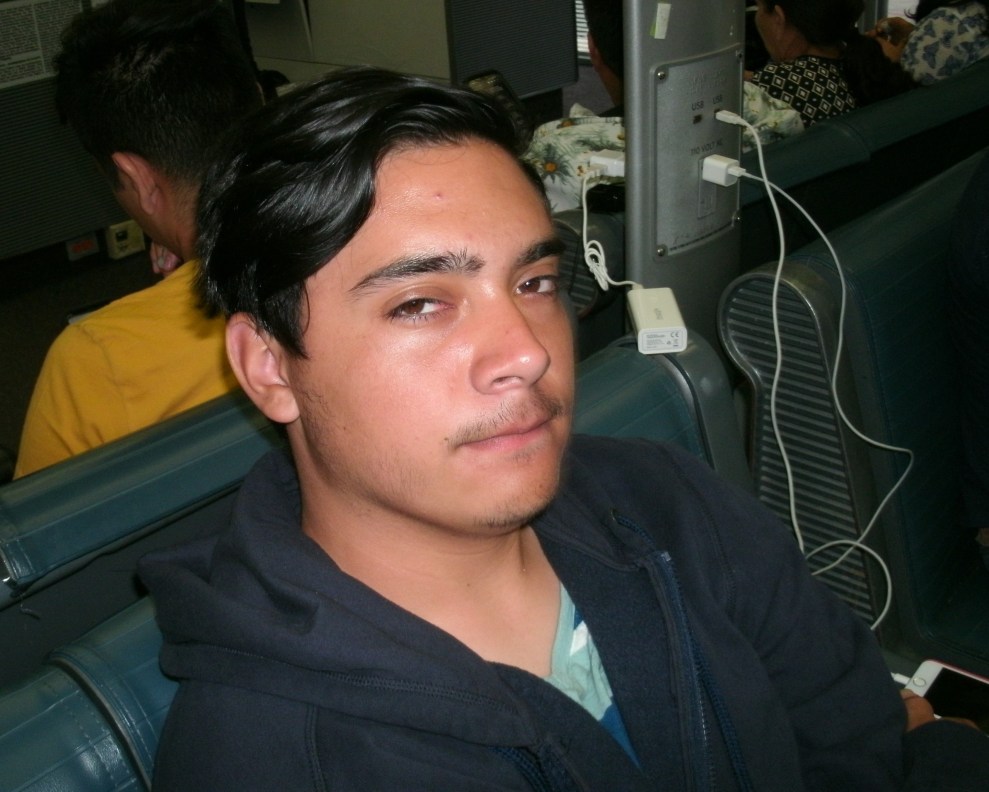
A very tired boy still waiting for the flight to board in Chicago.
Personally, I prefer to wait it out when conditions are unsafe to fly in. So wait it out we did. We finally boarded the plane at 12:30 am. Boy, were we exhausted. I have to admit I slept through most of the flight, awakened twice briefly when the flight attendant passed with a flashlight asking if we wanted water. My son was completely unconscious the entire time, which was for the best. He gets antsy on trips.
We arrived at 5:30 in the morning and went to go through immigration. I had my paper given to me by the powers that be from when we left. My son, being Mexican, wasn’t given any papers. So I made the executive decision to send him through the Mexican National line while I queued up in the Foreigner Line.
Just before I was to be attended to, I saw that my son was out of the line with a paper that he was trying to fill out. He said that because his passport was foreign (he has a US passport) that the guy told him he had to fill out that same form I had. Umm, no. That didn’t seem right. He wasn’t entering the country as a visitor at all!
Well, I had him approach the desk with me when it was my turn and explained our situation. The lady stamped my passport again and took my son’s birth certificate. After ascertaining that we lived in Mexico (and that his birth certificate was Mexican) she gave us back everything and sent us on our way. Whew! Needless to say, my son was mighty worried he wasn’t going to be able to get back into Mexico at all!
We picked up our suitcases, which weren’t on the turnstile but lined up alongside. I imagine they had beaten us to Mexico by several hours. We decided we had nothing to declare and bypassed the voluntary x-ray machine completely.
Upon exiting, several ladies in taxi booths waved us over. I picked one at random and paid $235 pesos for a taxi to the bus station. We left through Salida 9 and our ticket was taken by the attendant there who flagged down a cab for us. The cab driver presented his credentials and our ticket had the cab number written on it.
Soon enough we were at the bus station. We bought tickets for Moroleon and went to the waiting room to wait. We had missed the 6:30 am bus but were in plenty of time for the 8:40 am bus. We were scheduled to be home by 1 pm.
That didn’t happen. I must have fallen asleep again because before I knew it, it was 9:30 and we were still in Mexico City. There were several protests of some sort and the roads were closed. Traffic was at a standstill. We waited for 3 hours before we could inch along to a road where we could get off and take an alternate route.
Then, when we arrived in Celaya, we were told it was the end of the line for that bus. We’d have to wait for another bus and transfer over. That added about 45 minutes to our already tediously long trip.
We didn’t arrive in Moroleon until 6 pm that evening. My husband had taken the day off to pick us up and had been to the bus terminal three times to check for us. So much for planning! We were TIRED and after some quesadillas went to bed.